Preparing for the United States Medical Licensing Examination (USMLE) can be an arduous journey, and the risk of burnout is ever-present. To ensure success in med school and pursuit of the USMLE, it’s crucial to pace effectively and prevent the overwhelming exhaustion that often leads to burnout. In this comprehensive guide, we will explore ten practical strategies to help avoid burnout and maintain physical and mental well-being throughout USMLE preparation.
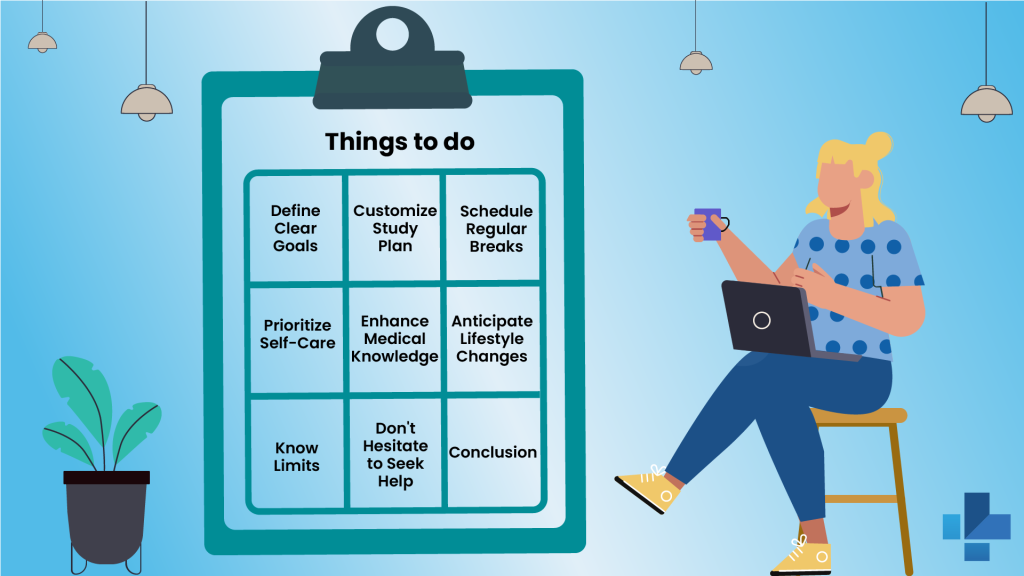
Define Clear Goals:
It’s essential to start USMLE preparation journey by defining clear and specific goals. Consider what want to achieve, whether it’s passing the USMLE Step 1 or aiming for a high score like 270. These goals will serve as guiding light, allowing to create a study schedule that’s tailored to objectives. By working toward personal, concrete goals, can measure progress effectively without feeling overwhelmed or succumbing to burnout.
Customize Study Plan:
Every student has a unique learning style and pace. While it’s beneficial to use templates as study guides, creating a customized study plan that aligns with learning preferences and capabilities is crucial. USMLE preparation is not a one-size-fits-all approach. may find that mixing various learning techniques, such as reading review books, using whiteboards, teaching peers, watching educational videos, practicing with questions, or even recording teaching sessions, works best. Tailoring study plan ensures optimal retention and minimizes the risk of burnout.
Know Limits:
Understanding daily study limits is paramount in avoiding burnout. USMLE Step 1 preparation, much like medical school itself, is a marathon, not a sprint. It’s essential to pace gradually. Some students can study intensively for four weeks, investing up to 12 hours each day, while others prefer a more extended preparation period, spanning eight weeks with daily sessions of six to eight hours. By recognizing study limits, can be more productive in studies and minimize the chances of burnout.
Schedule Regular Breaks:
Taking a day off each week is a piece of advice that many students tend to overlook, yet it’s one of the most critical strategies for successful USMLE preparation. brain can only absorb a limited amount of information at a time. Beyond a certain point, prolonged studying becomes counterproductive. Experts emphasize the importance of taking a day off to recharge, as it’s not about working harder but working smarter. By allowing breaks, can rejuvenate and return to studies with increased focus and productivity.
Prioritize Self-Care:
Self-care plays a pivotal role in preventing burnout. By taking care of physical and mental well-being, can harness the full potential of brain and body. Adequate sleep, a balanced diet, and regular exercise are essential components of self-care. Aim for 7-8 hours of quality sleep each night. Ensure diet is rich in nutrients and stay well-hydrated. Incorporate superfoods such as avocados, kale, fish, and broccoli into meals to support brain’s functioning and overall calmness.
Enhance Medical Knowledge:
If find needing a break from the monotony of book studying, consider setting up an elective-like rotation with a preceptor. This approach can add a refreshing dynamic to preparation process, keeping motivated and connected to goals. It also reinforces confidence, as may find that the material is studying for USMLE Step 1 is directly applicable and reinforced in the clinical setting. Experiencing how the information comes to life in a real-world context can be a game-changer.
Don’t Hesitate to Seek Help:
We all learn at different paces and through various methods. When ‘re struggling with challenging concepts, remember that don’t need to reinvent the wheel. fellow medical school peers or professors can often explain complex topics in a matter of minutes. Don’t hesitate to seek help when need it. This approach keeps progress on track and ensures that ‘re not wasting time wrestling with difficult concepts.
Anticipate Lifestyle Changes:
Preparing for the USMLE requires significant dedication and focus. It’s essential to communicate to support system, whether it’s friends, family, or loved ones, the magnitude of this exam for a medical student. Apologize in advance for the potential mood swings, periods of absence, and occasional social awkwardness that may arise during preparation. By anticipating these lifestyle changes, can lower stress levels, prevent burnout, and maintain a supportive network that understands goals and challenges.
Conclusion
Preparing for the USMLE is a challenging yet rewarding journey. By implementing these ten essential strategies, can safeguard well-being and maintain the motivation needed to excel in medical studies and USMLE preparation. Remember that a balanced approach is key to preventing burnout, and with determination and self-care, can reach goals without sacrificing physical or mental health.