What Is Mean Arterial Pressure (MAP) and Why Should You Care?
Mean arterial pressure (MAP) is defined as the average pressure in arteries throughout a complete cardiac cycle. While diastolic and systolic pressure are commonly measured, MAP provides a more accurate indication of organ perfusion, specifically in critically ill patients.
Whether you are in the ER, ICU, or operating room, MAP blood pressure is a crucial measure for making informed clinical decisions. Understanding and efficient use of MAP can make the difference between life and death in cases of trauma, shock, or sepsis.
How MAP Is Calculated: The Formula
The standard formula to calculate MAP is:
MAP = [(2 x Diastolic BP) + Systolic BP] ÷ 3
This weighted average compensates for the longer diastolic pressure in the cardiac cycle. It can be done manually or quickly by using an MAP calculator.
For example, if the blood pressure of a patient is 120/80 mmHg:
MAP = [(2 × 80) + 120] ÷ 3 = 93.3 mmHg
What Is a Normal MAP Range?
A normal MAP range is between 70 and 100 mmHg. This makes sure sufficient blood flow to the vital organs.
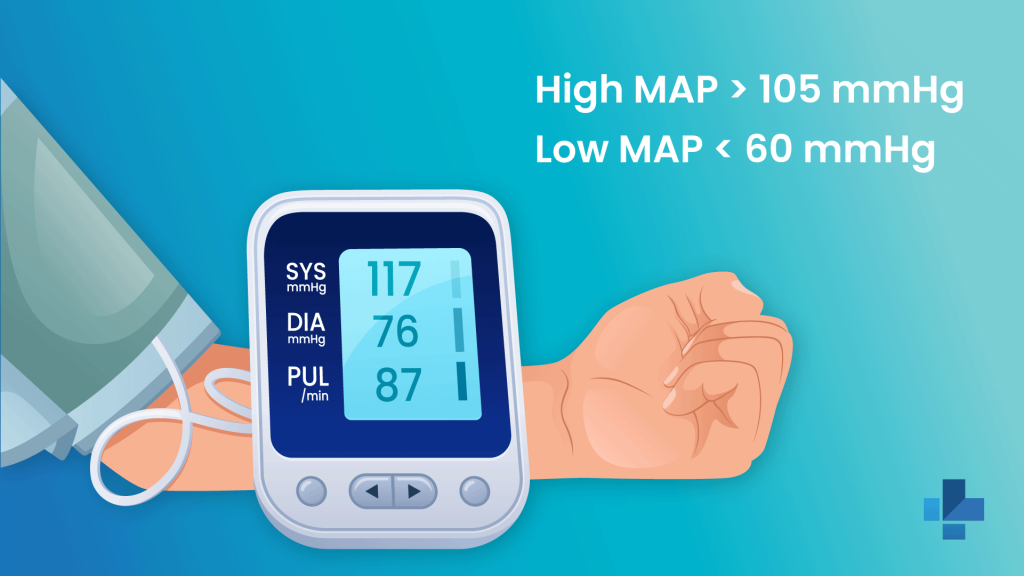
- Low MAP (<60 mmHg): This indicates poor perfusion, which can lead to ischemia in the brain, kidneys, and heart.
- High MAP (>105 mmHg): This may indicate increased cardiac workload and vascular damage, particularly in patients with hypertension.
MAP in Clinical Practice: Why It Matters
MAP is not just a number; it is a critical tool in bedside decision-making across many medical settings:
- ICU: It is used to titrate vasopressors and guide fluid management.
- Emergency room: It is a key to assess shock and start trauma protocols.
- Operating room/anesthesia: It ensures adequate organ perfusion during the surgery.
- Common conditions: Essential to manage sepsis, stroke, renal failure, and multi-organ dysfunction.
Case Scenario: MAP in Action
Patient: A 68-year-old male presents with sepsis.
Blood pressure: 85/50 mmHg
MAP = [(2×50)+85] ÷ 3 = 61.6 mmHg
This borderline MAP suggests compromised perfusion. Immediate fluid resuscitation and initiation of vasopressors are needed to prevent organ failure.
Want to try it yourself? Use our free MAP Calculator now.
Why MAP Is More Reliable Than Systolic Pressure Alone
While systolic blood pressure reflects peak arterial pressure, it does not provide a comprehensive view of perfusion. MAP gives a more stable and accurate assessment, which is useful in:
- Patients on mechanical ventilation
- Those with wide pulse pressures
- Conditions like sepsis, shock, or trauma
Conclusion
MAP is a vital clinical parameter in acute and chronic care.
Quick and accurate MAP calculation improves decision-making and outcomes.
Bookmark medtigo’s MAP calculator to streamline patient care.
Check your MAP now using medtigo’s Mean Arterial Pressure Calculator: no login needed, 100% free.
Whether you are monitoring MAP, evaluating pneumonia severity, or calculating an anion gap, accuracy matters.
Explore all medtigo clinical tools here: Browse All Medical Calculators