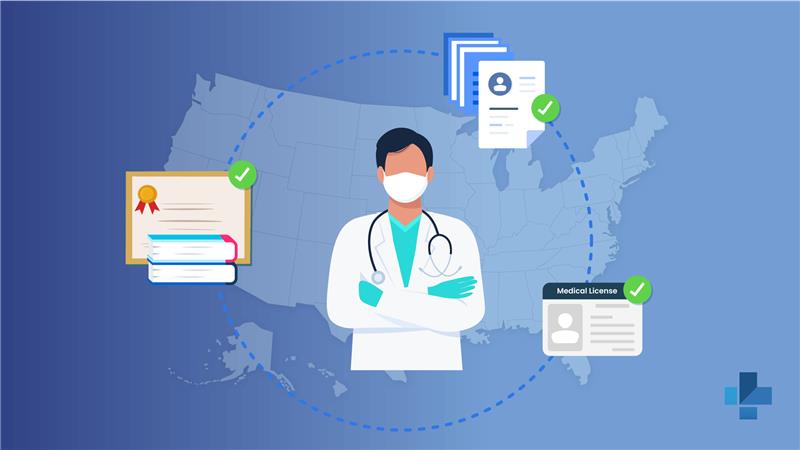
To navigate medical licensing requirements in the U.S. is challenging, specifically because every state has its own set of rules, timeline, and documentation needs. If you are a new graduate or experienced physician seeking a state medical license, it is necessary to understand that these variations are key to practicing without delays. This guide will give a detailed overview of physician licenses by state requirements and practical insight to help streamline the procedure.
Common Challenges in Medical Licensing and How Professional Services Can Help for insights into licensing challenges.
Overview of Common Licensing Requirements
Each state has unique criteria, but many states can share common elements related to medical license eligibility, postgraduate training, and standardized examination.
1. Minimum Education and Exam Requirements
Most states need:
- Graduation from accredited medical school (MD/DO)
- Completion of at least 1 to 3 years of postgraduate training
- Passing score on USMLE (for MDs) or COMLEX-USA (for DOs)
- These exams and their attempt limits play an important role in eligibility.
2. Fees and Application Timelines
Application fees can differ significantly in states, ranging from a few hundred to a thousand dollars. The processing time can span from a few weeks to many months based on:
- State board workload
- Verification of training and exam scores
- Background check requirement
How Professional Credentialing Services Can Streamline Your Practice Setup for credentialing and licensing support.
State-by-State Licensing Requirements Breakdown
It is essential to understand each state’s medical license because regulations differ widely. State medical boards have their own rules and create meaningful variation in how licensing works.
Key Licensing Metrics That Differ by State
State | USMLE/COMLEX Attempt Limits | Required Postgraduate Training | License Renewal Cycle |
State A | 6 attempts per Step | 1 year | Every 2 years |
State B | No attempt limit | 3 years | Every 3 years |
State C | 3 attempts per Step | 2 years | Annually |
States With Unique or Stringent Requirements
California: Extensive training documentation and primary source verification.
Texas: Strict exam attempt limits and jurisprudence exam requirements.
New York: Step 3 is not required for limited permits, but for detailed postgraduate requirements.
Florida: Explicit background checks and CME specificity.
Understanding Medical License and Credentialing for Healthcare Professionals.
Interstate Medical Licensure Compact (IMLC) States
The Interstate Medical Licensure Compact (IMLC) is designed to simplify multi-state practice. It allows qualified physicians to get licenses in participating states by expediting the pathway.
What Is IMLC?
The IMLC is an agreement on state medical boards that streamlines the licensing process for physicians who meet specific eligibility criteria.
Participating States
More than 35 states, plus Guam and D.C., are part of the Compact. This list continues to grow as telemedicine expands nationwide.
IMLC Benefits
- Faster licensing in multiple states
- Simplified verification and credentialing
- Expanded telehealth opportunities
- Improved mobility for locum tenens and multi-state practices
Learn more on telehealth and multi-state practice:
How Hospitals Handle Credentialing for Telehealth Providers
Licensing Process Tips for Specific States
Some states have more complex licensing processes due to stricter requirements or higher physician demand.
California Medical License Process
- Prepare for extensive primary-source verification
- Expect longer processing times due to high applicant volume
- Ensure training certificates are correctly completed
Texas Medical Licensing Rules
- Study for the Texas Jurisprudence Exam
- Monitor exam attempt limits closely
- Maintain detailed postgraduate training documentation
Florida Medical Licensing Guide
- Expect mandatory fingerprinting and background checks
- Complete specific CME requirements (e.g., human trafficking course)
- Prepare to submit multiple supporting documents for verification
Common Challenges in Medical Licensing and How Professional Services Can Help for state-specific challenges.
Maintaining Compliance and Renewal Across States
Holding multiple state licenses adds another layer of responsibility. Medical license renewal requires:
- Completing state-specific continuing medical education (CME)
- Submitting renewal fees
- Reporting disciplinary actions or malpractice claims
Managing Multiple Licenses
Physicians practicing in several states often rely on:
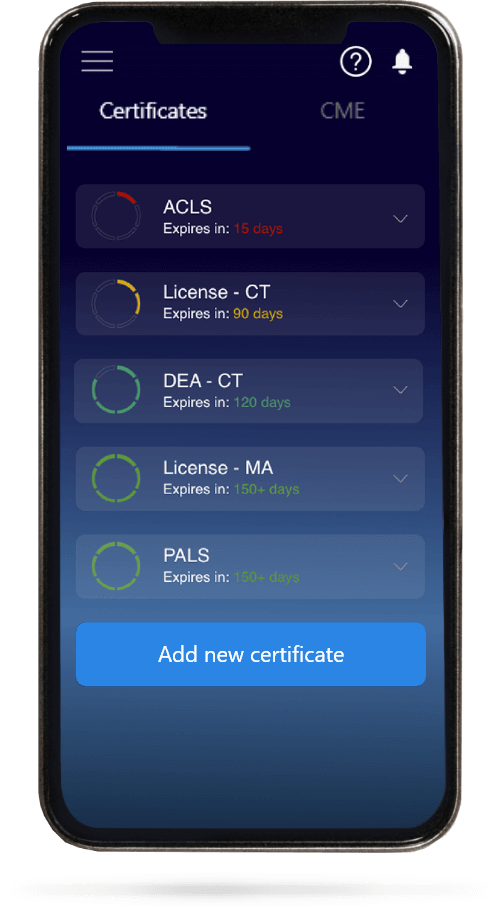
- License-tracking software
- Credentialing management services
- Automated reminders for CME and renewal deadlines
These tools help streamline multi-state license management and reduce compliance risks.
How Professional Credentialing Services Can Streamline Your Practice Setup
Conclusion
It is important to understand state-specific medical licensing requirements for smooth and successful medical careers, specifically with the growing demand for telehealth and multi-state practice. With the right guidance and support, navigating multiple boards and renewals becomes far more manageable.
To simplify the entire process, explore medtigo’s end-to-end licensing support services.
https://landing.medtigo.com/licensing/
FAQs
1. How do licensing requirements differ for international medical graduates (IMGs) by state?
Most states require IMGs to complete ECFMG certification, additional training years, and sometimes specific clinical requirements before eligibility.
2. Are there states that waive certain licensing exams for certified physicians?
Yes, a few states may relax exam attempt limits or time limits for ABMS/AOA board-certified physicians.
3. What are common reasons medical license applications get delayed in specific states?
Delays often occur due to incomplete paperwork, slow verification from training institutions, background check issues, or high state board workloads.
4. How does interstate telemedicine affect state licensing requirements?
Physicians must still obtain a license in each state where patients reside, unless the state participates in special telehealth licensing arrangements or the IMLC.
5. Can I hold multiple state licenses simultaneously, and how do renewal periods align?
Yes, physicians can hold multiple licenses. Renewal periods vary by state, so tracking systems or credentialing services are recommended for timely compliance.