Introduction
Medical errors remain one of the most common challenges in healthcare. Studies show that medication errors contribute to about 250,00 deaths every year in the U.S. Many of these errors are preventable with proper systems, training, and awareness. From prescribing mistakes to communication breakdowns, these errors can significantly impact patient safety, healthcare costs, and provider accountability. Most of these issues can be reduced or even eliminated by targeted education and process improvements.
For healthcare professionals looking to stay ahead, continuing education platforms like medtigo offer CME courses focused on medical error prevention, helping clinicians strengthen patient safety practices while earning credits.
Top 5 Medication Errors (and How to Prevent Them)
Medication errors are among the most frequent and preventable clinical mistakes. Here are the top five:
1. Prescribing Errors
Incorrect drug selection, dosage, or frequency can occur because of incomplete patient information or a lack of updated guidelines.
Prevention: Use electronic prescribing systems and clinical decision support tools.
2. Dispensing Errors
Pharmacy-related mistakes, such as giving the wrong medication or incorrect labeling.
Prevention: Implement barcode verification systems and double-check protocols.
3. Administration Errors
Wrong patient, dose, route, or timing during medication administration.
Prevention: Follow the “5 Rights” (right patient, drug, dose, route, time).
4. Documentation Errors
Incomplete or inaccurate medical records can lead to inappropriate treatment decisions.
Prevention: Maintain real-time, accurate documentation in electronic health records (EHRs).
5. Monitoring Errors
Failure to track patient response or side effects after medication administration.
Prevention: Establish follow-up protocols and use alert systems for high-risk medications.
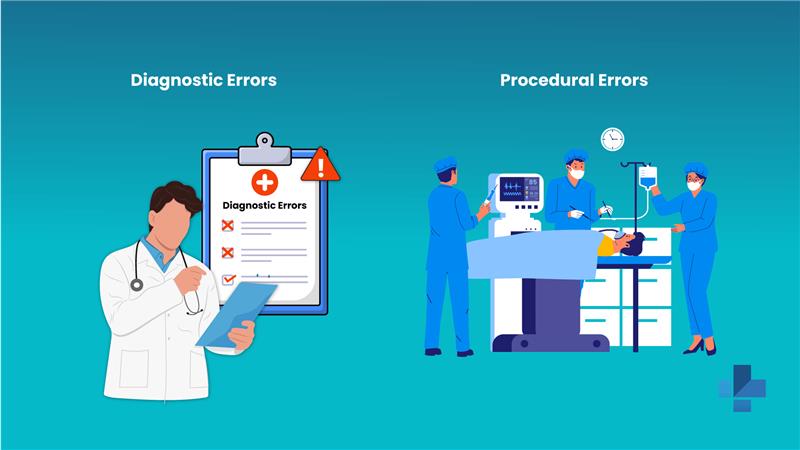
Diagnostic & Procedural Errors
Beyond medication issues, diagnostic and procedural errors also contribute significantly to patient harm:
Misdiagnosis:
It affects about 12 million patients annually in the U.S. It is common in conditions like cancer and infections.
Prevention: Use differential diagnosis checklists, second opinions, and diagnostic decision tools.
Surgical Wrong Site Errors
It occurs in about 1 in 112,000 surgeries
Prevention: Strict adherence to surgical safety checklists and “time-out” protocols before procedures.
Handoff Failures
Up to 80% of serious medical errors involve communication gaps during handoffs.
Prevention: Standardize handoff communication using tools like SBAR (Situation, Background, Assessment, Recommendation).
Also read: Simulation Training Benefits to understand how hands-on training improves error prevention skills.
System & Human Factors Behind Medical Errors
Medical errors rarely occur in isolation; they are often the result of systemic and human factors:
System Factors
- Poor workflow design
- Lack of standardized protocols
- Inadequate staffing
- Inefficient health IT systems
Human Factors
- Fatigue and burnout
- Cognitive overload
- Inexperience or insufficient training
- Communication breakdowns
Solution: Building a culture of safety, investing in training, and leveraging technology can significantly reduce these risks.
medtigo Medical Errors CME Solution
To effectively reduce clinical errors, continuous education is essential. medtigo offers specialized CME courses that focus on:
- Identifying common medical errors
- Implementing evidence-based prevention strategies
- Enhancing clinical decision-making
- Improving communication and patient safety practices
These courses are designed for busy healthcare professionals, combining flexibility with practical, real-world insights.
Top CME Courses to explore more learning opportunities.
Master Error Prevention
Take Medical Errors CME Course
Strengthen your clinical skills and reduce the risk of preventable errors.
Earn 2 CME Credits Today
Stay compliant, improve patient outcomes, and advance your professional development all in one step.
Conclusion
By understanding the most common medical errors and proactively addressing their root causes, healthcare professionals can significantly improve patient safety and care quality. Continuous learning and structured training remain key to minimizing risks in clinical practice.
FAQs
1. What percentage of hospital deaths are from preventable errors?
Estimates vary, but studies suggest that up to 10% of hospital deaths may be linked to preventable medical errors, making them a leading cause of mortality.
2. How do smart infusion pumps prevent IV errors?
Smart infusion pumps use built-in drug libraries and dose error reduction systems to alert clinicians when programmed doses exceed safe limits, reducing the risk of IV medication errors.
3. Is medication error reporting mandatory for licensing?
Reporting requirements vary by region and institution, but many healthcare organizations mandate internal reporting systems to improve patient safety and meet regulatory standards.