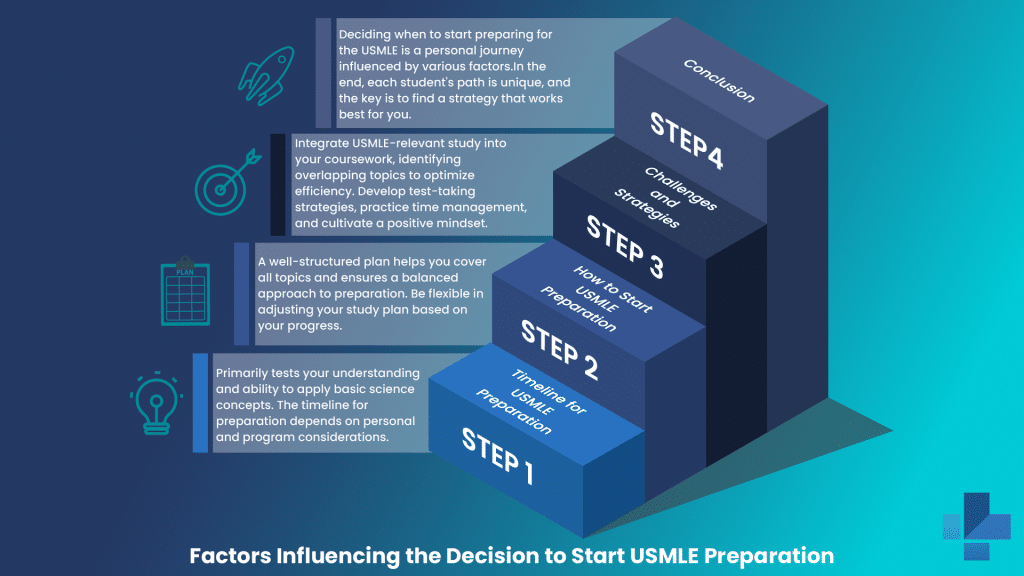
Embarking on the journey to become a licensed physician in the United States involves conquering several milestones, with the United States Medical Licensing Examination (USMLE) being a crucial step. For aspiring medical professionals, the question of when to start preparing for the USMLE is both pivotal and complex. In this blog, we’ll explore the factors influencing the decision and offer guidance on when and how to initiate your USMLE preparation.
Understanding the USMLE Journey:
The USMLE is a three-step examination for medical licensure in the U.S., administered by the National Board of Medical Examiners (NBME) and the Federation of State Medical Boards (FSMB). The three steps are designed to assess a physician’s ability to apply medical knowledge and principles to patient care. The exams are taken at different points during medical education: Step 1 typically after the second year of medical school, Step 2 during the clinical years, and Step 3 during residency.
Factors Influencing the Decision to Start USMLE Preparation:
The structure and content of your medical school curriculum play a significant role in determining when to start USMLE preparation. Understanding when your coursework aligns with the USMLE content can help you plan your study schedule effectively.
Each individual’s learning style and study skills are unique. Some may prefer a more gradual, integrated approach, while others may thrive in an intensive, dedicated study period. Assessing your learning preferences will guide your decision on when to start your USMLE preparation.
Starting early allows you to cultivate strong study habits gradually. Consistent, focused studying over an extended period often leads to better retention of information and a deeper understanding of the material.
Consider your personal commitments and stress tolerance level. Starting early can help distribute the workload, reducing the intensity of the preparation phase and allowing you to manage stress more effectively.
Timeline for USMLE Preparation:
Step 1 primarily tests your understanding and ability to apply basic science concepts. Many students start preparing for Step 1 during their dedicated study period after completing the second year of medical school. A 3-6 month dedicated study period is common.
Step 2 is divided into two parts – Clinical Knowledge (CK) and Clinical Skills (CS). CK is typically taken during the fourth year of medical school, with preparation often integrated into clinical rotations. CS is usually taken after completing core clinical rotations.
Step 3 is taken during residency. The timeline for preparation depends on personal and program considerations. Residents often start preparing during their first or second year of residency.
How to Start USMLE Preparation:
Develop a realistic study plan based on your strengths, weaknesses, and the time available. A well-structured plan helps you cover all topics and ensures a balanced approach to preparation.
Choose high-yield resources that align with your learning style. These may include review books, question banks, flashcards, and online forums. Consider investing in a comprehensive review course if needed.
Periodically assess your progress with practice exams and self-assessment tools. This not only gauges your readiness but also helps identify areas that require additional focus.
Avoid burnout by incorporating breaks and sufficient sleep into your routine. A well-rested mind is more efficient at retaining information.
Joining study groups or seeking guidance from mentors and peers can provide valuable insights. Sharing experiences and knowledge enhances your preparation.
Be flexible in adjusting your study plan based on your progress. If certain topics need more attention, allocate additional time accordingly.
Challenges and Strategies:
Integrate USMLE-relevant study into your coursework, identifying overlapping topics to optimize efficiency.
Focus on understanding core concepts rather than memorization. Use active learning techniques, such as teaching the material to someone else.
Develop test-taking strategies, practice time management, and cultivate a positive mindset. Simulate exam conditions during practice tests to acclimate to the testing environment.
Conclusion: Deciding when to start preparing for the USMLE is a personal journey influenced by various factors. It’s essential to align your preparation with your medical school curriculum, study habits, and personal commitments. Starting early provides the opportunity to build a strong foundation gradually and reduces the stress associated with last-minute cramming. Remember, success in the USMLE is not just about passing exams but about becoming a competent and confident physician.
In the end, each student’s path is unique, and the key is to find a strategy that works best for you. Whether you choose to start early or opt for an intensive study period, staying disciplined, focused, and adaptable will be essential throughout your USMLE preparation journey.