Rising Adoption of Continuous Glucose Monitors in Medicare Advantage: Trends from 2021–2023
April 13, 2026






Background
Acute coronary syndrome (ACS) refers to a range of conditions caused by a sudden reduction or blockage of blood flow to the heart muscle, often due to the rupture of a plaque in the coronary arteries. ACS is a medical emergency and includes three main types: unstable angina, non-ST segment elevation myocardial infarction (NSTEMI), and ST-segment elevation myocardial infarction (STEMI). Unstable angina involves a partial blockage and causes chest pain or discomfort, serving as a warning sign of a potential heart attack. NSTEMI is less severe, with partial or temporary blockage leading to some heart muscle damage. STEMI is the most severe, involving a complete blockage and causing significant heart muscle damage, requiring immediate medical attention.
Epidemiology
Acute coronary syndrome (ACS): Leading cause of morbidity and mortality worldwide, affecting millions annually.
Incidence: Varies by region, age, and other factors; common cardiovascular emergency.
Prevalence: Influenced by risk factors such as hypertension, diabetes, smoking, and obesity.
Gender differences: Historically more common in men, but the gender gap is narrowing; significant cause of death and morbidity in both genders.
Seasonal pattern: Increased incidence during winter; cold weather and other factors may contribute to this variation.
Anatomy
Pathophysiology
Acute coronary syndrome (ACS): Involves a reduction in blood flow to a segment of the heart muscle.
Primary cause: Typically, due to the rupture of a plaque within a coronary artery.
Thrombus formation: The rupture leads to the formation of a blood clot (thrombus).
Other causes: Can also be attributed to vasospasm, with or without underlying atherosclerotic conditions.
Initial effect: Reduced blood flow results in ischemia (insufficient blood supply).
Subsequent effect: Ischemia leads to infarction (tissue damage) of the affected heart region.
Etiology
Acute Coronary Syndrome (ACS): Manifestation of coronary heart disease.
Primary cause: Disruption of plaques within the coronary arteries.
Prevalent risk factors:
Smoking
Diabetes
High blood pressure
Elevated lipid levels
Sedentary lifestyle
Familial obesity
Poor dietary habits
Cocaine abuse: Can induce vasospasms, increasing risk.
Family history: Early myocardial infarction (before age 55) is a significant risk factor.
Genetics
Prognostic Factors
Clinical History
Acute coronary syndrome (ACS) often affects individuals with risk factors like coronary artery disease (CHD), smoking, hypertension, diabetes, hyperlipidemia, and a family history of heart disease. Patients may have a history of angina or heart attacks.
Symptoms include new or worsening chest pain (crushing, squeezing, or pressure-like), shortness of breath, nausea, vomiting, and sweating.
ACS typically has a sudden onset and can present with persistent or intermittent symptoms, including rest and exertional angina. The exact symptoms can vary among individuals.
Age group
Middle-Aged Adults (40-60 years):
This is a more common age range for ACS, as risk factors such as hypertension, high cholesterol, smoking, and diabetes tend to accumulate during this period.
Men typically have a higher incidence of ACS in this age group, although the gap is narrowing as cardiovascular risk factors in women rise.
Older Adults (Over 60 years):
ACS becomes much more common in this age group, with the risk increasing as people age due to the natural progression of coronary artery disease (CAD), which often goes undiagnosed for many years.
Physical Examination
Patients with ACS often exhibit general distress and diaphoresis. Heart sounds are usually normal, but in some cases, healthcare providers may detect additional sounds like gallops or murmurs. Lung examination typically reveals no abnormalities, though crackles may be heard in some cases, suggesting associated congestive heart failure. Bilateral leg swelling or edema may be present, which can be indicative of CHF. Evaluations of other body systems typically yield results within normal limits unless there are concurrent medical conditions. When abdominal tenderness is noted upon palpation, healthcare providers should consider the possibility of other conditions, such as pancreatitis or gastritis. The presence of unequal pulses should raise suspicion of aortic dissection, warranting further evaluation. If unilateral leg swelling is detected, a thorough work-up for pulmonary emboli is advisable.
Age group
Associated comorbidity
Hypertension (High Blood Pressure)
Diabetes Mellitus
Dyslipidemia (Abnormal Cholesterol Levels)
Peripheral Artery Disease (PAD)
Associated activity
Acuity of presentation
ST-Elevation Myocardial Infarction (STEMI):
Most acute: Sudden, severe chest pain, often crushing in nature, with rapid deterioration. Immediate intervention (e.g., PCI or thrombolysis) is critical to minimize heart damage.
Non-ST-Elevation Myocardial Infarction (NSTEMI):
Moderately acute: Chest pain, shortness of breath, and discomfort may be less intense but still severe. Requires urgent care with antiplatelet therapy and potential angiography.
Unstable Angina:
Less acute but still urgent: Chest pain at rest or with minimal exertion, with no significant muscle damage (no troponin elevation). Needs close monitoring and possible early revascularization.
Differential Diagnoses
Acute pericarditis
Aortic stenosis
Anxiety disorders
Asthma
Dilated cardiomyopathy
Esophagitis
Myocardial infarction
Laboratory Studies
Imaging Studies
Procedures
Histologic Findings
Staging
Treatment Paradigm
Immediate medical assessment and diagnosis:
Electrocardiography (ECG) and cardiac biomarker tests
Initial treatments:
Oxygen therapy
Pain relief with nitroglycerin and opioids
Administration of antiplatelet and anticoagulant medications
Revascularization procedures (Depending on type of ACS – STEMI or NSTEMI):
Primary percutaneous coronary intervention (PCI)
Thrombolytic therapy
Long-term management:
Beta-blockers
ACE inhibitors or ARBs
Statins
Lifestyle modifications
Cardiac rehabilitation
Psychological support:
Addressing the emotional impact of ACS
Ensuring comprehensive care and better patient outcomes
by Stage
by Modality
Chemotherapy
Radiation Therapy
Surgical Interventions
STEMI: Urgent revascularization is the goal. This can be achieved through primary percutaneous coronary intervention (PCI) or thrombolytic therapy. PCI is preferred if available within a timely window.
NSTEMI: An early invasive strategy, involving coronary angiography and PCI if indicated, is commonly employed.
Hormone Therapy
Immunotherapy
Hyperthermia
Photodynamic Therapy
Stem Cell Transplant
Targeted Therapy
Palliative Care
lifestyle-modifications-in-treating-acute-coronary-syndrome
Encourage patients to make lifestyle changes, such as quitting smoking, adopting a heart-healthy diet, losing weight if necessary, and managing underlying risk factors like hypertension and diabetes.
Effectiveness of Antiplatelet and Anticoagulant Therapy in treating Acute Coronary Syndrome
Cardiology
Aspirin is administered promptly to inhibit platelet aggregation. Additional antiplatelet agents like P2Y12 inhibitors (e.g., clopidogrel, ticagrelor, or prasugrel) are initiated. Anticoagulants such as heparin or enoxaparin are given to prevent further clot formation.
Use of Beta-Blockers in treating Acute Coronary Syndrome
Beta-blockers, like metoprolol, may be administered to reduce heart rate, blood pressure, and myocardial oxygen demand, especially if the patient is stable.
Use of Statin Therapy in treating Acute Coronary Syndrome
Statins, such as atorvastatin or rosuvastatin, are initiated or continued to lower cholesterol levels and reduce the risk of future events.
Effectiveness of ACE Inhibitors or ARBs in treating Acute Coronary Syndrome
Angiotensin-converting enzyme (ACE) inhibitors or angiotensin receptor blockers (ARBs) may be prescribed in the subacute phase to improve cardiac function and reduce the risk of complications.
role-of-surgical-care-in-treating-acute-coronary-syndrome
STEMI: Urgent revascularization is the goal. This can be achieved through primary percutaneous coronary intervention (PCI) or thrombolytic therapy. PCI is preferred if available within a timely window.
NSTEMI: An early invasive strategy, involving coronary angiography and PCI if indicated, is commonly employed.
role-of-management-in-treating-acute-coronary-syndrome
Initial (Pre-Hospital) Phase:
Aspirin to prevent further clotting.
Oxygen if necessary (for low saturation or distress).
Nitroglycerin to relieve chest pain (if no contraindications).
Pain control with morphine.
Anticoagulation (e.g., heparin) to prevent further clot formation.
Hospital (Early) Phase:
Monitoring: Continuous ECG and vital sign monitoring.
Reperfusion therapy for STEMI (PCI or thrombolysis).
Antiplatelet therapy (Aspirin + P2Y12 inhibitors).
Anticoagulation (heparin).
Risk stratification to guide further intervention.
Intermediate Phase (Post-Reperfusion):
Post-PCI care (monitor for complications).
Beta-blockers, ACE inhibitors/ARBs, and statins.
Continued antiplatelet therapy (Dual Antiplatelet Therapy).
Late Phase (Discharge & Long-Term):
Secondary prevention: Lifestyle changes, medications, and patient education.
Cardiac rehabilitation to improve recovery and reduce future risk.
Follow-up for ongoing care and management of risk factors.
Medication
Loading dose (following ACS event): 180 mg orally, single dose
The maintenance dose (for 1st 12 months after diagnosis): 90 mg orally two times
The maintenance dose (after 12 months from diagnosis): 60 mg orally two times
Also, continue with aspirin 75-100 mg
25
mcg/kg
Solution
Intravenous (IV)
5
minutes
180
mcg/kg
Solution
Intravenous (IV)
1 - 2
minutes
Later, 2 mcg/kg/min intravenously for 72 hours
Initial dose
:
60
mg
Tablet
Orally
once a day
Maintenance dose: 10mg/day orally combined with 81-325mg/day aspirin
Non-ST-Elevation Myocardial Infarction (NSTEMI)
Loading dose:
300
mg
Tablet
Orally
every day
Maintenance dose: 75 mg orally daily
ST-Elevation Myocardial Infarction (STEMI)
Loading dose: 300 mg orally daily
Maintenance dose: 75 mg orally daily with/without thrombolytics
PCI
Without the GPIIb or IIIa inhibitor: 70 to 100 unit/kg Intravenous bolus initially
With GPIIb or IIIa inhibitor: 50 to 70 units/kg Intravenous bolus initially
STEMI
Patient who are on fibrinolytics: IV bolus of 60 units/kg (maximum: 4000 units), following 12 units/kg in hour as continuous IV infusion (max 1000 units/hr)
The dose must be adjusted to keep the aPTT between 50 to 70 seconds
NSTEMI/Unstable Angina
6 to 70 units/kg intravenous bolus initially (maximum: 5000 units), following 12-15 units/kg in hour intravenous infusion initially (maximum: 1000 units/hr)
The dose must be adjusted to keep the aPTT between 50 to 70 secs
Dosing considerations
There are several concentrations available; extreme caution is necessary to prevent a medication error
Administer initial dose of 86 anti-Xa units/kg intravenously once bolus and the maximum dose not more than 9500 anti-Xa units
Fixed dosing:
<50 kg: dose of 3800 anti-Xa units once intravenous bolus
≥100 kg: dose of 9500 anti-Xa units once intravenous bolus
Administer maintenance dose of 86 anti-Xa units/kg subcutaneously each 12 hours and the maximum total daily dose not more than 19000 anti-Xa units
Fixed dosing:
<50 kg: dose of 3800 anti-Xa units subcutaneously each 12 hours
≥100 kg: dose of 9500 anti-Xa units subcutaneously each 12 hours
Acute Coronary Syndrome
<75 years:
Loading dose: 60mg orally
Maintenance dose: 10mg/day orally combined with 81-325mg/day aspirin
>75 years:
Not recommended due to intracranial bleeding
Future Trends
Acute coronary syndrome (ACS) refers to a range of conditions caused by a sudden reduction or blockage of blood flow to the heart muscle, often due to the rupture of a plaque in the coronary arteries. ACS is a medical emergency and includes three main types: unstable angina, non-ST segment elevation myocardial infarction (NSTEMI), and ST-segment elevation myocardial infarction (STEMI). Unstable angina involves a partial blockage and causes chest pain or discomfort, serving as a warning sign of a potential heart attack. NSTEMI is less severe, with partial or temporary blockage leading to some heart muscle damage. STEMI is the most severe, involving a complete blockage and causing significant heart muscle damage, requiring immediate medical attention.
Acute coronary syndrome (ACS): Leading cause of morbidity and mortality worldwide, affecting millions annually.
Incidence: Varies by region, age, and other factors; common cardiovascular emergency.
Prevalence: Influenced by risk factors such as hypertension, diabetes, smoking, and obesity.
Gender differences: Historically more common in men, but the gender gap is narrowing; significant cause of death and morbidity in both genders.
Seasonal pattern: Increased incidence during winter; cold weather and other factors may contribute to this variation.
Acute coronary syndrome (ACS): Involves a reduction in blood flow to a segment of the heart muscle.
Primary cause: Typically, due to the rupture of a plaque within a coronary artery.
Thrombus formation: The rupture leads to the formation of a blood clot (thrombus).
Other causes: Can also be attributed to vasospasm, with or without underlying atherosclerotic conditions.
Initial effect: Reduced blood flow results in ischemia (insufficient blood supply).
Subsequent effect: Ischemia leads to infarction (tissue damage) of the affected heart region.
Acute Coronary Syndrome (ACS): Manifestation of coronary heart disease.
Primary cause: Disruption of plaques within the coronary arteries.
Prevalent risk factors:
Smoking
Diabetes
High blood pressure
Elevated lipid levels
Sedentary lifestyle
Familial obesity
Poor dietary habits
Cocaine abuse: Can induce vasospasms, increasing risk.
Family history: Early myocardial infarction (before age 55) is a significant risk factor.
Acute coronary syndrome (ACS) often affects individuals with risk factors like coronary artery disease (CHD), smoking, hypertension, diabetes, hyperlipidemia, and a family history of heart disease. Patients may have a history of angina or heart attacks.
Symptoms include new or worsening chest pain (crushing, squeezing, or pressure-like), shortness of breath, nausea, vomiting, and sweating.
ACS typically has a sudden onset and can present with persistent or intermittent symptoms, including rest and exertional angina. The exact symptoms can vary among individuals.
Age group
Middle-Aged Adults (40-60 years):
This is a more common age range for ACS, as risk factors such as hypertension, high cholesterol, smoking, and diabetes tend to accumulate during this period.
Men typically have a higher incidence of ACS in this age group, although the gap is narrowing as cardiovascular risk factors in women rise.
Older Adults (Over 60 years):
ACS becomes much more common in this age group, with the risk increasing as people age due to the natural progression of coronary artery disease (CAD), which often goes undiagnosed for many years.
Patients with ACS often exhibit general distress and diaphoresis. Heart sounds are usually normal, but in some cases, healthcare providers may detect additional sounds like gallops or murmurs. Lung examination typically reveals no abnormalities, though crackles may be heard in some cases, suggesting associated congestive heart failure. Bilateral leg swelling or edema may be present, which can be indicative of CHF. Evaluations of other body systems typically yield results within normal limits unless there are concurrent medical conditions. When abdominal tenderness is noted upon palpation, healthcare providers should consider the possibility of other conditions, such as pancreatitis or gastritis. The presence of unequal pulses should raise suspicion of aortic dissection, warranting further evaluation. If unilateral leg swelling is detected, a thorough work-up for pulmonary emboli is advisable.
Hypertension (High Blood Pressure)
Diabetes Mellitus
Dyslipidemia (Abnormal Cholesterol Levels)
Peripheral Artery Disease (PAD)
ST-Elevation Myocardial Infarction (STEMI):
Most acute: Sudden, severe chest pain, often crushing in nature, with rapid deterioration. Immediate intervention (e.g., PCI or thrombolysis) is critical to minimize heart damage.
Non-ST-Elevation Myocardial Infarction (NSTEMI):
Moderately acute: Chest pain, shortness of breath, and discomfort may be less intense but still severe. Requires urgent care with antiplatelet therapy and potential angiography.
Unstable Angina:
Less acute but still urgent: Chest pain at rest or with minimal exertion, with no significant muscle damage (no troponin elevation). Needs close monitoring and possible early revascularization.
Acute pericarditis
Aortic stenosis
Anxiety disorders
Asthma
Dilated cardiomyopathy
Esophagitis
Myocardial infarction
Immediate medical assessment and diagnosis:
Electrocardiography (ECG) and cardiac biomarker tests
Initial treatments:
Oxygen therapy
Pain relief with nitroglycerin and opioids
Administration of antiplatelet and anticoagulant medications
Revascularization procedures (Depending on type of ACS – STEMI or NSTEMI):
Primary percutaneous coronary intervention (PCI)
Thrombolytic therapy
Long-term management:
Beta-blockers
ACE inhibitors or ARBs
Statins
Lifestyle modifications
Cardiac rehabilitation
Psychological support:
Addressing the emotional impact of ACS
Ensuring comprehensive care and better patient outcomes
STEMI: Urgent revascularization is the goal. This can be achieved through primary percutaneous coronary intervention (PCI) or thrombolytic therapy. PCI is preferred if available within a timely window.
NSTEMI: An early invasive strategy, involving coronary angiography and PCI if indicated, is commonly employed.
Cardiology, General
Encourage patients to make lifestyle changes, such as quitting smoking, adopting a heart-healthy diet, losing weight if necessary, and managing underlying risk factors like hypertension and diabetes.
Cardiology, General
Cardiology
Aspirin is administered promptly to inhibit platelet aggregation. Additional antiplatelet agents like P2Y12 inhibitors (e.g., clopidogrel, ticagrelor, or prasugrel) are initiated. Anticoagulants such as heparin or enoxaparin are given to prevent further clot formation.
Cardiology, General
Beta-blockers, like metoprolol, may be administered to reduce heart rate, blood pressure, and myocardial oxygen demand, especially if the patient is stable.
Cardiology, General
Statins, such as atorvastatin or rosuvastatin, are initiated or continued to lower cholesterol levels and reduce the risk of future events.
Cardiology, General
Angiotensin-converting enzyme (ACE) inhibitors or angiotensin receptor blockers (ARBs) may be prescribed in the subacute phase to improve cardiac function and reduce the risk of complications.
Cardiology, General
STEMI: Urgent revascularization is the goal. This can be achieved through primary percutaneous coronary intervention (PCI) or thrombolytic therapy. PCI is preferred if available within a timely window.
NSTEMI: An early invasive strategy, involving coronary angiography and PCI if indicated, is commonly employed.
Cardiology, General
Initial (Pre-Hospital) Phase:
Aspirin to prevent further clotting.
Oxygen if necessary (for low saturation or distress).
Nitroglycerin to relieve chest pain (if no contraindications).
Pain control with morphine.
Anticoagulation (e.g., heparin) to prevent further clot formation.
Hospital (Early) Phase:
Monitoring: Continuous ECG and vital sign monitoring.
Reperfusion therapy for STEMI (PCI or thrombolysis).
Antiplatelet therapy (Aspirin + P2Y12 inhibitors).
Anticoagulation (heparin).
Risk stratification to guide further intervention.
Intermediate Phase (Post-Reperfusion):
Post-PCI care (monitor for complications).
Beta-blockers, ACE inhibitors/ARBs, and statins.
Continued antiplatelet therapy (Dual Antiplatelet Therapy).
Late Phase (Discharge & Long-Term):
Secondary prevention: Lifestyle changes, medications, and patient education.
Cardiac rehabilitation to improve recovery and reduce future risk.
Follow-up for ongoing care and management of risk factors.

Acute coronary syndrome (ACS) refers to a range of conditions caused by a sudden reduction or blockage of blood flow to the heart muscle, often due to the rupture of a plaque in the coronary arteries. ACS is a medical emergency and includes three main types: unstable angina, non-ST segment elevation myocardial infarction (NSTEMI), and ST-segment elevation myocardial infarction (STEMI). Unstable angina involves a partial blockage and causes chest pain or discomfort, serving as a warning sign of a potential heart attack. NSTEMI is less severe, with partial or temporary blockage leading to some heart muscle damage. STEMI is the most severe, involving a complete blockage and causing significant heart muscle damage, requiring immediate medical attention.
Acute coronary syndrome (ACS): Leading cause of morbidity and mortality worldwide, affecting millions annually.
Incidence: Varies by region, age, and other factors; common cardiovascular emergency.
Prevalence: Influenced by risk factors such as hypertension, diabetes, smoking, and obesity.
Gender differences: Historically more common in men, but the gender gap is narrowing; significant cause of death and morbidity in both genders.
Seasonal pattern: Increased incidence during winter; cold weather and other factors may contribute to this variation.
Acute coronary syndrome (ACS): Involves a reduction in blood flow to a segment of the heart muscle.
Primary cause: Typically, due to the rupture of a plaque within a coronary artery.
Thrombus formation: The rupture leads to the formation of a blood clot (thrombus).
Other causes: Can also be attributed to vasospasm, with or without underlying atherosclerotic conditions.
Initial effect: Reduced blood flow results in ischemia (insufficient blood supply).
Subsequent effect: Ischemia leads to infarction (tissue damage) of the affected heart region.
Acute Coronary Syndrome (ACS): Manifestation of coronary heart disease.
Primary cause: Disruption of plaques within the coronary arteries.
Prevalent risk factors:
Smoking
Diabetes
High blood pressure
Elevated lipid levels
Sedentary lifestyle
Familial obesity
Poor dietary habits
Cocaine abuse: Can induce vasospasms, increasing risk.
Family history: Early myocardial infarction (before age 55) is a significant risk factor.
Acute coronary syndrome (ACS) often affects individuals with risk factors like coronary artery disease (CHD), smoking, hypertension, diabetes, hyperlipidemia, and a family history of heart disease. Patients may have a history of angina or heart attacks.
Symptoms include new or worsening chest pain (crushing, squeezing, or pressure-like), shortness of breath, nausea, vomiting, and sweating.
ACS typically has a sudden onset and can present with persistent or intermittent symptoms, including rest and exertional angina. The exact symptoms can vary among individuals.
Age group
Middle-Aged Adults (40-60 years):
This is a more common age range for ACS, as risk factors such as hypertension, high cholesterol, smoking, and diabetes tend to accumulate during this period.
Men typically have a higher incidence of ACS in this age group, although the gap is narrowing as cardiovascular risk factors in women rise.
Older Adults (Over 60 years):
ACS becomes much more common in this age group, with the risk increasing as people age due to the natural progression of coronary artery disease (CAD), which often goes undiagnosed for many years.
Patients with ACS often exhibit general distress and diaphoresis. Heart sounds are usually normal, but in some cases, healthcare providers may detect additional sounds like gallops or murmurs. Lung examination typically reveals no abnormalities, though crackles may be heard in some cases, suggesting associated congestive heart failure. Bilateral leg swelling or edema may be present, which can be indicative of CHF. Evaluations of other body systems typically yield results within normal limits unless there are concurrent medical conditions. When abdominal tenderness is noted upon palpation, healthcare providers should consider the possibility of other conditions, such as pancreatitis or gastritis. The presence of unequal pulses should raise suspicion of aortic dissection, warranting further evaluation. If unilateral leg swelling is detected, a thorough work-up for pulmonary emboli is advisable.
Hypertension (High Blood Pressure)
Diabetes Mellitus
Dyslipidemia (Abnormal Cholesterol Levels)
Peripheral Artery Disease (PAD)
ST-Elevation Myocardial Infarction (STEMI):
Most acute: Sudden, severe chest pain, often crushing in nature, with rapid deterioration. Immediate intervention (e.g., PCI or thrombolysis) is critical to minimize heart damage.
Non-ST-Elevation Myocardial Infarction (NSTEMI):
Moderately acute: Chest pain, shortness of breath, and discomfort may be less intense but still severe. Requires urgent care with antiplatelet therapy and potential angiography.
Unstable Angina:
Less acute but still urgent: Chest pain at rest or with minimal exertion, with no significant muscle damage (no troponin elevation). Needs close monitoring and possible early revascularization.
Acute pericarditis
Aortic stenosis
Anxiety disorders
Asthma
Dilated cardiomyopathy
Esophagitis
Myocardial infarction
Immediate medical assessment and diagnosis:
Electrocardiography (ECG) and cardiac biomarker tests
Initial treatments:
Oxygen therapy
Pain relief with nitroglycerin and opioids
Administration of antiplatelet and anticoagulant medications
Revascularization procedures (Depending on type of ACS – STEMI or NSTEMI):
Primary percutaneous coronary intervention (PCI)
Thrombolytic therapy
Long-term management:
Beta-blockers
ACE inhibitors or ARBs
Statins
Lifestyle modifications
Cardiac rehabilitation
Psychological support:
Addressing the emotional impact of ACS
Ensuring comprehensive care and better patient outcomes
STEMI: Urgent revascularization is the goal. This can be achieved through primary percutaneous coronary intervention (PCI) or thrombolytic therapy. PCI is preferred if available within a timely window.
NSTEMI: An early invasive strategy, involving coronary angiography and PCI if indicated, is commonly employed.
Cardiology, General
Encourage patients to make lifestyle changes, such as quitting smoking, adopting a heart-healthy diet, losing weight if necessary, and managing underlying risk factors like hypertension and diabetes.
Cardiology, General
Cardiology
Aspirin is administered promptly to inhibit platelet aggregation. Additional antiplatelet agents like P2Y12 inhibitors (e.g., clopidogrel, ticagrelor, or prasugrel) are initiated. Anticoagulants such as heparin or enoxaparin are given to prevent further clot formation.
Cardiology, General
Beta-blockers, like metoprolol, may be administered to reduce heart rate, blood pressure, and myocardial oxygen demand, especially if the patient is stable.
Cardiology, General
Statins, such as atorvastatin or rosuvastatin, are initiated or continued to lower cholesterol levels and reduce the risk of future events.
Cardiology, General
Angiotensin-converting enzyme (ACE) inhibitors or angiotensin receptor blockers (ARBs) may be prescribed in the subacute phase to improve cardiac function and reduce the risk of complications.
Cardiology, General
STEMI: Urgent revascularization is the goal. This can be achieved through primary percutaneous coronary intervention (PCI) or thrombolytic therapy. PCI is preferred if available within a timely window.
NSTEMI: An early invasive strategy, involving coronary angiography and PCI if indicated, is commonly employed.
Cardiology, General
Initial (Pre-Hospital) Phase:
Aspirin to prevent further clotting.
Oxygen if necessary (for low saturation or distress).
Nitroglycerin to relieve chest pain (if no contraindications).
Pain control with morphine.
Anticoagulation (e.g., heparin) to prevent further clot formation.
Hospital (Early) Phase:
Monitoring: Continuous ECG and vital sign monitoring.
Reperfusion therapy for STEMI (PCI or thrombolysis).
Antiplatelet therapy (Aspirin + P2Y12 inhibitors).
Anticoagulation (heparin).
Risk stratification to guide further intervention.
Intermediate Phase (Post-Reperfusion):
Post-PCI care (monitor for complications).
Beta-blockers, ACE inhibitors/ARBs, and statins.
Continued antiplatelet therapy (Dual Antiplatelet Therapy).
Late Phase (Discharge & Long-Term):
Secondary prevention: Lifestyle changes, medications, and patient education.
Cardiac rehabilitation to improve recovery and reduce future risk.
Follow-up for ongoing care and management of risk factors.
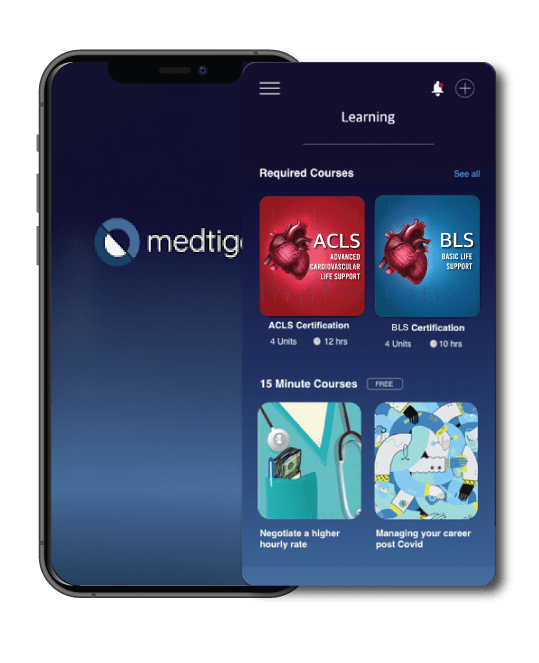
Both our subscription plans include Free CME/CPD AMA PRA Category 1 credits.
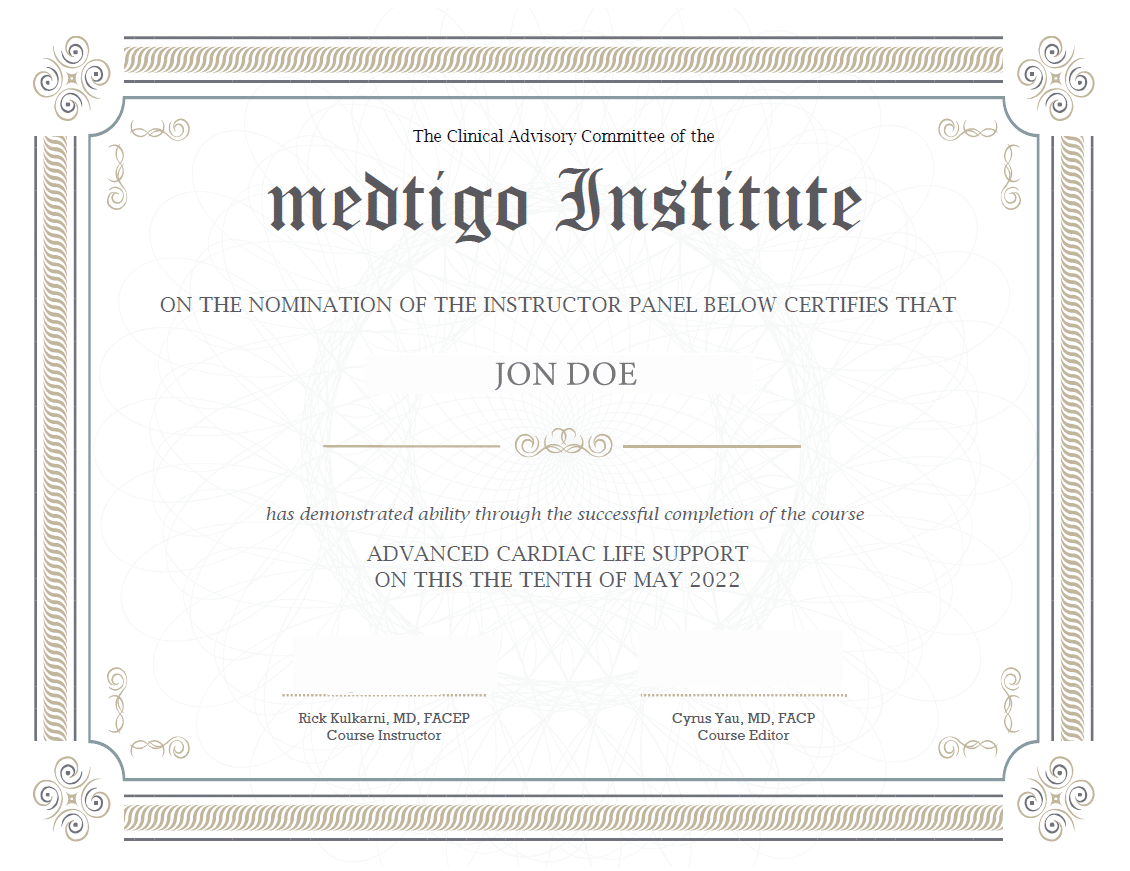
On course completion, you will receive a full-sized presentation quality digital certificate.
A dynamic medical simulation platform designed to train healthcare professionals and students to effectively run code situations through an immersive hands-on experience in a live, interactive 3D environment.
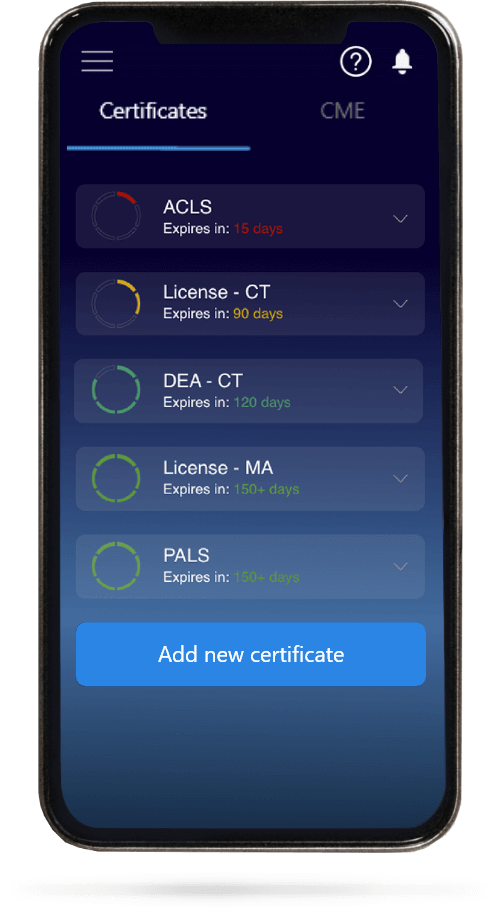
When you have your licenses, certificates and CMEs in one place, it's easier to track your career growth. You can easily share these with hospitals as well, using your medtigo app.