Hidden Risks of Exosome Injections in Pain Management
April 8, 2026




Brand Name :
Miochol-E
Synonyms :
acetylcholine chloride intraocular solution
Class :
Cholinergic Agonist, Miotic, Ophthalmic agent



Brand Name :
Miochol-E
Synonyms :
acetylcholine chloride intraocular solution
Class :
Cholinergic Agonist, Miotic, Ophthalmic agent
Dosage Forms & Strengths
Powder for injection
20mg
Indicated for Miosis During Ocular Surgery:
Before or following the placement of one or more sutures, 0.5 to 2 mL should be injected into the anterior chamber
Safety and efficacy not established
Refer adult dosing
Mechanism of action
The mechanism of action of acetylcholine chloride is based on its ability to activate the muscarinic acetylcholine receptors in the iris. This leads to contraction of the iris muscle and widening of the pupil, making it easier for the surgeon to access the surgical field.
Spectrum
The spectrum of activity of acetylcholine chloride is limited to the iris and does not affect other muscles or organs in the body. This makes it a valuable and safe option for pupillary dilation in eye procedures, especially for patients with minor or irregularly shaped pupils.
Frequency undefined:
Systemic (Rare)
flushing
breathing difficulty
bradycardia
hypotension
sweating
Ocular
corneal clouding
corneal edema
corneal decomposition
Contraindications
None
Caution
Pregnancy consideration: C
Lactation:
Excretion of the drug in human breast milk is unknown
Pregnancy category:
Category A: well-controlled and Satisfactory studies show no risk to the fetus in the first or later trimester.
Category B: there was no evidence of risk to the fetus in animal studies, and there were not enough studies on pregnant women.
Category C: there was evidence of risk of adverse effects in animal reproduction studies, and no adequate evidence in human studies must take care of potential risks in pregnant women.
Category D: adequate data available with sufficient evidence of human fetal risk from various platforms, but despite the potential risk, and used only in emergency cases for potential benefits.
Category X: Drugs listed in this category outweigh the risks over benefits. Hence these categories of drugs need to be avoided by pregnant women.
Category N: There is no data available for the drug under this category
Pharmacology
acetylcholine chloride is a medication used in eye procedures for pupillary dilation. It is a type of cholinergic drug that works by activating the acetylcholine receptors in the iris
When instilled in the eye, acetylcholine chloride activates the muscarinic acetylcholine receptors in the iris, leading to contraction of the iris muscle and widening the pupil. This helps to prevent the iris from blocking the surgical field during eye procedures
acetylcholine chloride has a short duration of action, typically lasting for about 10 to 15 minutes. This is because the enzyme acetylcholinesterase rapidly hydrolyzes it in the eye
Pharmacodynamics
The pharmacodynamics of acetylcholine chloride are specific to the iris and do not affect other muscles or organs in the body. This makes it a valuable and safe option for pupillary dilation in eye procedures, especially for patients with minor or irregularly shaped pupils
It’s important to note that the effects of acetylcholine chloride can be influenced by factors such as the dose and duration of use, as well as any underlying medical conditions or medications being taken by the patient
Pharmacokinetics
Absorption
acetylcholine chloride is instilled as an aqueous solution in the eye, and only a tiny amount of the drug is absorbed systemically. Systemic absorption is influenced by factors such as the dose and route of administration, as well as any underlying medical conditions or medications being taken by the patient
Distribution
Most acetylcholine chloride remains within the eye after installation, and only a tiny amount is absorbed systemically. When absorbed, it is rapidly distributed to the target tissues, including the iris and pupil
Metabolism
acetylcholine chloride is rapidly hydrolyzed by the enzyme acetylcholinesterase in the eye, leading to its short duration of action. Systemically absorbed acetylcholine chloride is also rapidly metabolized in the body
Elimination/Excretion
Most of the acetylcholine chloride is eliminated from the body unchanged, primarily through the urine. Systemically absorbed acetylcholine chloride is eliminated from the body through renal and non-renal routes.
Administration
acetylcholine chloride intraocular solution is a prescription medication used in ophthalmology to dilate the pupil and temporarily paralyze the accommodation reflex during diagnostic procedures. The solution is administered into the conjunctival sac of the eye, usually one drop at a time.
Some general steps to follow include:
Patient information leaflet
Generic Name: acetylcholine chloride intraocular solution
Pronounced:
Why do we use acetylcholine chloride intraocular solution?
acetylcholine chloride intraocular solution is used in ophthalmology for several purposes, including:
Pupil dilation: The solution is used to dilate the pupil, allowing for a better view of the retina and other internal structures of the eye during diagnostic procedures such as fundoscopy or retinal examination
Accommodation paralysis: The solution temporarily paralyzes the ciliary muscle, which is responsible for the accommodation reflex, allowing for a clearer view of the retina during the examination
Diagnostic testing: acetylcholine chloride intraocular solution can be used in conjunction with other diagnostic tests such as tonometry, which measures the pressure inside the eye, and gonioscopy, which evaluates the drainage angle of the eye

Both our subscription plans include Free CME/CPD AMA PRA Category 1 credits.

On course completion, you will receive a full-sized presentation quality digital certificate.
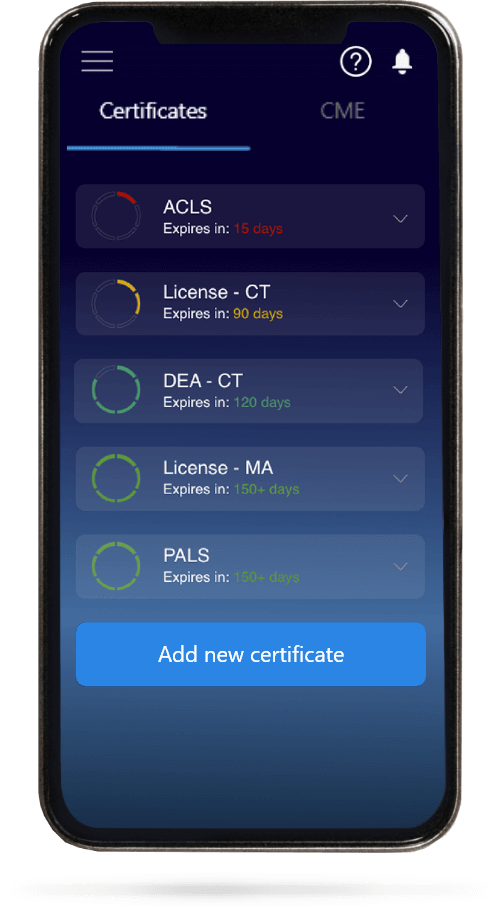
When you have your licenses, certificates and CMEs in one place, it's easier to track your career growth. You can easily share these with hospitals as well, using your medtigo app.