The Dark Side of Care: Assisted Dying, Lethal Drugs, and Suicide Risk Among Healthcare Professionals
April 10, 2026




Brand Name :
Ixiaro
Synonyms :
Japanese encephalitis virus vaccine
Class :
Vaccines, viral, Inactivated




Brand Name :
Ixiaro
Synonyms :
Japanese encephalitis virus vaccine
Class :
Vaccines, viral, Inactivated
Dosage forms and strengths
suspension (Intramuscular injection)
(0.5mL) syringe prefilled
The administration of vaccines is advised for adults who face an elevated risk of contracting the Japanese encephalitis virus (JEV) while traveling to Asia
It is recommended to undergo the entire primary immunization regimen at least one week before the possibility of being exposed to JEV
Age ≥66 years: 2 intramuscular doses, each measuring 0.5 mL, with a time gap of 28 days between each dose
Age 18-65 years: 2 doses of 0.5 mL are given with an interval of either 7 or 28 days between them
Booster dose
It is permissible to administer a single 5-mL booster dose (referred to as the third dose) after a minimum of 11 months have passed since the completion of the initial immunization regimen
Dosage forms and strengths
suspension Intramuscular injection
(0.5mL) syringe prefilled
The administration of the Japanese encephalitis virus (JEV) vaccine is advised for individuals, both adults and children aged ≥2 months, who are at a higher risk of contracting the virus while traveling to Asia
It is recommended to complete the entire vaccination process at least one week before the probable exposure to JEV
Primary series (immunization)
For Age (2 months - <3 years): Two doses of 0.25 mL each, given intramuscularly, with a time interval of 28 days between doses
For Age (≥3 years): Two intramuscular (IM) doses of 0.5 mL each are recommended with a 28-day interval
Booster dose
If there is continued exposure or re-exposure to JEV, it is recommended to administer a booster dose (third dose) no sooner than 11 months after the completion of the initial immunization series
Age (14 months to <3 years): Provide a single booster dose of 0.25 mL
Age (≥3 years): provide one booster dose of 0.5 ml
Refer adult dosing
Actions and Spectrum
Action:
Prevention of Infection: The vaccine stimulates the production of antibodies against the Japanese encephalitis virus. When an individual who has received a vaccination comes into contact with the virus, the antibodies present in their system can effectively neutralize the virus, thereby opposing its ability to invade and infect the cells of the body. This preventive action of the vaccine plays a crucial role in minimizing the transmission of the virus among the general population.
Reduction of Disease Severity: In cases where a vaccinated individual does become infected with the Japanese encephalitis virus, the vaccine can still provide benefits. Vaccinated individuals are likely to experience milder symptoms and a lower risk of developing severe complications compared to those who are unvaccinated. This reduction in disease severity is crucial, as Japanese encephalitis can be a severe and potentially life-threatening illness.
Spectrum
It primarily targets protection against Japanese encephalitis virus infection. The vaccine is specifically designed to provide immunity against the Japanese encephalitis virus serotype 3, which is the most common cause of the disease.
However, it also offers some cross-protection against other serotypes of the virus, providing a broader spectrum of coverage. It’s worth noting that the JEV vaccine is usually recommended for individuals living in or traveling to areas where Japanese encephalitis is endemic or where outbreaks have occurred.
Frequency defined
>10%
Infants 2 month to <1 year
Diarrhea (8.4-11.5%)
Irritability (8.4-15.3%)
Injection site redness (5.3-17.6%)
Fever, 99.9-101.5°F (12.2-17.6%)
Children 1 year to <3 years
Injection pain (6.7-15%)
Adolescents 12 years to <18 years
Fever, 99.9-101.5F (8.5-15.6%)
Adults ≥18 years
Influenzalike illness (12.3%)
Fatigue (11.3%)
Myalgia (15.6%)
Headache (27.9%)
1-10%
Infants 2 month to <1 year
Vomiting (3.8-7.6%)
Injection site swelling (1.5%)
Excessive fatigue (1.5-3.1%)
Fever, 101.6-102.7°F (1.5-6.1%)
Loss of appetite (5.3%)
Rash (3.8-8.4%)
Injection site tenderness (0.8-3.1%)
Children 1 year to <3 years
Vomiting (2.8-4.2%)
Injection site pain (3.6%)
Rash (1.3-4.2%)
Injection site redness (2.5-6.1%)
Fever, 101.6-102.7°F (2.5-3%)
Loss of appetite (2.5-5.6%)
Diarrhea (4.6-7%)
Children 3 years to <12 years
Flulike symptoms (0.3-1.4%)
Rash (1%)
Loss of appetite (1%)
Headache (1.4-3.8%)
Injection site pain or tenderness (1.7-5.5%)
Vomiting (0.7-1.7%)
Fever, 99.9-101.5°F (3.3-7.7%)
Adolescents 12 years to <18 years
Vomiting (1.3%)
Injection site tenderness (0.4-10%)
Nausea (2.1%)
Headache (3.4-4.6%)
Muscle pain (1.3-2.9%)
Fever, 99.9-101.5°F (3.3-3.8%)
Irritability (2.1%)
Flulike symptoms (1.3-3.3%)
Adults ≥18 years
Vomiting (1.4%)
Fever (3.2%)
Pharyngolaryngeal pain (1.6%)
URI (1.7%)
Diarrhea (1.5%)
Nasopharyngitis (4.7%)
Nausea (6.6%)
Rhinitis (1.4%)
<1%
Infants 2 month to <1 year
Fever, 102.8-104.9°F (0.8%)
Children 1 year to <3 years
Fever, >104.9°F (0.2%)
Black Box Warning:
None
Contraindication/Caution:
Allergy: If an individual has had a severe allergic reaction (anaphylaxis) to a previous dose of the Japanese encephalitis vaccine or any of its components, they should not receive the vaccine.
Hypersensitivity: Individuals who have a known hypersensitivity to any element of the Japanese encephalitis vaccine should not receive it. This includes allergies to any ingredient of the vaccine, such as proteins, preservatives, or stabilizers.
Severe illness: Vaccination should be postponed in individuals who are acutely ill with a moderate or severe fever. It is advisable to wait until the person recovers from the illness before administering the vaccine.
Pregnancy: It is generally advised against administering the Japanese encephalitis vaccine to pregnant individuals, unless the potential advantages outweigh the associated risks. In situations where traveling to an area where the disease is prevalent is unavoidable, it is crucial to consult with a healthcare professional who can carefully evaluate the risks and benefits before making a decision.
Immunosuppression: Individuals who are severely immunocompromised, such as those undergoing chemotherapy, radiation therapy, or taking immunosuppressive medications, may have a diminished immune response to the vaccine. In such cases, the vaccine may be less effective, and the decision to vaccinate should be made in consultation with a healthcare provider.
Pregnancy warnings:
Pregnancy category: AU TGA pregnancy category: B1
US FDA pregnancy category: B
Lactation: Excreted into human milk is unknown
Pregnancy Categories:
Category A: Studies that were well-controlled and met expectations revealed no risk to the fetus in either the first or second trimester.
Category B: There were a lack of studies on pregnant women and no evidence of risk to the fetus in animal experiments.
Category C: there was evidence of risk of adverse effects in animal reproduction studies, and no adequate evidence in human studies must take care of potential risks in pregnant women.
Category D: adequate data with sufficient evidence of human fetal risk from various platforms, but despite the potential risk, and used only in emergency cases for potential benefits.
Category X: Drugs listed in this category outweigh the risks over benefits. Hence these categories of drugs need to be avoided by pregnant women.
Category N: There is no data available for the drug under this category
Pharmacology:
The Japanese encephalitis virus (JEV) vaccine is a vaccine that provides protection against Japanese encephalitis, a viral disease caused by the Japanese encephalitis virus.
Pharmacodynamics:
Japanese encephalitis virus vaccine involve the activation of the immune system, leading to the production of specific antibodies and the generation of memory B and T cells. These immune responses provide protection against the Japanese encephalitis virus, reducing the risk and severity of infection if exposed to the actual virus.
Pharmacokinetics:
Absorption
Once injected, the vaccine is absorbed into the bloodstream. The vaccine contains inactivated JEV antigens, which trigger an immune response in the body.
Distribution
Once in the bloodstream, the JEV vaccine antigens are distributed throughout the body. The antigens interact with immune cells, particularly antigen-presenting cells such as dendritic cells, which play a crucial role in initiating an immune response.
Metabolism
As a vaccine, the JEV antigens are not metabolized in the same way as drugs. However, within the body, the antigens are recognized by the immune system, which initiates a complex series of metabolic processes.
Excretion and Elimination
The vaccine does not undergo traditional excretion from the body. once the immune response is initiated, the immune cells recognize and neutralize the JEV antigens. Antibodies are produced, and immunological memory is established to provide long-term protection against JEV infection.
Administration:
Schedule: The vaccine is typically given in a two-dose series, with the doses administered a few weeks apart. In some cases, a booster dose may be required based on individual risk factors and previous vaccination history.
Injection: The vaccine is given as an intramuscular injection, usually in the upper arm for adults and older children. for infants, it may be administered in the anterolateral 5thigh muscle.
Patient information leaflet
Generic Name: Japanese encephalitis virus vaccine
Why do we use Japanese encephalitis virus vaccine?
Preventing Japanese Encephalitis: The primary purpose of the Japanese encephalitis virus vaccine is to prevent the occurrence of Japanese encephalitis. This disease is caused by the Japanese encephalitis virus, which is transmitted through mosquito bites, particularly in rural and agricultural areas of Asia. Vaccination can significantly reduce the risk of acquiring this potentially life-threatening infection.
Protection for Travelers: The Japanese encephalitis vaccine is recommended for travelers who plan to visit or reside in areas where Japanese encephalitis is endemic or prevalent. This includes countries in East Asia, South Asia, and Southeast Asia, such as Japan, China, South Korea, India, Thailand, and Vietnam.
Military Personnel Deployments: Japanese encephalitis vaccination is often a requirement for military personnel, especially those deployed to regions where Japanese encephalitis is endemic. Vaccinating military personnel helps to protect them from the disease and ensures their readiness during deployments.
Outbreak Control Measures: In the event of an outbreak or increased transmission of Japanese encephalitis, vaccination campaigns may be conducted as part of public health measures.

Both our subscription plans include Free CME/CPD AMA PRA Category 1 credits.
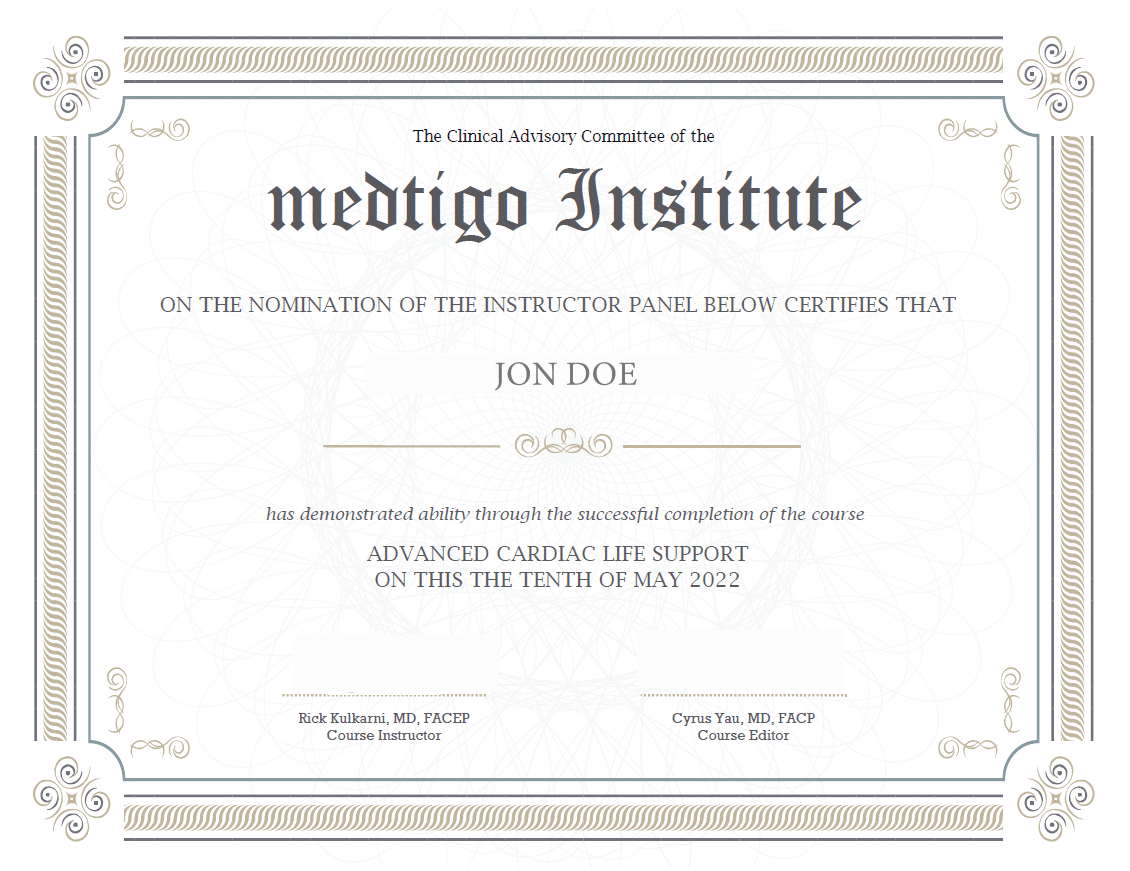
On course completion, you will receive a full-sized presentation quality digital certificate.
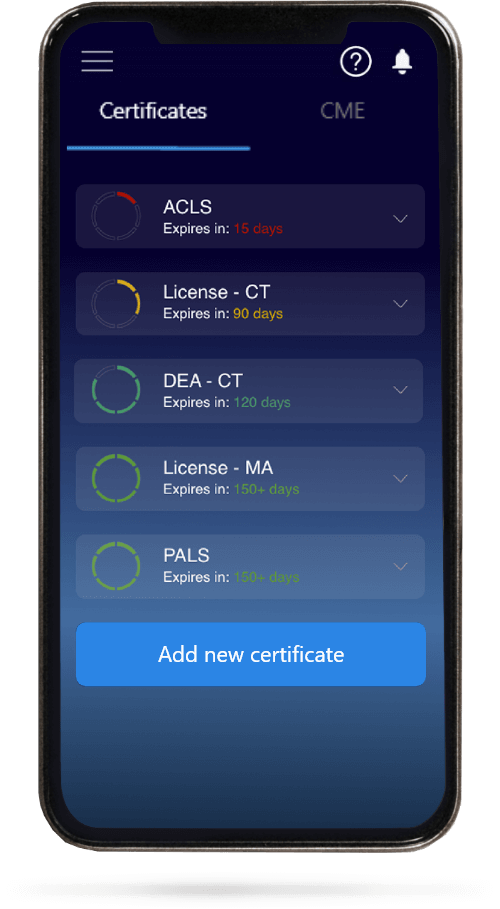
When you have your licenses, certificates and CMEs in one place, it's easier to track your career growth. You can easily share these with hospitals as well, using your medtigo app.