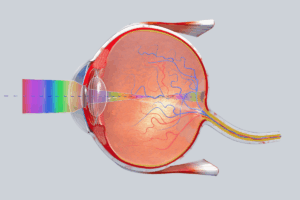
World’s First Human Implant of a 3D-Printed Cornea Restores Sight
December 15, 2025




Brand Name :
N/A
Synonyms :
Polihexanide, poly (hexamethylene biguanide), PHMB
Class :
Antiseptics& disinfectants, Antimicrobial agent, Dermatologicals




Brand Name :
N/A
Synonyms :
Polihexanide, poly (hexamethylene biguanide), PHMB
Class :
Antiseptics& disinfectants, Antimicrobial agent, Dermatologicals
Dosage Forms & Strengths
Acanthamoeba keratitis
It is indicated for the treatment of Neoplasm, Nail diseases, Dental plaque, and Skin diseases.
It is indicated for the treatment of neoplasm, nail diseases, dental plaque, and skin diseases
Dosage Forms & Strengths
Data not available
GERIATRIC DOSING
Refer to adult dosing
Actions and spectrum:
Polyhexanide acts against bacteria. First, it attaches to negative charges on bacterial cell walls. Then, potassium leaks out and cellular contents become disorganized. As a result, the cell membrane malfunctions. This damage leads to bacterial death.
Frequency not defined
Irritation
Pneumothorax
Myopia
Seizures because of lack of oxygen
Corneal staining
Conjunctival hyperemia
Black Box Warning
No special warning is available
Contraindication/Caution:
Contraindication:
Hypersensitivity
Hyaline cartilage
Pregnancy consideration:
Data about the use of polyhexanide in pregnancy is not available
Lactation:
Data about the use of polyhexanide in pregnancy is not available
Pregnancy category:
Category A: Studies that were well-controlled and met expectations revealed no risk to the fetus in either the first or second trimester.
<b>Category B: There were a lack of studies on pregnant women and no evidence of risk to the fetus in animal experiments.
Category C: there was evidence of risk of adverse effects in animal reproduction studies, and no adequate evidence in human studies must take care of potential risks in pregnant women.
Category D: adequate data with sufficient evidence of human fetal risk from various platforms, but despite the potential risk, and used only in emergency cases for potential benefits.
Category X: Drugs listed in this category outweigh the risks over benefits. Hence, these categories of drugs need to be avoided by pregnant women.
Category N: There is no data available for the drug under this category
Pharmacology:
Polyhexanide exhibits antimicrobial activity against many bacterial and fungal pathogens. Its broad spectrum allows it to work on diverse microorganisms.
Pharmacodynamics:
PHMB carries a positive charge. It binds to bacterial cell membranes. Both gram-positive and gram-negative bacteria have negatively charged spots on their cell membranes. These spots attract the positively charged disinfectant. The disinfectant attaches to these spots via electrostatic interactions. After attaching, it disrupts the membrane structure. This disruption causes the bacterial cell to burst open, leaking its internal contents and leading to cell death.
Pharmacokinetics:
Limited information is available.
Administration:
Limited data available
Patient information leaflet
Generic Name: polyhexanide
Why do we use polyhexanide?
It tackles dental cavities, skin issues, cancers, dental infections and beyond. Its strong germ-killing power targets bugs like E. coli, mold Aspergillus niger, drug-resistant enterococci bacteria, Klebsiella pneumoniae germs, plus others. It also works against Acanthamoeba keratitis, an eye infection.


Both our subscription plans include Free CME/CPD AMA PRA Category 1 credits.

On course completion, you will receive a full-sized presentation quality digital certificate.

When you have your licenses, certificates and CMEs in one place, it's easier to track your career growth. You can easily share these with hospitals as well, using your medtigo app.