


A Nation in Need: How International Medical Graduates are Reshaping US Healthcare
March 24, 2026




Brand Name :
Alyftrek
Synonyms :
vanzacaftor/tezacaftor/deutivacaftor
Class :
CFTR Correctors





Brand Name :
Alyftrek
Synonyms :
vanzacaftor/tezacaftor/deutivacaftor
Class :
CFTR Correctors
Adult Dosing
Dosage forms and strengths
Oral tablets
125 mg/50 mg/10 mg
deutivacaftor/tezacaftor/vanzacaftor
Cystic fibrosis
The suggested dose is 250 mg of deutivacaftor, 100 mg of tezacaftor and 20 mg of Vanzacaftor orally in a day
Strong CYP3A inhibitors
The suggested dose is 125 mg of deutivacaftor, 50 mg of tezacaftor and 10 mg of Vanzacaftor orally one time in a week
Moderate CYP3A inhibitors
The suggested dose is 125 mg of deutivacaftor, 50 mg of tezacaftor and 10 mg of Vanzacaftor orally taken on alternate days
The suggested dose is 250 mg of deutivacaftor, 100 mg of tezacaftor and 20 mg of Vanzacaftor orally in a day
Strong CYP3A inhibitors
The suggested dose is 125 mg of deutivacaftor, 50 mg of tezacaftor and 10 mg of Vanzacaftor orally one time in a week
Moderate CYP3A inhibitors
The suggested dose is 125 mg of deutivacaftor, 50 mg of tezacaftor and 10 mg of Vanzacaftor orally taken on alternate days
Dosage forms and strengths
Oral tablet
deutivacaftor/ tezacaftor/ vanzacaftor
50mg/20mg/4mg
125mg/50mg/10mg
Cystic fibrosis
For Age 6-12 years
For Weight ≥40 kg
The suggested dose is 250 mg of deutivacaftor, 100 mg of tezacaftor and 20 mg of vanzacaftor taken orally everyday
For weight <40 kg
The suggested dose is 150 mg of deutivacaftor, 60 mg of tezacaftor, and 12 mg of vanzacaftor taken orally everyday
For moderate CYP3A inhibitors:
In children aged 6-12 years who weigh less than 40 kg, administer deutivacaftor 100 mg/ tezacaftor 40 mg/ vanzacaftor 8 mg taken on alternate days
In children aged 6-12 years who weigh 40 kg or more
Administer deutivacaftor 125 mg/ tezacaftor 50 mg/ vanzacaftor 10 mg taken on alternate days
For individuals, regardless of weight, administer deutivacaftor 125 mg/tezacaftor 50 mg/ vanzacaftor 10 mg taken on alternate days
For strong CYP3A inhibitors:
In children aged 6-12 years who weigh less than 40 kg, administer deutivacaftor 100 mg/ tezacaftor 40 mg/ vanzacaftor 8 mg taken one time in a week through oral route
In children aged 6-12 years who weigh 40 kg or more, administer deutivacaftor 125 mg/ tezacaftor 50 mg/ vanzacaftor 10 mg taken one time in a week through oral route.
For individuals aged 12 years or older, administer deutivacaftor 125 mg/ tezacaftor 50 mg/ Vanzacaftor 10 mg taken one time in a week through oral route.
Action:
Vanazacaftor:
Acts as a CFTR corrector.
Helps improve the processing and trafficking of the defective CFTR protein to the cell surface.
Tezacaftor:
Also, a CFTR corrector.
Works synergistically with vanazacaftor to enhance the maturation and stability of CFTR protein at the cell membrane.
Deutivacaftor:
Functions as a CFTR potentiator.
Enhances the function of the CFTR protein once it reaches the cell surface, improving chloride ion transport.
Spectrum
Targets CFTR mutations associated with impaired protein processing, trafficking, and function.
Particularly effective for patients with at least one F508del mutation, the most common CFTR mutation, or certain other responsive mutations.
Broadens the treatment options for patients who may not benefit from other CFTR modulator therapies.
Frequency defined
>10%
Rash (8-11%)
Fatigue (11%)
Influenza (11%)
Oropharyngeal pain (14%)
Headache (16%)
Upper respiratory tract infection (21%)
Nasopharyngitis (21%)
Cough 25%
1-10%
Increased blood pressure (3.5%)
Increased CPK >5x ULN (7.9%)
Sinus congestion (7%)
AST increased (7%)
ALT increased (8%)
Black Box Warning
Alyftrek (vanzacaftor/tezacaftor/deutivacaftor) carries a boxed warning for drug-induced liver injury and liver failure. Elevated transaminases have been observed in patients treated with Alyftrek, and cases of serious and potentially fatal liver injury have been reported with similar medications. Liver injury has occurred within the first month of therapy and up to 15 months following initiation.
Contraindication/Caution
Contraindication:
Hypersensitivity
Severe Hepatic Impairment
Concomitant Use of Strong CYP3A Inducers
Cautions:
Elevations in Liver Enzymes (ALT/AST)
Increased Risk of Cataracts
Pregnancy/Lactation
Pregnancy warnings:
Pregnancy category: N/A
Lactation: Excreted into human milk is known
Pregnancy Categories:
Category A: Studies that were well-controlled and met expectations revealed no risk to the fetus in either the first or second trimester.
Category B: There were a lack of studies on pregnant women and no evidence of risk to the fetus in animal experiments.
Category C: there was evidence of risk of adverse effects in animal reproduction studies, and no adequate evidence in human studies must take care of potential risks in pregnant women.
Category D: adequate data with sufficient evidence of human fetal risk from various platforms, but despite the potential risk, and used only in emergency cases for potential benefits.
Category X: Drugs listed in this category outweigh the risks over benefits. Hence these categories of drugs need to be avoided by pregnant women.
Category N: There is no data available for the drug under this category.
Pharmacology
This combination therapy is used to treat cystic fibrosis (CF) by targeting the dysfunctional CFTR protein caused by specific genetic mutations. Each component plays a role in enhancing CFTR function.
Pharmacodynamics:
Vanzacaftor:
Acts as a CFTR potentiator, increasing the channel’s opening probability (gating) to enhance chloride ion transport.
Tezacaftor:
Functions as a CFTR corrector, improving the folding and trafficking of the F508del-CFTR protein to the cell surface.
Deutivacaftor:
Another CFTR potentiator, designed with deuterium substitution to enhance metabolic stability and prolong activity, further amplifying CFTR channel function.
Pharmacokinetics:
Absorption
The peak plasma time for the three drugs are as follows: vanzacaftor at 7.8 hours, tezacaftor at 1.6 hours, and deutivacaftor at 3.7 hours. The corresponding peak plasma concentrations are 0.812 mcg/mL for vanzacaftor, 6.77 mcg/mL for tezacaftor, and 2.33 mcg/mL for deutivacaftor.
Distribution
In terms of distribution, all three drugs are highly protein-bound, with vanzacaftor, tezacaftor, and deutivacaftor being greater than 99% protein-bound. Their volumes of distribution (Vd) are as follows: vanzacaftor with 121 L, tezacaftor with 73.1 L, and deutivacaftor with 159 L.
Metabolism
Vanzacaftor, tezacaftor, and deutivacaftor are primarily metabolized by the CYP3A4/5 enzymes. Among them, vanzacaftor has no active metabolites, while tezacaftor produces the active metabolite M1-TEZ, which has a potency like the parent compound. Deutivacaftor, on the other hand, generates M1-D-IVA, which has approximately 20% of the potency of the parent compound.
Excretion and Elimination
The half-life for vanzacaftor is 92.8 hours, for tezacaftor is 22.5 hours, and for deutivacaftor is 19.2 hours. In terms of clearance, vanzacaftor has a rate of 1.34 L/hr, tezacaftor 1.22 L/hr, and deutivacaftor 7.29 L/hr. Vanzacaftor is primarily excreted in the feces (91.6%), mostly as metabolites, with a small amount (0.5%) excreted in urine. Tezacaftor is also mainly excreted in the feces (72%), with a minor portion as the metabolite M2-TEZ (0.79% unchanged), and 13.7% is excreted in urine.
Administration
The administration route is oral.
The drug better taken with fat rich foods.
The drug is available in the form of tablets.
Always follow specific dosing instructions as per the prescribing information based on the patient’s age, weight, and condition. Regular monitoring is recommended during treatment.
Patient Information Leaflet
Generic Name: vanzacaftor/tezacaftor/deutivacaftor
Why do we use vanzacaftor/tezacaftor/deutivacaftor?
This combination therapy is used to improve lung function and reduce pulmonary exacerbations in patients with cystic fibrosis who have at least one F508del mutation in the CFTR gene or other specific CFTR mutations (depending on the product’s approval status and local guidelines).
It is specifically used for patients with homozygous (two copies of the F508del mutation) or heterozygous mutations (one copy of F508del and another CFTR mutation that is responsive to the therapy).
The therapy works by targeting and modulating the CFTR protein to improve its function, particularly for patients with class II mutations (such as F508del), which result in misfolded CFTR protein and defective chloride ion transport.

Both our subscription plans include Free CME/CPD AMA PRA Category 1 credits.
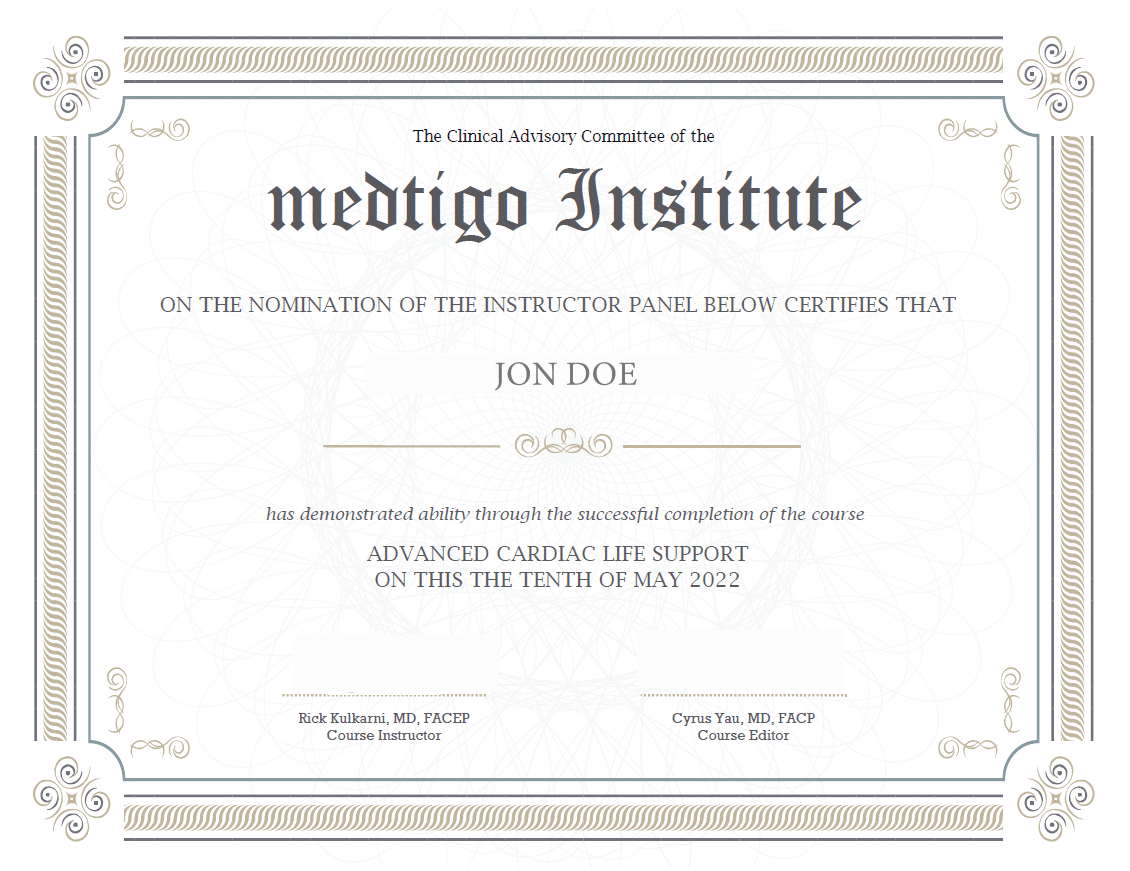
On course completion, you will receive a full-sized presentation quality digital certificate.

When you have your licenses, certificates and CMEs in one place, it's easier to track your career growth. You can easily share these with hospitals as well, using your medtigo app.


