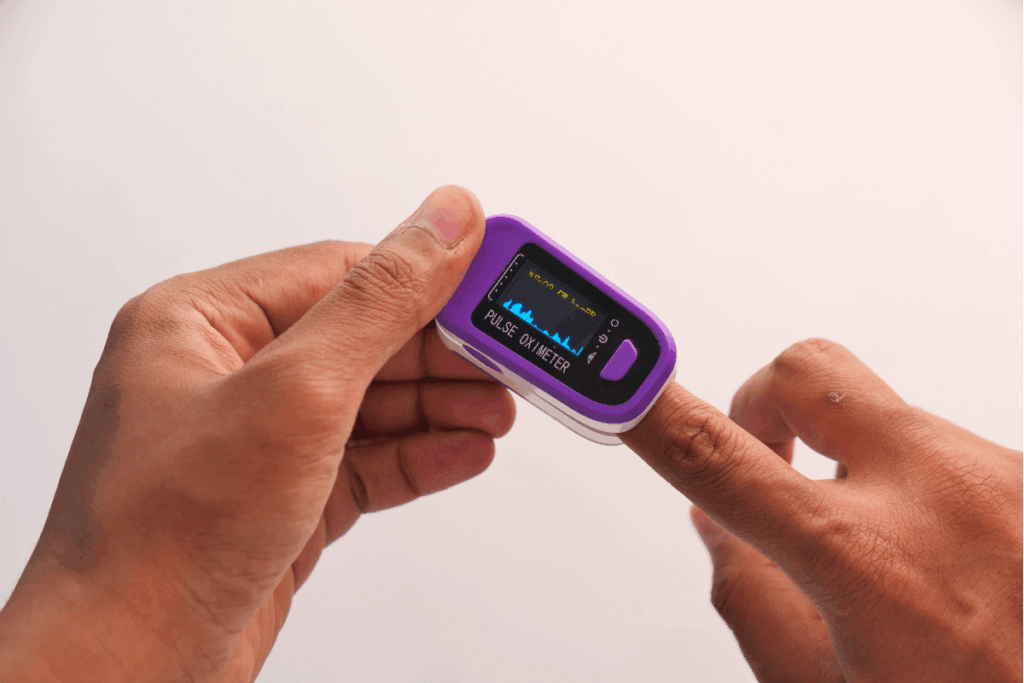
Pulse oximetry is a widely used and non-invasive method to estimate arterial oxygen saturation (SpO₂). It plays an important role in detecting hypoxaemia in hospital and community settings. Low-cost fingertip pulse oximeters were distributed for home monitoring by the NHS England COVID Oximetry @home scheme during the COVID-19 pandemic. Concerns emerged regarding the reading accuracy of these devices, specifically in people with darker skin tones, where SpO₂ may overestimate true arterial oxygen saturation (SaO₂). Such inaccuracies risk delayed recognition of hypoxaemia and late treatment. Earlier studies investigating skin tone effects are limited by small sample sizes, subjective skin tone classification, or the use of ethnicity as a proxy for skin pigmentation. The exploring pulse oximeter accuracy across skin tones (EXAKT) study was designed to address these limitations by using objective skin tone measurement and statistical methods in a large and prospective clinical cohort.
The aim of this EXAKT study was to assess the measurement and diagnostic accuracy of 5 low-cost fingertip pulse oximeters supplied for home use in the NHS England COVID Oximetry @home scheme and how skin tone, objectively measured by spectrophotometry, influences pulse oximeter bias, precision, overall accuracy, and ability to detect clinically relevant hypoxaemia.
EXAKT was a multicentre prospective observational study conducted between June 2022 and August 2024 in 24 NHS adult intensive care units in England. Adult patients (≥18 years) receiving mechanical ventilation and supplemental oxygen were recruited by intratest of the UK-ROX trial with weighted sampling to ensure over-representation of individuals with darker skin tones. 5 NHS supplied fingertip pulse oximeters were assessed. Paired and contemporaneous SpO₂ readings from up to 2 study pulse oximeters were collected immediately before routine arterial blood gas sampling, with SaO₂ measured by co-oximetry as the gold standard for each patient. Skin tone was objectively qualified by using a handheld spectrophotometer, which generates International Commission on Illumination L* and b* values that were combined in an individual typology angle (ITA), a continuous measure of skin tone.
Measurement accuracy was assessed by using bias, precision, and accuracy root mean square (ARMS). Diagnostic accuracy was evaluated by using false negative and false positive rates to detect SaO₂ ≤92% at SpO₂ thresholds of ≤92% and ≤94%, area under the receiver operating characteristic curve (AUC), and rates of occult hypoxaemia (SaO₂ below 88% with SpO₂ above 92%). Fractional probit and multilevel logistic regression models adjusted for pulse oximeter model, ITA, SaO₂, hemoglobin concentration, site, and repeated measures were used. The study was powered (above 90%) to detect a 1.5 percentage-point difference in bias in clinically relevant skin tone ranges.
Of the 903 patients, 902 were included in statistical analyses. Linked routine data were available for 94% of participants: the mean age was 56 years, and 63% were male. Ethnic representation involved 31% white, 31% Asian, 24% black, and 14% mixed or other groups. 5656 SaO₂ measurements were collected, which yielded 11,018 paired SpO₂ to SaO₂ observations. Median SaO₂ was 96% (IQR: 94 to 97%) with 16% of measurements ≤92%. Skin tones spanned the full ITA range with low within-patient measurement variability.
SpO₂ readings were consistently higher in patients with darker skin tones for any given SaO₂ in all 5 pulse oximeters. Median dark skin tone (ITA −44°) had SpO₂ values on average 0.6 to 1.5 percentage points higher than those of patients with median light skin tone (ITA 46°). For both SpO₂ thresholds (≤92% and ≤94%), false negative rates to detect SaO₂ ≤92% elevated monotonically with darker skin tone, while false positive rates decreased. For SpO₂ ≤94%, false negative rates were 5.3 to 35.3% points higher in patients with median dark as compared with median light skin tone (7.6 to 62.2% vs 1.2 to 26.9%, rate ratio 2.3 to 7.1). Discriminatory performance measured by AUC was reduced with darker skin tone. Rates of occult hypoxaemia increased in darker skin tones, although estimates were imprecise because of fewer observations at very low SaO₂.
The EXAKT study shows that low-cost fingertip pulse oximeters used for home monitoring systematically report higher SpO₂ values in individuals with darker skin tones. While the variations in measurement bias were small, they resulted in clinically significant increases in false negative rates and decreased identification of hypoxaemia. These findings emphasize the difficulties of depending entirely on ARMS for device assessment. Clinicians should interpret SpO₂ measurements cautiously, particularly in patients with darker skin tones. The findings have significant implications for clinical practice, regulatory standards, and future device testing, which highlight the need for stricter, skin tone-inclusive accuracy criteria and improved advice for both healthcare professionals and patients.
Reference: Martin DS, Doidge JC, Gould D, et al. The impact of skin tone on performance of pulse oximeters used by NHS England COVID Oximetry @home scheme: measurement and diagnostic accuracy study. BMJ. 2026;392:e085535. doi:10.1136/bmj-2025-085535