Over the past 50 years, cervical cancer incidence and mortality in the United States have declined significantly, largely due to the widespread adoption of screening beginning in the mid-twentieth century. Screening allows cervical precancers to be detected and treated early, with an estimated 200,000 U.S. women requiring treatment for precancerous lesions each year. Despite these improvements, gaps in screening compliance persist. Consequently, approximately 13,360 cases of invasive cervical cancer with 4,320 deaths are expected in 2025.
The American Cancer Society (ACS) and other professional organizations have revised their cervical cancer screening recommendations as knowledge of the disease has increased. Modern guidelines have been influenced by research on the natural history of cervical cancer, the established role of high-risk human papillomavirus (HPV) infection, and the development of more effective testing methods. Although cytology (the Papanicolaou test) has substantially reduced cervical cancer burden, HPV testing offers greater sensitivity and reassurance with a negative result. HPV testing can be performed alone or in combination with cytology, and primary HPV testing has become the preferred approach in most national and international guidelines.
HPV testing was initially recommended by the ACS in 2002 as a screening and proposed to be co-tested every three years, pending approval by the U.S Food and Drug Administration (FDA). In 2003, following FDA approval, the ACS endorsed three-year co-testing for women aged 30 and older. The update of the guideline in 2012 suggested a 5-year interval between co-tests. In 2020, the ACS recommended that primary HPV testing be done every 5 years starting at age 25. Self-collected vaginal specimens were not mentioned in the 2020 guideline, as they were not yet FDA-approved, though the authors of the guidelines noted that self-sampling could become increasingly important once regulatory and clinical standards are met.
The process of ACS guideline endorsement includes a review by the Guideline Development Group that consists of clinicians, methodologists, and general health experts. The ACS has a formal process to authorize the recommendations from external groups if sufficient evidence is available. To achieve this endorsement, four reviewers evaluated the methodology using the Appraisal of Guidelines for Research and Evaluation II tool (AGREE II) and found the recommendations on self-collected vaginal specimens to be well supported. Two recommendations related to self-collection were then reviewed and voted on by the Guideline Development Group.
Despite cervical cancer being largely preventable, alarming trends have emerged, with incidence increasing in some groups between 2013 and 2022. This tendency is facilitated by refusing to take part in screening from 2021 to 2023. The minority groups that are underserved, such as rural communities, minoritized racial and ethnic groups, and those with lower socioeconomic status, experience disproportionately higher incidence and mortality.
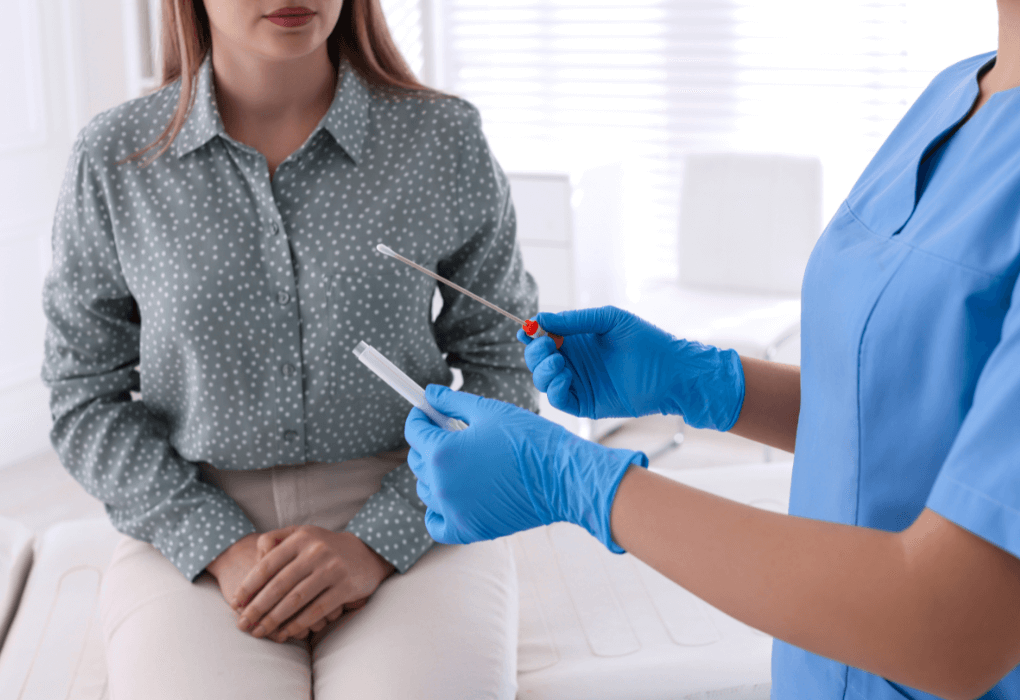
Self-sampling of HPV can be used to reduce screening disparities by eliminating barriers. A study in the US showed that it doubled uptake among under-screened populations. The present recommendations suggest retesting three years after a negative result. Nonetheless, cytology cannot be performed on self-collected samples; hence, a patient with HPV-positive status (10-15% of average-risk groups) needs a follow-up appointment. With a hypothetical positivity rate of 10%, approximately 50 % would require colposcopy and six months of follow-up; self-collection redistributes all HPV-positive cases to immediate follow-up.
While self-collection can raise the screening rates, it also raises the demand for clinical resources. Currently, most of the self-collection kits are designed to be used in clinical settings. The Teal Wand is the only FDA-approved home option that is available and offered via a specific telehealth service. The Self Collection, a trial of HPV testing to improve cervical cancer prevention, is expected to provide further evidence and is a trial that was carried out at 25 U.S. sites. This research is expected to establish the suitability of self-collected specimens compared with the accuracy of clinician-collected samples. Its findings are expected to inform future screening recommendations, assess real-world performance, and guide care coordination and follow-up practices.
Reference: Perkins RB, Wolf AMD, Church TR, et al. Self-collected vaginal specimens for human papillomavirus testing and guidance on screening exit: An update to the American Cancer Society cervical cancer screening guideline. CA Cancer J Clin. 2025;76(1):e70041. doi:10.3322/caac.70041