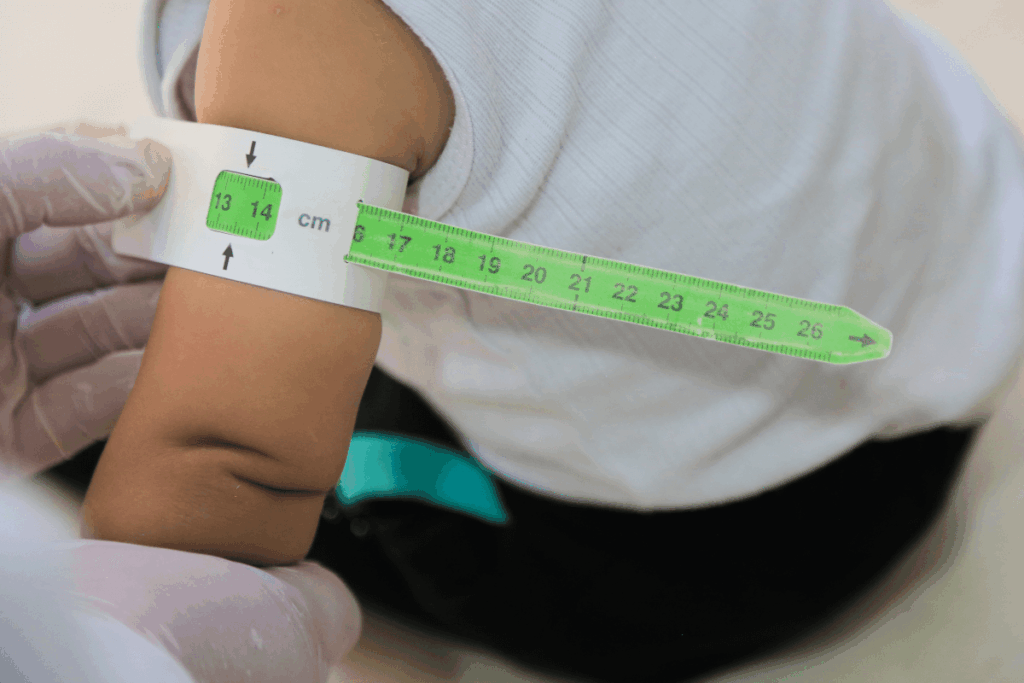
Child growth failure (CGF) occurs when children do not gain adequate weight or height. It is caused by various factors like socioeconomic, environmental, maternal, healthcare, and nutritional factors. CGF increases the risk of mortality and susceptibility to infectious diseases. It can also lead to long-term health problems related to metabolic and cognitive functions. Global progress has been made since 1990, but many countries are still not meeting child-health goals. Malnutrition remains a major cause of death in children under 5 years of age. Early detection and intervention are essential. Treatment becomes less effective as children grow older. A recent study published in The Lancet Child & Adolescent Health aimed to provide a comprehensive global estimate of CGF-related disease burden. This study reports the mortality and disability adjusted life years (DALYs) data across 204 countries between 1990 and 2023.
The burden of CGF was determined through 4 steps. First, researchers modelled population-level distributions of weight for age, weight for height, and height for age by >1700 data sources and a spatiotemporal Gaussian process regression (ST-GRP) model. Then, we built ensemble distribution models to generate continuous exposure curves. Second, they estimated continuous relative risk for cause-specific incidence and death reports for measles, lower respiratory infections, malaria, and diarrhea using Bayesian meta-regression, age-adjusted, and longitudinal data modelling. Third, the authors calculated population attributable fractions for each CGF indicator and combined all these factors into an overall CGF estimate. All estimates were year-, age-, geographic-, and sex-specific. Finally, in the fourth step, the authors applied these fractions to cause specific cases, DALYs, and mortality. All estimates follow GBD 2023 methods, including uncertainty intervals (UIs) and use publicly available data and code.
Results demonstrated that in 2023, children aged <5 years experienced a substantial disease burden due to CGF, resulting in an estimated 880,000 deaths with 95% UI of 517,000-1,170,000 and 79.4 million DALYs with 95% UI of 47.0-106. This denoted 18.8% (11·1-25) of 4.67 million (4.59-4.75) under-5-year deaths, and 17.9% (10.6-23.8) of the 444 million (434-457) total DALYs in this age group.
Among CGF components, childhood underweight contributed the greatest share with 573,000 deaths (236,000-824,000) and 52.2 million DALYs (21.9-75.1). The CGF-attributable fraction in under-5 deaths declined from 30.5% in 2000 to 18.8% in 2023, with a reduction of 2.1% per year. For all CGF-related causes, the decline was slower from 73.7% to 61.2% with a yearly reduction of only 0.9%. In comparison, stunting accounted for 373,000 deaths (272,000-477,000) and 33 million DALYs (24.1-42.2), whereas wasting was linked to 428,000 deaths (256,000-583,000) and 39.2 million DALYs (23.8-53).
In 2023, CGF contributed most to under-5 deaths in South Asia (165,000 [134,000 to 194,000]) and sub-Saharan Africa (618,000 [299,000 to 862,000]). DR Congo (50,800 [17,000 to 87,800]), Nigeria (188,000 [70,200 to 270,000]), and India (112,000 [88,300 to 131,000]) had the highest death counts. CGF was associated with major mortality risk due to measles (78,600 [30,700 to 150,000]), diarrhea (243,000 [146,000 to 360,000]), lower respiratory infections (362,000 [253,000 to 465,000]), and malaria (107,000 [71,300 to 341,000]). The attributable burden varied widely across regions but remained lowest in high-income countries.
This study had several limitations, such as data biases and gaps in countries with weak surveillance, uncertainty in the estimation of the CGF burden, limited evidence on COVID-19 impacts, and a focus on cross-sectional growth patterns due to its cross-sectional design. Finally, this study did not explain the correlation between gestational age, low birth weight, and growth indicators.
In conclusion, this study highlights that the global burden of CGF remains high, especially in sub-Saharan Africa and South Asia, where it contributes to increased mortality and infection risks. Despite progress, preventing low birthweight, preterm birth, and early growth faltering remains essential. These estimates help to identify priority indicators and guide targeted interventions to reduce the global burden of CGF.
Reference: Troeger CE, Arndt MB, Aalruz H, et al. Quantifying the fatal and non-fatal burden of disease associated with child growth failure, 2000–2023: a systematic analysis from the Global Burden of Disease Study 2023. Lancet Child Adolesc Health. 2026;10(1):22-38. doi:10.1016/S2352-4642(25)00303-7