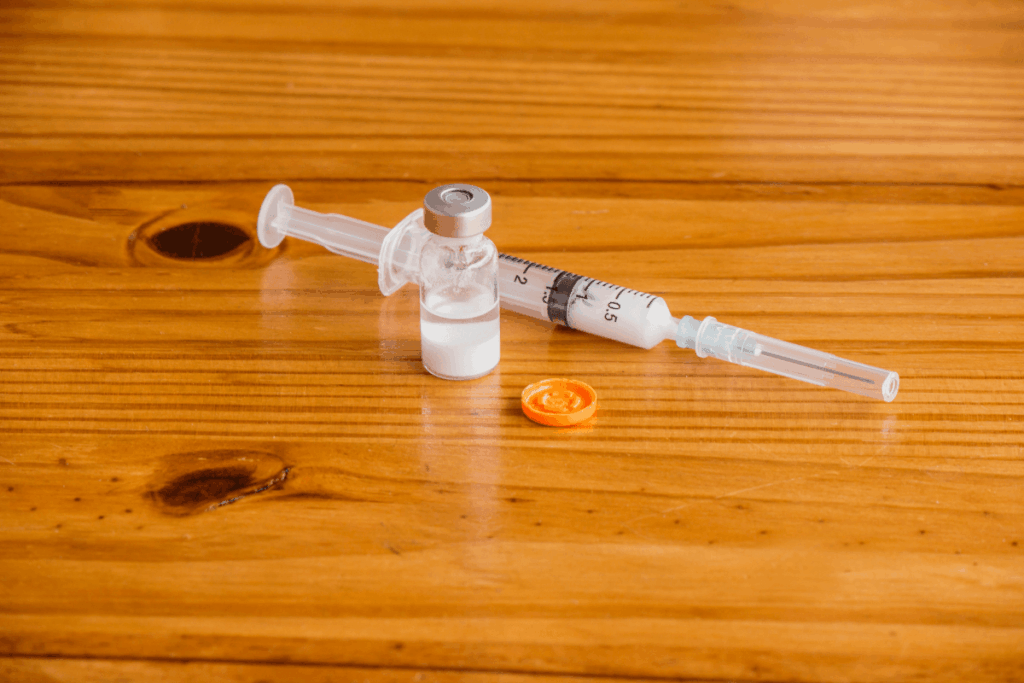
The U.S. Food and Drug Administration (FDA) has approved a label change for Pfizer’s Depo-Provera contraceptive injectable solution to warn patients regarding its potential risk of meningioma, which is a tumor that develops in the lining of the brain. This decision comes as Pfizer faces a lawsuit filed by >1,000 women who allege that the company knew about these risks but failed to provide adequate warnings to healthcare professionals and patients.
Depo-Provera contains medroxyprogesterone acetate (MPA), which is a synthetic progestin hormone. It is a long-acting contraceptive administered by injection every three months. The lawsuit cites studies dating back to 1983 that reported an association between meningioma and progesterone, arguing that these results created a responsibility for Pfizer to examine and disclose potential risks earlier.
Data from the Centers for Disease Control and Prevention (CDC) showed that around one in four sexually active women in the U.S. has used Depo-Provera. The usage rate of this medicine is particularly high among Black women, who receive the injection at nearly twice the national average. Meningiomas are usually benign and do not spread to other body parts. However, they can still cause serious health problems, which depend on their location and size. Overall, the risk remains relatively low. In the U.S., approximately 39,000 meningioma cases are diagnosed annually.
Pfizer asked a judge this year to dismiss the lawsuit. The company said that it became aware of the potential meningioma risk only in 2023. The company declared that it applied to the FDA in February 2024 to add a meningioma warning to the labels of Depo-Provera and two oral formulations containing much lower doses of MPA. The FDA rejected the request and concluded that the available observational clinical studies did not support adding a meningioma warning to all MPA-containing products.
Pfizer subsequently revised and resubmitted its application in June 2025. This time, the FDA approved a label update specifically for the injectable forms, such as Depo-Subq Provera 104 and Depo-Provera CI, allowing the addition of information related to the potential risk of meningioma. The FDA confirmed that the amendment permits this risk to be reflected on the label of the drug.
Pfizer said that the label change reflects a recent FDA decision and noted that the FDA had previously denied the approval of the label warning. The company emphasized that it stands behind the effectiveness and safety of Depo-Provera. The company also stated that the MPA-based remains an important option for the management of women’s reproductive health.
Lawyers for the women suing Pfizer welcomed the label update. They said that Pfizer had misled regulators, doctors, and patients for years. They also stated that a label change is an important step toward improving patient awareness and safety. Similar regulatory actions have already been taken internationally. In 2024, Health Canada and the European Medicines Agency (EMA) updated the labels of high-dose MPA products to include a warning of meningioma. South Africa issued a similar recommendation in early 2025. A U.S. judge has not yet ruled on the pending lawsuit against Pfizer.
Reference: Brooks A, Essamuah Z. FDA approves label change for Depo-Provera, adding brain tumor warning. NBC News. Published December 17, 2025. Accessed December 19, 2025. FDA approves label change for Depo-Provera, adding brain tumor warning