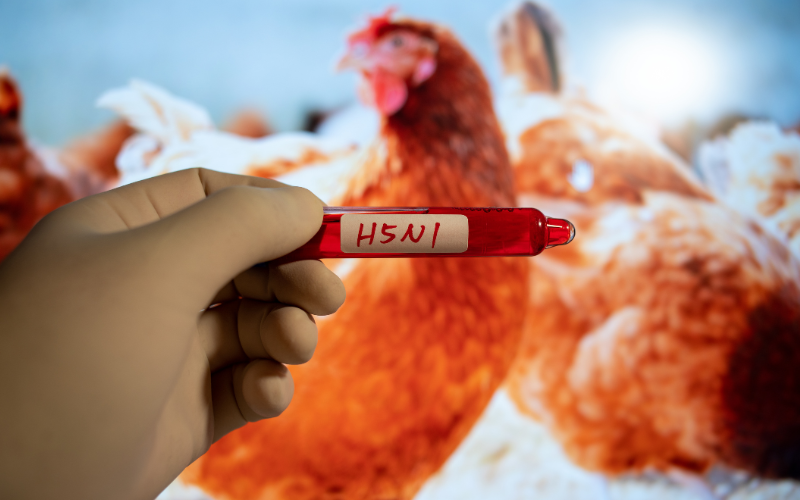
The U.S. Food and Drug Administration (FDA), in conjunction with state, local, and federal partners, has confirmed that specific lots of RAWR Raw Cat Food Chicken Eats are contaminated with the H5N1 Highly Pathogenic Avian Influenza (HPAI) virus. This confirmation follows the illness and euthanasia of a cat that consumed the product; testing indicated a strong match between the H5N1 strain identified in the cat and the contaminated cat food.
The FDA shared these findings with the public while still conducting its investigation. The lots identified are Lot CCS 25 077 (sell by: September 18, 2026) and Lot CCS 25 093 (sell by: October 3, 2026). The San Francisco Department of Public Health reported the first case after a cat consumed food from Lot CCS 25 093 and became ill (the cat was euthanized). Testing of an opened food sample provided by the pet owner detected H5N1, and confirmatory polymerase chain reaction (PCR) and whole genome sequencing performed by the USDA National Veterinary Services Laboratories conducted confirmatory polymerase chain reaction (PCR) and whole genome sequencing and concluded that the same strain of virus was present in the food sample and the diagnostic sample from the cat.
Further FDA testing of two retail samples from Lot CCS 25 077 also identified Influenza A Virus, and the sequencing identified one of the samples as H5N1. These results indicate that both lots were contaminated and likely traceable to a common source. The sequencing results indicated that both samples clustered together into the same lineage, genotype B3.13. This genotype has been linked to illness and death in cats and is suspected to be present in other raw poultry-based pet foods. Genotype B3.13 was circulating between November and December 2024, but is no longer detected, supporting the fact that the contaminated food was the likely source of infection.
H5N1 causes disease and death in birds and poultry, and it can infect mammals as well. This includes pets such as cats, panthers, mountain lions, and bobcats. Dogs have also been infected but generally experience mild illness and low mortality. To date, cases of HPAI in dogs in the United States have not been reported, though there have been fatal infections in other countries.
Very young, elderly, or immunocompromised pets are especially susceptible to H5N1 infection. Symptoms in cats and dogs may include tremors, seizures, inability to walk straight, or blindness, difficulty breathing, nasal or eye discharge, eye redness or inflammation, loss of appetite, lethargy, or fever. Owners of pets that notice any of these symptoms must consult the vet immediately.
Although no human cases have been linked to contaminated pet food, transmission is possible if the live virus comes into contact with the eyes, nose, or mouth. For this reason, the FDA recommends that pet owners wash their hands after handling pet food and disinfect any surfaces that come into contact with it.
The agency emphasizes caution when feeding raw animal-based products to pets, as they carry a risk of contamination. Although the current contamination appears to be limited to specific lots of RAWR Raw Cat Food Chicken Eats, this incident underscores the potential risks to both pets and humans. The FDA and its partners will continue to monitor the situation and provide updates as new information becomes available.
References: U.S. FDA. FDA Notifies Pet Owners That Tests Show H5N1 Contamination in Certain Lots of RAWR Raw Cat Food Chicken Eats. Published 3 Sept 2025. Accessed 4 Sept 2025. FDA Notifies Pet Owners That Tests Show H5N1 Contamination in Certain Lots of RAWR Raw Cat Food Chicken Eats | FDA