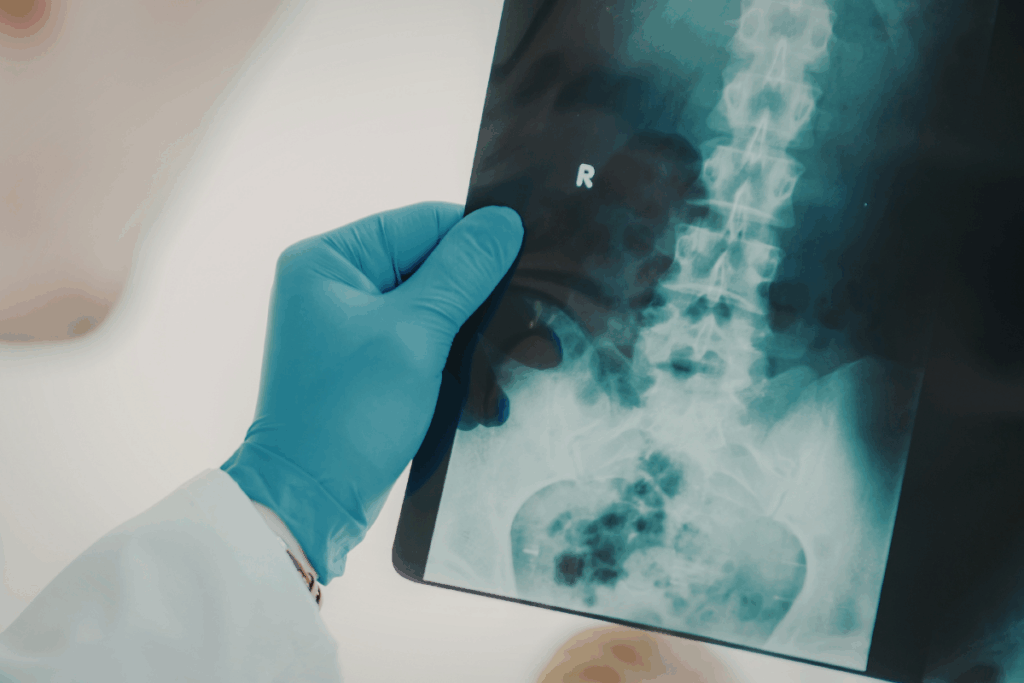
Researchers have found that a protein known for its role in the immune system also plays an important role in ensuring healthy bones. The study demonstrates that the protein under control of a complement-dependent immune system, named the collectin-11 (CL-11), regulates the development of osteoclast cells that break down bone during normal remodeling. Bone renewal is a continuous balance between the osteoblasts, which build bone, and the osteoclasts, which break down bone. When this balance is disrupted, skeletal issues may occur. The new study is evidence of the idea that this process is controlled with the help of CL-11, which ensures normal maintenance of the bones during the whole course of life.
The findings may also be useful in explaining skeletal defects observed in the 3MC syndrome, which is a rare developmental disorder that is related to mutations in CL-11 and related complement pathway proteins. Patients with the syndrome usually have craniofacial defects, cleft palate, growth difficulties, and multiple organ defects. In an attempt to understand the role CL-11 plays in bone health, scientists engineered genetically modified mice that do not contain CL-11 and other complement pathway factors. It was surprising to note that deletion of CL-11 alone did not cause skeletal abnormalities. Nevertheless, in the cases of CL-11 deficiency concomitant with deletion of complement proteins like MASP-2, complement factor B, or C3, severe spinal defects developed. At 12 weeks of age, 23–28% of mice lacking both CL-11 and another complement factor acquired spinal curvature, such as kyphosis or scoliosis. In contrast, none of the wild-type mice or mice with one gene deleted exhibited these deformities, 0 to 1% respectively.
Radiological and histological examinations showed that there was severe vertebral bone damage. Micro-computed tomography revealed a large number of structural lesions in the vertebrae, especially around the lumbar and thoracic regions of the spine. There were vertebrae with little holes, as well as those with general structural disintegration. Additional tissue examination showed significant bone loss within the vertebral bodies. Marrow adiposity and degeneration of intervertebral discs were also observed in the damaged bones. Although these bones had abnormalities, the other major organs, like the liver, heart, kidney, and pituitary, were normal, implying that the abnormality was more localized in the maintenance processes of bones. The researchers studied embryonic tissues in order to identify the time when the problem developed. Although CL-11 and complement protein expression were common in embryonic bone formation, the embryos that were free of CL-11 and C3 were found to be normal skeletally at birth. This suggests that the defects are later on because of issues with bone remodeling as opposed to early development.
The group then researched the osteoclast development in bone marrow-derived cells. Normal mouse cells efficiently formed large and multinucleated osteoclasts. Nevertheless, the major decrease in osteoclast formation was observed in cells of mice without CL-11 and complement. Supplementing the cell cultures with recombinant CL-11 restored the osteoclast development to some extent. The mean number of nuclei per osteoclast in treated cells lacking CL-11 and C3 was 12.6, which is still less than 16 found in wild-type cells but higher than in untreated cells of 6.6. The researchers also confirmed this mechanism in human cells. They produced human osteoclast precursors with no CL-11 using induced pluripotent stem cells. The osteoclast differentiation in these cells was significantly affected, and the defect was again partially corrected by the addition of recombinant CL-11.
Altogether, the research shows that the combination of CL-11 and complement activation works together to regulate osteoclast differentiation and bone resorption. Inhibition of this pathway may result in a gradual degradation of the bones, especially the spine. The results indicate that CL-11-dependent complement signaling could represent a novel therapeutic target for conditions such as osteoporosis, renal bone disease, and erosive osteoarthritis with a pathophysiology that involves abnormal osteoclast activity. If confirmed in further studies, targeting this immune-bone interaction may open new avenues for treating skeletal disorders linked to disrupted bone remodeling.
Reference: Howard MC, Farrar CA, Nauser CL, et al. Collectin-11 regulates osteoclastogenesis and bone maintenance via a complement-dependent mechanism. Proc Natl Acad Sci U S A. 2026;123:e2511950123. doi:10.1073/pnas.2511950123