Ageing is associated with progressive decline in immune function, leading to increased susceptibility to infections, reduced vaccine efficacy, and diminished responses to cancer immunotherapy. This immune deterioration arises from a reduced capacity to generate new immune cells and the gradual accumulation of dysfunctional and exhausted immune cell states. Thymic involution, which starts early in childhood and accelerates with age, causes a decrease in the production of naïve T cells, reduced T cell receptor diversity, and impaired primary immune responses.
Consequently, older people show a skewing of the T cell compartment toward the memory and exhaustion-like phenotypes, such as PD1^high^ CD62L⁻ cells, which respond poorly to novel antigens. Although various interventions have been explored to counter immune ageing, including cytokine supplementation, hormonal manipulation, thymic rejuvenation, and hematopoietic stem cell modulation, these methods have been limited by modest efficacy, systemic toxicity, or lack of clinical feasibility.
The aim of this study was to develop a scalable, safe, and transient method to restore age-associated immune signalling deficits and enhance immune competence by repurposing the liver as an ectopic platform to produce key immune-supportive factors normally supplied by the thymus. The researchers thought that restoring multiple trophic signals simultaneously, instead of administering individual cytokines, would more effectively rejuvenate immune function while avoiding excessive inflammation.
To detect candidate factors, this study used longitudinal single-cell RNA sequencing. T cell receptor sequencing and spatial transcriptomic analyses across the mouse lifespan. These analyses showed a marked age-associated loss of naïve and stem-like T cell populations, expansion of memory and exhaustion-like states, and a decline in Notch, interleukin-7 (IL-7), and FMS-like tyrosine kinase three ligand (FLT3-L) signalling in both thymic and peripheral T cells. Based on these findings, the researchers selected a combination of the Notch ligand DLL1 with IL-7 and FLT3-L (DFI) to restore critical immune-supportive functions.
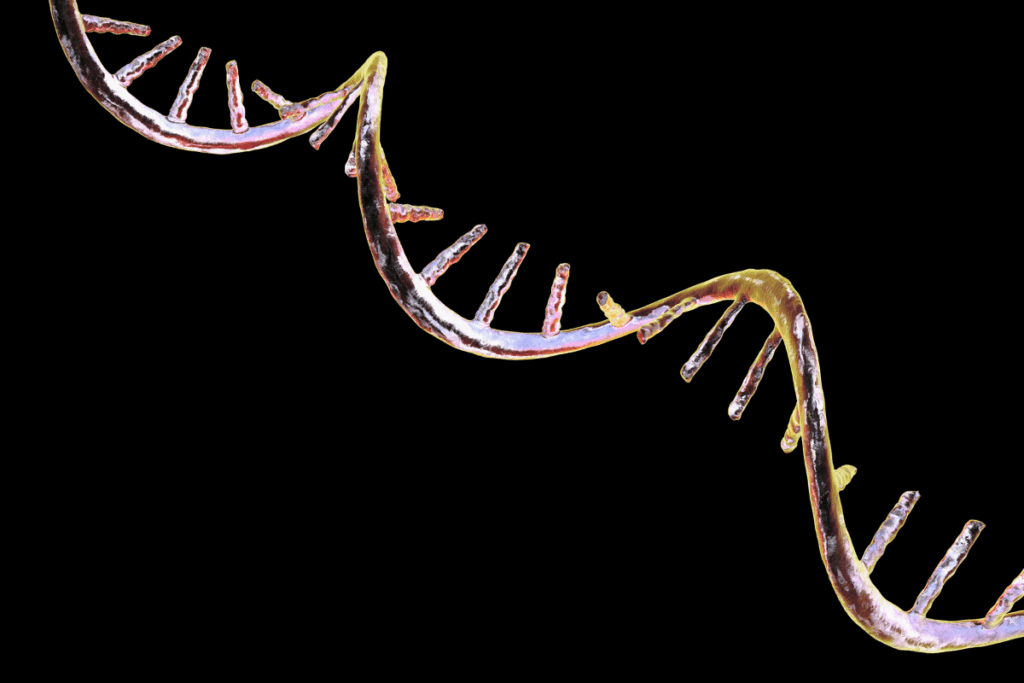
The study used lipid nanoparticle-encapsulated mRNA, which enabled transient and controlled protein expression mainly in hepatocytes after systemic administration. This method bypassed the structural limitation of the involuted thymus and avoided the high peak cytokine levels and inflammation toxicity commonly associated with recombinant protein therapies. Extensive in vivo profiling confirmed that mRNA delivery led to localised hepatic expression of DLL1 and sustained secretion of biologically active IL-7 and FLT3-L with minimal off-target expression and no detectable liver toxicity. Aged mice were treated repeatedly with DFI mRNA-LNPs and compared with control or single-factor treatments to evaluate immune composition, safety, and function.
The results showed that DFI treatment significantly mitigated many hallmarks of immune ageing. DFI increased thymic cellularity, expanded early thymocyte progenitors, and increased levels of recent thymic emigrants, which indicate enhanced thymopoiesis despite persistent thymic involution in aged mice. Circulating naïve CD4⁺ and CD8⁺ T cell numbers were elevated without evidence of excessive clonal expansion, which suggests that restored thymic output, instead of peripheral homeostatic proliferation, drives these changes. DFI also expanded common lymphoid progenitors in the bone marrow and elevated thymus-homing CCR9⁺ progenitors in the circulation, which supports improved lymphoid supply to the thymus. Furthermore, DFI improved immune system balance by expanding conventional type 1 dendritic cells, improving their spatial organisation and co-stimulatory capacity in the spleen, and decreasing age-associated B cell populations while promoting follicular B cell phenotypes.
Functionally, DFI treatment enhanced immune responses in aged mice by restoring CD8⁺ T cell expansion, enhancing cytokine production, and reducing exhausted T cell accumulation compared with untreated controls. It preserved naïve T cell counts post-vaccination and increased tumour control in cancer models by boosting antitumor immunity and working synergistically with PD-L1 blockade to improve survival. The mechanisms included increased CD8⁺ T cell infiltration into tumours and reduced exhaustion markers. Importantly, DFI treatment was well tolerated with no evidence of systemic inflammation or tissue damage. The immune enhancements were transient and returned to baseline after cessation of treatment, which indicated controlled and reversible immune modulation.
In summary, this study demonstrates that transiently repurposing the liver to express immune-supportive factors through mRNA delivery can safely and effectively rejuvenate immune function in aged organisms. This approach offers a potentially clinically viable way to enhance vaccine efficacy and cancer immunotherapy in older populations by simultaneously restoring multiple age-diminished immune signals while avoiding the limitations of recombinant cytokine therapies. Moreover, this study emphasises liver-directed mRNA delivery as a broadly applicable strategy for mitigating systemic dysfunction associated with ageing and re-establishing physiological signalling across multiple biological systems.
Reference: Friedrich MJ, Pham J, Tian J, et al. Transient hepatic reconstitution of trophic factors enhances aged immunity. Nature. 2025. doi:10.1038/s41586-025-09873-4