Bacillus anthracis is a spore-forming bacterium in the Bacillus cereus group that causes anthrax, a severe infection. The group also includes B. cereus and the newly identified bacterium B. tropicus. Virulence is primarily driven by anthrax toxin and a protective capsule, encoded on plasmids pXO1 and pXO2. Humans can be infected through skin contact, ingestion, or inhalation of spores. Inhalation anthrax is particularly deadly, with fatality rates around 55% with treatment and nearly 100% if untreated.
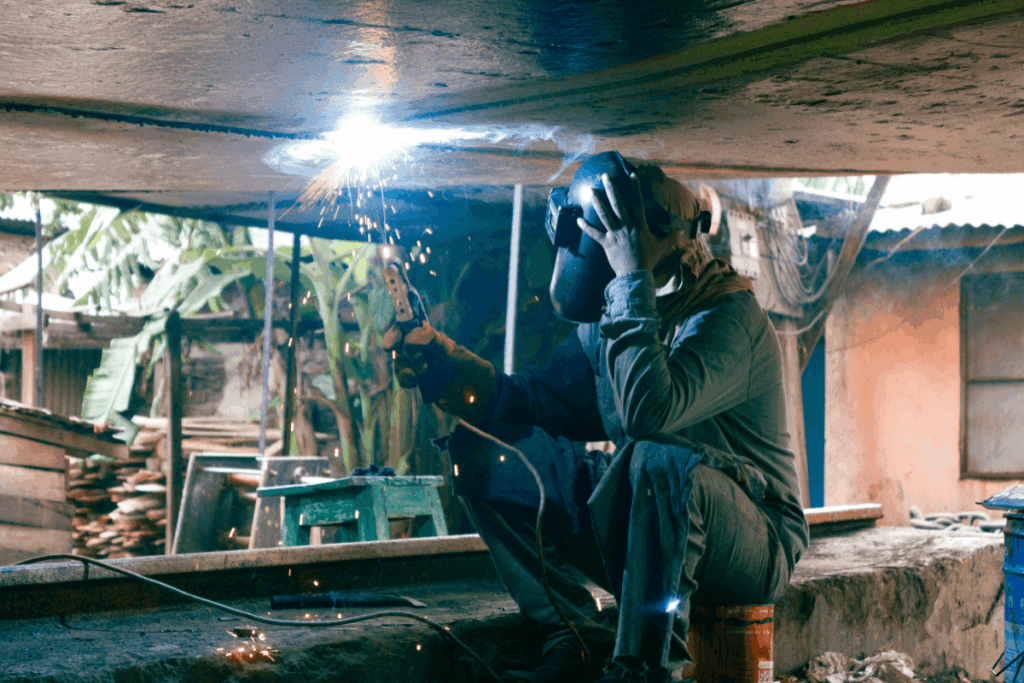
CDC guidelines recommend multidrug antimicrobial treatment for systemic anthrax, which is usually used combined with antitoxin treatment. B. cereus group strains carrying plasmid homologous to pXO1, such as B. tropicus, can cause anthrax-like disease. Since 1994, eight severe cases of pneumonia, six of which were fatal cases, were reported among metalworkers in Louisiana and Texas, with 70% identified as welders; these are collectively referred to as “welder anthrax.”
On September 7, 2024, the Louisiana Department of Health (LDH) and CDC were notified of an 18-year-old healthy male in Louisiana admitted to an intensive care unit (ICU) with severe pneumonia and respiratory failure, requiring intubation and mechanical ventilation. The patient had been a part-time welder for six months, with no history of smoking, vaping, or excessive alcohol consumption. Blood cultures identified B. cereus group bacteria, and anthrax-like illness was suspected due to his occupation, location, and clinical presentation.
The patient was started on empiric therapy with vancomycin, meropenem, ciprofloxacin, and doxycycline. Obiltoxaximab, a monoclonal antibody anthrax antitoxin, was provided by CDC and administered 34 hours after the suspicion of the illness, about one week after the symptom onset. The patient’s condition improved rapidly, with extubation and discontinuation of mechanical ventilation 72 hours later. At the 3-month follow-up, he remained free of pulmonary symptoms.
The presence of an anthrax toxin gene was confirmed by laboratory testing in blood isolates. The whole genome sequencing identified the pathogen as Bacillus tropicus (sequence type 78), highly similar to previous cases in Louisiana. The 245 samples that were collected during the environmental investigation from the patient’s worksite included soil, surfaces, and tools. Among these 28 samples (11.4%) were positive for anthrax toxic genes by PCR, including soil, handrails, tables, and work gloves. One soil isolate was viable in culture and matched with the clinical isolate genetically with 99.998% average nucleotide identity.
The patient worked four hours a day, four days a week, performing shielded metal arc welding in poorly ventilated areas with minimal personal protective equipment (PPE). Interviews indicated inconsistent respirator use and occasional eating in work areas, highlighting occupational exposure risks.
The CDC and LDH recommended the use of engineering and administrative controls to reduce dust and soil exposure. Rapid identification and management, including antitoxin administration, likely contributed to the patient’s recovery. Among nine reported cases of anthrax in welders, only three survived; two of them had received antitoxin.
Previous studies reveal that welding fumes can impair respiratory immune defenses, increasing susceptibility to infection even in healthy individuals. This case represents the first clinical use of obiltoxaximab in anthrax-like disease, emphasizing the significance of occupational health measures, early disease detection, and prompt antitoxin therapy to prevent fatalities among welders in the southwestern United States.
Reference: Thompson JM, Lundstrom EW, Hein LD, et al. Welder’s Anthrax Treated with Obiltoxaximab — Louisiana, 2024. MMWR Morb Mortal Wkly Rep. 2026;74(42):641–647. doi:10.15585/mmwr.mm7442a1