Semaglutide (SEM) is a glucagon-like peptide-1 (GLP-1) receptor agonist used to treat type 2 diabetes and obesity, promoting weight loss by increasing insulin secretion and appetite suppression. It is initially given by injection because of its poor gastrointestinal (GI) absorption. SEM is also available orally with salcaprozate sodium (SNAC), an absorption enhancer. Although this formulation improves patient adherence, it has been associated with increased GI adverse effects. While SNAC is deemed safe, growing concerns about its potential effects on the gut microbiota and epithelial integrity highlight the need to evaluate the effects of SEM and SNAC on gut health and physiology.
The study published in ScienceDirect aimed to investigate the effects of chronic oral exposure to SEM, SNAC, and their combination (SEM-SNAC) on gut microbiota composition, predicted microbial functional capacity, short-chain fatty acid (SCFA) production, inflammatory markers, neurotrophic markers, and organ weights in healthy rats. The primary objective was to characterize treatment-associated microbial and host changes instead of establishing causality.
Male Sprague-Dawley rats (4 weeks old, n = 6 per group) were randomized to receive daily oral gavage for 21 days with SEM (0.74 mg/kg/day), SNAC (22 mg/kg/day), SEM-SNAC (1:33 w/w, SEM equivalent 0.74 mg/kg/day), or phosphate-buffered saline (PBS) as a control. Dosages were selected using FDA body surface area scaling to approximate human therapeutic exposure (human equivalent dose of SEM ~ 8.4 mg/day). Body weight was recorded daily. Fecal samples were collected at baseline and Day 21 for 16S rRNA sequencing to assess α-diversity (Shannon, Chao1, Simpson indices) and β-diversity (Bray-Curtis; PERMANOVA). Predictive functional profiling was performed using ICRUSt2. Fecal SCFAs (acetate, propionate, butyrate) were quantified by gas chromatography-mass spectrometry (GC-MS). Plasma Interleukin-6 (IL-6), tumor necrosis factor-alpha (TNF-α), and brain-derived neurotrophic factor (BDNF) were measured by enzyme-linked immunosorbent assay (ELISA). Liver and caecum weights were recorded at sacrifice. Statistical analyses included one-way ANOVA or Kruskal-Wallis test with appropriate post hoc comparisons and Spearman correlation analysis (n = 18 pooled). Statistical significance was defined as p ≤ 0.05.
All treatments significantly reduced cumulative weight gain as compared to controls over 21 days. Area-under-curve analysis showed reductions of −7.8% for SEM (p < 0.0001), −4.9% for SNAC (p < 0.0001), and −7.3% for SEM–SNAC (p < 0.0001). SEM reduced weight gain more effectively than SNAC (p = 0.0257). No significant changes were observed in fasting glucose, high-density lipoprotein (HDL), or triglycerides.
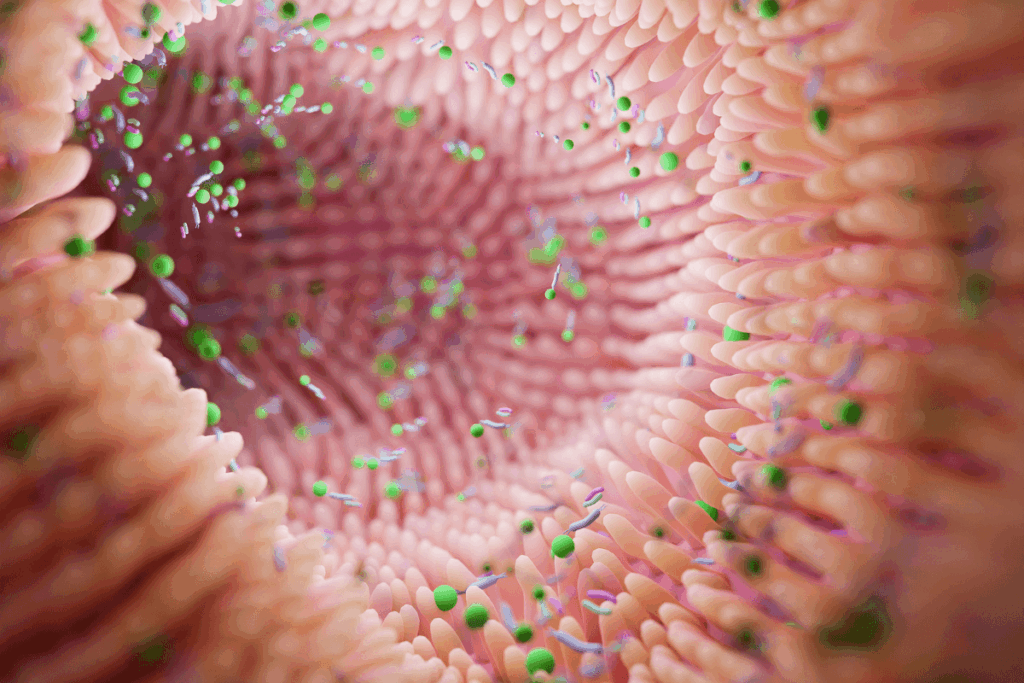
Microbial α-diversity did not differ significantly between groups. However, β-diversity analysis revealed significant compositional shifts in SNAC-treated rats (PERMANOVA, p < 0.05). Taxonomic analysis showed selective depletion of primary fermenters. SEM reduced Muribaculaceae (−53%, p = 3.79 × 10⁻³) and Bacteroidaceae (−60%, p = 0.033). SNAC produced greater reductions in Muribaculaceae (−62%, p = 1.12 × 10⁻³) and Bacteroidaceae (−77%, p = 2.73 × 10⁻³), alongside a 7-fold increase in Desulfovibrionaceae (p = 0.039). The SEM-SNAC group showed intermediate reductions.
Functional prediction analysis indicated suppression of carbohydrate-metabolizing enzymes across treatments, including significant reductions in α-amylase (p = 7.68 × 10⁻⁵), 6-phospho-β-galactosidase (p = 6.24 × 10⁻⁴), and mannan endo-1,4-β-mannosidase (p = 8.66 × 10⁻⁴). SEM and SEM-SNAC showed moderate but significant pathway reductions. SCFA analysis revealed a significant reduction in fecal butyrate in SNAC (−77%, p = 0.010) and SEM-SNAC (−75%, p = 0.018) groups, consistent with depletion of fermentative taxa. Inflammatory markers showed elevated TNF-α in SNAC-treated rats (+70%, p = 0.0009) and increased IL-6 in SEM-SNAC animals (+25%, p = 0.0027). Plasma BDNF was significantly reduced in SEM-SNAC animals (−85%, p = 0.0014). SNAC significantly increased normalized liver weight (+12.9%, p = 0.029) and reduced caecum weight (−30.1%, p = 0.0065). Spearman correlation analysis revealed that Muribaculaceae and Bacteroidaceae were positively correlated with total SCFA levels and negatively correlated with TNF-α (p < 0.05).
Chronic SNAC exposure in healthy rats was linked to significant alterations in the gut microbiota composition, reduced predicted saccharolytic capacity, marked depletion of fecal butyrate, elevated inflammatory cytokines, reduced BDNF, increased liver weight, and decreased caecum weight. In contrast, SEM alone primarily reduced weight gain without inducing significant inflammatory or structural changes. These findings suggest that SNAC, an excipient used to enable oral SEM delivery, may influence microbial fermentation and gut-liver axis physiology during repeated exposure. These results highlight the importance of evaluating long-term microbiome and inflammatory effects of absorption enhancers when co-administered with active pharmaceutical agents, specifically given the chronic clinical use of oral GLP-1 receptor agonist therapy.
Reference: Ariaee A, Noueihad K, Hunter A, et al. Gut microbiota perturbation and systemic inflammation are associated with salcaprozate sodium (SNAC) enabled oral semaglutide delivery. J Control Release. 2026;392:114711. doi:10.1016/j.jconrel.2026.114711