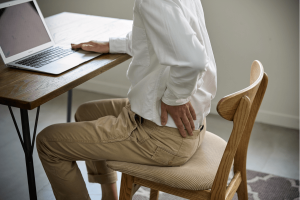
Low back pain (LBP) is a very common health problem and causes disability and lost productivity. It often comes and goes with sudden flares. Physical activity can both worsen and improve LBP. People often feel that bending or lifting triggers pain. However, long-term studies have reported that physical exercise helps in the treatment and prevention of LBP. These mixed views may relate to short-term risks versus long-term benefits. An activity may cause brief pain but still helps over time. This pattern is like the risk of myocardial infarction and vigorous exercise. A recent study published in JAMA Network Open aimed to assess transient short-term risks of activities and their cumulative long-term effects on LBP.
In this prospective, longitudinal case-crossover, cohort study, a total of 416 patients with LBP (mean age = 47.5 ± 10.9 years, female = 25%, male = 75%) were recruited from the Veterans Affairs Puget Sound Healthcare System (VAPSHCS) between March 2021 and September 2023. Patients completed a total of 9757 surveys during the follow-up period of one year. The first aim used a case-crossover design (n = 345, mean age = 47.5 ± 10.8 years, female = 27%, male = 73%) to compare the short-term activity exposures with self-reported flares. Participants completed scheduled surveys (median survey = 24) and flare surveys (median = 2), each asking about physical activities in the past 24 hours. The second aim used a cohort design (n = 71, mean age = 47.7 ± 11.5 years, female = 18%, male = 82%) to evaluate how average physical activity levels in the first 8 weeks influence disability in one year. Primary outcomes were flare occurrence in the first aim and functional limitations in the second aim. Statistical analyses were performed using logistic and linear regression analyses by using R version 4.5.0.
Patients in the crossover analysis had lower disability Roland-Morris disability questionnaire (RMDQ) scores (11.8 vs 14.1), lower pain (4.3 vs 5.1), and fewer daily LBP reports (49% vs 62%) compared to the cohort analysis. Overall, 76% (n = 314) completed the one-year RMDQ outcome analysis, and the mean number of yearly flares was 8.6.
Adjusted analyses demonstrated that each additional hour spent bending (odds ratio [OR] = 1.06; 95% confidence interval [CI], 1.03-1.08), pulling or pushing (OR = 1.06; 95% CI, 1.03-1.09), squatting (OR, 1.05; 95% CI, 1.03-1.08), and twisting (OR, 1.06; 95% CI 1.03-1.08) significantly increased the risk of a flare whereas sitting reduced flare risk (OR, 0.96; 95% CI, 0.94-0.98). Mean hours before flares aligned with these findings (lifting 2.43 vs 1.99 hours). Crawling (OR, 1.03; 95% CI, 0.96-1.09), walking (OR, 1.00; 95% CI, 0.97-1.03), standing (OR, 1.01; 95% CI, 0.99-1.04), and climbing (OR, 1.00; 95% CI, 0.98-1.03) were not significantly associated with flares. Results were similar across sensitivity analyses. Non-linear regression analysis showed the greatest flare risk when comparing one vs. zero hours of activity. In contrast, none of the 10 activities during the first 8 weeks were linked to functional limitations at one year after adjustment, consistent across all secondary analyses.
This study’s limitations include self-reported physical activity and pain, which may introduce bias. This bias may affect transient risk findings more than long-term associations. Results may not generalize beyond this population.
In conclusion, this study highlighted that some activities briefly enhanced the risk of LBP flares, but none were linked to worse functional outcomes at one year. Overall, adults with LBP can perform these activities, as they do not appear to cause prolonged harm.
Reference: Suri P, Timmons AKI, Korpak AM, et al. Transient and Long-Term Risks of Common Physical Activities in People with Low Back Pain. JAMA Netw Open. 2025;8(12):e2547915. doi:10.1001/jamanetworkopen.2025.47915