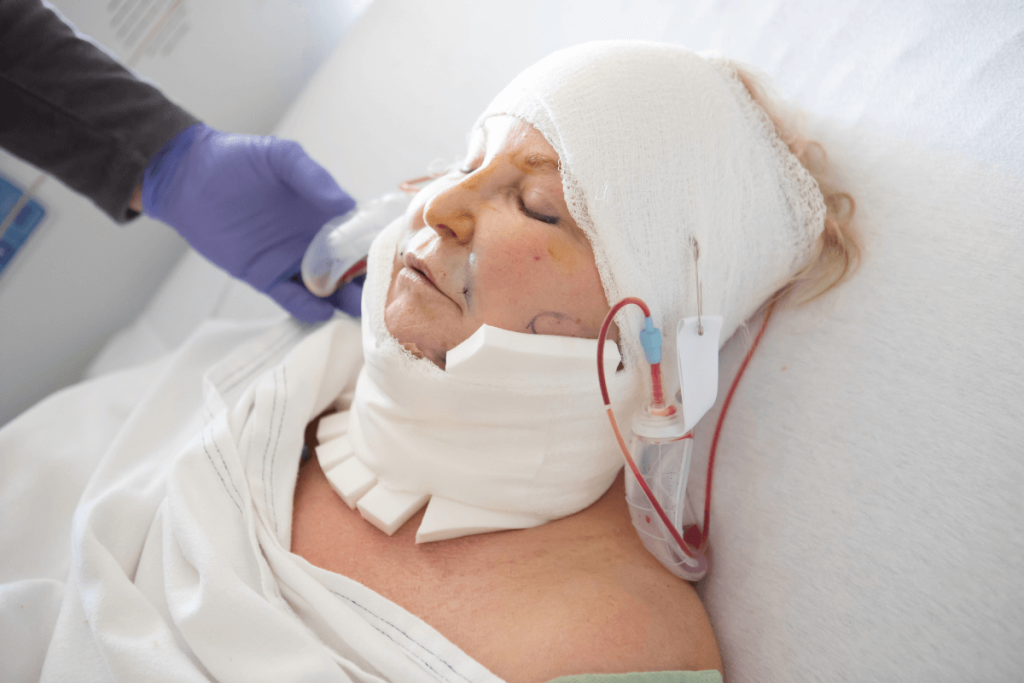
Over one million Canadians aged 65 years and older are expected to experience a traumatic brain injury (TBI) in their lifetime, and most frequently caused by falls. TBI is clinically diagnosed following a direct or indirect hit on the head, along with any of the symptoms like confusion, weakness, memory loss, loss of consciousness, changes in vision, or slurred speech. The severity of TBI is categorized as mild (13-15), moderate (9-12), or severe (3-8) based on the Glasgow Coma Scale. Older people with TBI often experience cognitive and memory difficulties, incur higher health care costs, and have a greater risk of dementia. However, the incidence of dementia following TBI in older adults remains poorly understood. A recent study published in the Canadian Medical Association Journal aimed at understanding how TBI affects dementia risk, care needs, and how social factors influence recovery in older adults.
In a retrospective matched cohort study, researchers used multiple Ontario health administrative databases, like the health insurance plan claims database, the national ambulatory care reporting system, the Canadian Institute for Health Information discharge abstract database, the registered persons database, ICES physician database, Citizenship Canada permanent residents’ database, home care database, drug benefit claims database, and continuing reporting system. Community-dwelling adults aged over 65 years with new TBI from April 1, 2004, to March 1, 2020, were selected in this study. All the individuals were followed for up to 17 years. A total of 132,113 matched (1:1) individuals with and without TBI on propensity score, age (mean age = 77.2±7.7 years), and sex (female = 58.2%) were included.
Crenshaw’s intersectionality framework was employed to investigate how overlapping social factors influence outcomes following TBI. Variables included sex, income, immigration status, neighborhood diversity, age, and rurality. Cox models were used for the estimation of home care, risk of dementia, and long-term care, accounting for death. All statistical analysis was performed using RStudio v3.6.3 and SAS v9.4.
In this 17-year population-based study, individuals with TBI had a higher incidence of dementia compared to matched controls. The median time to dementia was found to be 7.2 years (interquartile range = 2.6-14.4) after TBI, whereas 9.2 years (4.1-16.4) without TBI. After accounting for death, TBI increased the risk of dementia within 5 years with a hazard ratio (HR) of 1.69 (95% confidence interval [CI]: 1.66-1.72) and >5 years with an HR of 1.56 (95% CI: 1.53-1.59). TBI in older adults was linked to a greater risk of long-term care admission with an HR of 1.45 (95% CI: 1.42-1.47) and higher use of publicly funded home care with an HR of 1.30 (95% CI: 1.29-1.31). Among home care users, TBI patients required slightly more care compared to people without TBI (Incidence rate ratio [IRR] = 1.02, 95% CI: 1.02-1.02). Subgroup analysis confirmed consistent results.
This study’s limitations include missing data on education, social capital, and gender identity, the inability to detect subtypes of dementia, a lack of focus on recurrent TBI and outpatient cases, as well as the exclusion of privately funded home care for patients.
In conclusion, this study found that late-life TBI increased home care use, a higher risk of dementia, and long-term care admission. Older women and low-income residents faced a higher risk of dementia, whereas smaller, low-income, and less-diverse communities had higher long-term home care costs. Tailored post-traumatic brain injury (TBI) support and prevention are essential to reducing disparities.
Reference: Huang YQ, Vyas MV, Bronskill SE, et al. Late-life traumatic brain injury and risk of dementia, home care use, and long-term care admission: a population-based cohort study. CMAJ. 2025;197(33):E1067-1077. doi:10.1503/cmaj.250361