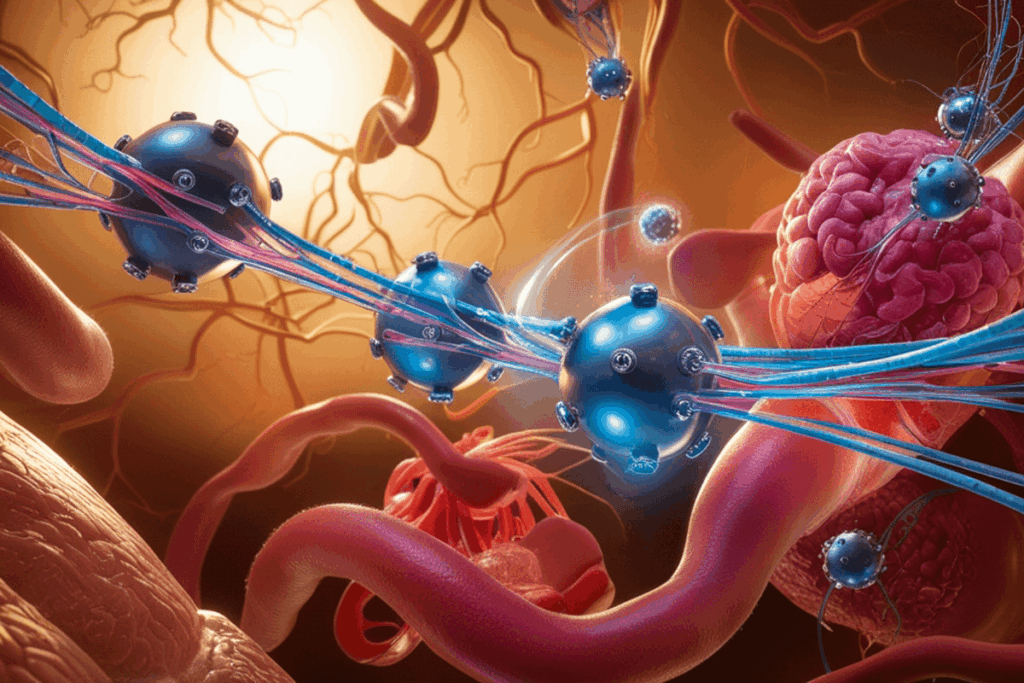
In the 1966 movie Fantastic Voyage, a tiny, miniaturised submarine and its crew are injected into an injured astronaut’s body to clear a deadly blood clot in his brain. Technologists believe that extremely miniature machines that are inserted into our bodies will soon bridge human biology and the internet. This concept is known as the Internet of Beings. It was one of the key issues in the Prototypes for Humanity event in Dubai, during which specialists suggested that this may become the third significant phase of the development of the internet.
The initial step involved connecting computers. In the second stage, there was a linkage of the daily objects. This new phase may be directly linked to the digital technology with human organs, and hence, one can always monitor the body. If this comes to pass, it may transform healthcare, scientific research, and society as we have never known before.
The idea of digitisation of the human body evokes both hope and fear. Others who are enthusiasts of technology envision a time when diseases are diagnosed much earlier than they show their symptoms, and individuals can potentially extend their lives for a long time, with much better health. However, cybersecurity experts are concerned that once our bodies become interconnected devices, the chances of hacking could be far more dangerous than anything we have faced online before.
As stated in the new book Internet of Beings, there are at least three breakthroughs in medicine in this new era. The first significant shift is that it is possible to identify the diseases at the initial stages of their progression by monitoring the internal organs all the time. This would lead to the prevention of medicine replacing treatment. For example, in the United States, about 170,000 of the 805,000 heart attacks each year are silent because people do not notice any symptoms. Microscopic biorobots within the body would allow a person to be alerted instantly. Patients would get personalised diet, sleep, or exercise recommendations rather than just depending on medicines; it would be based on what the body needs at that specific time.
The second huge transformation is that the sensors present in the body are getting sophisticated to the extent of taking measures on their own. With soft biorobots, it would be possible to automatically release medicine, activate vaccines when a person falls ill, and even fix the microscopic areas of damage. In the future, these systems could repair DNA directly using mRNA and gene-editing technologies. The third breakthrough could transform medical research entirely. Instead of relying on slow and expensive trials, scientists could analyse vast datasets from millions of connected bodies to quickly determine which treatments are most effective. This would accelerate the development of new therapies towards faster, cheaper, and more personalised therapies.
These technologies are an indication of a time when healthcare ceases to be a one-size-fits-all thing. Digital twins that are constantly updated would be able to diagnose illnesses at the initial stage, run tests online, and intervene before issues go out of control. The systems of research can also evolve as scientists find out other methods through which various body parts interact.
Although there are those futurists who fantasize about overcoming the effects of ageing, the majority of the experts are of the opinion that the actual aim is to ensure that all people are provided with good healthcare. This advancement has the potential to empower systems such as the NHS and enable humans to live longer and healthier lives on the planet. But it also brings ethical concerns. Linking the physical world to the digital world makes us ask ourselves how far we can go as humans to blend with technology. The greatest challenge will be to make sure that such advances do not undermine what it means to be a human.
Reference: The conversation. Internet of beings: the dream of digitising human bodies for healthcare (and the nightmare). Published December 1, 2025. Accessed December 3, 2025. Internet of beings: the dream of digitising human bodies for healthcare (and the nightmare)