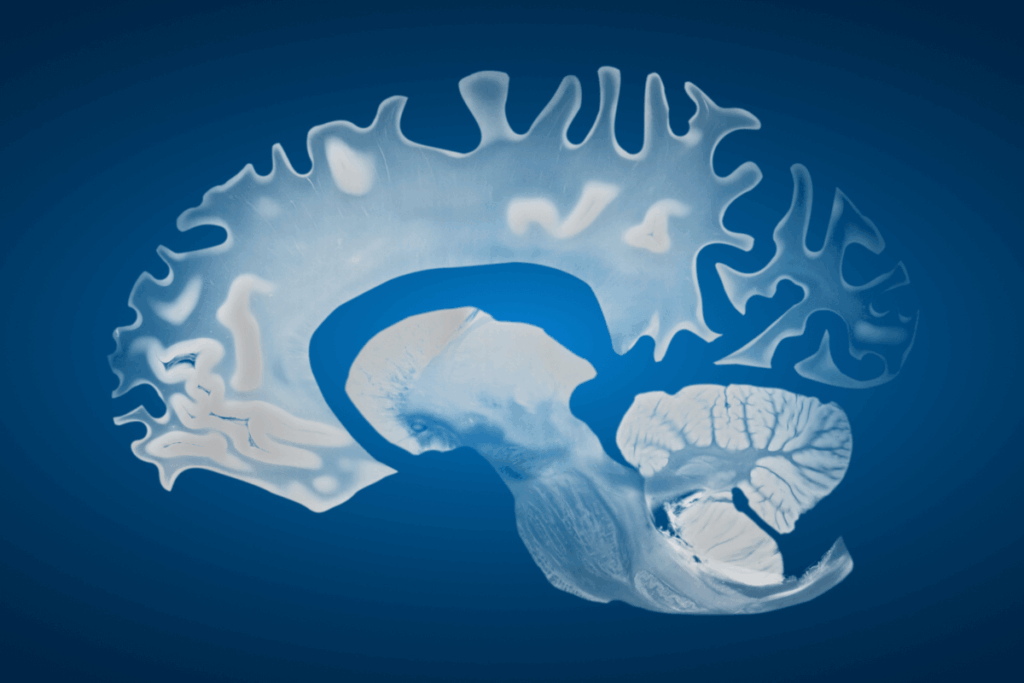
Depression is the most prevalent neuropsychiatric condition in both Lewy body dementia (LBD) and Parkinson’s disease (PD). It affects about 30-40% of patients. It is associated with adverse outcomes, including cognitive decline, faster disease progression, disability, suicide, and increased mortality. Growing evidence suggests that depression may precede the motor and cognitive manifestations of PD and LBD by many years. This raises the possibility that depression represents an early non-motor feature of the underlying neurodegenerative process rather than a psychological reaction to disability.
Many earlier studies have relied on comparisons with healthy control populations, making it difficult to distinguish disease-specific neurological effects from depression related to chronic disease and functional impairment. The present study addressed this limitation by comparing depression rates in PD and LBD with those observed in other chronic medical conditions associated with disability but not neurodegeneration.
This study aimed to quantify the incidence of depression in the years preceding and following a diagnosis of PD or LBD and to compare these patterns with those seen in rheumatoid arthritis (RA), chronic kidney disease (CKD), and osteoporosis. RA and CKD were included as active control conditions associated with substantial disability, while osteoporosis served as a passive control, needing healthcare contact but involving less chronic impairment. The hypothesis was that a substantially higher rate of depression before diagnosis in PD and LBD would support depression as an early manifestation of neurodegenerative disease.
A retrospective case-control design was employed using linked data from nationwide Danish health registers. Patients with a first-time hospital diagnosis of PD (ICD-10 G20) or LBD (ICD-10 G318E) between 2007 and 2019 were identified and matched by age, sex, and calendar year of diagnosis to up to three patients with RA, CKD, or osteoporosis. Incidence of depression was defined as either a first psychiatric hospital diagnosis of depression (ICD-10 F32–F33) or the first redemption of an antidepressant prescription specifically indicated for depression. Follow-up extended up to 20 years, from 10 years before to 10 years after diagnosis, with the date of diagnosis serving as time zero. Depression rates were analysed using hazard rate plots and Cox proportional hazards models, with additional sex-stratified and sensitivity analyses conducted to assess robustness.
The study included 17,711 patients with PD or LBD (14,636 with PD, 3,075 with LBD) with a median age of 74.98 years and 39.9% female. Comparator groups included 19,556 individuals with RA, 40,842 with CKD, and 47,809 with osteoporosis. In the 10 years preceding diagnosis, incident depression occurred in 13.1% of patients with PD and 16.9% of patients with LBD, compared with 5.6% in RA, 7.8% in CKD, and 7.2% in osteoporosis. In the 10 years after diagnosis, depression occurred in 7.9% of patients with PD and 8.5% with LBD, compared with 5.1% in RA, 5.5% in CKD, and 6.1% in osteoporosis. About 15-21% of depression cases across groups involved psychiatric hospital contacts, indicating that most cases were detected by antidepressant treatment in primary care.
Hazard rate analyses demonstrated that patients with PD and LBD had significantly higher rates of depression beginning 7 to 8 years before diagnosis, with the greatest excess risk observed for three years immediately preceding diagnosis. An elevated risk of depression persisted for up to five years after diagnosis compared with all control conditions. From approximately three years before to three years after diagnosis, patients with LBD exhibited significantly higher depression rates than those with PD. These findings were consistent across sex-stratified analyses and sensitivity analyses restricted to fully matched PD/LBD–RA subgroups, supporting the robustness of the results.
In conclusion, this large nationwide study shows that depression occurs at substantially higher rates in patients with PD and LBD than those with other chronic medical conditions, beginning up to 8 years before diagnosis and persisting for many years thereafter. These findings support the integration of depression as an early, disease-related manifestation of the neurodegenerative processes underlying PD and LBD rather than solely a reaction to disability. Clinically, late-onset depression should prompt awareness of possible prodromal PD or LBD, while systematic screening and treatment of depression should be integrated into routine care after diagnosis. Early recognition of depression may improve patient outcomes and offer opportunities for closer monitoring and future disease-modifying interventions.
Reference: Rohde C, Langeskov-Christensen M, Jørgensen LB, Borghammer P, Østergaard SD. Depression preceding and following the diagnosis of Parkinson’s disease and Lewy body dementia. Gen Psychiatry. 2025;38:e102405. doi:10.1136/gpsych-2025-102405