A recent study published in The BMJ’s Christmas issue brings reassuring news to healthcare workers—hospital coffee machines are not implicated in spreading disease, and a general ban is deemed unnecessary. In the ongoing efforts to mitigate hospital-acquired infections, various items, including doctors’ ties and even hospital Bibles, have been investigated for their potential as breeding grounds for bacteria.
However, the study, conducted in Germany, aimed to address a previously unexplored area—the microbial population in health care-associated coffee machines. The focus was on assessing the risk of these machines harboring high priority “ESKAPE” pathogens identified by the World Health Organization (Enterococcus faecium, Staphylococcus aureus, Klebsiella pneumoniae, Acinetobacter baumannii, Pseudomonas aeruginosa, and Enterobacter species). These bacteria are particularly concerning due to their antibiotic resistance and the potential to cause fatal infections.
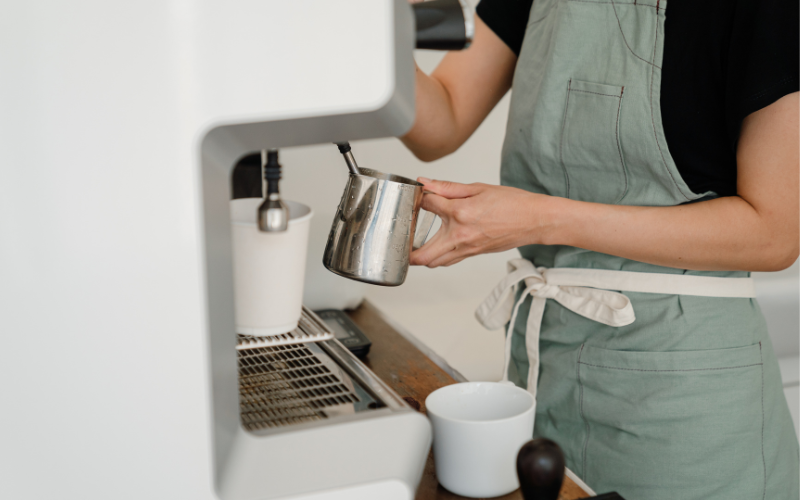
The research spanned from October 31 to December 31, 2022, during which the researchers swabbed 25 coffee makers, including fully automatic, capsule (e.g., Nespresso), and espresso machines. Seventeen were in break rooms and offices at a university hospital’s Department of Anaesthesiology and Intensive Care Medicine, as well as at the Institute for Medical Microbiology, Immunology, and Hygiene, both in Cologne, Germany. Additionally, eight coffee makers were sampled from staff members’ homes.
All machines had been in use for at least a year, and none underwent special cleaning before sampling. Notably, there were no ongoing disease outbreaks at the sampled locations during the study period.
Swabs were taken from five specified sites on each machine: the drip tray, the outlet, the buttons, the handle of the water tank, and the inside of the water tank. Microbial growth was detected on every coffee machine, with hospital machines being about three times as heavily colonized (360 strains isolated from 72 positive swabs) as home machines (135 strains isolated from 34 positive swabs).
Most detected species were commensals, bacteria that reside on the skin or in the gut and pose no threat to health. Importantly, only a few medically relevant pathogens were identified, and none of them were antibiotic resistant.
Among the medically relevant Gram-negative species detected, 81% were found in hospital coffee makers, primarily collected from drip trays, outlets, and water tank handles. This highlights the importance of adhering to hand hygiene protocols.
Staphylococcus aureus, a possibly Gram-positive disease-causing species, was found on the buttons of a home coffee maker and the inside of a water tank at the hospital. This suggests that users’ hands may meet unexpected parts of the machines.
The researchers expressed relief, stating that despite the potential for pathogen origins in nosocomial outbreaks, a general ban on coffee makers does not seem necessary. Additionally, the study has prompted extensive cleaning measures.
The authors concluded by raising questions about tea-drinking nations, wondering if teapots, kettles, and hot waterspouts might be similar breeding grounds for bacteria. They also pondered whether the high temperatures in tea pots are sufficient to eliminate potential pathogens and raised concerns about the cleanliness of handles.
Journal Reference
Bug in a mug: are hospital coffee machines transmitting pathogens?, The BMJ (2023). DOI: 10.1136/bmj.p2564