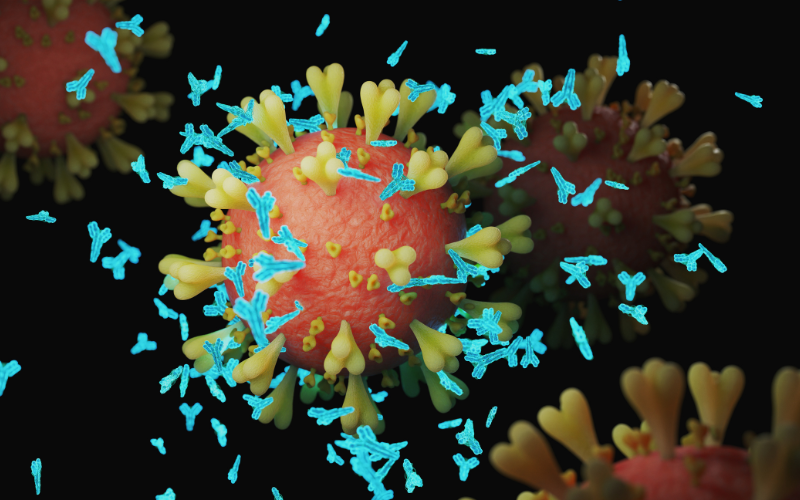
In contemporary therapeutics, antibodies are among the best-performing biopharmaceuticals. Their therapeutic success is attributable to the phenomenal structural diversities that antibodies can take in recognizing an extremely wide variety of potential targets, whose diversity has been generated from their hypervariable regions, without much discussion, functional specificity for antibodies is crucial.
However, understanding how the sequence of an antibody’s hypervariable regions maps to its function is still one of the critical gaps in the field.
In recent years, protein language models (PLMs) have emerged as powerful tools for representing proteins. They draw from millions of sequences and capture most of the implicit structures and thereby predict protein functional properties. In the case of antibodies, a simple method is to use these PLMs trained on the corpus of all proteins. These types of models are commonly termed “foundational” PLMs in machine learning terminology for general-purpose, broad applications. While these models have demonstrated exceptional results in protein structure modeling, they struggle with antibody-specific challenges. This is because hypervariable regions, crucial for antibody function, do not follow the principles of evolutionary conservation that foundational PLMs typically rely on.
Here, the authors describe a transfer learning framework also known as Antibody Mutagenesis-Augmented Processing (AbMAP), a fine-tuning transfer learning framework for input antibody sequence to predict structure and binding specificity. With a favorable learned feature representation, this can predict key properties in antibodies such as the antigen-binding effect of mutation, paratope identification, and others. Researchers validate AbMAP experimentally for antibody refinement in the context of optimizing its application by obtaining an 82% hit rate as well as an up to 22-fold increase in binding affinity after its application to refine an antibody set for a SARS-CoV-2 peptide.
AbMAP enables large-scale immune repertoire analyses by showing how B-cell receptor (BCR) repertoires, although highly variable in sequence, converge toward similar structural and functional outcomes. More interestingly, the transfer learning method in AbMAP can be directly applied to any further advances made in foundational PLMs. Researchers expect AbMAP to accelerate antibody design and modeling, speed up antibody therapeutic discovery, and deepen fundamental understanding of humoral immunity. The performance of AbMAP within antibody design is especially remarkable. Existing in silico approaches have typically yielded much lower hit rates.
There are certain trade-offs in designing AbMAP. In repertoire analyses, hypervariable regions will prove to be less data-efficient and robust in isotype switching and do not capture the dependency of framework regions in the overall stability and specificity of the antibody. It should be possible to use more comprehensive antibody datasets for complex models that include both frameworks and hypervariable regions. The contrastive augmentation step will also increase performance but requires multiple PLM calls, which could be a concern in speed-critical applications; recent advances in fast-but-performance attention mechanisms could contribute to that. In conclusion, AbMAP provides a robust solution to the challenge of antibody modeling.
The comprehension of antibody structure and function, along with the ability to manipulate it in silico, is fundamental to the investigation of human immune repertoires for the design and development of large-molecule therapeutics. However, the hypervariability of antibodies makes applying general-purpose protein modeling techniques to predict antibody function infeasible. It is in this respect that AbMAP’s transfer-learning approach will find wide applicability. We believe that this will significantly advance our knowledge of how antibodies behave and will fast-track the discovery of a new class of therapeutic biologics. With the advancement of protein language models, the adaptable framework of AbMAP will remain a valuable tool in antibody research and development.
Reference: Singh R, Im C, Qiu Y, Mackness B, Gupta A, Joren T, Sledzieski S, Erlach L, Wendt M, Fomekong Nanfack Y, Bryson B, Berger B. Learning the language of antibody hypervariability. Proc Natl Acad Sci USA. 2025;122(1):e2418918121. doi:10.1073/pnas.2418918121