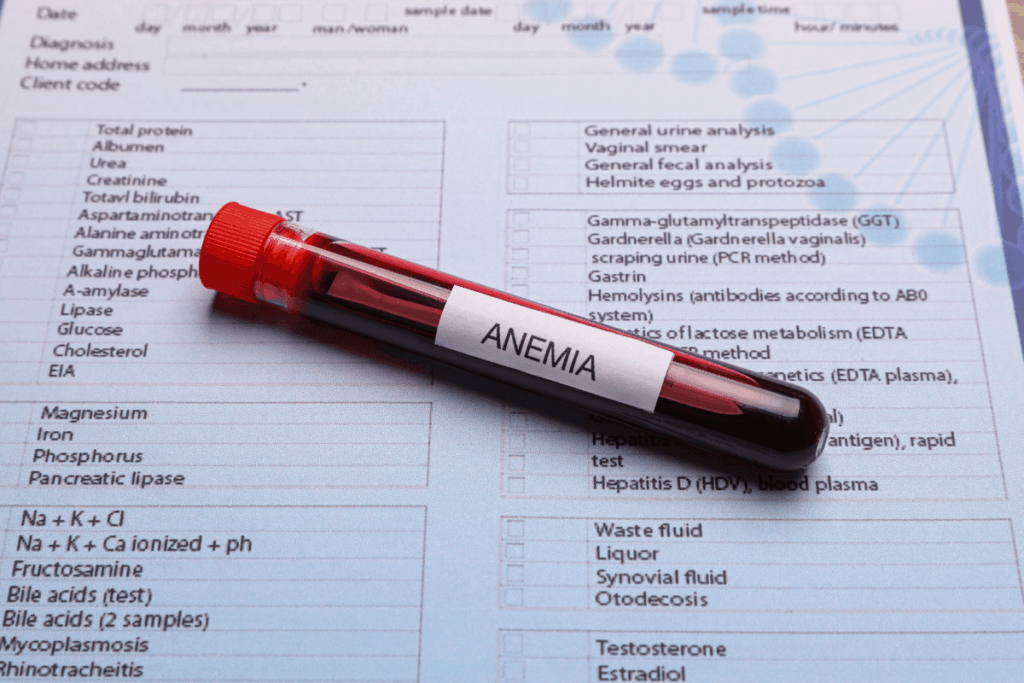
Iron deficiency anemia (IDA) affects approximately 31.2% of women globally and is a major cause of disability. Heavy menstrual bleeding (HMB) is often associated with underlying gynecologic disorders. HMB is a major contributor to IDA, particularly in high-income countries. Up to one-third of menstruating women experience IDA due to HMB. Despite its significant impact on quality of life, most women receive delayed or inadequate care. Oral iron therapy is commonly prescribed because it is widely available at a low cost. However, poor gastrointestinal tolerance and inconsistent absorption often limit its effectiveness. Intravenous (IV) iron provides better adherence and more reliable repletion but remains underutilized, resulting in suboptimal or delayed treatment for patients with HMB. Evidence regarding the most cost-effective first-line therapy remains limited. A recent study published in Blood Advances aimed to evaluate the cost-effectiveness of first-line IV iron (iron sucrose and iron dextran) compared with oral iron (ferrous sulfate) for the treatment of IDA in women with HMB across the reproductive lifespan.
In this study, the authors developed a Markov simulation model following women aged from 18 to 51 years using 3-month cycles from a societal perspective. The model incorporated quality-adjusted life years (QALYs), healthcare costs, and lost wages. Women were assumed to begin with a 1000mg iron deficit and ongoing menstrual iron loss. Transitions between IDA and healthy states reflected treatment response, retreatment, and adverse events. Cost-effective analysis was performed through net monetary benefit (NMB) and incremental cost-effectiveness ratio (ICER). Multiple scenarios and sensitivity analyses examined varying levels of menstrual blood loss, alternative IV dosing strategies, and parameter uncertainty.
Base-case analysis showed that total lifetime costs were highest for IV iron sucrose at $ 163,500, followed by IV ferumoxytol at $158,300, IV iron dextran at $157,500, and oral ferrous sulfate at $152,900. Total QALYs were found to be 19.26 for all IV iron formulations compared to 19.10 for the oral iron. First-line IV iron dextran was the most cost-effective option, with ICER of $28,600 per QALYs (95% credible interval [CI]: $19,200–$55,500) and an incremental NMB of $11,500 compared to oral iron.
Across scenarios with higher menstrual blood loss of 240 mL and 420 mL, IV iron dextran remained cost-effective with ICERs of $22,500 (95% CI: $14,300–$52,500) and $10,100 (95% CI: $8,600–$12,300) per QALYs, respectively. In a variable blood loss scenario with a 50% reduction in menstrual volume by year 5, IV iron dextran remained the preferred strategy with an ICER of $22,500 (95% CI: 12 $15,400–$41,100) per QALY. Rapid infusion analyses demonstrated lower costs with equivalent QALYs, with one-time-30-minute IV ferumoxytol being cost-effective at $23,400 (95% CI: $15,500–$45,400) per QALY. Sensitivity analyses confirmed the robustness of these findings, with IV iron dextran preferred in 99.9% of 10,000 probabilistic simulations across U.S. willingness-to-pay (WTP) thresholds of $50,000 to $150,000 per QALY.
This study’s limitations included reliance on limited adherence data, assumptions of uniform menstrual blood loss, exclusion of pregnancy and HMB treatments, omission of productivity losses, and unmodeled variability in iron formulations, treatment switching, and healthcare costs.
This study concluded that first-line IV iron dextran is a cost-effective treatment for IDA in women with HMB. These findings support improved access to infusion care, reduced insurance barriers, and the need for further real-world effectiveness studies.
Reference: Wang D, Sra MS, Ito S, et al. Cost-Effectiveness of First-Line IV Versus Oral Iron for Iron Deficiency Anemia in Women with Heavy Menstrual Bleeding. Blood Adv. 2026. doi:10.1182/bloodadvances.2025018315