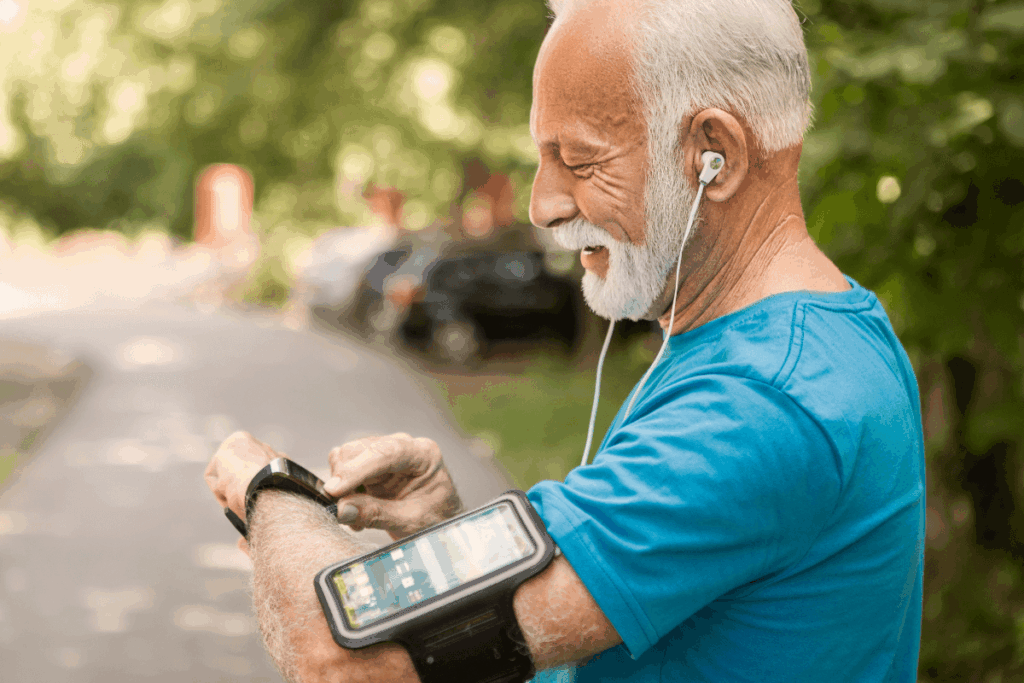
Frailty syndrome is a clinical condition associated with an increased risk of falls, hospitalization, and death, and it is often identified only after a high-risk health event. However, now researchers at the University of Arizona have developed a lightweight wearable that continuously measures frailty during everyday walking using on-device artificial intelligence, with the potential to shift care from a reactive to a preventive approach. A study published in Nature Communications in 2025 describes a biosymbiotic edge AI device (BEAD) that performs frailty assessment based on gait entirely on the device itself. Unlike traditional approaches that rely on in-clinic testing or cloud-based data processing, the system operates autonomously, requires no user interaction, and enhances patient privacy by minimizing data transfer.
Clinically, frailty is usually identified through the Fried Frailty Phenotype, which assesses exhaustion, slowness, weakness, low activity, and unintentional weight loss. Some of these measures are subjective, and objective gait assessment is generally restricted to brief clinical examinations. According to the researchers, these short assessments do not reflect the actual walking patterns in the real world, which are different depending on the environment and activities in day-to-day life. They observe that continuous monitoring of habitual walking is necessary to detect frailty accurately.
To test the device, the group performed in vivo tests on adults aged 65 and above. Data of gait using biosymbiotic wearables was compared to gold standards of clinical gait analysis systems in 60-second walk tests, sit-to-stand tasks, and Timed Up-and-Go tests in the first cohort (N1 = 16). In all the measured gait parameters, such as step and stride variability, statistically significant differences existed between the two types of devices. The wearable data revealed evident differences between healthy and pre-frail participants, which is in line with the accepted clinical data.
The most significant innovation of the BEAD is that it can do machine learning inference on the device. Individual steps are separated out and analyzed in real time with the use of angular velocity measurements obtained by an angular measurement unit mounted on the thigh. On-device inference saves data transmitted by almost 99 %; the 436 bytes per step of raw data are reduced to only 8 bytes per timestamped inference. This is an average power consumption reduction of 21% and can be used to classify in real-time at under 330 milliseconds per step. The machine learning pipeline will consist of a compressed MINIROCKET feature extractor and a Random Forest classifier. Upon optimization, the model obtained a total accuracy of 91.33%, and false-negative and false-positive rates of 8.05% and 6.35%, respectively. Healthy steps performed at 0.92 in F1-scores, whereas the pre-frail steps at 0.90 in F1-scores; this demonstrates a good classification performance despite the minor gait variations across groups.
The second validation cohort (N2= 14) validated the capability of the device to make real-time inferences on the device as the participant continued to walk. The BEAD was able to perform thousands of step classifications on a ten-day-long study without being removed, and the operation was constant. Less than ten false positives were also recorded, which equates to about an 8.6 false-positive rate.
The researchers suggest that tracking the cumulative proportion of steps classified as frail or pre-frail over weeks or months could provide clinicians with a simple, intuitive measure of a patient’s condition. By incorporating these trends into the electronic health records, the technology would complement the provision of early detection, tailored care, and wider access to frailty assessment, especially among the elderly who are frail with barriers to regular visits to clinics. Though not yet ready to be used in clinical practice, the results indicate that on-device AI, especially in wearable devices, can be used to provide an effective and scalable solution to continuous frailty monitoring outside of standard healthcare facilities.
Reference: Kasper KA, Thien R, Stuart T, et al. Wearable AI for on-device frailty assessment. Nat Commun. 2025. doi:10.1038/s41467-025-67728-y