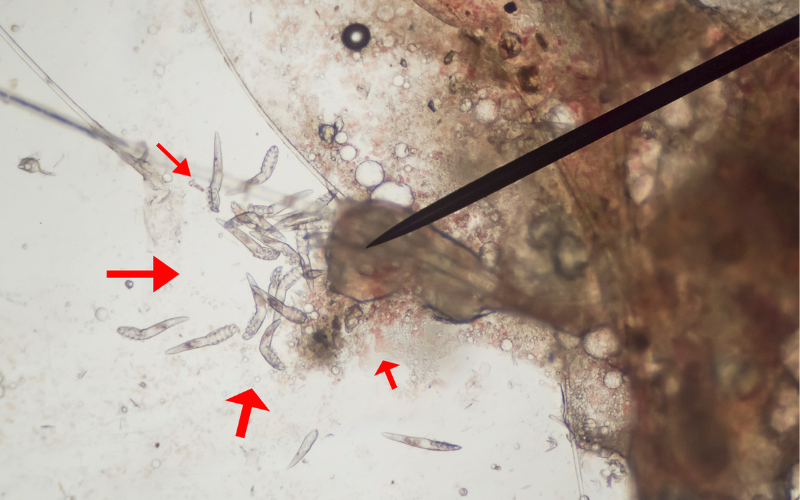
A concerning new public health threat is emerging across the United States, specifically locally transmitted fishborne diseases caused by parasitic flatworms. These aquatic-related diseases, historically limited to Asia and Africa, are becoming possible in the U.S. due to the introduction of a non-native freshwater snail species, Melanoides tuberculata. This snail transmits exotic trematodes that are infectious to humans: Haplorchis pumilio and Centrocestus formosanus.
A recent study in southern California found that metacercariae (the infectious stage of the parasite) were present in seven commonly consumed freshwater fish species in San Diego County. The results revealed wide geographic distribution and high infection rates, particularly involving H. pumilio. Some fish harbored thousands of parasites, especially in tissue sections near their muscles and fins, areas that are frequently consumed raw. The prevalence of H. pumilio ranged from 80% to 100% across different localities in both bluegill and largemouth bass, with an overall infection rate of 93% among all sampled fish (95% CI: 85%–97%; 78 out of 84 fish).
Tissue studies demonstrated that C. formosanus primarily infects the gills, while H. pumilio is embedded mostly in tissues nearest to the muscles. DNA sequencing confirmed the parasites with an identification accuracy of over 99%. Larger fish were more likely to carry high numbers of parasites, thereby increasing the health risk for consumers.
In 2008–2024, 125 YouTube videos originating from the U.S. were reviewed and showed a substantial amount of raw freshwater fish from U.S. consumption (4.7 million views). Of these, 82% (103 videos) featured raw-fish meals, and 65% (67 videos) showed actual consumption, with 59 of these involving unfrozen fish. Nearly 22% of creators reported raw fish as a regular part of their normal diet, whereas 18% used shock-value content. Among 49 geolocated videos featuring raw, unfrozen fish, 49% originated from states with known trematode presence, and 27% were from states where M. tuberculata was established.
At least 31 different fish species were consumed raw, including 25% of videos, which had species known to carry trematodes. It was concerning that 16 videos inaccurately stated that citrus juice kills parasites, three videos promoted raw fish from “clean” sources as safe, and one video misleadingly endorsed “candling” as a valid method for parasite detection. This highlights dangerous misinformation and significant public health concerns.
While infections from these parasites are preventable, they can cause gastrointestinal illness and other complications. Even more concerning is the lack of awareness, as these pathogens are often not included in state surveillance systems, and many healthcare providers are unfamiliar with diagnosing or treating such infections.
Experts recommend freezing freshwater fish before raw consumption to kill the metacercariae. Additional mitigation strategies include enhanced surveillance of snail and fish hosts, as well as promoting accurate food safety education. As modern American diets evolve, driven in part by social media trends, culinary curiosity, and infectious disease risk are increasingly intertwined. Local transmission of trematodes is no longer hypothetical; it is occurring. Combating this threat will require better public communication, better-informed healthcare providers, and stronger food safety regulations to slow the spread of these overlooked parasites.
References: Palmer EM, Metz DCG, Hechinger RF. Further evidence for plausible transmission of fishborne trematodiases in the United States: game fish carry human-infectious trematodes and are eaten raw. J Infect Dis. 2025. doi:10.1093/infdis/jiaf180