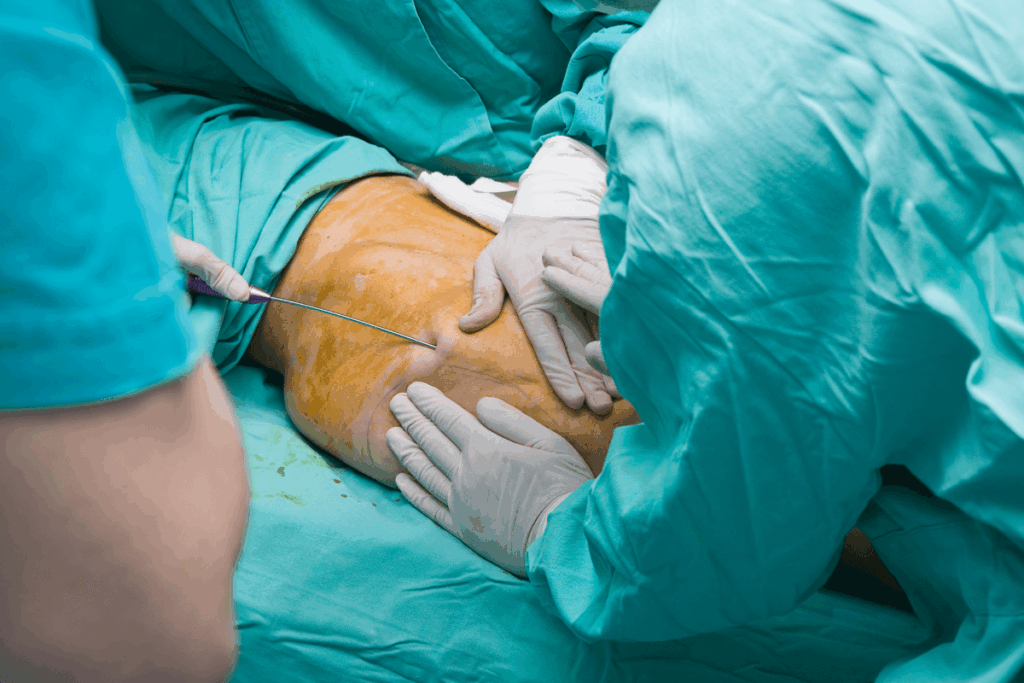
Liposuction has been the most performed aesthetic surgery worldwide since 2021, with over 2.3 million procedures annually. It accounts for approximately 15-20% of all aesthetic surgeries. Although most procedures are safe, complications occur in about 5% of cases. Deaths are rare but have been reported. Excessive blood loss is one of the most serious surgical complications. It can lead to blood transfusion or death. Artificial intelligence (AI) can help predict and manage blood loss by analyzing large-scale surgical, demographic, and clinical data. A recent study published in Plastic and Reconstructive Surgery aimed to develop an AI-based predictive model for blood loss during liposuction, while addressing ethical and technical challenges to enhance surgical outcomes, patient safety, and personalized care.
In this study, data from 721 adults (median age = 37 years [interquartile range {IQR} = 11, female = 79.2%, male = 16%, median body mass index [BMI] = 24.3 kg/m2 [IQR = 4.03]) underwent large volume liposuction (more than 4000 ml) at two specialized centers in Ecuador and Columbia between 2019 and 2023 were analyzed. One hundred healthy American Society of Anesthesiologists (ASA) I patients aged 18-60 years were included, following standardized surgical and perioperative protocols. Postoperative hemoglobin levels were monitored at 24 and 72 hours. The dataset was randomly divided into testing (n = 100 patients, mean age = 37.78 ± 7.56 years, female = 84%, male = 16%, mean BMI = 24.7 ± 2.2 kg/m2) and training groups (n = 621 patients, mean age = 37.02 ± 8.45 years, female = 78.4%, male = 21.6%, mean BMI = 24.7 ± 3.3 kg/m2). A supervised machine learning linear regression model was developed on the Google Cloud AppSheet platform to predict blood loss through surgical, clinical, and demographic characteristics. Model performance was assessed by comparing predicted blood loss with actual clinical data using statistical validation metrics.
Patients had a median aspirated volume of 3900 ml (IQR = 2200 ml), a median calculated volemia of 3924.4 ml (IQR = 807.5 ml), and a median infiltrated volume of 5800 ml (IQR = 2131.5 ml). There was no statistical significance differences observed between the training and testing groups for demographic variables like sex (p = 0.234), age (p = 0.162), weight (p = 0.997), height (p = 0.314), BMI (p = 0.396), volemia (p = 0.663), initial hemoglobin (p = 0.956), total infiltrated volume (p = 0.071). In contrast, statistically significant differences were reported for final hemoglobin (p <0.001), total aspirated volume (p <0.001), infiltrated/aspirated ratio (p <0.001), estimated blood loss (p <0.001), and aspirated/blood loss ratio (p = 0.015).
Model performance was evaluated using 100 patients. The regression model showed a strong predictive accuracy with a coefficient of determination (R2) value of 0.974, a root mean square error of 34.13 ml, and a mean absolute error of 22.90 ml. The predicted and actual blood loss showed excellent agreement. The maximum and minimum prediction differences were found to be 187.82 ml and 0.22 ml, respectively. These results support the clinical relevance and reliability of the model.
This study’s limitations include the inclusion of only ASA class I patients, potential protocol variability, unknown performance in comorbid populations, and limited algorithm transparency regarding predication mechanisms and variable weighting.
In conclusion, this AI-based blood loss prediction model represents a significant advancement in liposuction safety and outcomes. Ongoing validation may help redefine safe lipoaspirate limits. This model supports personalized surgical planning and has the potential to enhance clinical decision-making across surgical and aesthetic disciplines.
Reference: Pachon MEP, Santaella JT, Onate C, et al. Artificial intelligence–driven blood loss prediction in large-volume liposuction: enhancing precision and patient safety. Plast Reconstr Surg. 2026;157(1):63e-70e. doi:10.1097/PRS.0000000000012240