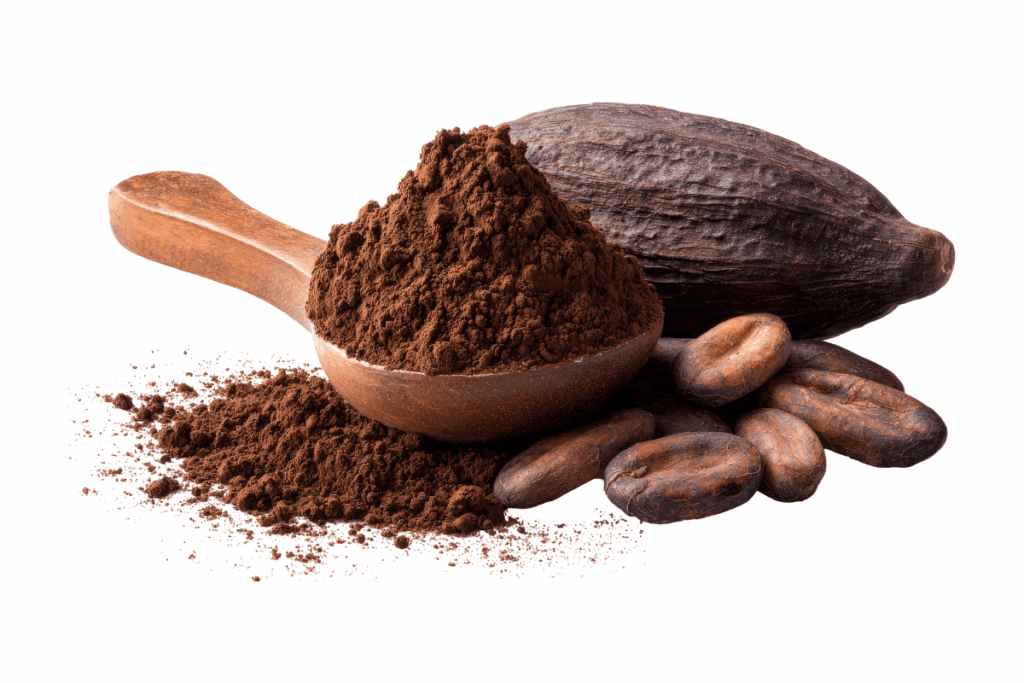
Dietary phytochemicals like polyphenols, flavonoids, terpenes, and alkaloids are linked with beneficial effects on human health and ageing. Alkaloids represent a particularly important class because of their abundance, bioactivity, and involvement in pathways related to inflammation, metabolic diseases, and cellular aging. Cocoa and coffee are two widely consumed foods rich in methylxanthine alkaloids, including caffeine, theophylline, paraxanthine, 7-methylxanthine, and especially theobromine (TB), which is the dominant alkaloid in cocoa. TB has gained interest after reports of lifespan extension in model organisms and associations with improved health markers in observational studies, though its biological role in humans is not clear. Epigenetic alterations like DNA methylation changes, telomere shortening, and methylation entropy increase with age and are quantified by using epigenetic clocks. These clocks give a powerful tool to explore the relationship between dietary molecules like TB and biological aging.
The aim of this study was to investigate whether circulating levels of key dietary methylxanthines, specifically theobromine, are linked with slower epigenetic ageing in humans. The researchers conducted discovery analyses in the TwinsUK cohort and targeted replication in the independent KORA cohort using many measures of epigenetic age acceleration and rigorous statistical modelling to detect metabolic-specific effects and account for potential confounding.
This study consisted of 509 monozygotic and dizygotic female twins from TwinsUK (median age of 58.9 years). Fasting serum metabolomics were generated by using an untargeted LC-MS platform, and metabolites with >20% missingness or outliers >3 SD from the mean were excluded. The remaining values were median-normalized, imputed, and inverse-normalized. Six metabolites with known relevance to coffee or cocoa intake were analysed: caffeine (CAF), theophylline (TP), paraxanthine (PX), 7-methylxanthine (MX), TB, and theanine. Whole-blood DNA methylation profiling was done by using the Illumina 450k array with stringent quality control, background and dye-bias correction (ENmix), and removal of cross-reactive or polymorphic probes. Blood cell proportions were calculated by using the Houseman method. Epigenetic age acceleration was calculated by using Horvath’s New Methylation Age Calculator, which focused on GrimAge acceleration (GrimAgeAccel) and methylation-based telomere length (DNAmTL), with secondary analyses by using PhenoAge, Hannum age, and DunedinPACE.
Linear mixed-effects models were used to assess links between each metabolite and epigenetic ageing, adjusting for age, BMI, cell proportions, and family structure. TB showed a strong and significant link with reduced GrimAge acceleration (B = −1.576, SE = 0.3, p = 3.99×10⁻⁶) surviving Bonferroni correction in primary analysis. Extending analyses to other ageing markers showed high TB levels were linked with longer DNAmTL (B = 0.03, SE = 0.0124, p = 0.0029). Correlation analyses confirmed expected dietary patterns: CAF, TP, and PX correlated strongly with one another (R = 0.89), and TB and MX formed a correlated pair (R = 0.78) with consistent changing food sources. TB showed only modest correlation with CAF (R = 0.46), which reflects the low metabolic conversion of CAF to TB.
Many sensitivity analyses were performed to confirm that the association of TB was not driven by other methylxanthines or dietary confounders. CAF, TP, PX, and MX as covariates in the models did not attenuate the TB–GrimAgeAccel association (B = −0.823, p = 0.00219). This indicated metabolite-specific effects. Stratification by latency between metabolic and methylation sampling showed a strong association when samples were closer in time. Panelized regression analyses (LASSO and elastic net) detected TB as the key metabolite linked with GrimAgeAccel after accounting for multicollinearity.
Replication analyses in the KORA cohort (n = 1,160, median age 60) confirmed primary findings. TB was significantly associated with reduced GrimAgeAccel after full covariate adjustment (B = −1.06, SE = 0.195, p = 7.17×10⁻⁸) and with increased DNAmTL (B = 0.022, SE = 0.008, p = 0.007). Effects were similar when restricting analyses to women alone, which included that associations were not sex-specific. Stratification by smoking status in TwinsUK suggested stronger TB effects in smokers, consistent with known nicotine-driven metabolic changes.
This study identifies robust and replicated links between circulating theobromine and slower epigenetic ageing in humans captured in 2 independent cohorts and many epigenetic biomarkers. The results suggest that TB, an abundant cocoa alkaloid, may affect biological pathways relevant to ageing, independent of other methylxanthines. Further research, specifically mechanistic and interventional studies, is required to clarify causality and assess the potential of TB as a dietary component that can contribute to extending human healthspan.
Reference: Saad R, Costeira R, Matías-García PR, et al. Theobromine is associated with slower epigenetic ageing. Aging (Albany NY). 2025;17. doi:10.18632/aging