Public health officials are now evaluating a potential case of the Powassan virus involving a resident of Martha’s Vineyard. Local health boards on the island, along with shared public health personnel such as Public Health Nurse Betsy VanLandingham and the Case Investigation Coordinator, are actively overseeing the ongoing investigation. Besides this potential case, the island has only one confirmed Powassan virus case in the past 20 years. Three confirmed cases of Powassan virus have been reported elsewhere in Massachusetts this year.
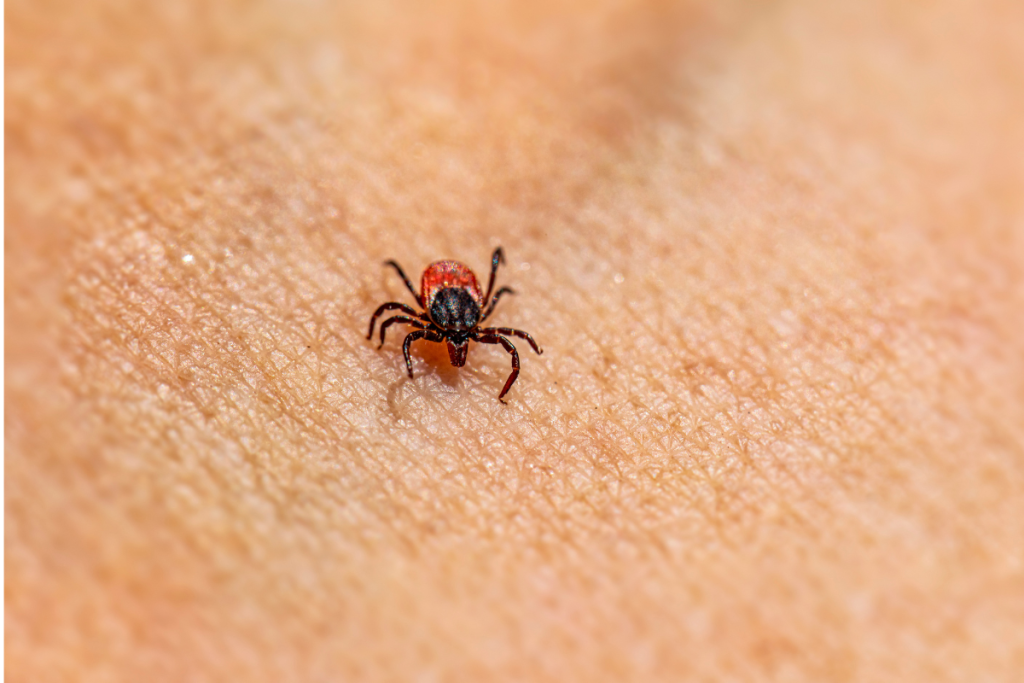
Powassan virus is a rare but very dangerous tick-borne disease transmitted by an infected black-legged tick, also referred to as a deer tick (Ixodes scapularis). The virus can be transmitted within 15 minutes of the tick bite. There is no vaccine or specific treatment, and severe cases may result in encephalitis (inflammation of the brain), disorientation, seizures, and permanent neurological damage.
Dr. Sam Telford, a Tufts University professor and longtime researcher of Martha’s Vineyard, stated that only a small number of deer ticks carry the Powassan virus each year, and it is uncommon for the virus to cause serious illness. His team and the Martha’s Vineyard Tick Program, led by Patrick Roden-Reynolds, analysed more than 3,500 nymph-stage deer ticks from 2021 to 2024. They found that the infection rates were just 1-2%, consistent with other New England regions. “Many people may clear the virus without experiencing any symptoms,” Dr. Telford explained.
Although Lone Star ticks have recently attracted attention, deer ticks remain the island’s primary disease vector. According to Patrick Roden-Reynolds, Director of the Martha’s Vineyard Tick Program, nymphal deer ticks, the second stage of a tick’s life cycle, are most active from May to July on Martha’s Vineyard. This coincides with increased outdoor activities and an influx of the island’s population due to tourism, which increases the chance of tick encounters.
Consequently, nymph-stage deer ticks are primarily responsible for the transmission of several tick-borne diseases, including Lyme disease, babesiosis, anaplasmosis, Borrelia miyamotoi, and Powassan virus. Although their activity decreases in late summer, adult deer ticks return in the fall and may remain active into the winter if the temperatures exceed 40°F.
“With no treatment for Powassan virus, prevention is key,” said Lea Hamner, contract epidemiologist for Dukes County. She urges residents and visitors to adopt year-round prevention practices, noting the island’s environment supports multiple tick species, including deer, Lone Star, and American dog ticks.
References: Barnstable County: Cape COD Regional Government. Press Release: Rare But Serious Tick-Borne Virus Investigated on Martha’s Vineyard. Published August 5, 2025. Press Release: Rare But Serious Tick-Borne Virus Investigated on Martha’s Vineyard – Barnstable County