William James described consciousness as a dynamic and continuous stream. During wakefulness, experience usually feels unbroken. Research shows that attention frequently fluctuates between mind-wandering (MW) and on-task (ON) states. MW involves activity within the default-mode network, along with changes in brain rhythms. Recent evidence suggests that these states present on a continuum shaped by awareness and context.
Mind blanking (MB) has been identified as a distinct waking state characterized by the subjective absence of mental content. It occurs both during task performance and at rest. MB shows distinct neural and behavioral patterns, although its underlying mechanisms remain largely unexplored. A recent study aimed to characterize MB as a distinct mental state, compare it with ON and MW, and identify its neurological signatures.
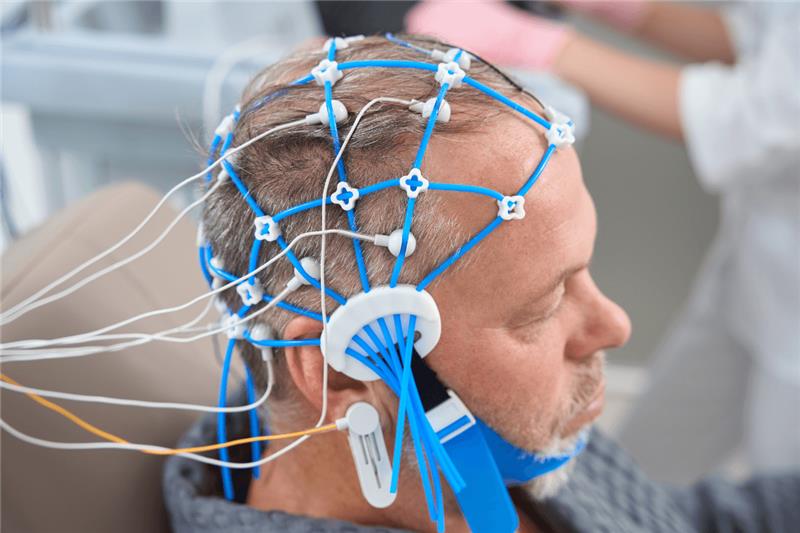
In this study, 62 healthy individuals (mean age = 27.9±0.7 years; female = 31) performed a modified sustained attention to response task (SART) with digits and faces while a high-density electroencephalogram (hdEEG) was recorded. Data were collected at Monash University and the Paris Brain Institute. Participants responded to “Go” trials and withheld responses during “No-Go” trials (1 out of 9 trials). Mental states were probed every 40-70 seconds. At the individual level, participants reported MB in 16±1.8% of probes, MW in 35±2.3%, and ON in 52±2.7%. Among participants, 9.6% (n = 6) reported no instances of MB, whereas 3.2% (n = 2) reported neither MW nor MB.
Behavioral analysis of trials occurring 5 sec before probes showed that MW had faster reaction times (RTs) and more false alarms (FAs), indicating an “impulsive” profile. In contrast, MB had slower RTs and more misses, indicating an “absent” profile. EEG markers (spectral alpha, beta, delta, gamma, and theta), functional connectivity (weighted symbolic mutual information [wSMI]), and complexity (sample entropy [SE] and Kolmogorov complexity [KC]) revealed a fronto-posterior dissociation between MB and MW. These effects persisted after controlling for vigilance.
Functional connectivity analyses revealed significant modulation of wSMI across the alpha, delta, and theta spectral bands during mind states. This connectivity progressively reduced from ON to MW to MB, especially in the alpha band. Source-level wSMI analysis across 68 cortical sources and 45 region-of-interest (ROI) connections demonstrated MB-related reductions in interareal connectivity, particularly in the fronto-parietal region, while phase-locking value (PLV) indicated enhanced phase synchrony.
Machine learning classifiers predicted MB, ON, and MW mind states with a median accuracy of 46%, chance level of 37%, and false discovery rate (FDR)-corrected p-value of 9 × 10⁻⁶. Event-related potential (ERP) analysis demonstrated that early visual responses were similar across mind states, but late P3b responses were absent during MB. Temporal decoding further revealed that successful stimulus classification occurred in MW and ON states but not during MB.
Source reconstruction analysis confirmed that MB trials lacked engagement of the ventral and dorsal visual streams, which showed only sparse, mostly left-lateralized activations. These results indicated that MB was a distinct brain state characterized by reduced information sharing, impaired processing of external stimuli, and diminished long-range connectivity. These neural and behavioral markers clearly differentiate MB from ON and MW states. MB, therefore, reflects a specific signature of reduced conscious access during wakefulness.
References: Munoz-Musat E, Le Coz A, Corcoran AW, Belloli L, Naccache L, Andrillon T. Behavioral, experiential, and physiological signatures of mind blanking. Proc Natl Acad Sci U S A. 2025;122(52):e2510262122. doi:10.1073/pnas.2510262122