Precise Bio has announced the first successful implantation in a human patient of a cornea created in a laboratory by using 3D bioprinting and cultured human eye cells. The procedure is described as a world-first breakthrough and a major step in addressing the global shortage of donor corneal tissue, which leaves millions of people waiting for sight-restoring transplants.
The implant, known as PB-001, was surgically implanted on October 29 in one eye of a patient who had been considered legally blind. The procedure was performed at Rambam Medical Center in Haifa, Israel, by Dr. Michael Mimouni. He is a director of the hospital’s cornea unit. Mimouni characterized the moment as historic and said that it was the first time a lab-grown cornea made from living human cells had successfully improved vision in a person. He highlighted that this breakthrough offers a glimpse into a future where blindness caused by donor shortages can be eliminated.
As per Precise Bio, the success of this implantation represents a major milestone in regenerative ophthalmology. The co-founder and CEO of the company, Aryeh Batt, said that this achievement shows the potential of manufacturing corneal implants in a lab instead of relying on donor tissue. Batt noted that technology could transform corneal transplantation into a scalable and globally accessible solution and give hope to millions affected by corneal blindness.
Precise Bio has developed a robotic bio-fabrication platform that combines cell biology, biomaterial science, and advanced 3D bioprinting. The company believes a single donated cornea can potentially be expanded into hundreds of lab-grown grafts by using this method. This capability addresses a critical supply gap: Precise Bio estimated that there is currently only one available donor cornea for every seven patients who need one cornea to restore their vision.
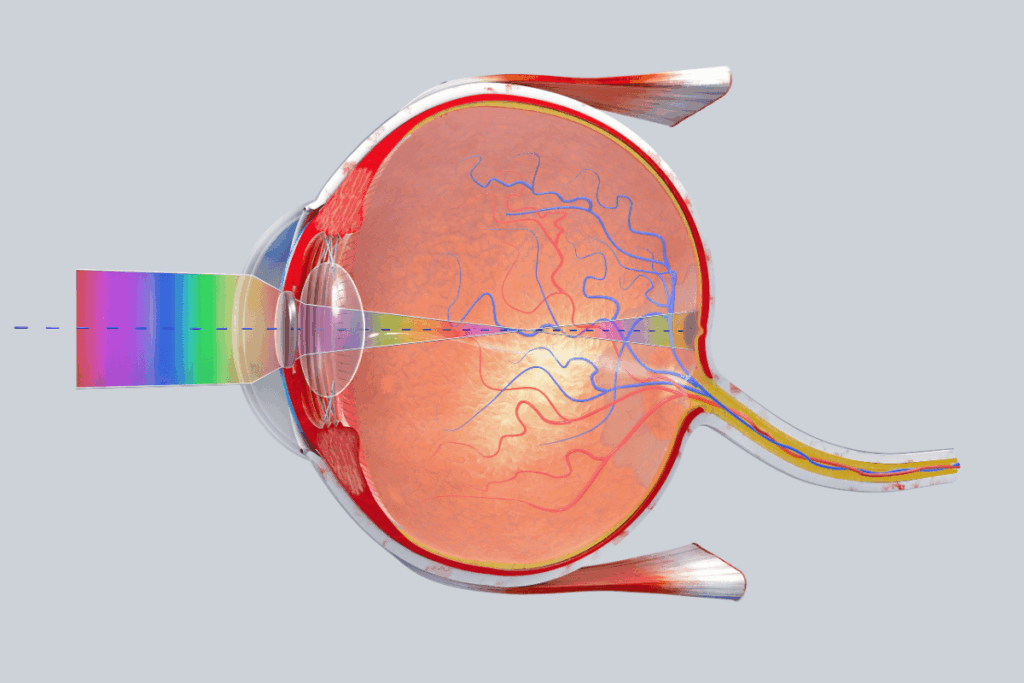
The cornea is the transparent outer layer of the eye that covers the iris and pupil and plays a crucial role in focusing light. Any damage to this tissue caused by injury, infection, scarring, or disease can lead to clouding and severe vision loss. Traditional corneal transplants depend on donated tissue, which is unavailable or unevenly distributed across regions. PB-001 aims to overcome these challenges by providing a consistent and standardized alternative.
PB-001, which is designed to precisely imitate the optical clarity, transparency, and biomechanical strength of a normal human cornea, has previously been shown to integrate well with host tissue in animal tests. The implant is designed to operate with established ophthalmic surgical equipment and procedures, allowing surgeons to follow familiar workflows. It is supplied under long-term cryopreservation and comes preloaded on conventional delivery devices. During implantation, the graft unrolls inside the eye, spontaneously forming the proper corneal shape.
PB-001 is currently being evaluated in a single-arm Phase 1 clinical trial in Israel. The study plans to enroll 10 to 15 participants who suffer from corneal swelling caused by dysfunction in the inner cell layers of the cornea. The trial is mainly focused on assessing safety and early signs of effectiveness. Precise Bio is expected to announce top-line results, including 6-month efficacy results, in the second half of 2026.
Dr. Anthony Atala, co-founder of Precise Bio and director of the Wake Forest Institute for Regenerative Medicine, described implantation as a defining moment for regenerative medicine. He said PB-001 could become a safe, reliable, and effective solution for ophthalmology. Atala highlighted that the ability to produce patient-ready tissue on demand has implications beyond eye care, potentially reshaping the future of transplant medicine.
Reference: Hale C. Precise Bio completes 1st human cornea transplant using 3D-printed, lab-grown tissue. Fierce Biotech. Published November 19, 2025. Accessed December 15, 2025. Precise Bio completes 1st 3D-printed human cornea transplant