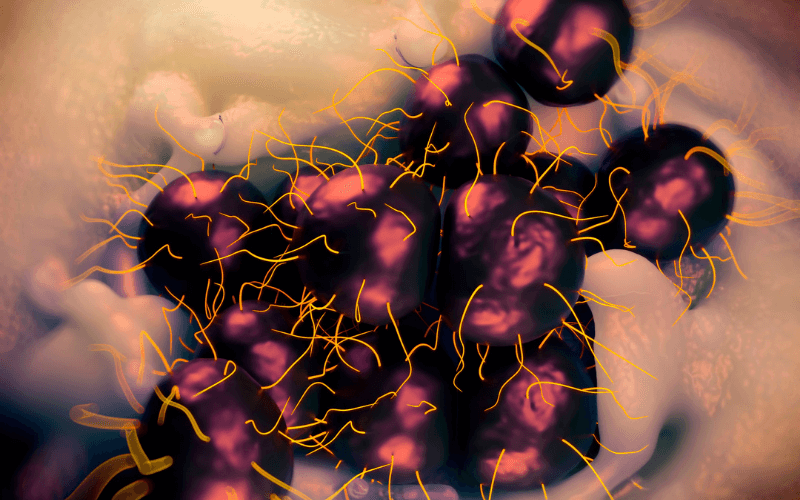
The World Health Organization (WHO) estimated 82.4 million new global cases of gonorrhoea among people aged 15 to 49 years during 2020. Untreated Neisseria gonorrhoeae infection leads to substantial morbidity and enhances the risk of HIV transmission. This N. gonorrhoeae has developed resistance to all major antibiotic classes. Ceftriaxone antibiotic remains the only practical first-line monotherapy for this infection. Resistance to ceftriaxone is rising worldwide, especially in Viet Nam and Cambodia. Zoliflodacin is a first-in-class oral antibiotic that targets the GyrB subunits of DNA gyrase. It remains active against multidrug-resistant organisms. A recent clinical trial (NCT03959527) published in The Lancet aimed to assess the safety and efficacy of a single dose (3g) oral zoliflodacin compared with a combination of azithromycin and ceftriaxone (comparator) in patients with uncomplicated urogenital gonorrhoea.
This Phase 3 clinical trial was a multicenter, randomized, open-label, placebo-controlled, non-inferiority design. This study was conducted across 17 outpatient clinics in the USA (17% participants), South Africa (46%), Thailand (29%), and Europe (8%) from November 6, 2019, to March 26, 2023. A total of 930 patients with suspected or confirmed urogenital gonorrhoea were included in this study. These patients were randomly (2:1) divided into zoliflodacin group (n = 621, mean age = 30±9.6 years, female = 13%, male = 87%) and ceftriaxone+azithromycin group (n = 309, mean age = 29.2±9.1 years, female = 12%, male = 88%). The primary endpoint was microbiological cure at the urogenital site at test of cure (TOC [day 6±2 days]). Secondary endpoints were clinical cure, antimicrobial susceptibility profiles, safety, and extragenital cure. Safety measures were estimated through laboratory testing and monitoring of adverse events. Statistical analysis was performed by SAS version 9.4.
Among 930 randomly assigned patients, confirmed N. gonorrhoea cultures were positive in 80% of participants (n = 744) at urogenital sites, 9% (n = 81) at pharyngeal sites, and 12% (n = 114) at rectal sites. Chlamydia trachomatis con-infection identified by NAAT occurred in 3% (28/925) of participants at pharyngeal sites, 11% (104/922) at rectal sites, and 25% (235/923) at urogenital sites. In the microbiological intention to treat urogenital individuals, cure at TOC was observed in 460/506 participants (90.9%, 95% confidence interval [CI]: 88.1 to 93.3) receiving zoliflodacin and 229/238 (96.2%, 95% CI: 92.9 to 98.3) receiving the comparator. The treatment difference was found to be 5.3% (95% CI: 1.4 to 8.6), within the prespecified non-inferiority margin of <12%.
In the evaluable population, cure rates were reported in 96.8% (95% CI: 94.8 to 98.2) of participants (460/475) receiving zoliflodacin and 100% (95% CI: 98.4 to 100) of participants (229/229) receiving comparator, with a difference of 3.2% and 95% CI: 1.1 to 5.1. Rectal cure rates were 87.3% (95% CI: 78.0 to 93.8) vs 88.6% (95% CI: 73.3 to 96.8) and pharyngeal cure rates were 79.2% (95% CI: 65.9 to 89.2) vs 78.6% (95% CI: 59.0 to 91.7) for zoliflodacin vs comparator groups, respectively, with rates exceeding 90% among both groups.
Clinical cure in symptomatic males was similar between the zoliflodacin group (82%) and the comparator group (88%), with a difference of 6.7% (95% CI: 0.7 to 11.9). Both treatments were well tolerated, with treatment-emergent adverse reactions reported in 46% of participants in each group, mostly mild/moderate. There were no serious safety concerns identified in either treatment group. Common adverse events were leukopenia (n = 24), neutropenia (n = 42), and headache (n = 61) with zoliflodacin, whereas diarrhea (n = 22), neutropenia (n = 24), and injection-site pain (n = 38) with the comparator.
Limitations include the open-label design, which may have influenced follow-up adherence and under-representation of adolescents and women.
In conclusion, this trial demonstrated that a single dose of oral zoliflodacin effectively treats uncomplicated urogenital gonorrhoea. It showed comparable efficacy at pharyngeal and rectal sites. The treatment was well tolerated. Zoliflodacin is a promising single-dose oral therapy for the treatment of uncomplicated urogenital gonorrhoea.
Reference: Luckey A, Balasegaram M, Barbee LA, et al. Zoliflodacin versus ceftriaxone plus azithromycin for treatment of uncomplicated urogenital gonorrhoea: an international, randomised, controlled, open-label, phase 3, non-inferiority clinical trial. The Lancet. 2025. doi:10.1016/S0140-6736(25)01953-1