A new fungal disease called Candida auris causes healthcare-associated infections globally. Here are some key points regarding the epidemiology of Candida auris:
Geographic Distribution: Candida auris was first identified in 2009 in Japan, and since then, it has been reported in more than 40 countries, including the United States, the United Kingdom, India, South Africa, and Venezuela.
Risk Factors: Candida auris infections mainly occur in patients with underlying health conditions, such as diabetes, cancer, and immunocompromised status. The risk of infection is also increased in patients who have received broad-spectrum antibiotics or antifungal therapy and those who have undergone invasive procedures.
Modes of Transmission: Candida auris is primarily transmitted through person-to-person contact or contaminated surfaces or equipment. For weeks, the fungus can persist on surfaces and is resistant to many disinfectants and antifungal drugs.
Infection Types: Candida auris can cause various infections, including bloodstream infections, wound infections, and urinary tract infections. It is often associated with high mortality rates, especially in patients with underlying health conditions.
Antifungal Resistance: One of the significant challenges in treating Candida auris infections is its resistance to multiple antifungal drugs, including azoles and echinocandin. It can lead to prolonged hospital stays and increased healthcare costs.
Outbreaks: Candida auris has been responsible for several outbreaks in healthcare facilities worldwide, leading to increased surveillance and infection control measures. It is classified as a global public health threat by the World Health Organization (WHO).
Kingdom: Fungi
Phylum: Ascomycota
Class: Saccharomycetes
Order: Saccharomycetales
Family: Debaryomycetaceae
Genus: Candida
Species:Candida auris
Structure:
Candida auris is a yeast-like fungus that typically exists in the form of oval-shaped cells called yeast cells. These yeast cells are typically 2 to 5 micrometers in size. The fungus can form biofilms, which are complex communities of cells attached to surfaces. Biofilms contribute to the persistence and resistance of Candida auris in healthcare environments.
Candida auris has a cell wall, like other fungi, which consists of several layers. The cell wall provides structural support and protection for the organism. It contains various components, including polysaccharides, glycoproteins, and other proteins, which contribute to its virulence and interactions with the host immune system.
The fungus also has a cell membrane, which is a phospholipid bilayer that surrounds the cytoplasm. The cell membrane regulates the movement of molecules in and out of the cell.
Inside the yeast cells, Candida auris contains a nucleus, which houses its genetic material in the form of DNA. It also has other cellular organelles, including mitochondria, Golgi apparatus, endoplasmic reticulum, and vacuoles, which are involved in various cellular processes.
Several antigenic types of Candida auris have been identified based on differences in the outer surface proteins of the fungus.
These antigenic types were designated A, B, C, and D.
Another study found that Candida auris strains from different geographic regions could be divided into four major clades based on whole-genome sequencing data. Within each clade, there were also several subgroups with distinct antigenic profiles.
There are multiple antigenic types of Candida auris. All strains of this fungus are considered highly pathogenic and resistant to many antifungal drugs, making it a significant public health concern.
The pathogenesis of Candida auris needs to be better understood. Still, it is thought to be a complex process involving several factors, including its ability to form biofilms, resistance to antifungal agents, and capacity to survive on surfaces.
The pathogenesis of Candida auris is its ability to form biofilms. Communities of bacteria known as biofilms cling to surfaces and form a protective matrix, making them resistant to antimicrobial agents. Candida auris has been shown to form biofilms on various surfaces, including catheters, ventilators, and medical equipment.
Another important factor contributing to the pathogenesis of Candida auris is its resistance to antifungal agents. Candida auris is resistant to multiple antifungal agents, including azoles, echinocandins, and polyenes. This resistance is thought to be due to several mechanisms, including mutations in the genes that code for the drug targets, overexpression of efflux pumps, and alterations in the cell membrane.
Candida auris can also survive on surfaces for extended periods, which can lead to its transmission in healthcare settings. This ability is due to the formation of a protective matrix and its ability to adapt to different environmental conditions.
auris has developed several host defenses to protect itself against the host’s immune system.
One of the primary host defenses against C. auris is the innate immune system, including neutrophils, macrophages, and dendritic cells. These cells can recognize and engulf C. auris, then use enzymes and reactive oxygen species to kill it. However, C. auris has developed several mechanisms to evade the innate immune system, including producing a biofilm and synthesizing enzymes that break down host proteins.
In addition to the innate immune system, the adaptive immune system also plays a role in defense against C. auris. Adaptive immunity involves the production of antibodies and T cells that specifically recognize and target C. auris. However, C. auris can produce several virulence factors impairing the adaptive immune response, such as the secretion of immunosuppressive molecules.
Finally, the microbiome also plays a role in defense against C. auris. The microbiome is the community of microorganisms that inhabit the human body and its surface, and it can compete with C. auris for resources and space. A healthy microbiome can help to prevent C. auris infections by limiting its growth and colonization.
The clinical manifestations of Candida auris infections can vary depending on the site of infection but may include the following:
Bloodstream infections (candidemia): Fever, chills, low blood pressure, rapid heartbeat, skin rash, and organ failure.
Ear infections: Pain, discharge, itching, and redness.
Skin infections: Redness, itching, scaling, and discharge.
Urinary tract infections: Painful urination, frequent urination, and cloudy or bloody urine.
Wound infections: Redness, swelling, pain, and discharge.
Respiratory infections: Cough, shortness of breath, chest pain, and fever.
It’s important to note that many of these symptoms are non-specific and can also be caused by other infections. If you suspect you may have a Candida auris infection, it’s essential to seek medical attention promptly for proper diagnosis and treatment.
Diagnosis of Candida auris typically involves a combination of laboratory tests and clinical symptoms.
Laboratory tests include:
Culture and fungus identification from a clinical sample, such as blood, urine, or wound swab. However, this may only sometimes be straightforward since C. auris can be easily misidentified as other Candida species.
Molecular testing, such as polymerase chain reaction (PCR), can confirm the presence of C. auris DNA in a clinical sample.
Clinical symptoms include:
Patients with C. auris infections may have a fever, chills, and other signs of infection.
Invasive infections can cause sepsis, organ failure, and other serious complications.
It is important to note that infections often resist multiple antifungal drugs, which can complicate C. auris treatment and increase mortality risk. Therefore, rapid, and accurate diagnosis is critical for effectively managing C. auris infections.
The control of Candida auris involves a combination of measures that aim to prevent its transmission, identify and treat infected individuals, and reduce the risk of infection in susceptible individuals.
Here are some ways to control Candida auris:
Hand hygiene: Proper hand hygiene is essential in preventing the transmission of Candida auris. It includes washing hands regularly with soap and water or using an alcohol-based hand sanitizer.
Environmental cleaning: Since Candida auris can persist in the environment, it’s essential to regularly clean and disinfect surfaces, equipment, and rooms where infected individuals have been.
Isolation precautions: Infected individuals should be placed in isolation to prevent the spread of Candida auris to other patients and healthcare workers.
Antifungal treatment: Infected individuals should be treated with antifungal medication as soon as possible to reduce the severity of the infection and prevent transmission.
Screening and surveillance: Screening and surveillance for Candida auris in high-risk settings such as hospitals and long-term care facilities can help identify infected individuals and prevent the spread of the fungus.
A new fungal disease called Candida auris causes healthcare-associated infections globally. Here are some key points regarding the epidemiology of Candida auris:
Geographic Distribution: Candida auris was first identified in 2009 in Japan, and since then, it has been reported in more than 40 countries, including the United States, the United Kingdom, India, South Africa, and Venezuela.
Risk Factors: Candida auris infections mainly occur in patients with underlying health conditions, such as diabetes, cancer, and immunocompromised status. The risk of infection is also increased in patients who have received broad-spectrum antibiotics or antifungal therapy and those who have undergone invasive procedures.
Modes of Transmission: Candida auris is primarily transmitted through person-to-person contact or contaminated surfaces or equipment. For weeks, the fungus can persist on surfaces and is resistant to many disinfectants and antifungal drugs.
Infection Types: Candida auris can cause various infections, including bloodstream infections, wound infections, and urinary tract infections. It is often associated with high mortality rates, especially in patients with underlying health conditions.
Antifungal Resistance: One of the significant challenges in treating Candida auris infections is its resistance to multiple antifungal drugs, including azoles and echinocandin. It can lead to prolonged hospital stays and increased healthcare costs.
Outbreaks: Candida auris has been responsible for several outbreaks in healthcare facilities worldwide, leading to increased surveillance and infection control measures. It is classified as a global public health threat by the World Health Organization (WHO).
Kingdom: Fungi
Phylum: Ascomycota
Class: Saccharomycetes
Order: Saccharomycetales
Family: Debaryomycetaceae
Genus: Candida
Species:Candida auris
Structure:
Candida auris is a yeast-like fungus that typically exists in the form of oval-shaped cells called yeast cells. These yeast cells are typically 2 to 5 micrometers in size. The fungus can form biofilms, which are complex communities of cells attached to surfaces. Biofilms contribute to the persistence and resistance of Candida auris in healthcare environments.
Candida auris has a cell wall, like other fungi, which consists of several layers. The cell wall provides structural support and protection for the organism. It contains various components, including polysaccharides, glycoproteins, and other proteins, which contribute to its virulence and interactions with the host immune system.
The fungus also has a cell membrane, which is a phospholipid bilayer that surrounds the cytoplasm. The cell membrane regulates the movement of molecules in and out of the cell.
Inside the yeast cells, Candida auris contains a nucleus, which houses its genetic material in the form of DNA. It also has other cellular organelles, including mitochondria, Golgi apparatus, endoplasmic reticulum, and vacuoles, which are involved in various cellular processes.
Several antigenic types of Candida auris have been identified based on differences in the outer surface proteins of the fungus.
These antigenic types were designated A, B, C, and D.
Another study found that Candida auris strains from different geographic regions could be divided into four major clades based on whole-genome sequencing data. Within each clade, there were also several subgroups with distinct antigenic profiles.
There are multiple antigenic types of Candida auris. All strains of this fungus are considered highly pathogenic and resistant to many antifungal drugs, making it a significant public health concern.
The pathogenesis of Candida auris needs to be better understood. Still, it is thought to be a complex process involving several factors, including its ability to form biofilms, resistance to antifungal agents, and capacity to survive on surfaces.
The pathogenesis of Candida auris is its ability to form biofilms. Communities of bacteria known as biofilms cling to surfaces and form a protective matrix, making them resistant to antimicrobial agents. Candida auris has been shown to form biofilms on various surfaces, including catheters, ventilators, and medical equipment.
Another important factor contributing to the pathogenesis of Candida auris is its resistance to antifungal agents. Candida auris is resistant to multiple antifungal agents, including azoles, echinocandins, and polyenes. This resistance is thought to be due to several mechanisms, including mutations in the genes that code for the drug targets, overexpression of efflux pumps, and alterations in the cell membrane.
Candida auris can also survive on surfaces for extended periods, which can lead to its transmission in healthcare settings. This ability is due to the formation of a protective matrix and its ability to adapt to different environmental conditions.
auris has developed several host defenses to protect itself against the host’s immune system.
One of the primary host defenses against C. auris is the innate immune system, including neutrophils, macrophages, and dendritic cells. These cells can recognize and engulf C. auris, then use enzymes and reactive oxygen species to kill it. However, C. auris has developed several mechanisms to evade the innate immune system, including producing a biofilm and synthesizing enzymes that break down host proteins.
In addition to the innate immune system, the adaptive immune system also plays a role in defense against C. auris. Adaptive immunity involves the production of antibodies and T cells that specifically recognize and target C. auris. However, C. auris can produce several virulence factors impairing the adaptive immune response, such as the secretion of immunosuppressive molecules.
Finally, the microbiome also plays a role in defense against C. auris. The microbiome is the community of microorganisms that inhabit the human body and its surface, and it can compete with C. auris for resources and space. A healthy microbiome can help to prevent C. auris infections by limiting its growth and colonization.
The clinical manifestations of Candida auris infections can vary depending on the site of infection but may include the following:
Bloodstream infections (candidemia): Fever, chills, low blood pressure, rapid heartbeat, skin rash, and organ failure.
Ear infections: Pain, discharge, itching, and redness.
Skin infections: Redness, itching, scaling, and discharge.
Urinary tract infections: Painful urination, frequent urination, and cloudy or bloody urine.
Wound infections: Redness, swelling, pain, and discharge.
Respiratory infections: Cough, shortness of breath, chest pain, and fever.
It’s important to note that many of these symptoms are non-specific and can also be caused by other infections. If you suspect you may have a Candida auris infection, it’s essential to seek medical attention promptly for proper diagnosis and treatment.
Diagnosis of Candida auris typically involves a combination of laboratory tests and clinical symptoms.
Laboratory tests include:
Culture and fungus identification from a clinical sample, such as blood, urine, or wound swab. However, this may only sometimes be straightforward since C. auris can be easily misidentified as other Candida species.
Molecular testing, such as polymerase chain reaction (PCR), can confirm the presence of C. auris DNA in a clinical sample.
Clinical symptoms include:
Patients with C. auris infections may have a fever, chills, and other signs of infection.
Invasive infections can cause sepsis, organ failure, and other serious complications.
It is important to note that infections often resist multiple antifungal drugs, which can complicate C. auris treatment and increase mortality risk. Therefore, rapid, and accurate diagnosis is critical for effectively managing C. auris infections.
The control of Candida auris involves a combination of measures that aim to prevent its transmission, identify and treat infected individuals, and reduce the risk of infection in susceptible individuals.
Here are some ways to control Candida auris:
Hand hygiene: Proper hand hygiene is essential in preventing the transmission of Candida auris. It includes washing hands regularly with soap and water or using an alcohol-based hand sanitizer.
Environmental cleaning: Since Candida auris can persist in the environment, it’s essential to regularly clean and disinfect surfaces, equipment, and rooms where infected individuals have been.
Isolation precautions: Infected individuals should be placed in isolation to prevent the spread of Candida auris to other patients and healthcare workers.
Antifungal treatment: Infected individuals should be treated with antifungal medication as soon as possible to reduce the severity of the infection and prevent transmission.
Screening and surveillance: Screening and surveillance for Candida auris in high-risk settings such as hospitals and long-term care facilities can help identify infected individuals and prevent the spread of the fungus.
A new fungal disease called Candida auris causes healthcare-associated infections globally. Here are some key points regarding the epidemiology of Candida auris:
Geographic Distribution: Candida auris was first identified in 2009 in Japan, and since then, it has been reported in more than 40 countries, including the United States, the United Kingdom, India, South Africa, and Venezuela.
Risk Factors: Candida auris infections mainly occur in patients with underlying health conditions, such as diabetes, cancer, and immunocompromised status. The risk of infection is also increased in patients who have received broad-spectrum antibiotics or antifungal therapy and those who have undergone invasive procedures.
Modes of Transmission: Candida auris is primarily transmitted through person-to-person contact or contaminated surfaces or equipment. For weeks, the fungus can persist on surfaces and is resistant to many disinfectants and antifungal drugs.
Infection Types: Candida auris can cause various infections, including bloodstream infections, wound infections, and urinary tract infections. It is often associated with high mortality rates, especially in patients with underlying health conditions.
Antifungal Resistance: One of the significant challenges in treating Candida auris infections is its resistance to multiple antifungal drugs, including azoles and echinocandin. It can lead to prolonged hospital stays and increased healthcare costs.
Outbreaks: Candida auris has been responsible for several outbreaks in healthcare facilities worldwide, leading to increased surveillance and infection control measures. It is classified as a global public health threat by the World Health Organization (WHO).
Kingdom: Fungi
Phylum: Ascomycota
Class: Saccharomycetes
Order: Saccharomycetales
Family: Debaryomycetaceae
Genus: Candida
Species:Candida auris
Structure:
Candida auris is a yeast-like fungus that typically exists in the form of oval-shaped cells called yeast cells. These yeast cells are typically 2 to 5 micrometers in size. The fungus can form biofilms, which are complex communities of cells attached to surfaces. Biofilms contribute to the persistence and resistance of Candida auris in healthcare environments.
Candida auris has a cell wall, like other fungi, which consists of several layers. The cell wall provides structural support and protection for the organism. It contains various components, including polysaccharides, glycoproteins, and other proteins, which contribute to its virulence and interactions with the host immune system.
The fungus also has a cell membrane, which is a phospholipid bilayer that surrounds the cytoplasm. The cell membrane regulates the movement of molecules in and out of the cell.
Inside the yeast cells, Candida auris contains a nucleus, which houses its genetic material in the form of DNA. It also has other cellular organelles, including mitochondria, Golgi apparatus, endoplasmic reticulum, and vacuoles, which are involved in various cellular processes.
Several antigenic types of Candida auris have been identified based on differences in the outer surface proteins of the fungus.
These antigenic types were designated A, B, C, and D.
Another study found that Candida auris strains from different geographic regions could be divided into four major clades based on whole-genome sequencing data. Within each clade, there were also several subgroups with distinct antigenic profiles.
There are multiple antigenic types of Candida auris. All strains of this fungus are considered highly pathogenic and resistant to many antifungal drugs, making it a significant public health concern.
The pathogenesis of Candida auris needs to be better understood. Still, it is thought to be a complex process involving several factors, including its ability to form biofilms, resistance to antifungal agents, and capacity to survive on surfaces.
The pathogenesis of Candida auris is its ability to form biofilms. Communities of bacteria known as biofilms cling to surfaces and form a protective matrix, making them resistant to antimicrobial agents. Candida auris has been shown to form biofilms on various surfaces, including catheters, ventilators, and medical equipment.
Another important factor contributing to the pathogenesis of Candida auris is its resistance to antifungal agents. Candida auris is resistant to multiple antifungal agents, including azoles, echinocandins, and polyenes. This resistance is thought to be due to several mechanisms, including mutations in the genes that code for the drug targets, overexpression of efflux pumps, and alterations in the cell membrane.
Candida auris can also survive on surfaces for extended periods, which can lead to its transmission in healthcare settings. This ability is due to the formation of a protective matrix and its ability to adapt to different environmental conditions.
auris has developed several host defenses to protect itself against the host’s immune system.
One of the primary host defenses against C. auris is the innate immune system, including neutrophils, macrophages, and dendritic cells. These cells can recognize and engulf C. auris, then use enzymes and reactive oxygen species to kill it. However, C. auris has developed several mechanisms to evade the innate immune system, including producing a biofilm and synthesizing enzymes that break down host proteins.
In addition to the innate immune system, the adaptive immune system also plays a role in defense against C. auris. Adaptive immunity involves the production of antibodies and T cells that specifically recognize and target C. auris. However, C. auris can produce several virulence factors impairing the adaptive immune response, such as the secretion of immunosuppressive molecules.
Finally, the microbiome also plays a role in defense against C. auris. The microbiome is the community of microorganisms that inhabit the human body and its surface, and it can compete with C. auris for resources and space. A healthy microbiome can help to prevent C. auris infections by limiting its growth and colonization.
The clinical manifestations of Candida auris infections can vary depending on the site of infection but may include the following:
Bloodstream infections (candidemia): Fever, chills, low blood pressure, rapid heartbeat, skin rash, and organ failure.
Ear infections: Pain, discharge, itching, and redness.
Skin infections: Redness, itching, scaling, and discharge.
Urinary tract infections: Painful urination, frequent urination, and cloudy or bloody urine.
Wound infections: Redness, swelling, pain, and discharge.
Respiratory infections: Cough, shortness of breath, chest pain, and fever.
It’s important to note that many of these symptoms are non-specific and can also be caused by other infections. If you suspect you may have a Candida auris infection, it’s essential to seek medical attention promptly for proper diagnosis and treatment.
Diagnosis of Candida auris typically involves a combination of laboratory tests and clinical symptoms.
Laboratory tests include:
Culture and fungus identification from a clinical sample, such as blood, urine, or wound swab. However, this may only sometimes be straightforward since C. auris can be easily misidentified as other Candida species.
Molecular testing, such as polymerase chain reaction (PCR), can confirm the presence of C. auris DNA in a clinical sample.
Clinical symptoms include:
Patients with C. auris infections may have a fever, chills, and other signs of infection.
Invasive infections can cause sepsis, organ failure, and other serious complications.
It is important to note that infections often resist multiple antifungal drugs, which can complicate C. auris treatment and increase mortality risk. Therefore, rapid, and accurate diagnosis is critical for effectively managing C. auris infections.
The control of Candida auris involves a combination of measures that aim to prevent its transmission, identify and treat infected individuals, and reduce the risk of infection in susceptible individuals.
Here are some ways to control Candida auris:
Hand hygiene: Proper hand hygiene is essential in preventing the transmission of Candida auris. It includes washing hands regularly with soap and water or using an alcohol-based hand sanitizer.
Environmental cleaning: Since Candida auris can persist in the environment, it’s essential to regularly clean and disinfect surfaces, equipment, and rooms where infected individuals have been.
Isolation precautions: Infected individuals should be placed in isolation to prevent the spread of Candida auris to other patients and healthcare workers.
Antifungal treatment: Infected individuals should be treated with antifungal medication as soon as possible to reduce the severity of the infection and prevent transmission.
Screening and surveillance: Screening and surveillance for Candida auris in high-risk settings such as hospitals and long-term care facilities can help identify infected individuals and prevent the spread of the fungus.
Both our subscription plans include Free CME/CPD AMA PRA Category 1 credits.
Digital Certificate PDF
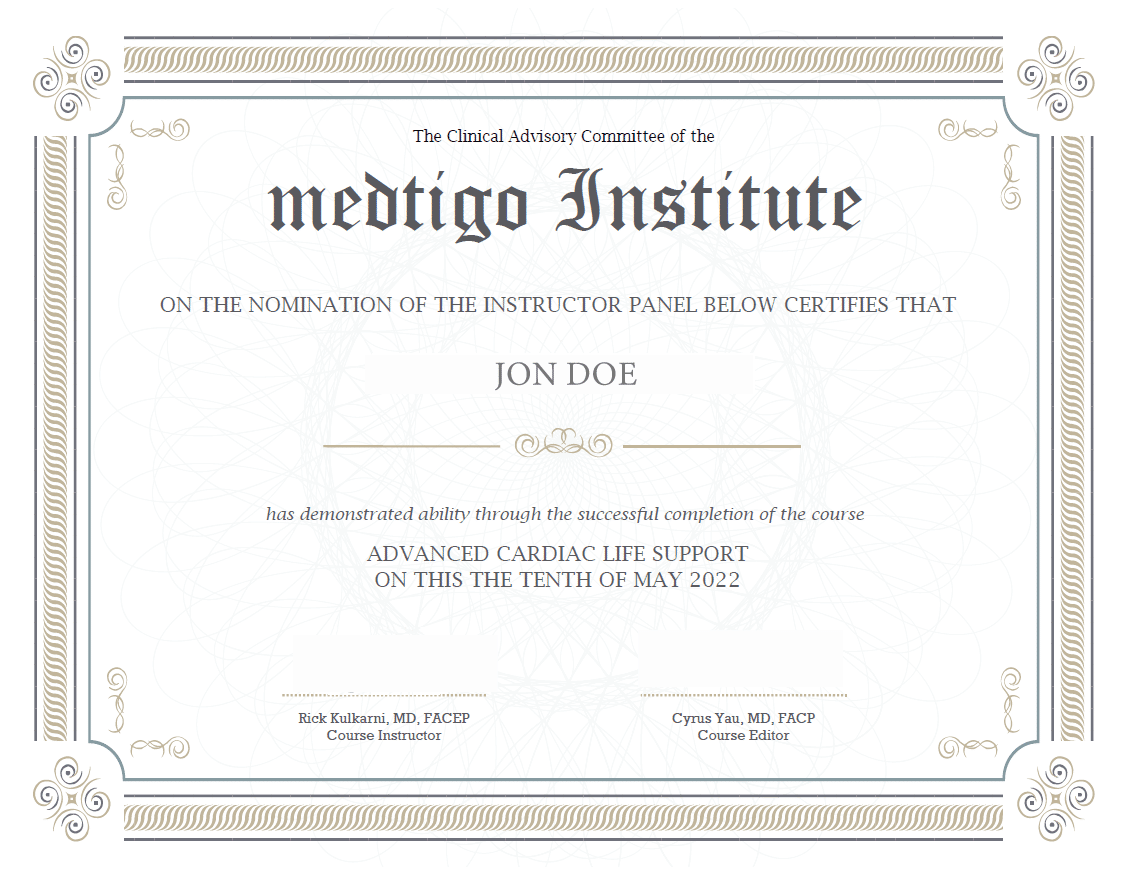
On course completion, you will receive a full-sized presentation quality digital certificate.
medtigo Simulation
A dynamic medical simulation platform designed to train healthcare professionals and students to effectively run code situations through an immersive hands-on experience in a live, interactive 3D environment.
medtigo Points
medtigo points is our unique point redemption system created to award users for interacting on our site. These points can be redeemed for special discounts on the medtigo marketplace as well as towards the membership cost itself.
Community Forum post/reply = 5 points
*Redemption of points can occur only through the medtigo marketplace, courses, or simulation system. Money will not be credited to your bank account. 10 points = $1.
All Your Certificates in One Place
When you have your licenses, certificates and CMEs in one place, it's easier to track your career growth. You can easily share these with hospitals as well, using your medtigo app.