The epidemiology of Encephalitozoon intestinalis infection still needs to be fully elucidated. This microsporidium is widely distributed in the environment and has a broad host range, including rodents, rabbits, dogs, cats, birds, and monkeys. Humans can become infected through various routes, including ingesting contaminated water or food and contacting infected animals.
While the infection is more prevalent in developing countries where sanitation and hygiene standards are often suboptimal, cases are not limited to these regions. Developed countries also report cases among travelers, immigrants, and refugees from areas where the parasite is endemic.The prevalence of E. intestinalis infection in humans varies widely, ranging from 0% to 56%.
This variation is influenced by geographic location, the specific population studied, and the diagnostic techniques employed. Notably, individuals with compromised immune systems, particularly those with AIDS and low CD4+ cell counts, exhibit higher prevalence rates. Additionally, the parasite can be transmitted through various means, including organ transplantation, blood transfusion, and sexual contact.
The precise incubation period of E. intestinalis infection remains unknown but is believed to span from days to months. Instances of outbreaks have occurred, as seen in a reported outbreak involving 20 travelers who had consumed untreated water from a mountain stream during their visit to Nepal.
Classification and Structure:
Kingdom: Fungi
Phylum: Microsporidia
Class: Microsporea
Order: Microsporidiales
Family: Unikaryonidae
Genus:Encephalitozoon
Species:E. intestinalis
Encephalitozoon intestinalis has a distinct structural composition consisting of:
Sporoblast: This is the infectious stage of the parasite and contains essential components such as the nucleus, posterior vacuole, and ribosomes, all enveloped by a plasma membrane. It is a crucial element for initiating infection.
Polar Tubule: A unique organelle coiled around the sporoblast within the spore. It plays a pivotal role by everting and piercing the host cell membrane to inject the sporoblast.
Spore Wall: Comprising an inner endospore & an outer exospore, the spore wall is a robust, protective layer. It shields the sporoblast and the polar tubule, offering resistance to environmental conditions and ensuring the spore’s longevity.
Spore Structure:E. intestinalis spores are oval-shaped and measure approximately 1 to 2 microns in diameter. They possess a polar tube coiled within the spore, essential for infecting host cells. Additionally, the spore is enclosed by a plasma membrane, an endospore, and an exospore, safeguarding it from external factors.
Encephalitozoon intestinalis possesses various antigens that can be identified through antibodies in the serum or stool of infected individuals, with some of these antigens being spore wall proteins (SWPs). Notably, this microsporidian species harbors specific virulent proteins, such as EiEnP1, an endospore protein expressed during sporulation, potentially involved in spore invasion.
Another significant virulent protein is EiCDA, a chitin deacetylase responsible for modifying the chitin layer of the spore wall.Compared to its counterpart, E. cuniculi, E. intestinalis exhibits a reduced gene complement and a smaller genome size of 2.3 Mbp, reflecting its high level of host dependency.
Notably, while E. intestinalis and E. cuniculi share a conserved gene content, order, and density across most of their genomes, they differ antigenically in molecular weight regions of 54–58 kDa and 28–40 kDa, as evidenced by Immunodetection Western blot technique using murine antisera raised against various microsporidian species, including Encephalitozoonhellem, E. cuniculi, & the Encephalitozoon-like Septataintestinalis.
The pathogenesis of Encephalitozoon intestinalis infection involves several key steps:
Parasite Entry: The parasite gains access to the human body by ingesting contaminated water or food or contacting infected animals.
Spore Germination and Invasion: Once inside the host, the parasite’s spores germinate within the gastrointestinal tract. By employing unique polar tubules, they inject the infective sporoplasm into host cells.
Intracellular Multiplication: The sporoplasm multiplies within host cells by using binary or multiple fission to produce meronts. E. intestinalis develops within a parasitophorous vacuole of unknown origin.
Sporogony and Dissemination: Following intracellular multiplication, the parasite meronts undergo sporogony. This process involves the formation of new spores equipped with thick walls and invasion apparatus. These mature spores are then released from the host cells and can infect new cells or disseminate to other organs via macrophages.
Inflammatory Response and Tissue Damage: The parasite triggers an inflammatory response in the affected organs, leading to tissue damage and, in some cases, cell death. The severity of symptoms and disease progression varies based on the site & extent of the infection and the host’s immune status.
Genomic Instability: Importantly, the parasite infection can induce DNA damage and genomic instability in host cells. This disturbance in the host’s genetic material can increase the risk of developing cancer or other diseases. This aspect of the pathogenesis highlights the potential long-term consequences of E. intestinalis infection.
Human host defenses against Encephalitozoon intestinalis encompass innate and adaptive immune responses, forming a robust defense mechanism. The innate immune system counters as a primary defense, by recognizing the parasite via PRRs (pattern recognition receptors). These receptors play a pivotal role in identifying the presence of the parasite, triggering a cascade of immune responses.
Subsequently, the adaptive immune system is activated through antigen presentation by infected cells, producing specific antibodies and cytotoxic T cells tailored to target and eliminate the parasite. T helper (Th) cells, a crucial component of the adaptive immune response, secrete cytokines that regulate the functions of various immune cells, including B cells, macrophages, and cytotoxic T cells.
Th cells can be further categorized into distinct subsets, such as Th1, Th17, Th2, & regulatory T cells (Treg), based on the specific cytokines they produce.Notably, Th1 cells are responsible for secreting interferon-gamma (IFN-γ) and interleukin-2 (IL-2), pivotal in promoting cell-mediated immunity and macrophage activation intracellularly against Encephalitozoon intestinalis.
Encephalitozoon intestinalis infection can manifest with various clinical symptoms, which may vary based on the location and extent of the infection:
Diarrhea and Malabsorption:E. intestinalis primarily targets the epithelial cells of the small intestine, leading to inflammation, villous atrophy, and mucosal damage. This often results in persistent diarrhea, weight loss, and malabsorption of essential nutrients.
Disseminated Infection: In severe cases, the infection can extend beyond the intestine and affect other organs, including the kidney, liver, spleen, lung, brain, heart, eye, and muscle. This dissemination can lead to complications such as nephritis, hepatitis, encephalitis, uveitis, splenomegaly, pneumonia, endocarditis, keratitis, and myositis.
Increased Host Cell Mutation Rate:E. intestinalis infection has been associated with DNA damage & genomic instability in host cells. This poses an elevated risk of developing conditions like cancer or other diseases, adding to the complexity of its clinical manifestations.
Diagnosis of Encephalitozoon intestinalis infection involves various methods, each with strengths and applications. These diagnostic approaches include:
Microscopy: Stool samples or tissue biopsies can be stained with modified trichrome, calcofluor white, or Gram-chromotrope dyes and examined under a light microscope. E. intestinalis spores, which are oval and typically 1 to 4 microns in diameter, can be differentiated from other microsporidia based on their distinctive shape, size, and staining characteristics.
Monoclonal Antibody-Based Immunofluorescence Assay (IFA): This method employs specific antibodies to label and visualize E. intestinalis spores under a fluorescence microscope. IFA provides a precise means of identifying the parasite.
Real-Time PCR Assay: Real-time PCR amplifies and detects the DNA of Encephalitozoon species using specific primers and probes. This method not only confirms the presence of the parasite but can also differentiate between various Encephalitozoon species, including E. intestinalis, E. cuniculi, and E. hellem, by analyzing the melting temperature of the amplicons.
Molecular Phylodiagnosis: For a more in-depth understanding, DNA sequencing and phylogenetic analysis can identify the species and genotype of microsporidia, including E. intestinalis. This advanced method can also shed light on these parasitic organisms’ evolutionary relationships and epidemiological patterns.
Given its transmission through contaminated water, it’s essential to consume safe, treated water and avoid contact with water sources contaminated by animal or human feces. This practice significantly reduces the risk of infection.
Treatment for microsporidiosis varies depending on the species involved. Effective drugs for Encephalitozoon intestinalis infections include albendazole, fumagillin, and nitazoxanide. Seeking medical attention and adhering to prescribed treatment is crucial.
In cases of co-infection with HIV, antiretroviral therapy can enhance immune system function & reduce the risk of microsporidiosis. Proper medical management is essential for HIV-infected patients to minimize susceptibility to this and other opportunistic infections.
The epidemiology of Encephalitozoon intestinalis infection still needs to be fully elucidated. This microsporidium is widely distributed in the environment and has a broad host range, including rodents, rabbits, dogs, cats, birds, and monkeys. Humans can become infected through various routes, including ingesting contaminated water or food and contacting infected animals.
While the infection is more prevalent in developing countries where sanitation and hygiene standards are often suboptimal, cases are not limited to these regions. Developed countries also report cases among travelers, immigrants, and refugees from areas where the parasite is endemic.The prevalence of E. intestinalis infection in humans varies widely, ranging from 0% to 56%.
This variation is influenced by geographic location, the specific population studied, and the diagnostic techniques employed. Notably, individuals with compromised immune systems, particularly those with AIDS and low CD4+ cell counts, exhibit higher prevalence rates. Additionally, the parasite can be transmitted through various means, including organ transplantation, blood transfusion, and sexual contact.
The precise incubation period of E. intestinalis infection remains unknown but is believed to span from days to months. Instances of outbreaks have occurred, as seen in a reported outbreak involving 20 travelers who had consumed untreated water from a mountain stream during their visit to Nepal.
Classification and Structure:
Kingdom: Fungi
Phylum: Microsporidia
Class: Microsporea
Order: Microsporidiales
Family: Unikaryonidae
Genus:Encephalitozoon
Species:E. intestinalis
Encephalitozoon intestinalis has a distinct structural composition consisting of:
Sporoblast: This is the infectious stage of the parasite and contains essential components such as the nucleus, posterior vacuole, and ribosomes, all enveloped by a plasma membrane. It is a crucial element for initiating infection.
Polar Tubule: A unique organelle coiled around the sporoblast within the spore. It plays a pivotal role by everting and piercing the host cell membrane to inject the sporoblast.
Spore Wall: Comprising an inner endospore & an outer exospore, the spore wall is a robust, protective layer. It shields the sporoblast and the polar tubule, offering resistance to environmental conditions and ensuring the spore’s longevity.
Spore Structure:E. intestinalis spores are oval-shaped and measure approximately 1 to 2 microns in diameter. They possess a polar tube coiled within the spore, essential for infecting host cells. Additionally, the spore is enclosed by a plasma membrane, an endospore, and an exospore, safeguarding it from external factors.
Encephalitozoon intestinalis possesses various antigens that can be identified through antibodies in the serum or stool of infected individuals, with some of these antigens being spore wall proteins (SWPs). Notably, this microsporidian species harbors specific virulent proteins, such as EiEnP1, an endospore protein expressed during sporulation, potentially involved in spore invasion.
Another significant virulent protein is EiCDA, a chitin deacetylase responsible for modifying the chitin layer of the spore wall.Compared to its counterpart, E. cuniculi, E. intestinalis exhibits a reduced gene complement and a smaller genome size of 2.3 Mbp, reflecting its high level of host dependency.
Notably, while E. intestinalis and E. cuniculi share a conserved gene content, order, and density across most of their genomes, they differ antigenically in molecular weight regions of 54–58 kDa and 28–40 kDa, as evidenced by Immunodetection Western blot technique using murine antisera raised against various microsporidian species, including Encephalitozoonhellem, E. cuniculi, & the Encephalitozoon-like Septataintestinalis.
The pathogenesis of Encephalitozoon intestinalis infection involves several key steps:
Parasite Entry: The parasite gains access to the human body by ingesting contaminated water or food or contacting infected animals.
Spore Germination and Invasion: Once inside the host, the parasite’s spores germinate within the gastrointestinal tract. By employing unique polar tubules, they inject the infective sporoplasm into host cells.
Intracellular Multiplication: The sporoplasm multiplies within host cells by using binary or multiple fission to produce meronts. E. intestinalis develops within a parasitophorous vacuole of unknown origin.
Sporogony and Dissemination: Following intracellular multiplication, the parasite meronts undergo sporogony. This process involves the formation of new spores equipped with thick walls and invasion apparatus. These mature spores are then released from the host cells and can infect new cells or disseminate to other organs via macrophages.
Inflammatory Response and Tissue Damage: The parasite triggers an inflammatory response in the affected organs, leading to tissue damage and, in some cases, cell death. The severity of symptoms and disease progression varies based on the site & extent of the infection and the host’s immune status.
Genomic Instability: Importantly, the parasite infection can induce DNA damage and genomic instability in host cells. This disturbance in the host’s genetic material can increase the risk of developing cancer or other diseases. This aspect of the pathogenesis highlights the potential long-term consequences of E. intestinalis infection.
Human host defenses against Encephalitozoon intestinalis encompass innate and adaptive immune responses, forming a robust defense mechanism. The innate immune system counters as a primary defense, by recognizing the parasite via PRRs (pattern recognition receptors). These receptors play a pivotal role in identifying the presence of the parasite, triggering a cascade of immune responses.
Subsequently, the adaptive immune system is activated through antigen presentation by infected cells, producing specific antibodies and cytotoxic T cells tailored to target and eliminate the parasite. T helper (Th) cells, a crucial component of the adaptive immune response, secrete cytokines that regulate the functions of various immune cells, including B cells, macrophages, and cytotoxic T cells.
Th cells can be further categorized into distinct subsets, such as Th1, Th17, Th2, & regulatory T cells (Treg), based on the specific cytokines they produce.Notably, Th1 cells are responsible for secreting interferon-gamma (IFN-γ) and interleukin-2 (IL-2), pivotal in promoting cell-mediated immunity and macrophage activation intracellularly against Encephalitozoon intestinalis.
Encephalitozoon intestinalis infection can manifest with various clinical symptoms, which may vary based on the location and extent of the infection:
Diarrhea and Malabsorption:E. intestinalis primarily targets the epithelial cells of the small intestine, leading to inflammation, villous atrophy, and mucosal damage. This often results in persistent diarrhea, weight loss, and malabsorption of essential nutrients.
Disseminated Infection: In severe cases, the infection can extend beyond the intestine and affect other organs, including the kidney, liver, spleen, lung, brain, heart, eye, and muscle. This dissemination can lead to complications such as nephritis, hepatitis, encephalitis, uveitis, splenomegaly, pneumonia, endocarditis, keratitis, and myositis.
Increased Host Cell Mutation Rate:E. intestinalis infection has been associated with DNA damage & genomic instability in host cells. This poses an elevated risk of developing conditions like cancer or other diseases, adding to the complexity of its clinical manifestations.
Diagnosis of Encephalitozoon intestinalis infection involves various methods, each with strengths and applications. These diagnostic approaches include:
Microscopy: Stool samples or tissue biopsies can be stained with modified trichrome, calcofluor white, or Gram-chromotrope dyes and examined under a light microscope. E. intestinalis spores, which are oval and typically 1 to 4 microns in diameter, can be differentiated from other microsporidia based on their distinctive shape, size, and staining characteristics.
Monoclonal Antibody-Based Immunofluorescence Assay (IFA): This method employs specific antibodies to label and visualize E. intestinalis spores under a fluorescence microscope. IFA provides a precise means of identifying the parasite.
Real-Time PCR Assay: Real-time PCR amplifies and detects the DNA of Encephalitozoon species using specific primers and probes. This method not only confirms the presence of the parasite but can also differentiate between various Encephalitozoon species, including E. intestinalis, E. cuniculi, and E. hellem, by analyzing the melting temperature of the amplicons.
Molecular Phylodiagnosis: For a more in-depth understanding, DNA sequencing and phylogenetic analysis can identify the species and genotype of microsporidia, including E. intestinalis. This advanced method can also shed light on these parasitic organisms’ evolutionary relationships and epidemiological patterns.
Given its transmission through contaminated water, it’s essential to consume safe, treated water and avoid contact with water sources contaminated by animal or human feces. This practice significantly reduces the risk of infection.
Treatment for microsporidiosis varies depending on the species involved. Effective drugs for Encephalitozoon intestinalis infections include albendazole, fumagillin, and nitazoxanide. Seeking medical attention and adhering to prescribed treatment is crucial.
In cases of co-infection with HIV, antiretroviral therapy can enhance immune system function & reduce the risk of microsporidiosis. Proper medical management is essential for HIV-infected patients to minimize susceptibility to this and other opportunistic infections.
The epidemiology of Encephalitozoon intestinalis infection still needs to be fully elucidated. This microsporidium is widely distributed in the environment and has a broad host range, including rodents, rabbits, dogs, cats, birds, and monkeys. Humans can become infected through various routes, including ingesting contaminated water or food and contacting infected animals.
While the infection is more prevalent in developing countries where sanitation and hygiene standards are often suboptimal, cases are not limited to these regions. Developed countries also report cases among travelers, immigrants, and refugees from areas where the parasite is endemic.The prevalence of E. intestinalis infection in humans varies widely, ranging from 0% to 56%.
This variation is influenced by geographic location, the specific population studied, and the diagnostic techniques employed. Notably, individuals with compromised immune systems, particularly those with AIDS and low CD4+ cell counts, exhibit higher prevalence rates. Additionally, the parasite can be transmitted through various means, including organ transplantation, blood transfusion, and sexual contact.
The precise incubation period of E. intestinalis infection remains unknown but is believed to span from days to months. Instances of outbreaks have occurred, as seen in a reported outbreak involving 20 travelers who had consumed untreated water from a mountain stream during their visit to Nepal.
Classification and Structure:
Kingdom: Fungi
Phylum: Microsporidia
Class: Microsporea
Order: Microsporidiales
Family: Unikaryonidae
Genus:Encephalitozoon
Species:E. intestinalis
Encephalitozoon intestinalis has a distinct structural composition consisting of:
Sporoblast: This is the infectious stage of the parasite and contains essential components such as the nucleus, posterior vacuole, and ribosomes, all enveloped by a plasma membrane. It is a crucial element for initiating infection.
Polar Tubule: A unique organelle coiled around the sporoblast within the spore. It plays a pivotal role by everting and piercing the host cell membrane to inject the sporoblast.
Spore Wall: Comprising an inner endospore & an outer exospore, the spore wall is a robust, protective layer. It shields the sporoblast and the polar tubule, offering resistance to environmental conditions and ensuring the spore’s longevity.
Spore Structure:E. intestinalis spores are oval-shaped and measure approximately 1 to 2 microns in diameter. They possess a polar tube coiled within the spore, essential for infecting host cells. Additionally, the spore is enclosed by a plasma membrane, an endospore, and an exospore, safeguarding it from external factors.
Encephalitozoon intestinalis possesses various antigens that can be identified through antibodies in the serum or stool of infected individuals, with some of these antigens being spore wall proteins (SWPs). Notably, this microsporidian species harbors specific virulent proteins, such as EiEnP1, an endospore protein expressed during sporulation, potentially involved in spore invasion.
Another significant virulent protein is EiCDA, a chitin deacetylase responsible for modifying the chitin layer of the spore wall.Compared to its counterpart, E. cuniculi, E. intestinalis exhibits a reduced gene complement and a smaller genome size of 2.3 Mbp, reflecting its high level of host dependency.
Notably, while E. intestinalis and E. cuniculi share a conserved gene content, order, and density across most of their genomes, they differ antigenically in molecular weight regions of 54–58 kDa and 28–40 kDa, as evidenced by Immunodetection Western blot technique using murine antisera raised against various microsporidian species, including Encephalitozoonhellem, E. cuniculi, & the Encephalitozoon-like Septataintestinalis.
The pathogenesis of Encephalitozoon intestinalis infection involves several key steps:
Parasite Entry: The parasite gains access to the human body by ingesting contaminated water or food or contacting infected animals.
Spore Germination and Invasion: Once inside the host, the parasite’s spores germinate within the gastrointestinal tract. By employing unique polar tubules, they inject the infective sporoplasm into host cells.
Intracellular Multiplication: The sporoplasm multiplies within host cells by using binary or multiple fission to produce meronts. E. intestinalis develops within a parasitophorous vacuole of unknown origin.
Sporogony and Dissemination: Following intracellular multiplication, the parasite meronts undergo sporogony. This process involves the formation of new spores equipped with thick walls and invasion apparatus. These mature spores are then released from the host cells and can infect new cells or disseminate to other organs via macrophages.
Inflammatory Response and Tissue Damage: The parasite triggers an inflammatory response in the affected organs, leading to tissue damage and, in some cases, cell death. The severity of symptoms and disease progression varies based on the site & extent of the infection and the host’s immune status.
Genomic Instability: Importantly, the parasite infection can induce DNA damage and genomic instability in host cells. This disturbance in the host’s genetic material can increase the risk of developing cancer or other diseases. This aspect of the pathogenesis highlights the potential long-term consequences of E. intestinalis infection.
Human host defenses against Encephalitozoon intestinalis encompass innate and adaptive immune responses, forming a robust defense mechanism. The innate immune system counters as a primary defense, by recognizing the parasite via PRRs (pattern recognition receptors). These receptors play a pivotal role in identifying the presence of the parasite, triggering a cascade of immune responses.
Subsequently, the adaptive immune system is activated through antigen presentation by infected cells, producing specific antibodies and cytotoxic T cells tailored to target and eliminate the parasite. T helper (Th) cells, a crucial component of the adaptive immune response, secrete cytokines that regulate the functions of various immune cells, including B cells, macrophages, and cytotoxic T cells.
Th cells can be further categorized into distinct subsets, such as Th1, Th17, Th2, & regulatory T cells (Treg), based on the specific cytokines they produce.Notably, Th1 cells are responsible for secreting interferon-gamma (IFN-γ) and interleukin-2 (IL-2), pivotal in promoting cell-mediated immunity and macrophage activation intracellularly against Encephalitozoon intestinalis.
Encephalitozoon intestinalis infection can manifest with various clinical symptoms, which may vary based on the location and extent of the infection:
Diarrhea and Malabsorption:E. intestinalis primarily targets the epithelial cells of the small intestine, leading to inflammation, villous atrophy, and mucosal damage. This often results in persistent diarrhea, weight loss, and malabsorption of essential nutrients.
Disseminated Infection: In severe cases, the infection can extend beyond the intestine and affect other organs, including the kidney, liver, spleen, lung, brain, heart, eye, and muscle. This dissemination can lead to complications such as nephritis, hepatitis, encephalitis, uveitis, splenomegaly, pneumonia, endocarditis, keratitis, and myositis.
Increased Host Cell Mutation Rate:E. intestinalis infection has been associated with DNA damage & genomic instability in host cells. This poses an elevated risk of developing conditions like cancer or other diseases, adding to the complexity of its clinical manifestations.
Diagnosis of Encephalitozoon intestinalis infection involves various methods, each with strengths and applications. These diagnostic approaches include:
Microscopy: Stool samples or tissue biopsies can be stained with modified trichrome, calcofluor white, or Gram-chromotrope dyes and examined under a light microscope. E. intestinalis spores, which are oval and typically 1 to 4 microns in diameter, can be differentiated from other microsporidia based on their distinctive shape, size, and staining characteristics.
Monoclonal Antibody-Based Immunofluorescence Assay (IFA): This method employs specific antibodies to label and visualize E. intestinalis spores under a fluorescence microscope. IFA provides a precise means of identifying the parasite.
Real-Time PCR Assay: Real-time PCR amplifies and detects the DNA of Encephalitozoon species using specific primers and probes. This method not only confirms the presence of the parasite but can also differentiate between various Encephalitozoon species, including E. intestinalis, E. cuniculi, and E. hellem, by analyzing the melting temperature of the amplicons.
Molecular Phylodiagnosis: For a more in-depth understanding, DNA sequencing and phylogenetic analysis can identify the species and genotype of microsporidia, including E. intestinalis. This advanced method can also shed light on these parasitic organisms’ evolutionary relationships and epidemiological patterns.
Given its transmission through contaminated water, it’s essential to consume safe, treated water and avoid contact with water sources contaminated by animal or human feces. This practice significantly reduces the risk of infection.
Treatment for microsporidiosis varies depending on the species involved. Effective drugs for Encephalitozoon intestinalis infections include albendazole, fumagillin, and nitazoxanide. Seeking medical attention and adhering to prescribed treatment is crucial.
In cases of co-infection with HIV, antiretroviral therapy can enhance immune system function & reduce the risk of microsporidiosis. Proper medical management is essential for HIV-infected patients to minimize susceptibility to this and other opportunistic infections.
Both our subscription plans include Free CME/CPD AMA PRA Category 1 credits.
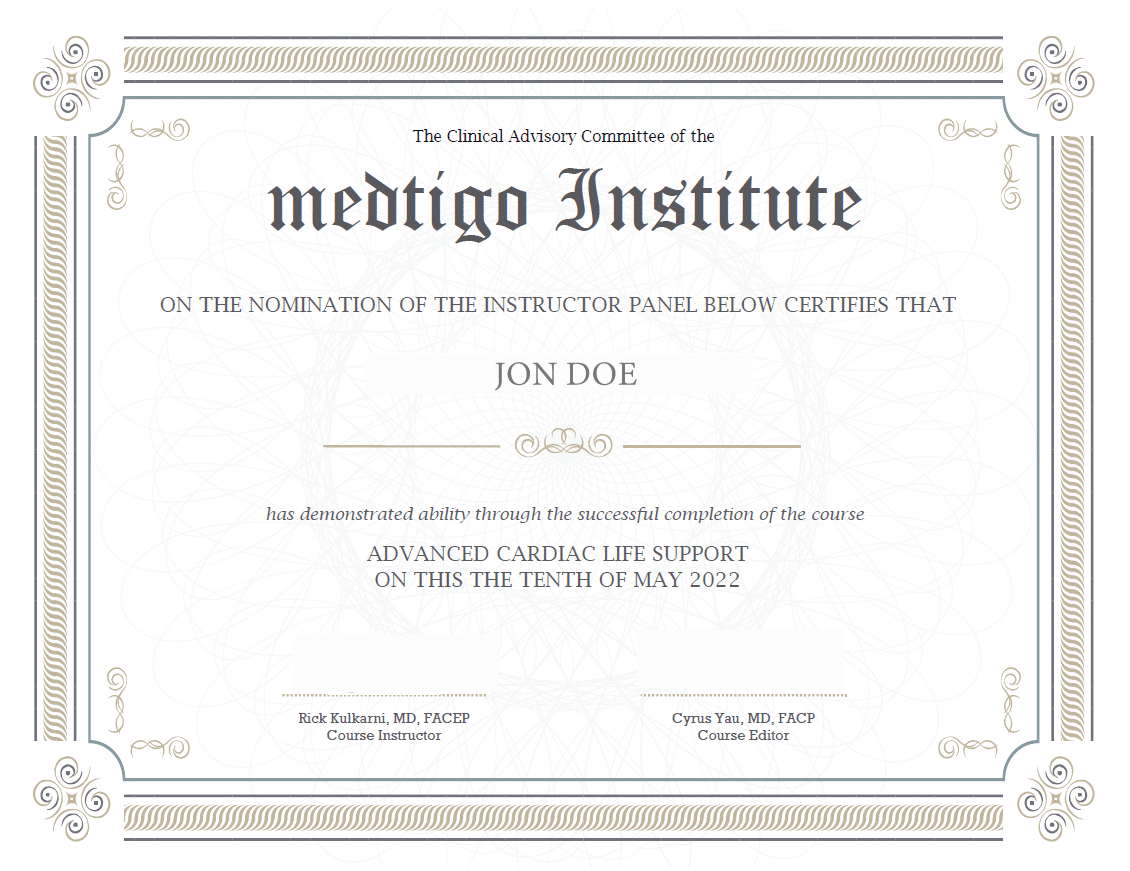
Digital Certificate PDF
On course completion, you will receive a full-sized presentation quality digital certificate.
medtigo Simulation
A dynamic medical simulation platform designed to train healthcare professionals and students to effectively run code situations through an immersive hands-on experience in a live, interactive 3D environment.
medtigo Points
medtigo points is our unique point redemption system created to award users for interacting on our site. These points can be redeemed for special discounts on the medtigo marketplace as well as towards the membership cost itself.
Community Forum post/reply = 5 points
*Redemption of points can occur only through the medtigo marketplace, courses, or simulation system. Money will not be credited to your bank account. 10 points = $1.
All Your Certificates in One Place
When you have your licenses, certificates and CMEs in one place, it's easier to track your career growth. You can easily share these with hospitals as well, using your medtigo app.