Staphylococcus aureus is a persistent skin and mucosa colonizer. Hospital patients and staff carry a high rate of infections, i.e., up to 80%. In these people, the anterior nasal mucosal part is the foremost confined colonization triggered, from where the bacteria can spread to hands or with dust into the air can be transmitted to bypassing people. S. aureus is a frequent pathogen that causes nosocomial infections.
Amongst the five most common causes of healthcare infections, S aureus infection acquired is one of the significant results in wound infections followed up to surgery.In 2019, the CDC reported approximately 323,700 invasive S. aureus infections in the United States, resulting in 11,957 deaths. Notably, these numbers may not represent the total number of Staphylococcus aureus infections in the United States, as not all infections are reported to the CDC.
Majorly, S aureus causes group-acquired infections. So, typing systems must be consistently duplicable, differentiable, and have reasonable interpretation. Phage typing is a widely used way of typing S aureus. This method is entirely focused on a phenotypic marker with low reproducibility.
Also, 20% in a recent survey at the Centre for Disease Control and Prevention stated that it doesn’t type many isolates shows (20% in the latest survey), and phage stocks and propagating strains are required of a large number, consequently with maintenance. It can be performed only by expert reference laboratories.
Scientific Classification:
Kingdom: Bacteria
Phylum: Firmicutes
Class: Bacilli
Order: Bacillales
Family: Staphylococcaceae
Genus: Staphylococcus
Species: Staphylococcus aureus
Structure:
Staphylococcus aureusis a facultative anaerobe, non-spore-forming and non-motile.
It is a Gram-positive cocci with a diameter size of approximately 0.5 – 1.5 microns, appears as grapelike clusters, and has a cluttered distribution under the microscope.
Staphylococcus aureus lacks a nucleus and membrane-bound organelles. The functional cell consists of the cell wall, cell membrane, nucleoid, and ribosome.
The cell wall comprises a thick layer of peptidoglycan & a thin lipid layer.
S. aureus contains surface proteins like fibronectin and fibrinogen, a binding protein involved in blood clotting.
SuperantigensThese antigens can cause toxic shock syndrome (TSS). These antigens are composite with 25 staphylococcal enterotoxins (SEs). Identification to date as done named it alphabetically like SEA – SEZ.
Some extracellular proteins act as antigens to trigger an immune response in the host; Coagulase is an extracellular protein that combines with prothrombin in the host to produce a complex state known as staphylothrombin.
To better understand the pathogenesis of staphylococcus aureus, molecular biology has led to the application in recent advances. S aureus shows many cell surface-accompanied and interstitial proteins with potential virulence factors. For many diseases caused by S. aureus, pathogenesis is combined. It is hard to find the role in a provided factor. For staphylococcal diseases, it also shows the inadequacies of a couple of animal models.
There is a connection with the expression of specific factors and strains isolated from the actual diseases, which masters their importance in pathogenesis. Symptoms of a disease can be accomplished with some toxins reproduced in animals with pure proteins. Potential virulence element is cloned and sequenced by Gene encoding. In both in vitro and model systems, these help at the molecular level, facilitating studies on their modes of action.
In addition, genes encoding presumed virulence factors will be inactivated, and the virulence of the mutants differentiates the wild-type strain in animal models. Any diminution in virulence blinks the missing factor. If the gene is returned to the mutant and virulence is restocked, then “Molecular Koch’s Postulates” have been attained. This approach has substantiated many virulence factors of S aureus.
Platelets are directly involved in host defense mechanisms through the direct killing of S. aureus and boosting the antimicrobial strength of macrophages.In the innate immune system, neutrophils are the most remarkable cellular member, providing a solid primary defense against S. aureus.
Neutrophils are quickly brought to sites where infections occur, secure and destroy invading S. aureus, and trigger an excellent non-oxidative and oxidative antimicrobial killing process which leads to restricted pathogen distribution.
Phagocytosis is the primary mechanism by monocytes for fighting against staphylococcal infection. Antibodies are launched, which triggers opsonization. The protein A and the outer capsule may involve in phagocytosis. Towards phagocytosis, the implanted biofilm growth is impervious.
Staphylococcus aureus causes various forms of infection, including Peripheral skin lesions.
Nosocomial infection is caused by indwelling healthcare devices in Hospitals.
Endocarditis, Osteomyelitis are hardcore infections.
Furunculosis (severe infection with intolerable pain)
Effects central nervous system also results in hemolysis. Causes severe infection form, i.e., dermo necrosis.
Toxic shock syndrome is caused due to release of superantigens into the bloodstream.
Epidermolysis is caused due to release of Exfoliatins.
Diarrhea, nausea and vomiting, hypotension, and a scarlatiniform rash are the secondary causes.
Dermatitis exfoliativa (Ritter disease)
The diagnosis includes tests to confirm the infection and provide appropriate antibiotics to cure it.
Collection of specimen sample:
It depends on the area of the infected part. For example, if infected areas are the throat, nostrils, wounds, and skin layers- the swabbing method is used to gather pus and other discharge, which is the bacterial source. Swabs consist of sterile absorbent cotton over fine sticks. For urinary tract infections, one must provide a urine sample in a sterile tube or bottle; blood samples are drawn for people with a blood infection.
Organism Identification:
The gram staining method shows S. aureus cells under the microscope as Gram positive (blue/ purple) and appears like small round cocci and most commonly as grapelike clusters. Thus S. aureus is normal human skin microflora, usually present, and this test may not always be confirmatory.
Toxins Identification:
Severe infections like toxic shock syndrome and food poisoning. Agglutination tests are conducted to identify toxins released from S. aureus like TSST-1 and enterotoxins A, B, C & D. If the test is positive, results clump the latex in the sample.
Rapid diagnostic tests
These techniques consist of Quantitative and Real-time PCR, which helps get real-time results, which are currently well appreciated in clinical laboratories.
Washing hands with sanitizers before nursing and clinical procedures is a significant preventive measure in hospitals which avoids infection from possible chances.
Ethanol can be used as a topical sanitizer against MRSA, which is very effective.
S. aureus survives cold temperatures but can be destroyed at 78 °C for 1 minute and 64 °C for 10 minutes.
The nasal carriage infections by S. aureus can be reduced using Mupirocin, an Intranasal antibiotic. Some evidence shows that using antibiotics or antiseptics helps in nasal decontamination of S. aureus, which results in decreasing bacterial counts & site infection rates.
Staphylococcus aureus is a persistent skin and mucosa colonizer. Hospital patients and staff carry a high rate of infections, i.e., up to 80%. In these people, the anterior nasal mucosal part is the foremost confined colonization triggered, from where the bacteria can spread to hands or with dust into the air can be transmitted to bypassing people. S. aureus is a frequent pathogen that causes nosocomial infections.
Amongst the five most common causes of healthcare infections, S aureus infection acquired is one of the significant results in wound infections followed up to surgery.In 2019, the CDC reported approximately 323,700 invasive S. aureus infections in the United States, resulting in 11,957 deaths. Notably, these numbers may not represent the total number of Staphylococcus aureus infections in the United States, as not all infections are reported to the CDC.
Majorly, S aureus causes group-acquired infections. So, typing systems must be consistently duplicable, differentiable, and have reasonable interpretation. Phage typing is a widely used way of typing S aureus. This method is entirely focused on a phenotypic marker with low reproducibility.
Also, 20% in a recent survey at the Centre for Disease Control and Prevention stated that it doesn’t type many isolates shows (20% in the latest survey), and phage stocks and propagating strains are required of a large number, consequently with maintenance. It can be performed only by expert reference laboratories.
Scientific Classification:
Kingdom: Bacteria
Phylum: Firmicutes
Class: Bacilli
Order: Bacillales
Family: Staphylococcaceae
Genus: Staphylococcus
Species: Staphylococcus aureus
Structure:
Staphylococcus aureusis a facultative anaerobe, non-spore-forming and non-motile.
It is a Gram-positive cocci with a diameter size of approximately 0.5 – 1.5 microns, appears as grapelike clusters, and has a cluttered distribution under the microscope.
Staphylococcus aureus lacks a nucleus and membrane-bound organelles. The functional cell consists of the cell wall, cell membrane, nucleoid, and ribosome.
The cell wall comprises a thick layer of peptidoglycan & a thin lipid layer.
S. aureus contains surface proteins like fibronectin and fibrinogen, a binding protein involved in blood clotting.
SuperantigensThese antigens can cause toxic shock syndrome (TSS). These antigens are composite with 25 staphylococcal enterotoxins (SEs). Identification to date as done named it alphabetically like SEA – SEZ.
Some extracellular proteins act as antigens to trigger an immune response in the host; Coagulase is an extracellular protein that combines with prothrombin in the host to produce a complex state known as staphylothrombin.
To better understand the pathogenesis of staphylococcus aureus, molecular biology has led to the application in recent advances. S aureus shows many cell surface-accompanied and interstitial proteins with potential virulence factors. For many diseases caused by S. aureus, pathogenesis is combined. It is hard to find the role in a provided factor. For staphylococcal diseases, it also shows the inadequacies of a couple of animal models.
There is a connection with the expression of specific factors and strains isolated from the actual diseases, which masters their importance in pathogenesis. Symptoms of a disease can be accomplished with some toxins reproduced in animals with pure proteins. Potential virulence element is cloned and sequenced by Gene encoding. In both in vitro and model systems, these help at the molecular level, facilitating studies on their modes of action.
In addition, genes encoding presumed virulence factors will be inactivated, and the virulence of the mutants differentiates the wild-type strain in animal models. Any diminution in virulence blinks the missing factor. If the gene is returned to the mutant and virulence is restocked, then “Molecular Koch’s Postulates” have been attained. This approach has substantiated many virulence factors of S aureus.
Platelets are directly involved in host defense mechanisms through the direct killing of S. aureus and boosting the antimicrobial strength of macrophages.In the innate immune system, neutrophils are the most remarkable cellular member, providing a solid primary defense against S. aureus.
Neutrophils are quickly brought to sites where infections occur, secure and destroy invading S. aureus, and trigger an excellent non-oxidative and oxidative antimicrobial killing process which leads to restricted pathogen distribution.
Phagocytosis is the primary mechanism by monocytes for fighting against staphylococcal infection. Antibodies are launched, which triggers opsonization. The protein A and the outer capsule may involve in phagocytosis. Towards phagocytosis, the implanted biofilm growth is impervious.
Staphylococcus aureus causes various forms of infection, including Peripheral skin lesions.
Nosocomial infection is caused by indwelling healthcare devices in Hospitals.
Endocarditis, Osteomyelitis are hardcore infections.
Furunculosis (severe infection with intolerable pain)
Effects central nervous system also results in hemolysis. Causes severe infection form, i.e., dermo necrosis.
Toxic shock syndrome is caused due to release of superantigens into the bloodstream.
Epidermolysis is caused due to release of Exfoliatins.
Diarrhea, nausea and vomiting, hypotension, and a scarlatiniform rash are the secondary causes.
Dermatitis exfoliativa (Ritter disease)
The diagnosis includes tests to confirm the infection and provide appropriate antibiotics to cure it.
Collection of specimen sample:
It depends on the area of the infected part. For example, if infected areas are the throat, nostrils, wounds, and skin layers- the swabbing method is used to gather pus and other discharge, which is the bacterial source. Swabs consist of sterile absorbent cotton over fine sticks. For urinary tract infections, one must provide a urine sample in a sterile tube or bottle; blood samples are drawn for people with a blood infection.
Organism Identification:
The gram staining method shows S. aureus cells under the microscope as Gram positive (blue/ purple) and appears like small round cocci and most commonly as grapelike clusters. Thus S. aureus is normal human skin microflora, usually present, and this test may not always be confirmatory.
Toxins Identification:
Severe infections like toxic shock syndrome and food poisoning. Agglutination tests are conducted to identify toxins released from S. aureus like TSST-1 and enterotoxins A, B, C & D. If the test is positive, results clump the latex in the sample.
Rapid diagnostic tests
These techniques consist of Quantitative and Real-time PCR, which helps get real-time results, which are currently well appreciated in clinical laboratories.
Washing hands with sanitizers before nursing and clinical procedures is a significant preventive measure in hospitals which avoids infection from possible chances.
Ethanol can be used as a topical sanitizer against MRSA, which is very effective.
S. aureus survives cold temperatures but can be destroyed at 78 °C for 1 minute and 64 °C for 10 minutes.
The nasal carriage infections by S. aureus can be reduced using Mupirocin, an Intranasal antibiotic. Some evidence shows that using antibiotics or antiseptics helps in nasal decontamination of S. aureus, which results in decreasing bacterial counts & site infection rates.
Staphylococcus aureus is a persistent skin and mucosa colonizer. Hospital patients and staff carry a high rate of infections, i.e., up to 80%. In these people, the anterior nasal mucosal part is the foremost confined colonization triggered, from where the bacteria can spread to hands or with dust into the air can be transmitted to bypassing people. S. aureus is a frequent pathogen that causes nosocomial infections.
Amongst the five most common causes of healthcare infections, S aureus infection acquired is one of the significant results in wound infections followed up to surgery.In 2019, the CDC reported approximately 323,700 invasive S. aureus infections in the United States, resulting in 11,957 deaths. Notably, these numbers may not represent the total number of Staphylococcus aureus infections in the United States, as not all infections are reported to the CDC.
Majorly, S aureus causes group-acquired infections. So, typing systems must be consistently duplicable, differentiable, and have reasonable interpretation. Phage typing is a widely used way of typing S aureus. This method is entirely focused on a phenotypic marker with low reproducibility.
Also, 20% in a recent survey at the Centre for Disease Control and Prevention stated that it doesn’t type many isolates shows (20% in the latest survey), and phage stocks and propagating strains are required of a large number, consequently with maintenance. It can be performed only by expert reference laboratories.
Structure and Classification
Scientific Classification:
Kingdom: Bacteria
Phylum: Firmicutes
Class: Bacilli
Order: Bacillales
Family: Staphylococcaceae
Genus: Staphylococcus
Species: Staphylococcus aureus
Structure:
Staphylococcus aureusis a facultative anaerobe, non-spore-forming and non-motile.
It is a Gram-positive cocci with a diameter size of approximately 0.5 – 1.5 microns, appears as grapelike clusters, and has a cluttered distribution under the microscope.
Staphylococcus aureus lacks a nucleus and membrane-bound organelles. The functional cell consists of the cell wall, cell membrane, nucleoid, and ribosome.
The cell wall comprises a thick layer of peptidoglycan & a thin lipid layer.
S. aureus contains surface proteins like fibronectin and fibrinogen, a binding protein involved in blood clotting.
Antigenic types
SuperantigensThese antigens can cause toxic shock syndrome (TSS). These antigens are composite with 25 staphylococcal enterotoxins (SEs). Identification to date as done named it alphabetically like SEA – SEZ.
Some extracellular proteins act as antigens to trigger an immune response in the host; Coagulase is an extracellular protein that combines with prothrombin in the host to produce a complex state known as staphylothrombin.
Pathogenesis
To better understand the pathogenesis of staphylococcus aureus, molecular biology has led to the application in recent advances. S aureus shows many cell surface-accompanied and interstitial proteins with potential virulence factors. For many diseases caused by S. aureus, pathogenesis is combined. It is hard to find the role in a provided factor. For staphylococcal diseases, it also shows the inadequacies of a couple of animal models.
There is a connection with the expression of specific factors and strains isolated from the actual diseases, which masters their importance in pathogenesis. Symptoms of a disease can be accomplished with some toxins reproduced in animals with pure proteins. Potential virulence element is cloned and sequenced by Gene encoding. In both in vitro and model systems, these help at the molecular level, facilitating studies on their modes of action.
In addition, genes encoding presumed virulence factors will be inactivated, and the virulence of the mutants differentiates the wild-type strain in animal models. Any diminution in virulence blinks the missing factor. If the gene is returned to the mutant and virulence is restocked, then “Molecular Koch’s Postulates” have been attained. This approach has substantiated many virulence factors of S aureus.
Host defense
Platelets are directly involved in host defense mechanisms through the direct killing of S. aureus and boosting the antimicrobial strength of macrophages.In the innate immune system, neutrophils are the most remarkable cellular member, providing a solid primary defense against S. aureus.
Neutrophils are quickly brought to sites where infections occur, secure and destroy invading S. aureus, and trigger an excellent non-oxidative and oxidative antimicrobial killing process which leads to restricted pathogen distribution.
Phagocytosis is the primary mechanism by monocytes for fighting against staphylococcal infection. Antibodies are launched, which triggers opsonization. The protein A and the outer capsule may involve in phagocytosis. Towards phagocytosis, the implanted biofilm growth is impervious.
Clinical Manifestations:
Staphylococcus aureus causes various forms of infection, including Peripheral skin lesions.
Nosocomial infection is caused by indwelling healthcare devices in Hospitals.
Endocarditis, Osteomyelitis are hardcore infections.
Furunculosis (severe infection with intolerable pain)
Effects central nervous system also results in hemolysis. Causes severe infection form, i.e., dermo necrosis.
Toxic shock syndrome is caused due to release of superantigens into the bloodstream.
Epidermolysis is caused due to release of Exfoliatins.
Diarrhea, nausea and vomiting, hypotension, and a scarlatiniform rash are the secondary causes.
Dermatitis exfoliativa (Ritter disease)
Diagnosis
The diagnosis includes tests to confirm the infection and provide appropriate antibiotics to cure it.
Collection of specimen sample:
It depends on the area of the infected part. For example, if infected areas are the throat, nostrils, wounds, and skin layers- the swabbing method is used to gather pus and other discharge, which is the bacterial source. Swabs consist of sterile absorbent cotton over fine sticks. For urinary tract infections, one must provide a urine sample in a sterile tube or bottle; blood samples are drawn for people with a blood infection.
Organism Identification:
The gram staining method shows S. aureus cells under the microscope as Gram positive (blue/ purple) and appears like small round cocci and most commonly as grapelike clusters. Thus S. aureus is normal human skin microflora, usually present, and this test may not always be confirmatory.
Toxins Identification:
Severe infections like toxic shock syndrome and food poisoning. Agglutination tests are conducted to identify toxins released from S. aureus like TSST-1 and enterotoxins A, B, C & D. If the test is positive, results clump the latex in the sample.
Rapid diagnostic tests
These techniques consist of Quantitative and Real-time PCR, which helps get real-time results, which are currently well appreciated in clinical laboratories.
Control
Washing hands with sanitizers before nursing and clinical procedures is a significant preventive measure in hospitals which avoids infection from possible chances.
Ethanol can be used as a topical sanitizer against MRSA, which is very effective.
S. aureus survives cold temperatures but can be destroyed at 78 °C for 1 minute and 64 °C for 10 minutes.
The nasal carriage infections by S. aureus can be reduced using Mupirocin, an Intranasal antibiotic. Some evidence shows that using antibiotics or antiseptics helps in nasal decontamination of S. aureus, which results in decreasing bacterial counts & site infection rates.
Both our subscription plans include Free CME/CPD AMA PRA Category 1 credits.
Digital Certificate PDF
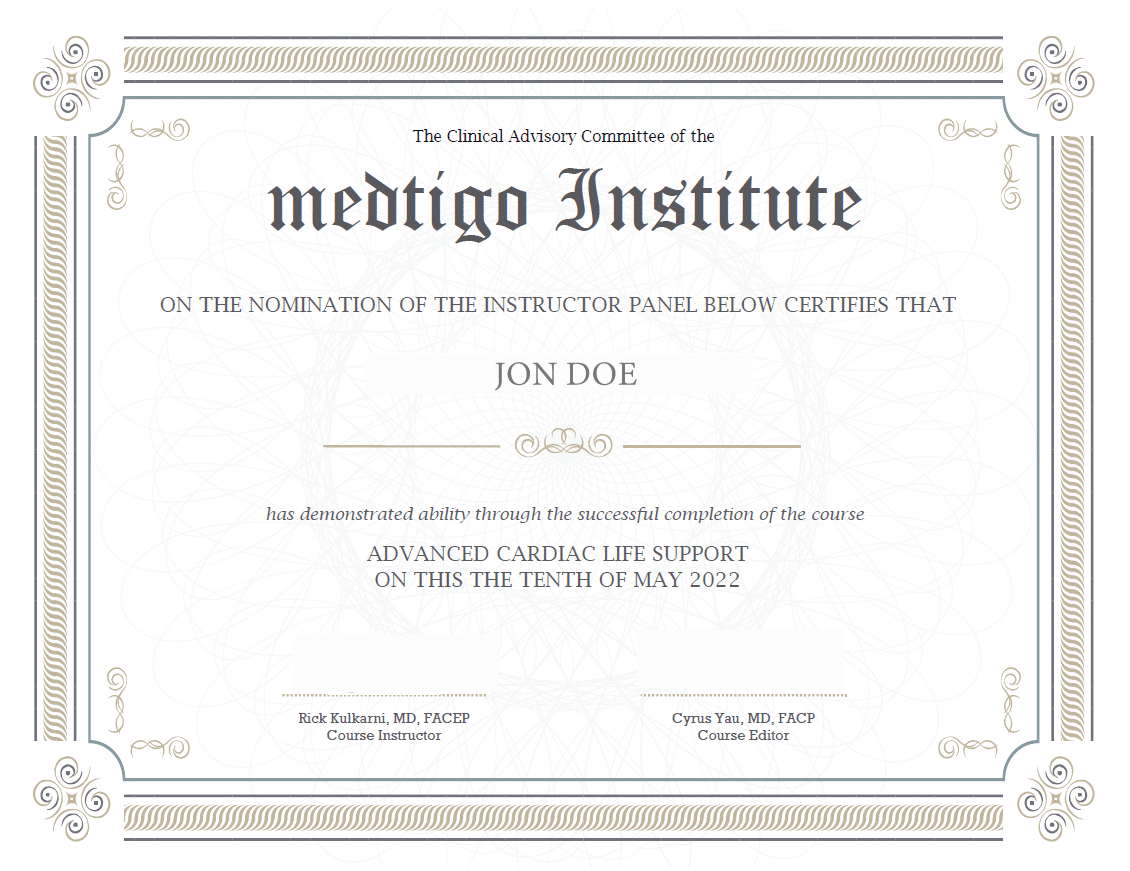
On course completion, you will receive a full-sized presentation quality digital certificate.
medtigo Simulation
A dynamic medical simulation platform designed to train healthcare professionals and students to effectively run code situations through an immersive hands-on experience in a live, interactive 3D environment.
medtigo Points
medtigo points is our unique point redemption system created to award users for interacting on our site. These points can be redeemed for special discounts on the medtigo marketplace as well as towards the membership cost itself.
Community Forum post/reply = 5 points
*Redemption of points can occur only through the medtigo marketplace, courses, or simulation system. Money will not be credited to your bank account. 10 points = $1.
All Your Certificates in One Place
When you have your licenses, certificates and CMEs in one place, it's easier to track your career growth. You can easily share these with hospitals as well, using your medtigo app.