Mastoidectomy involves the removal of the mastoid air cells, which are located within the mastoid bone of the skull. The mastoid bone is situated behind the ear and contains a network of air cells that are interconnected. These air cells are extensions of the middle ear and communicate with it. Mastoidectomy is typically performed as a treatment for various ear conditions, particularly chronic otitis media, where the middle ear becomes infected and filled with pus.
If untreated, this can lead to complications, such as the spread of infection to surrounding areas, hearing loss, and damage to important structures like the facial nerve and inner ear. Mastoidectomy aims to remove the infected or damaged tissue from the mastoid bone, improve drainage, and prevent further complications.
The procedure is performed by ear, nose, and throat (ENT) surgeons and has evolved over the years with advancements in surgical techniques and technology. It can be done as a traditional open surgery or, in some cases, endoscopically, offering a more minimally invasive approach. Mastoidectomy is an essential procedure in the field of otolaryngology and otology, focusing on the treatment of ear-related diseases and conditions.
Indications
Chronic Otitis Media: This is one of the most frequent reasons for mastoidectomy. Chronic otitis media refers to long-standing inflammation or infection of the middle ear. If conservative treatments such as antibiotics and ear drops are ineffective, surgical intervention may be necessary.
Cholesteatoma: A cholesteatoma is an abnormal, noncancerous skin growth that can develop in middle ear, typically due to chronic ear infections. If untreated, it may damage to the ear structures and lead to complications. Mastoidectomy is often required to remove the cholesteatoma and prevent its recurrence.
Mastoid Abscess: A severe ear infection can lead to the formation of an abscess in the mastoid air cells. Drainage of the abscess and mastoidectomy may be necessary to clear the infection and prevent its spread.
Complications of Chronic Otitis Media: If chronic otitis media results in complications like mastoiditis (infection of the mastoid bone), facial nerve injury, or hearing loss, mastoidectomy may be needed to address these issues.
Mastoid Air Cell Disease: Conditions affecting the mastoid air cells, such as inflammation, damage, or tumor growth, may require mastoidectomy to remove affected tissue and improve drainage.
Perforated Eardrum: When a perforation in the eardrum does not heal on its own, and it is associated with chronic ear infections or other complications, mastoidectomy may be performed to repair the eardrum.
Cochlear Implantation: In some cases, mastoidectomy is performed to create space for cochlear implantation, a hearing device used for individuals with severe hearing loss.
Contraindications
Inoperable Medical Conditions: If a patient has significant underlying medical conditions that make any surgical procedure too risky, such as severe heart disease or a compromised immune system, mastoidectomy may be contraindicated.
Uncontrolled Infections: Active or uncontrolled ear infections or systemic infections may need to be treated and resolved before mastoidectomy can be safely performed. Operating in the presence of active infection can increase the risk of complications.
Severe Bleeding Disorders: Patients with severe bleeding disorders or clotting abnormalities may not be ideal candidates for mastoidectomy due to the risk of excessive bleeding during and after the procedure.
Severe Allergies: A severe allergy to anesthetics or medications used during surgery can be a contraindication.
Patient’s General Health: The overall health and well-being of the patient is essential considerations. The patient should be in a condition suitable for undergoing surgery and anesthesia.
Anatomical Variations: In some cases, anatomical variations or anomalies may affect the feasibility and safety of mastoidectomy. The surgeon will assess the individual’s ear anatomy to determine the best approach.
Outcomes
Resolution of Ear Disease: Mastoidectomy is often successful in treating chronic ear infections (otitis media) that do not respond to other treatments. It can also be effective in managing conditions like cholesteatoma, tumors, and other ear pathologies.
Hearing Improvement: In cases where hearing loss is due to middle ear problems or cholesteatoma, mastoidectomy can lead to improvements in hearing. This is particularly true if the hearing loss was conductive, meaning it resulted from issues in the middle ear.
Prevention of Complications: By addressing ear infections and other ear conditions, mastoidectomy can prevent complications such as mastoiditis (infection of the mastoid bone), abscess formation, and erosion of the surrounding structures.
Pain Relief: Patients who experience chronic ear pain or discomfort due to their underlying condition may find relief after undergoing mastoidectomy.
Risk Reduction: In cases where conditions like cholesteatoma pose a risk of severe complications, mastoidectomy can mitigate this risk by removing the abnormal growth or tissue.
Long-Term Management: Mastoidectomy can provide long-term solutions for patients with chronic ear conditions. However, post-operative care and follow-up appointments are essential to monitor the patient’s progress and address any potential complications.
Tympanic Membrane Reconstruction: In cases where the tympanic membrane (eardrum) has been affected, mastoidectomy may include procedures to repair or reconstruct the eardrum to restore its function.
Patient Preparation
Medical Evaluation: Before the mastoidectomy, the patient will undergo a thorough medical history and any relevant imaging or diagnostic tests to assess the condition of the ear and mastoid area.
Informed Consent: The surgeon will explain the procedure, its risks, benefits, and alternatives to the patient. Informed consent will be obtained.
NPO Status: The patient is typically instructed to refrain from eating or drinking before surgery to reduce the risk of aspiration during anesthesia. The duration of fasting may vary but is often around 6 to 8 hours.
Medication Review: The patient’s current medications will be reviewed, and adjustments may be made, if necessary, particularly for medications that affect blood clotting or anesthesia.
Preoperative Medications: The patient may be given preoperative medications to help reduce anxiety and manage pain. These may be administered orally or intravenously.
Equipment and patient positioning
Surgical Instruments: The surgical team will prepare and sterilize the instruments required for the mastoidectomy. These instruments may include otologic microscopes, drills, curettes, suction devices, and various microsurgical instruments.
Anesthesia Equipment: Depending on the type of mastoidectomy and the patient’s condition, general anesthesia or local anesthesia with sedation may be administered. An anesthesiologist or nurse anesthetist will be responsible for the anesthesia equipment and monitoring the patient’s vital signs during the procedure.
Operating Room Setup: The operating room will be equipped with sterile drapes, surgical gloves, and gowns. Proper lighting and visualization equipment, such as surgical microscopes, will be in place to facilitate the surgeon’s work.
Sterile Supplies: The surgical team will ensure that all sterile supplies, including drapes, gauze, and dressings, are readily available for the procedure.
Imaging and Navigation Tools: In some cases, imaging tools like computed tomography (CT) scans and intraoperative navigation systems may be used to aid the surgeon in precisely locating and accessing the mastoid area.
Electrocautery and Hemostatic Agents: Equipment for achieving hemostasis (controlling bleeding), such as electrocautery devices and hemostatic agents, will be available.
Patient Positioning:
The patient is usually placed in a lateral recumbent position with the ear to be operated on facing upward. This positioning provides the surgeon with optimal access to the mastoid area.
Overall, meticulous preparation and organization are essential for the success of a mastoidectomy. The patient’s safety, comfort, and the surgeon’s ability to perform the procedure effectively are top priorities during periprocedural care.
TECHNIQUE
Step 1: Anesthesia
The patient is brought into the operating room, and anesthesia is administered. This may be general anesthesia (patient is completely unconscious) or local anesthesia with sedation (patient is awake but sedated).
Step 2: Patient Positioning
The patient is usually positioned in a lateral recumbent (side-lying) or semi-recumbent position, with the ear to be operated on facing upward. This provides access to the surgical site.
Step 3: Skin Preparation
The area behind the ear is cleaned and prepared with an antiseptic solution to minimize the risk of infection.
Step 4: Incision
The surgeon makes an incision behind the ear. The specific location and shape of the incision may vary, but it is typically designed to provide access to the mastoid bone without being visible when the incision heals.
Step 5: Soft Tissue Dissection
The surgeon carefully dissects through the soft tissues, including the skin and subcutaneous layers, to expose the mastoid bone.
Step 6: Mastoidectomy
Using specialized surgical instruments, the surgeon begins the mastoidectomy:
The mastoid bone is drilled or removed in a controlled manner to access the mastoid air cells.
The surgeon may also enter the middle ear space.
Infected or diseased tissue is meticulously removed to improve drainage and eliminate the source of infection.
The surgeon may also need to repair or reconstruct structures in the middle ear, such as the ossicles (tiny ear bones) or the eardrum.
In some cases, particularly when the ossicles have been damaged or destroyed, the surgeon may perform ossicular chain reconstruction. This involves replacing or reconstructing the ossicles to restore hearing.
Step 8: Closure
Once the necessary procedures are completed, the surgeon carefully closes the incision with sutures. Depending on the case, a small drain may be inserted to facilitate postoperative fluid drainage.
Complications
Infection: Infection in the surgical area can occur. Signs include increased pain, redness, swelling, discharge, or fever.
Hearing Loss: Patients may experience hearing loss, either temporary or permanent.
Facial Nerve Damage: The facial nerve runs through the mastoid bone. Damage to the nerve can cause facial weakness.
Taste Changes: Alterations in taste perception may occur, typically linked to damage to the chorda tympani nerve.
Vertigo: Dizziness and balance issues may arise, particularly if the semicircular canals are affected during surgery.
Tinnitus: Ringing or noise in the ear may persist or worsen post-surgery.
Delayed Healing: Slow or incomplete wound healing can happen, leading to persistent ear drainage or infection.
Medication Summary
Mastoidectomy is a surgical procedure used to treat various ear conditions, including chronic otitis media and cholesteatoma. Medications are typically used before and after the surgery to prevent or treat infection, control pain, and manage other aspects of care.
Preoperative Medications:
Antibiotics: Patients are often prescribed antibiotics before surgery to prevent infection. Common choices include ciprofloxacin or levofloxacin.
Intraoperative Medications:
Local Anesthesia: During the surgery, local anesthesia is administered to numb the surgical area. Lidocaine with or without epinephrine is commonly used for this purpose.
Postoperative Medications:
Antibiotics: A course of antibiotics is usually prescribed after mastoidectomy to prevent or treat any postoperative infections. The choice of antibiotics may depend on the patient’s specific case, but common options include amoxicillin-clavulanate, ciprofloxacin, or levofloxacin.
Pain Medications: Patients are given pain relievers to manage postoperative pain. These may include non-steroidal anti-inflammatory drugs (NSAIDs) like ibuprofen or prescription pain relievers like opioids.
Ear Drops: After surgery, antibiotic ear drops may be prescribed to treat infections in the ear canal.
Medicated Ear Packing: Medicated ear packing may be used to help control bleeding and prevent infection in the ear canal.
Antiemetics: If patients experience nausea or vomiting after surgery, antiemetic medications may be administered.
Mastoidectomy involves the removal of the mastoid air cells, which are located within the mastoid bone of the skull. The mastoid bone is situated behind the ear and contains a network of air cells that are interconnected. These air cells are extensions of the middle ear and communicate with it. Mastoidectomy is typically performed as a treatment for various ear conditions, particularly chronic otitis media, where the middle ear becomes infected and filled with pus.
If untreated, this can lead to complications, such as the spread of infection to surrounding areas, hearing loss, and damage to important structures like the facial nerve and inner ear. Mastoidectomy aims to remove the infected or damaged tissue from the mastoid bone, improve drainage, and prevent further complications.
The procedure is performed by ear, nose, and throat (ENT) surgeons and has evolved over the years with advancements in surgical techniques and technology. It can be done as a traditional open surgery or, in some cases, endoscopically, offering a more minimally invasive approach. Mastoidectomy is an essential procedure in the field of otolaryngology and otology, focusing on the treatment of ear-related diseases and conditions.
Chronic Otitis Media: This is one of the most frequent reasons for mastoidectomy. Chronic otitis media refers to long-standing inflammation or infection of the middle ear. If conservative treatments such as antibiotics and ear drops are ineffective, surgical intervention may be necessary.
Cholesteatoma: A cholesteatoma is an abnormal, noncancerous skin growth that can develop in middle ear, typically due to chronic ear infections. If untreated, it may damage to the ear structures and lead to complications. Mastoidectomy is often required to remove the cholesteatoma and prevent its recurrence.
Mastoid Abscess: A severe ear infection can lead to the formation of an abscess in the mastoid air cells. Drainage of the abscess and mastoidectomy may be necessary to clear the infection and prevent its spread.
Complications of Chronic Otitis Media: If chronic otitis media results in complications like mastoiditis (infection of the mastoid bone), facial nerve injury, or hearing loss, mastoidectomy may be needed to address these issues.
Mastoid Air Cell Disease: Conditions affecting the mastoid air cells, such as inflammation, damage, or tumor growth, may require mastoidectomy to remove affected tissue and improve drainage.
Perforated Eardrum: When a perforation in the eardrum does not heal on its own, and it is associated with chronic ear infections or other complications, mastoidectomy may be performed to repair the eardrum.
Cochlear Implantation: In some cases, mastoidectomy is performed to create space for cochlear implantation, a hearing device used for individuals with severe hearing loss.
Inoperable Medical Conditions: If a patient has significant underlying medical conditions that make any surgical procedure too risky, such as severe heart disease or a compromised immune system, mastoidectomy may be contraindicated.
Uncontrolled Infections: Active or uncontrolled ear infections or systemic infections may need to be treated and resolved before mastoidectomy can be safely performed. Operating in the presence of active infection can increase the risk of complications.
Severe Bleeding Disorders: Patients with severe bleeding disorders or clotting abnormalities may not be ideal candidates for mastoidectomy due to the risk of excessive bleeding during and after the procedure.
Severe Allergies: A severe allergy to anesthetics or medications used during surgery can be a contraindication.
Patient’s General Health: The overall health and well-being of the patient is essential considerations. The patient should be in a condition suitable for undergoing surgery and anesthesia.
Anatomical Variations: In some cases, anatomical variations or anomalies may affect the feasibility and safety of mastoidectomy. The surgeon will assess the individual’s ear anatomy to determine the best approach.
Resolution of Ear Disease: Mastoidectomy is often successful in treating chronic ear infections (otitis media) that do not respond to other treatments. It can also be effective in managing conditions like cholesteatoma, tumors, and other ear pathologies.
Hearing Improvement: In cases where hearing loss is due to middle ear problems or cholesteatoma, mastoidectomy can lead to improvements in hearing. This is particularly true if the hearing loss was conductive, meaning it resulted from issues in the middle ear.
Prevention of Complications: By addressing ear infections and other ear conditions, mastoidectomy can prevent complications such as mastoiditis (infection of the mastoid bone), abscess formation, and erosion of the surrounding structures.
Pain Relief: Patients who experience chronic ear pain or discomfort due to their underlying condition may find relief after undergoing mastoidectomy.
Risk Reduction: In cases where conditions like cholesteatoma pose a risk of severe complications, mastoidectomy can mitigate this risk by removing the abnormal growth or tissue.
Long-Term Management: Mastoidectomy can provide long-term solutions for patients with chronic ear conditions. However, post-operative care and follow-up appointments are essential to monitor the patient’s progress and address any potential complications.
Tympanic Membrane Reconstruction: In cases where the tympanic membrane (eardrum) has been affected, mastoidectomy may include procedures to repair or reconstruct the eardrum to restore its function.
Medical Evaluation: Before the mastoidectomy, the patient will undergo a thorough medical history and any relevant imaging or diagnostic tests to assess the condition of the ear and mastoid area.
Informed Consent: The surgeon will explain the procedure, its risks, benefits, and alternatives to the patient. Informed consent will be obtained.
NPO Status: The patient is typically instructed to refrain from eating or drinking before surgery to reduce the risk of aspiration during anesthesia. The duration of fasting may vary but is often around 6 to 8 hours.
Medication Review: The patient’s current medications will be reviewed, and adjustments may be made, if necessary, particularly for medications that affect blood clotting or anesthesia.
Preoperative Medications: The patient may be given preoperative medications to help reduce anxiety and manage pain. These may be administered orally or intravenously.
Surgical Instruments: The surgical team will prepare and sterilize the instruments required for the mastoidectomy. These instruments may include otologic microscopes, drills, curettes, suction devices, and various microsurgical instruments.
Anesthesia Equipment: Depending on the type of mastoidectomy and the patient’s condition, general anesthesia or local anesthesia with sedation may be administered. An anesthesiologist or nurse anesthetist will be responsible for the anesthesia equipment and monitoring the patient’s vital signs during the procedure.
Operating Room Setup: The operating room will be equipped with sterile drapes, surgical gloves, and gowns. Proper lighting and visualization equipment, such as surgical microscopes, will be in place to facilitate the surgeon’s work.
Sterile Supplies: The surgical team will ensure that all sterile supplies, including drapes, gauze, and dressings, are readily available for the procedure.
Imaging and Navigation Tools: In some cases, imaging tools like computed tomography (CT) scans and intraoperative navigation systems may be used to aid the surgeon in precisely locating and accessing the mastoid area.
Electrocautery and Hemostatic Agents: Equipment for achieving hemostasis (controlling bleeding), such as electrocautery devices and hemostatic agents, will be available.
Patient Positioning:
The patient is usually placed in a lateral recumbent position with the ear to be operated on facing upward. This positioning provides the surgeon with optimal access to the mastoid area.
Overall, meticulous preparation and organization are essential for the success of a mastoidectomy. The patient’s safety, comfort, and the surgeon’s ability to perform the procedure effectively are top priorities during periprocedural care.
Step 1: Anesthesia
The patient is brought into the operating room, and anesthesia is administered. This may be general anesthesia (patient is completely unconscious) or local anesthesia with sedation (patient is awake but sedated).
Step 2: Patient Positioning
The patient is usually positioned in a lateral recumbent (side-lying) or semi-recumbent position, with the ear to be operated on facing upward. This provides access to the surgical site.
Step 3: Skin Preparation
The area behind the ear is cleaned and prepared with an antiseptic solution to minimize the risk of infection.
Step 4: Incision
The surgeon makes an incision behind the ear. The specific location and shape of the incision may vary, but it is typically designed to provide access to the mastoid bone without being visible when the incision heals.
Step 5: Soft Tissue Dissection
The surgeon carefully dissects through the soft tissues, including the skin and subcutaneous layers, to expose the mastoid bone.
Step 6: Mastoidectomy
Using specialized surgical instruments, the surgeon begins the mastoidectomy:
The mastoid bone is drilled or removed in a controlled manner to access the mastoid air cells.
The surgeon may also enter the middle ear space.
Infected or diseased tissue is meticulously removed to improve drainage and eliminate the source of infection.
The surgeon may also need to repair or reconstruct structures in the middle ear, such as the ossicles (tiny ear bones) or the eardrum.
In some cases, particularly when the ossicles have been damaged or destroyed, the surgeon may perform ossicular chain reconstruction. This involves replacing or reconstructing the ossicles to restore hearing.
Step 8: Closure
Once the necessary procedures are completed, the surgeon carefully closes the incision with sutures. Depending on the case, a small drain may be inserted to facilitate postoperative fluid drainage.
Infection: Infection in the surgical area can occur. Signs include increased pain, redness, swelling, discharge, or fever.
Hearing Loss: Patients may experience hearing loss, either temporary or permanent.
Facial Nerve Damage: The facial nerve runs through the mastoid bone. Damage to the nerve can cause facial weakness.
Taste Changes: Alterations in taste perception may occur, typically linked to damage to the chorda tympani nerve.
Vertigo: Dizziness and balance issues may arise, particularly if the semicircular canals are affected during surgery.
Tinnitus: Ringing or noise in the ear may persist or worsen post-surgery.
Delayed Healing: Slow or incomplete wound healing can happen, leading to persistent ear drainage or infection.
Mastoidectomy is a surgical procedure used to treat various ear conditions, including chronic otitis media and cholesteatoma. Medications are typically used before and after the surgery to prevent or treat infection, control pain, and manage other aspects of care.
Preoperative Medications:
Antibiotics: Patients are often prescribed antibiotics before surgery to prevent infection. Common choices include ciprofloxacin or levofloxacin.
Intraoperative Medications:
Local Anesthesia: During the surgery, local anesthesia is administered to numb the surgical area. Lidocaine with or without epinephrine is commonly used for this purpose.
Postoperative Medications:
Antibiotics: A course of antibiotics is usually prescribed after mastoidectomy to prevent or treat any postoperative infections. The choice of antibiotics may depend on the patient’s specific case, but common options include amoxicillin-clavulanate, ciprofloxacin, or levofloxacin.
Pain Medications: Patients are given pain relievers to manage postoperative pain. These may include non-steroidal anti-inflammatory drugs (NSAIDs) like ibuprofen or prescription pain relievers like opioids.
Ear Drops: After surgery, antibiotic ear drops may be prescribed to treat infections in the ear canal.
Medicated Ear Packing: Medicated ear packing may be used to help control bleeding and prevent infection in the ear canal.
Antiemetics: If patients experience nausea or vomiting after surgery, antiemetic medications may be administered.
Both our subscription plans include Free CME/CPD AMA PRA Category 1 credits.
Digital Certificate PDF
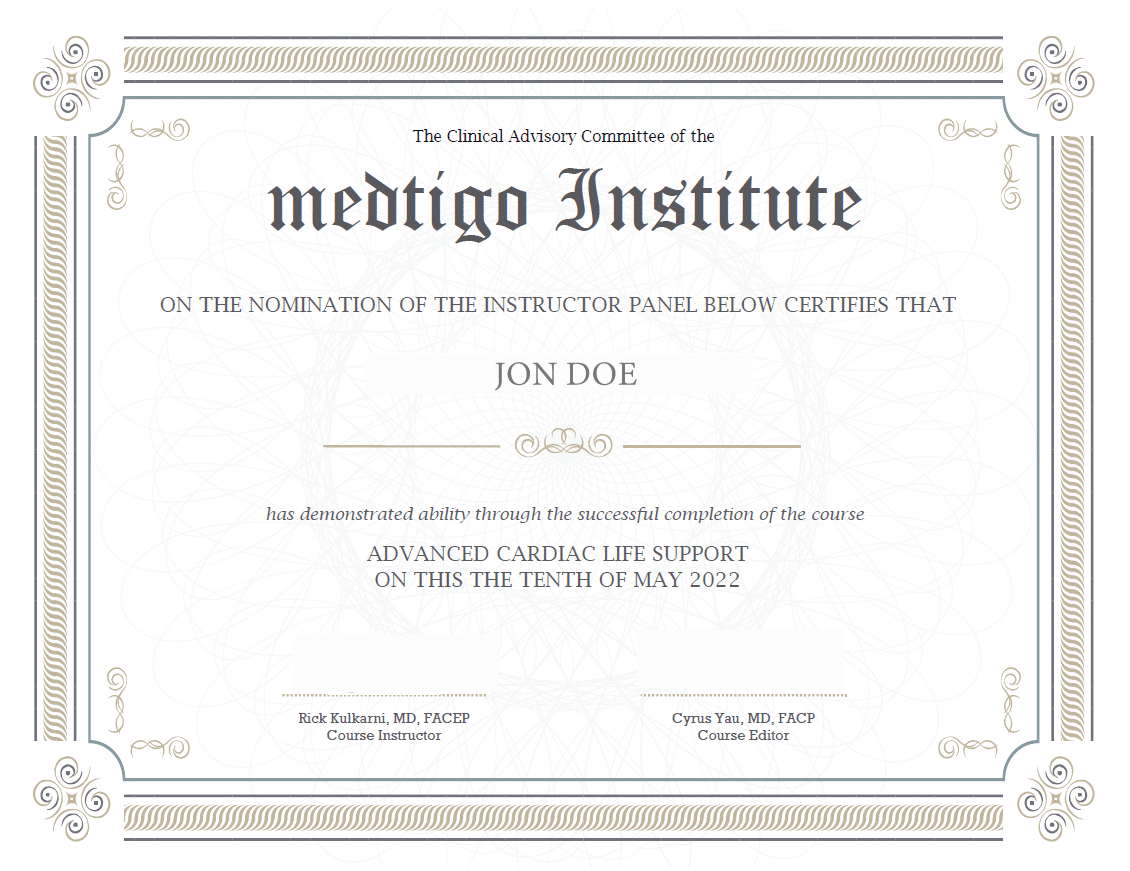
On course completion, you will receive a full-sized presentation quality digital certificate.
medtigo Simulation
A dynamic medical simulation platform designed to train healthcare professionals and students to effectively run code situations through an immersive hands-on experience in a live, interactive 3D environment.
medtigo Points
medtigo points is our unique point redemption system created to award users for interacting on our site. These points can be redeemed for special discounts on the medtigo marketplace as well as towards the membership cost itself.
Community Forum post/reply = 5 points
*Redemption of points can occur only through the medtigo marketplace, courses, or simulation system. Money will not be credited to your bank account. 10 points = $1.
All Your Certificates in One Place
When you have your licenses, certificates and CMEs in one place, it's easier to track your career growth. You can easily share these with hospitals as well, using your medtigo app.