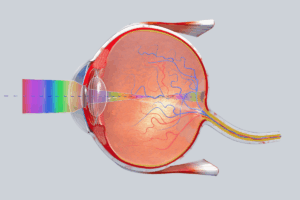
Amblyopia is a vision development disease. It is caused by early-life ocular disease that prevents cortical visual development in one or both eyes. Amblyopia is commonly referred to as “lazy eye” by the wider population. Even if the ocular ailment is addressed later in life, amblyopia leads to persistent impaired vision in the pathological eye if not treated early enough. It is the most prevalent cause of single-eye visual loss in children & young adults. When the growing visual system fails to communicate a sharp image to the visual cortex, amblyopia develops. Amblyopia can be caused by strabismus, cataracts, media opacities, and anisometropic refractive defects, which put one eye behind the other in development. Amblyopia is normally unilateral; however, it can be bilateral if both eyes have cataracts or have substantial refractive errors; how we perceive as adults are influenced by our visual experiences as children & infants.
Amblyopia is diagnosed by identifying reduced visual acuity in one or even both eyes that are out of accordance with the structural defect of the eye after ruling out any other visual problems as the root issue. When the refractive error is rectified, it is characterized as an interocular difference in acuity of two lines or over. Visual acuity in young children can be challenging to determine, but it can be assessed by examining the child’s reactions while one eye is masked, including the child’s capacity for following objects in one eye.
Epidemiology
Amblyopia, in its different manifestations, has been estimated to impact up to 3 percent of the public, with a 1.2 percent lifetime chance of loss of vision from this illness. The highest incidence of amblyopia has lately been estimated at approximately 1.75%. The major reason for amblyopia was anisometropia, followed by combined anisometropia & strabismus, strabismus, & visual deprivation. Mixed & strabismic amblyopia is usually diagnosed at a younger age (7.4) than anisometropic amblyopia (12.7). Amblyopia appears to be equally prevalent in the right & left eyes.
Anatomy
Pathophysiology
With monocular vision deprivation throughout visual development, the neural networks of the visual system compete for influence on neural cells. Various components of neuronal choices, such as activity dependence, synaptic plasticity, & neuronal network learning, have distinct sensitivity periods and are thus affected differently depending on the type of vision deprivation used. Amblyopia is determined by the anatomic linkages of photoreceptor cells to ganglion cell receptor regions, ganglion cell receptor areas to the layers of the lateral geniculate, and well as the lateral geniculate to the regions of the visual cortex. The depth of the disability is determined by its age of onset & duration. The earlier the beginning and so the longer it remains untreated, the more difficult it is to remedy amblyopia.
Etiology
Amblyopia can be caused by three primary factors: deprivation, strabismus, and refractive error. Deprivation amblyopia occurs when something interferes with the visual system, such as corneal opacity, cataracts, retinal damage, or optic nerve issues. It can also result from a lack of visual stimulation, like when one eye is closed or when living in complete darkness. Deprivation amblyopia is considered the most severe form. Strabismus, or misalignment of the eyes, results in the suppression of visual input from one eye, which interferes with normal visual development in the eye involved.
Refractive amblyopia is caused by improper visual input because of refractive errors such as astigmatism, hyperopia, and myopia. Commonly, astigmatism or hyperopia is more likely to cause amblyopia than myopia because myopic eyes can still focus on nearby objects. The more significant the visual deprivation, the more severe the amblyopia. This means visual development is most critical within the first seven years of life, with the early months or years being the most important. Treatment for amblyopia will be most effective when applied early; otherwise, reversing it will become challenging, as irreversible changes take place in the magnocellular (M) and parvocellular (P) visual pathways because of early visual deprivation. For this reason, early intervention is critical, such as operating on congenital unilateral cataracts as soon as they are detected, often within a week. Even a few months of untreated congenital cataracts can lead to permanent amblyopia, though there may be more time to treat bilateral congenital cataracts with similar severity.
Genetics
Prognostic Factors
The prognosis of amblyopia depends on its severity, age at diagnosis, and treatment effectiveness. Early detection and treatment, especially before age 7, yield better results as the visual system is still developing. Older children and adults can also improve with treatment, though it may take longer. Many patients see significant improvement in vision, but full normalcy isn’t always achieved, and amblyopia may recur, requiring follow-up. Untreated amblyopia can lead to permanent vision loss, making early treatment crucial.
Clinical History
The clinical history of amblyopia typically includes the following: Family history: Amblyopia may be hereditary so any family history of the condition or other eye problems could be reported.
Vision problems: Patients with amblyopia may complain of problems with objects that need a clear vision, such as, reading a book, driving a car or recognizing faces. They may also describe the presence of squints, strain or redness or headaches.
Symptoms: In some cases, patients with amblyopia may not have any obvious symptoms. However, they may report a preference for one eye over the other or a tendency to bump into objects on one side.
Onset: Amblyopia typically develops in childhood, but it may not be detected until later in life. The age of onset and duration of symptoms can provide important information for diagnosis and treatment planning.
Risk factors: Some conditions that make a child more susceptible to amblyopia include prematurity low birth weight, strabismus or when the child has cataracts. As such, it should be recognized that a history of these risk factors may be relevant to amblyopia evaluation.
The results indicate that amblyopia is best diagnosed and treated when information regarding the child’s visual history is undertaken together with an ophthalmic examination and visual acuity measurements.
Age Group:
Amblyopia typically develops in children under the age of 7, with the critical window for development and detection being birth to 6 years.
Early screening is often recommended between 3 to 5 years to identify amblyopia and its risk factors (e.g., strabismus, refractive errors, or deprivation).
Physical Examination
Visual acuity testing
Ocular alignment assessment
Refractive error testing
Examination of the ocular structures
Contrast sensitivity testing
Stereopsis testing
Age group
Associated comorbidity
Strabismus (misaligned eyes)
Refractive errors
Visual deprivation
Learning or developmental delays
Psychosocial issues
Associated activity
Acuity of presentation
The acuity of presentation for amblyopia can vary widely, as the condition often develops subtly, especially in children. Amblyopia is characterized by reduced visual acuity in one or both eyes due to abnormal visual development during a critical period in early life.
Differential Diagnoses
Amblyopia is an exclusion diagnosis, which means that it can only be diagnosed after all other ocular and cerebral pathophysiology has been checked out as the reason for decreased visual acuity. Refractive error, corneal pathology, cataract retinal pathology, and optic nerve pathology are all common reasons for diminished visual acuity. A thorough eye exam can rule out most of these disorders. Cerebral eyesight & functioning (non-organic) loss of vision should be considered as well.
Laboratory Studies
Imaging Studies
Procedures
Histologic Findings
Staging
Treatment Paradigm
Correction of Refractive Errors: Prescription glasses or contact lenses are used to correct any refractive issues (e.g., near-sightedness, farsightedness, or astigmatism) that may contribute to amblyopia.
Occlusion Therapy: Patching the stronger eye to force the brain to use the weaker, amblyopic eye. This helps stimulate visual development in the affected eye.
Atropine Eye Drops: In some cases, atropine drops are used in the stronger eye to blur its vision, making the weaker eye work harder.
Vision Therapy: A structured program of visual exercises designed to improve coordination and focus between the eyes. This may be done in-office or at home.
Surgical Intervention: If there are underlying structural problems (such as strabismus or cataracts), surgery may be required to realign the eyes or remove any obstruction.
by Stage
by Modality
Chemotherapy
Radiation Therapy
Surgical Interventions
Hormone Therapy
Immunotherapy
Hyperthermia
Photodynamic Therapy
Stem Cell Transplant
Targeted Therapy
Palliative Care
lifestyle-modifications-in-treating-amblyopia
Optimize Lighting Conditions
Bright and Even Lighting:
Ensure rooms are well-lit, as low light can make focusing difficult for the weaker eye.
Avoid Glare:
Use anti-glare filters on screens and ensure workspaces have proper, indirect lighting.
Use of Contrast and Color
High-Contrast Materials:
Provide books, toys, or games with bold, high-contrast visuals to make it easier for the weaker eye to focus.
Vivid Colors:
Encourage activities that involve bright and engaging colors, such as coloring books or puzzles.
Screen Time and Digital Tools
Controlled Screen Use:
Use interactive apps and programs designed for amblyopia therapy, which often include tasks like matching shapes or identifying letters.
Screen Breaks:
Avoid prolonged screen exposure without breaks, as this can lead to visual strain.
Effectiveness of Cycloplegics in treating Amblyopia
Atropine ophthalmic
Atropine is a muscarinic receptor antagonist that dilates the pupil (mydriasis) and temporarily paralyzes the eye’s ability to focus on near objects (cycloplegia). When used in the treatment of amblyopia, atropine is applied to the stronger (non-amblyopic) eye. This blurs the vision in that eye, forcing the brain to rely more on the weaker (amblyopic) eye, encouraging its use and promoting visual development.
Intervention with procedure
Role of intervention with procedure in treating Amblyopia
Surgical Interventions
Strabismus Surgery: Corrects misalignment of the eyes (strabismus), which can contribute to amblyopia.
Purpose: Ensures proper alignment to allow for better binocular vision and aesthetic improvement.
Timing: Usually considered if strabismus is severe or persistent after non-surgical treatments.
role-of-management-in-treating-amblyopia
Optical Correction
Prescribe appropriate glasses or contact lenses to correct refractive errors and address anisometropia or astigmatism.
Occlusion or Penalization Therapy
Use an eye patch over the stronger eye (occlusion therapy) or atropine drops in the stronger eye (penalization therapy) to stimulate the weaker eye.
Maintenance and Monitoring
Gradual taper treatment and while monitoring for recurrence, ensuring adherence to treatment, and following up regularly for visual acuity assessment.
Amblyopia is a vision development disease. It is caused by early-life ocular disease that prevents cortical visual development in one or both eyes. Amblyopia is commonly referred to as “lazy eye” by the wider population. Even if the ocular ailment is addressed later in life, amblyopia leads to persistent impaired vision in the pathological eye if not treated early enough. It is the most prevalent cause of single-eye visual loss in children & young adults. When the growing visual system fails to communicate a sharp image to the visual cortex, amblyopia develops. Amblyopia can be caused by strabismus, cataracts, media opacities, and anisometropic refractive defects, which put one eye behind the other in development. Amblyopia is normally unilateral; however, it can be bilateral if both eyes have cataracts or have substantial refractive errors; how we perceive as adults are influenced by our visual experiences as children & infants.
Amblyopia is diagnosed by identifying reduced visual acuity in one or even both eyes that are out of accordance with the structural defect of the eye after ruling out any other visual problems as the root issue. When the refractive error is rectified, it is characterized as an interocular difference in acuity of two lines or over. Visual acuity in young children can be challenging to determine, but it can be assessed by examining the child’s reactions while one eye is masked, including the child’s capacity for following objects in one eye.
Amblyopia, in its different manifestations, has been estimated to impact up to 3 percent of the public, with a 1.2 percent lifetime chance of loss of vision from this illness. The highest incidence of amblyopia has lately been estimated at approximately 1.75%. The major reason for amblyopia was anisometropia, followed by combined anisometropia & strabismus, strabismus, & visual deprivation. Mixed & strabismic amblyopia is usually diagnosed at a younger age (7.4) than anisometropic amblyopia (12.7). Amblyopia appears to be equally prevalent in the right & left eyes.
With monocular vision deprivation throughout visual development, the neural networks of the visual system compete for influence on neural cells. Various components of neuronal choices, such as activity dependence, synaptic plasticity, & neuronal network learning, have distinct sensitivity periods and are thus affected differently depending on the type of vision deprivation used. Amblyopia is determined by the anatomic linkages of photoreceptor cells to ganglion cell receptor regions, ganglion cell receptor areas to the layers of the lateral geniculate, and well as the lateral geniculate to the regions of the visual cortex. The depth of the disability is determined by its age of onset & duration. The earlier the beginning and so the longer it remains untreated, the more difficult it is to remedy amblyopia.
Amblyopia can be caused by three primary factors: deprivation, strabismus, and refractive error. Deprivation amblyopia occurs when something interferes with the visual system, such as corneal opacity, cataracts, retinal damage, or optic nerve issues. It can also result from a lack of visual stimulation, like when one eye is closed or when living in complete darkness. Deprivation amblyopia is considered the most severe form. Strabismus, or misalignment of the eyes, results in the suppression of visual input from one eye, which interferes with normal visual development in the eye involved.
Refractive amblyopia is caused by improper visual input because of refractive errors such as astigmatism, hyperopia, and myopia. Commonly, astigmatism or hyperopia is more likely to cause amblyopia than myopia because myopic eyes can still focus on nearby objects. The more significant the visual deprivation, the more severe the amblyopia. This means visual development is most critical within the first seven years of life, with the early months or years being the most important. Treatment for amblyopia will be most effective when applied early; otherwise, reversing it will become challenging, as irreversible changes take place in the magnocellular (M) and parvocellular (P) visual pathways because of early visual deprivation. For this reason, early intervention is critical, such as operating on congenital unilateral cataracts as soon as they are detected, often within a week. Even a few months of untreated congenital cataracts can lead to permanent amblyopia, though there may be more time to treat bilateral congenital cataracts with similar severity.
The prognosis of amblyopia depends on its severity, age at diagnosis, and treatment effectiveness. Early detection and treatment, especially before age 7, yield better results as the visual system is still developing. Older children and adults can also improve with treatment, though it may take longer. Many patients see significant improvement in vision, but full normalcy isn’t always achieved, and amblyopia may recur, requiring follow-up. Untreated amblyopia can lead to permanent vision loss, making early treatment crucial.
The clinical history of amblyopia typically includes the following: Family history: Amblyopia may be hereditary so any family history of the condition or other eye problems could be reported.
Vision problems: Patients with amblyopia may complain of problems with objects that need a clear vision, such as, reading a book, driving a car or recognizing faces. They may also describe the presence of squints, strain or redness or headaches.
Symptoms: In some cases, patients with amblyopia may not have any obvious symptoms. However, they may report a preference for one eye over the other or a tendency to bump into objects on one side.
Onset: Amblyopia typically develops in childhood, but it may not be detected until later in life. The age of onset and duration of symptoms can provide important information for diagnosis and treatment planning.
Risk factors: Some conditions that make a child more susceptible to amblyopia include prematurity low birth weight, strabismus or when the child has cataracts. As such, it should be recognized that a history of these risk factors may be relevant to amblyopia evaluation.
The results indicate that amblyopia is best diagnosed and treated when information regarding the child’s visual history is undertaken together with an ophthalmic examination and visual acuity measurements.
Age Group:
Amblyopia typically develops in children under the age of 7, with the critical window for development and detection being birth to 6 years.
Early screening is often recommended between 3 to 5 years to identify amblyopia and its risk factors (e.g., strabismus, refractive errors, or deprivation).
Visual acuity testing
Ocular alignment assessment
Refractive error testing
Examination of the ocular structures
Contrast sensitivity testing
Stereopsis testing
Strabismus (misaligned eyes)
Refractive errors
Visual deprivation
Learning or developmental delays
Psychosocial issues
The acuity of presentation for amblyopia can vary widely, as the condition often develops subtly, especially in children. Amblyopia is characterized by reduced visual acuity in one or both eyes due to abnormal visual development during a critical period in early life.
Amblyopia is an exclusion diagnosis, which means that it can only be diagnosed after all other ocular and cerebral pathophysiology has been checked out as the reason for decreased visual acuity. Refractive error, corneal pathology, cataract retinal pathology, and optic nerve pathology are all common reasons for diminished visual acuity. A thorough eye exam can rule out most of these disorders. Cerebral eyesight & functioning (non-organic) loss of vision should be considered as well.
Correction of Refractive Errors: Prescription glasses or contact lenses are used to correct any refractive issues (e.g., near-sightedness, farsightedness, or astigmatism) that may contribute to amblyopia.
Occlusion Therapy: Patching the stronger eye to force the brain to use the weaker, amblyopic eye. This helps stimulate visual development in the affected eye.
Atropine Eye Drops: In some cases, atropine drops are used in the stronger eye to blur its vision, making the weaker eye work harder.
Vision Therapy: A structured program of visual exercises designed to improve coordination and focus between the eyes. This may be done in-office or at home.
Surgical Intervention: If there are underlying structural problems (such as strabismus or cataracts), surgery may be required to realign the eyes or remove any obstruction.
Ophthalmology
Optimize Lighting Conditions
Bright and Even Lighting:
Ensure rooms are well-lit, as low light can make focusing difficult for the weaker eye.
Avoid Glare:
Use anti-glare filters on screens and ensure workspaces have proper, indirect lighting.
Use of Contrast and Color
High-Contrast Materials:
Provide books, toys, or games with bold, high-contrast visuals to make it easier for the weaker eye to focus.
Vivid Colors:
Encourage activities that involve bright and engaging colors, such as coloring books or puzzles.
Screen Time and Digital Tools
Controlled Screen Use:
Use interactive apps and programs designed for amblyopia therapy, which often include tasks like matching shapes or identifying letters.
Screen Breaks:
Avoid prolonged screen exposure without breaks, as this can lead to visual strain.
Ophthalmology
Atropine ophthalmic
Atropine is a muscarinic receptor antagonist that dilates the pupil (mydriasis) and temporarily paralyzes the eye’s ability to focus on near objects (cycloplegia). When used in the treatment of amblyopia, atropine is applied to the stronger (non-amblyopic) eye. This blurs the vision in that eye, forcing the brain to rely more on the weaker (amblyopic) eye, encouraging its use and promoting visual development.
Intervention with procedure
Ophthalmology
Surgical Interventions
Strabismus Surgery: Corrects misalignment of the eyes (strabismus), which can contribute to amblyopia.
Purpose: Ensures proper alignment to allow for better binocular vision and aesthetic improvement.
Timing: Usually considered if strabismus is severe or persistent after non-surgical treatments.
Ophthalmology
Optical Correction
Prescribe appropriate glasses or contact lenses to correct refractive errors and address anisometropia or astigmatism.
Occlusion or Penalization Therapy
Use an eye patch over the stronger eye (occlusion therapy) or atropine drops in the stronger eye (penalization therapy) to stimulate the weaker eye.
Maintenance and Monitoring
Gradual taper treatment and while monitoring for recurrence, ensuring adherence to treatment, and following up regularly for visual acuity assessment.
Amblyopia is a vision development disease. It is caused by early-life ocular disease that prevents cortical visual development in one or both eyes. Amblyopia is commonly referred to as “lazy eye” by the wider population. Even if the ocular ailment is addressed later in life, amblyopia leads to persistent impaired vision in the pathological eye if not treated early enough. It is the most prevalent cause of single-eye visual loss in children & young adults. When the growing visual system fails to communicate a sharp image to the visual cortex, amblyopia develops. Amblyopia can be caused by strabismus, cataracts, media opacities, and anisometropic refractive defects, which put one eye behind the other in development. Amblyopia is normally unilateral; however, it can be bilateral if both eyes have cataracts or have substantial refractive errors; how we perceive as adults are influenced by our visual experiences as children & infants.
Amblyopia is diagnosed by identifying reduced visual acuity in one or even both eyes that are out of accordance with the structural defect of the eye after ruling out any other visual problems as the root issue. When the refractive error is rectified, it is characterized as an interocular difference in acuity of two lines or over. Visual acuity in young children can be challenging to determine, but it can be assessed by examining the child’s reactions while one eye is masked, including the child’s capacity for following objects in one eye.
Amblyopia, in its different manifestations, has been estimated to impact up to 3 percent of the public, with a 1.2 percent lifetime chance of loss of vision from this illness. The highest incidence of amblyopia has lately been estimated at approximately 1.75%. The major reason for amblyopia was anisometropia, followed by combined anisometropia & strabismus, strabismus, & visual deprivation. Mixed & strabismic amblyopia is usually diagnosed at a younger age (7.4) than anisometropic amblyopia (12.7). Amblyopia appears to be equally prevalent in the right & left eyes.
With monocular vision deprivation throughout visual development, the neural networks of the visual system compete for influence on neural cells. Various components of neuronal choices, such as activity dependence, synaptic plasticity, & neuronal network learning, have distinct sensitivity periods and are thus affected differently depending on the type of vision deprivation used. Amblyopia is determined by the anatomic linkages of photoreceptor cells to ganglion cell receptor regions, ganglion cell receptor areas to the layers of the lateral geniculate, and well as the lateral geniculate to the regions of the visual cortex. The depth of the disability is determined by its age of onset & duration. The earlier the beginning and so the longer it remains untreated, the more difficult it is to remedy amblyopia.
Amblyopia can be caused by three primary factors: deprivation, strabismus, and refractive error. Deprivation amblyopia occurs when something interferes with the visual system, such as corneal opacity, cataracts, retinal damage, or optic nerve issues. It can also result from a lack of visual stimulation, like when one eye is closed or when living in complete darkness. Deprivation amblyopia is considered the most severe form. Strabismus, or misalignment of the eyes, results in the suppression of visual input from one eye, which interferes with normal visual development in the eye involved.
Refractive amblyopia is caused by improper visual input because of refractive errors such as astigmatism, hyperopia, and myopia. Commonly, astigmatism or hyperopia is more likely to cause amblyopia than myopia because myopic eyes can still focus on nearby objects. The more significant the visual deprivation, the more severe the amblyopia. This means visual development is most critical within the first seven years of life, with the early months or years being the most important. Treatment for amblyopia will be most effective when applied early; otherwise, reversing it will become challenging, as irreversible changes take place in the magnocellular (M) and parvocellular (P) visual pathways because of early visual deprivation. For this reason, early intervention is critical, such as operating on congenital unilateral cataracts as soon as they are detected, often within a week. Even a few months of untreated congenital cataracts can lead to permanent amblyopia, though there may be more time to treat bilateral congenital cataracts with similar severity.
The prognosis of amblyopia depends on its severity, age at diagnosis, and treatment effectiveness. Early detection and treatment, especially before age 7, yield better results as the visual system is still developing. Older children and adults can also improve with treatment, though it may take longer. Many patients see significant improvement in vision, but full normalcy isn’t always achieved, and amblyopia may recur, requiring follow-up. Untreated amblyopia can lead to permanent vision loss, making early treatment crucial.
The clinical history of amblyopia typically includes the following: Family history: Amblyopia may be hereditary so any family history of the condition or other eye problems could be reported.
Vision problems: Patients with amblyopia may complain of problems with objects that need a clear vision, such as, reading a book, driving a car or recognizing faces. They may also describe the presence of squints, strain or redness or headaches.
Symptoms: In some cases, patients with amblyopia may not have any obvious symptoms. However, they may report a preference for one eye over the other or a tendency to bump into objects on one side.
Onset: Amblyopia typically develops in childhood, but it may not be detected until later in life. The age of onset and duration of symptoms can provide important information for diagnosis and treatment planning.
Risk factors: Some conditions that make a child more susceptible to amblyopia include prematurity low birth weight, strabismus or when the child has cataracts. As such, it should be recognized that a history of these risk factors may be relevant to amblyopia evaluation.
The results indicate that amblyopia is best diagnosed and treated when information regarding the child’s visual history is undertaken together with an ophthalmic examination and visual acuity measurements.
Age Group:
Amblyopia typically develops in children under the age of 7, with the critical window for development and detection being birth to 6 years.
Early screening is often recommended between 3 to 5 years to identify amblyopia and its risk factors (e.g., strabismus, refractive errors, or deprivation).
Visual acuity testing
Ocular alignment assessment
Refractive error testing
Examination of the ocular structures
Contrast sensitivity testing
Stereopsis testing
Strabismus (misaligned eyes)
Refractive errors
Visual deprivation
Learning or developmental delays
Psychosocial issues
The acuity of presentation for amblyopia can vary widely, as the condition often develops subtly, especially in children. Amblyopia is characterized by reduced visual acuity in one or both eyes due to abnormal visual development during a critical period in early life.
Amblyopia is an exclusion diagnosis, which means that it can only be diagnosed after all other ocular and cerebral pathophysiology has been checked out as the reason for decreased visual acuity. Refractive error, corneal pathology, cataract retinal pathology, and optic nerve pathology are all common reasons for diminished visual acuity. A thorough eye exam can rule out most of these disorders. Cerebral eyesight & functioning (non-organic) loss of vision should be considered as well.
Correction of Refractive Errors: Prescription glasses or contact lenses are used to correct any refractive issues (e.g., near-sightedness, farsightedness, or astigmatism) that may contribute to amblyopia.
Occlusion Therapy: Patching the stronger eye to force the brain to use the weaker, amblyopic eye. This helps stimulate visual development in the affected eye.
Atropine Eye Drops: In some cases, atropine drops are used in the stronger eye to blur its vision, making the weaker eye work harder.
Vision Therapy: A structured program of visual exercises designed to improve coordination and focus between the eyes. This may be done in-office or at home.
Surgical Intervention: If there are underlying structural problems (such as strabismus or cataracts), surgery may be required to realign the eyes or remove any obstruction.
Ophthalmology
Optimize Lighting Conditions
Bright and Even Lighting:
Ensure rooms are well-lit, as low light can make focusing difficult for the weaker eye.
Avoid Glare:
Use anti-glare filters on screens and ensure workspaces have proper, indirect lighting.
Use of Contrast and Color
High-Contrast Materials:
Provide books, toys, or games with bold, high-contrast visuals to make it easier for the weaker eye to focus.
Vivid Colors:
Encourage activities that involve bright and engaging colors, such as coloring books or puzzles.
Screen Time and Digital Tools
Controlled Screen Use:
Use interactive apps and programs designed for amblyopia therapy, which often include tasks like matching shapes or identifying letters.
Screen Breaks:
Avoid prolonged screen exposure without breaks, as this can lead to visual strain.
Ophthalmology
Atropine ophthalmic
Atropine is a muscarinic receptor antagonist that dilates the pupil (mydriasis) and temporarily paralyzes the eye’s ability to focus on near objects (cycloplegia). When used in the treatment of amblyopia, atropine is applied to the stronger (non-amblyopic) eye. This blurs the vision in that eye, forcing the brain to rely more on the weaker (amblyopic) eye, encouraging its use and promoting visual development.
Intervention with procedure
Ophthalmology
Surgical Interventions
Strabismus Surgery: Corrects misalignment of the eyes (strabismus), which can contribute to amblyopia.
Purpose: Ensures proper alignment to allow for better binocular vision and aesthetic improvement.
Timing: Usually considered if strabismus is severe or persistent after non-surgical treatments.
Ophthalmology
Optical Correction
Prescribe appropriate glasses or contact lenses to correct refractive errors and address anisometropia or astigmatism.
Occlusion or Penalization Therapy
Use an eye patch over the stronger eye (occlusion therapy) or atropine drops in the stronger eye (penalization therapy) to stimulate the weaker eye.
Maintenance and Monitoring
Gradual taper treatment and while monitoring for recurrence, ensuring adherence to treatment, and following up regularly for visual acuity assessment.
Both our subscription plans include Free CME/CPD AMA PRA Category 1 credits.
Digital Certificate PDF
On course completion, you will receive a full-sized presentation quality digital certificate.
medtigo Simulation
A dynamic medical simulation platform designed to train healthcare professionals and students to effectively run code situations through an immersive hands-on experience in a live, interactive 3D environment.
medtigo Points
medtigo points is our unique point redemption system created to award users for interacting on our site. These points can be redeemed for special discounts on the medtigo marketplace as well as towards the membership cost itself.
Community Forum post/reply = 5 points
*Redemption of points can occur only through the medtigo marketplace, courses, or simulation system. Money will not be credited to your bank account. 10 points = $1.
All Your Certificates in One Place
When you have your licenses, certificates and CMEs in one place, it's easier to track your career growth. You can easily share these with hospitals as well, using your medtigo app.