Angiofibroma is a non-cancerous growth formed by blood vessels and fibrous tissues. It is most common among adolescent males and occurs mainly in the nasopharynx, the back of the pharynx above the posterior oropharynx. There are multiple types of angiofibroma, which vary in size and geographical distribution.
Types
Juvenile Nasopharyngeal Angiofibroma (JNA)
Location: It occurs in the region of the skull base, specifically in the nasopharyngeal region around the sphenopalatine foramen.
Clinical Features: Nasal obstruction. Epistaxis (nosebleeds). Facial swelling. Potential spread to the orbit or cranial vault
Adenoma Sebaceum (Facial Angiofibromas)
Location: Most often it develops on the face with the localizations being the nose and cheeks.
Clinical Features: Tiny, red or flesh colored skin nodules. They are symmetrically distributed. It may be linked to other TSC manifestations, such as seizures and intellectual disability.
Angiofibroma of Soft Tissue
Location: It is mainly discovered in the soft organs of the extremities or the trunk.
Clinical Features: Slow-growing, painless mass. They are generally found due to a routine examination or if the patient complains of local discomfort.
Epidemiology
Nasopharyngeal angiofibroma typically occurs in teenage males, it constitutes 0.05% to 0.5% Cancers that concurrently involves the head and neck region, and incidence rate estimation is 1:150000.
Tuberous sclerosis patients are reported to be having an incidence of 75% probability of developing angiofibroma. Periungual angiofibromas are rarer in children than they are in adults, in whom up to 40% may be affected.
Anatomy
Pathophysiology
Pathophysiology of Angiofibroma of Soft Tissue
Genetic Mutations: The changes in the specific genetic configuration that children inherit, and the variability of signal transduction are thought to be the fundamental causes.
Histological Features: It is typically revealed that the pathological features are vascular and fibrous. There are spindle shaped cells in collagen and there is an abundant vascularity seen in this tumor.
Tumor Growth: The tumor is slow growing and is usually circumscribed and therefore the radiological appearance of the tumor is benign.
Clinical Presentation: In most cases, its characteristics are painless, slow-growing nodule or mass with infiltrative growth pattern, and because of its benign histologic features, it does not spread to other organs.
Pathophysiology of Juvenile Nasopharyngeal Angiofibroma (JNA)
Hormonal Influence: JNA is thought to be influenced by androgens, which explains its occurrence almost exclusively in males during puberty.
Genetic Factors: The original familial cases report indicates that these conditions may have a genetic basis, although there is no specific genetic mutation through which the disorder can be diagnosed.
Origin and Growth: It arises from the sphenopalatine foramen that contains several blood vessels. It increases its size by encroaching on neighbouring tissues and possibly invading the nasal cavity, paranasal sinuses or the base of the skull.
Histological Features: JNA possesses a compact, rich fibrous tissue stroma with abundant small, ill-defined round to oval blood vessels. Endothelial cells and fibroblasts are supported by fibrous tissue to proliferate.
Etiology
Genetic Factors: JNA is widely known to be related to genetic mutations involved in components of beta-catenin (CTNNB1). Soft tissue angiofibromas is also known to be associated with specific genetic changes with the common one being the NAB2-STAT6 gene change.
Hormonal Influence: JNA mainly occurs in adolescent males and consists of symptoms that can be associated with androgenic hormone levels. The contribution of hormonal factors might be expected, although this is not as clearly demonstrated as in JNA.
Vascular Factors: The rich vascularity of the nasopharyngeal region may contribute to the formation of these tumors. Pathologically, characteristics such as the formation and proliferation of blood vessels are also involved in forming the tumor’s vasculature.
Genetics
Prognostic Factors
Stage at Diagnosis: Tumors at an early stage is better than at an advanced stage in which the tumor has also extended to the nearby structures.
Location and Size: Tumors that are large or located in areas that can barely be reached in Surgery can be a problem and might influence the outcomes.
Clinical History
Age Group:
Juvenile nasopharyngeal angiofibromas which are benign tumours contribute to this category and are mostly seen in male adolescents. This is an unusual, harmless growth and the disease commonly manifests during the second decade of life; it will affect the males mostly in their teens or at a young age of between 10 and 25 years.
Physical Examination
Location and Appearance
Consistency
Size and Shape
Associated Symptoms
Systemic Examination
Age group
Associated comorbidity
Neurofibromatosis Type 1 (NF1)
Type 1 Neurofibromatosis
Tuberous Sclerosis Complex (TSC)
Facial Angiofibromas
Associated activity
Acuity of presentation
Nasal Obstruction: Hyperactivity is one of the most common signs of the disorder, which can be mild or severe at the same time.
Nasal Bleeding: Epistaxis is often considered as one of the complications.
Facial Swelling: Particularly when the tumor is growing at a relatively fast rate.
Hearing Loss: Because of spread to the ear or eustachian tube.
Headaches: Connected with the influence of the mass of the tumor.
Differential Diagnoses
Nasopharyngeal Carcinoma (NPC)
Rhabdomyosarcoma
Hemangioma
Granulomatosis with Polyangiitis
Lymphangioma
Inverted Papilloma
Laboratory Studies
Imaging Studies
Procedures
Histologic Findings
Staging
Treatment Paradigm
Diagnosis:
Clinical Evaluation: History and physical.
Imaging: CT or MRI to see how far it has spread and how far it invades locally.
Biopsy: Usually, it is contraindicated because of the risk of bleeding; imaging is often sufficient for diagnosis.
Preoperative Management:
Hormonal Therapy: Neoadjuvant treatment with estrogen or antiandrogens can help the patient minimize the size and vascularity of the tumor.
Surgical Treatment:
Endoscopic Surgery: There usually is more morbidity with this approach, but it is preferred with accessible tumors.
Open Surgery: This may be needed for local extensive or advanced-stage cancer or tumors that are very bulky.
Postoperative Care:
Monitoring: Continuation of imaging for tumor recurrence as a follow-up.
Management of Complications: Monitor for associated signs and symptoms characterised by bleeding and complete blockage of the nasal cavity.
Radiotherapy:
Applied in situations when the operation is not possible, or as a subsequent line of treatment in conjunction with an operation to limit the leftover disease.
Long-term Surveillance:
Regular Follow-up: Periodic follow up to see, if the symptoms reappear again.
by Stage
by Modality
Chemotherapy
Radiation Therapy
Surgical Interventions
Hormone Therapy
Immunotherapy
Hyperthermia
Photodynamic Therapy
Stem Cell Transplant
Targeted Therapy
Palliative Care
Role of Flutamide in Juvenile Nasopharyngeal Angiofibroma (JNA)
Flutamide:
The rationale behind using flutamide is based on the idea that androgens might play a role in the growth of these tumors. Flutamide that belongs to antiandrogens may affect the ability of tumors to grow since it binds to androgen receptors. Nevertheless, this method is not considered a standard therapy option; however, some studies have addressed it.
Use of topical rapamycin in treating angiofibroma
Topical rapamycin:
Topical rapamycin has been reported to help manage angiofibromas because they are benign tumours linked to diseases such as the tuberous sclerosis complex. Rapamycin is an mTOR inhibitor that prevents cell division and, thus, significantly decreases the size of these tumors and the degree of severity.
0.5 gel or solution of topical timolol is applied twice or thrice a day. It significantly treats superficial hemangiomas.
role-of-surgery-for-treating-angiofibroma
Endoscopic Surgery: Surgery through inserting of an endoscope that can enable removal of the tumor through the nasal cavity. This method is minimally invasive, and most patients are known to take a shorter time to heal as compared to other methods.
Cryotherapy: Cryotherapy can be effectively used in the removal of angiofibromas which are tumors which may develop on the skin and of benign nature. This involves the application of extreme cold, mainly to eradicate abnormal tissues.
role-of-management-in-treating-angiofibroma
Diagnosis: It should be checked clinically, and angiofibroma can be confirmed on imaging studies.
Treatment Planning: The type of treatment plan to be chosen depends on the size, location, and signs and symptoms of the angiofibromas. Possible therapies might include surgical removal, laser treatment, and other treatments.
Treatment: Carry out the selected treatment/modality. Most patients with angiofibroma do not require treatment, but Surgery may be required if the tumor is large or causing symptoms. Surgical treatment of angiofibroma is carried out by surgical excision of the tumor. The initial treatment for this type of growth could entail a minimal invasion with the assistance of laser therapies.
Post-Treatment Follow-Up: Discharge the patient while observing the condition that may re-update or there may be other complications. Follow up visits are scheduled until it is certain that the angiofibromas have not recurred and addressing any side effects from the treatment.
Apply a thin layer twice a day (morning and night) on the affected skin.
should not exceed more than 800 mg daily (2.5 cm/day).
If symptoms persist after 12 weeks, reevaluate whether a person still requires therapy.
Below 6 yrs: Safety & efficacy were not established
Above 6 yrs
Apply a thin layer twice a day (morning and night) on the affected skin.
6 to 11 yrs: should not exceed more than 600 mg daily (2 cm/day)
Above 12 years: should not exceed more than 800 mg daily (2.5 cm/day)
If symptoms persist after 12 weeks, reevaluate whether a person still requires therapy.
Angiofibroma is a non-cancerous growth formed by blood vessels and fibrous tissues. It is most common among adolescent males and occurs mainly in the nasopharynx, the back of the pharynx above the posterior oropharynx. There are multiple types of angiofibroma, which vary in size and geographical distribution.
Types
Juvenile Nasopharyngeal Angiofibroma (JNA)
Location: It occurs in the region of the skull base, specifically in the nasopharyngeal region around the sphenopalatine foramen.
Clinical Features: Nasal obstruction. Epistaxis (nosebleeds). Facial swelling. Potential spread to the orbit or cranial vault
Adenoma Sebaceum (Facial Angiofibromas)
Location: Most often it develops on the face with the localizations being the nose and cheeks.
Clinical Features: Tiny, red or flesh colored skin nodules. They are symmetrically distributed. It may be linked to other TSC manifestations, such as seizures and intellectual disability.
Angiofibroma of Soft Tissue
Location: It is mainly discovered in the soft organs of the extremities or the trunk.
Clinical Features: Slow-growing, painless mass. They are generally found due to a routine examination or if the patient complains of local discomfort.
Nasopharyngeal angiofibroma typically occurs in teenage males, it constitutes 0.05% to 0.5% Cancers that concurrently involves the head and neck region, and incidence rate estimation is 1:150000.
Tuberous sclerosis patients are reported to be having an incidence of 75% probability of developing angiofibroma. Periungual angiofibromas are rarer in children than they are in adults, in whom up to 40% may be affected.
Pathophysiology of Angiofibroma of Soft Tissue
Genetic Mutations: The changes in the specific genetic configuration that children inherit, and the variability of signal transduction are thought to be the fundamental causes.
Histological Features: It is typically revealed that the pathological features are vascular and fibrous. There are spindle shaped cells in collagen and there is an abundant vascularity seen in this tumor.
Tumor Growth: The tumor is slow growing and is usually circumscribed and therefore the radiological appearance of the tumor is benign.
Clinical Presentation: In most cases, its characteristics are painless, slow-growing nodule or mass with infiltrative growth pattern, and because of its benign histologic features, it does not spread to other organs.
Pathophysiology of Juvenile Nasopharyngeal Angiofibroma (JNA)
Hormonal Influence: JNA is thought to be influenced by androgens, which explains its occurrence almost exclusively in males during puberty.
Genetic Factors: The original familial cases report indicates that these conditions may have a genetic basis, although there is no specific genetic mutation through which the disorder can be diagnosed.
Origin and Growth: It arises from the sphenopalatine foramen that contains several blood vessels. It increases its size by encroaching on neighbouring tissues and possibly invading the nasal cavity, paranasal sinuses or the base of the skull.
Histological Features: JNA possesses a compact, rich fibrous tissue stroma with abundant small, ill-defined round to oval blood vessels. Endothelial cells and fibroblasts are supported by fibrous tissue to proliferate.
Genetic Factors: JNA is widely known to be related to genetic mutations involved in components of beta-catenin (CTNNB1). Soft tissue angiofibromas is also known to be associated with specific genetic changes with the common one being the NAB2-STAT6 gene change.
Hormonal Influence: JNA mainly occurs in adolescent males and consists of symptoms that can be associated with androgenic hormone levels. The contribution of hormonal factors might be expected, although this is not as clearly demonstrated as in JNA.
Vascular Factors: The rich vascularity of the nasopharyngeal region may contribute to the formation of these tumors. Pathologically, characteristics such as the formation and proliferation of blood vessels are also involved in forming the tumor’s vasculature.
Stage at Diagnosis: Tumors at an early stage is better than at an advanced stage in which the tumor has also extended to the nearby structures.
Location and Size: Tumors that are large or located in areas that can barely be reached in Surgery can be a problem and might influence the outcomes.
Age Group:
Juvenile nasopharyngeal angiofibromas which are benign tumours contribute to this category and are mostly seen in male adolescents. This is an unusual, harmless growth and the disease commonly manifests during the second decade of life; it will affect the males mostly in their teens or at a young age of between 10 and 25 years.
Location and Appearance
Consistency
Size and Shape
Associated Symptoms
Systemic Examination
Neurofibromatosis Type 1 (NF1)
Type 1 Neurofibromatosis
Tuberous Sclerosis Complex (TSC)
Facial Angiofibromas
Nasal Obstruction: Hyperactivity is one of the most common signs of the disorder, which can be mild or severe at the same time.
Nasal Bleeding: Epistaxis is often considered as one of the complications.
Facial Swelling: Particularly when the tumor is growing at a relatively fast rate.
Hearing Loss: Because of spread to the ear or eustachian tube.
Headaches: Connected with the influence of the mass of the tumor.
Nasopharyngeal Carcinoma (NPC)
Rhabdomyosarcoma
Hemangioma
Granulomatosis with Polyangiitis
Lymphangioma
Inverted Papilloma
Diagnosis:
Clinical Evaluation: History and physical.
Imaging: CT or MRI to see how far it has spread and how far it invades locally.
Biopsy: Usually, it is contraindicated because of the risk of bleeding; imaging is often sufficient for diagnosis.
Preoperative Management:
Hormonal Therapy: Neoadjuvant treatment with estrogen or antiandrogens can help the patient minimize the size and vascularity of the tumor.
Surgical Treatment:
Endoscopic Surgery: There usually is more morbidity with this approach, but it is preferred with accessible tumors.
Open Surgery: This may be needed for local extensive or advanced-stage cancer or tumors that are very bulky.
Postoperative Care:
Monitoring: Continuation of imaging for tumor recurrence as a follow-up.
Management of Complications: Monitor for associated signs and symptoms characterised by bleeding and complete blockage of the nasal cavity.
Radiotherapy:
Applied in situations when the operation is not possible, or as a subsequent line of treatment in conjunction with an operation to limit the leftover disease.
Long-term Surveillance:
Regular Follow-up: Periodic follow up to see, if the symptoms reappear again.
Otolaryngology
Flutamide:
The rationale behind using flutamide is based on the idea that androgens might play a role in the growth of these tumors. Flutamide that belongs to antiandrogens may affect the ability of tumors to grow since it binds to androgen receptors. Nevertheless, this method is not considered a standard therapy option; however, some studies have addressed it.
Dermatology, General
Topical rapamycin:
Topical rapamycin has been reported to help manage angiofibromas because they are benign tumours linked to diseases such as the tuberous sclerosis complex. Rapamycin is an mTOR inhibitor that prevents cell division and, thus, significantly decreases the size of these tumors and the degree of severity.
Endoscopic Surgery: Surgery through inserting of an endoscope that can enable removal of the tumor through the nasal cavity. This method is minimally invasive, and most patients are known to take a shorter time to heal as compared to other methods.
Cryotherapy: Cryotherapy can be effectively used in the removal of angiofibromas which are tumors which may develop on the skin and of benign nature. This involves the application of extreme cold, mainly to eradicate abnormal tissues.
Diagnosis: It should be checked clinically, and angiofibroma can be confirmed on imaging studies.
Treatment Planning: The type of treatment plan to be chosen depends on the size, location, and signs and symptoms of the angiofibromas. Possible therapies might include surgical removal, laser treatment, and other treatments.
Treatment: Carry out the selected treatment/modality. Most patients with angiofibroma do not require treatment, but Surgery may be required if the tumor is large or causing symptoms. Surgical treatment of angiofibroma is carried out by surgical excision of the tumor. The initial treatment for this type of growth could entail a minimal invasion with the assistance of laser therapies.
Post-Treatment Follow-Up: Discharge the patient while observing the condition that may re-update or there may be other complications. Follow up visits are scheduled until it is certain that the angiofibromas have not recurred and addressing any side effects from the treatment.
Angiofibroma is a non-cancerous growth formed by blood vessels and fibrous tissues. It is most common among adolescent males and occurs mainly in the nasopharynx, the back of the pharynx above the posterior oropharynx. There are multiple types of angiofibroma, which vary in size and geographical distribution.
Types
Juvenile Nasopharyngeal Angiofibroma (JNA)
Location: It occurs in the region of the skull base, specifically in the nasopharyngeal region around the sphenopalatine foramen.
Clinical Features: Nasal obstruction. Epistaxis (nosebleeds). Facial swelling. Potential spread to the orbit or cranial vault
Adenoma Sebaceum (Facial Angiofibromas)
Location: Most often it develops on the face with the localizations being the nose and cheeks.
Clinical Features: Tiny, red or flesh colored skin nodules. They are symmetrically distributed. It may be linked to other TSC manifestations, such as seizures and intellectual disability.
Angiofibroma of Soft Tissue
Location: It is mainly discovered in the soft organs of the extremities or the trunk.
Clinical Features: Slow-growing, painless mass. They are generally found due to a routine examination or if the patient complains of local discomfort.
Nasopharyngeal angiofibroma typically occurs in teenage males, it constitutes 0.05% to 0.5% Cancers that concurrently involves the head and neck region, and incidence rate estimation is 1:150000.
Tuberous sclerosis patients are reported to be having an incidence of 75% probability of developing angiofibroma. Periungual angiofibromas are rarer in children than they are in adults, in whom up to 40% may be affected.
Pathophysiology of Angiofibroma of Soft Tissue
Genetic Mutations: The changes in the specific genetic configuration that children inherit, and the variability of signal transduction are thought to be the fundamental causes.
Histological Features: It is typically revealed that the pathological features are vascular and fibrous. There are spindle shaped cells in collagen and there is an abundant vascularity seen in this tumor.
Tumor Growth: The tumor is slow growing and is usually circumscribed and therefore the radiological appearance of the tumor is benign.
Clinical Presentation: In most cases, its characteristics are painless, slow-growing nodule or mass with infiltrative growth pattern, and because of its benign histologic features, it does not spread to other organs.
Pathophysiology of Juvenile Nasopharyngeal Angiofibroma (JNA)
Hormonal Influence: JNA is thought to be influenced by androgens, which explains its occurrence almost exclusively in males during puberty.
Genetic Factors: The original familial cases report indicates that these conditions may have a genetic basis, although there is no specific genetic mutation through which the disorder can be diagnosed.
Origin and Growth: It arises from the sphenopalatine foramen that contains several blood vessels. It increases its size by encroaching on neighbouring tissues and possibly invading the nasal cavity, paranasal sinuses or the base of the skull.
Histological Features: JNA possesses a compact, rich fibrous tissue stroma with abundant small, ill-defined round to oval blood vessels. Endothelial cells and fibroblasts are supported by fibrous tissue to proliferate.
Genetic Factors: JNA is widely known to be related to genetic mutations involved in components of beta-catenin (CTNNB1). Soft tissue angiofibromas is also known to be associated with specific genetic changes with the common one being the NAB2-STAT6 gene change.
Hormonal Influence: JNA mainly occurs in adolescent males and consists of symptoms that can be associated with androgenic hormone levels. The contribution of hormonal factors might be expected, although this is not as clearly demonstrated as in JNA.
Vascular Factors: The rich vascularity of the nasopharyngeal region may contribute to the formation of these tumors. Pathologically, characteristics such as the formation and proliferation of blood vessels are also involved in forming the tumor’s vasculature.
Stage at Diagnosis: Tumors at an early stage is better than at an advanced stage in which the tumor has also extended to the nearby structures.
Location and Size: Tumors that are large or located in areas that can barely be reached in Surgery can be a problem and might influence the outcomes.
Age Group:
Juvenile nasopharyngeal angiofibromas which are benign tumours contribute to this category and are mostly seen in male adolescents. This is an unusual, harmless growth and the disease commonly manifests during the second decade of life; it will affect the males mostly in their teens or at a young age of between 10 and 25 years.
Location and Appearance
Consistency
Size and Shape
Associated Symptoms
Systemic Examination
Neurofibromatosis Type 1 (NF1)
Type 1 Neurofibromatosis
Tuberous Sclerosis Complex (TSC)
Facial Angiofibromas
Nasal Obstruction: Hyperactivity is one of the most common signs of the disorder, which can be mild or severe at the same time.
Nasal Bleeding: Epistaxis is often considered as one of the complications.
Facial Swelling: Particularly when the tumor is growing at a relatively fast rate.
Hearing Loss: Because of spread to the ear or eustachian tube.
Headaches: Connected with the influence of the mass of the tumor.
Nasopharyngeal Carcinoma (NPC)
Rhabdomyosarcoma
Hemangioma
Granulomatosis with Polyangiitis
Lymphangioma
Inverted Papilloma
Diagnosis:
Clinical Evaluation: History and physical.
Imaging: CT or MRI to see how far it has spread and how far it invades locally.
Biopsy: Usually, it is contraindicated because of the risk of bleeding; imaging is often sufficient for diagnosis.
Preoperative Management:
Hormonal Therapy: Neoadjuvant treatment with estrogen or antiandrogens can help the patient minimize the size and vascularity of the tumor.
Surgical Treatment:
Endoscopic Surgery: There usually is more morbidity with this approach, but it is preferred with accessible tumors.
Open Surgery: This may be needed for local extensive or advanced-stage cancer or tumors that are very bulky.
Postoperative Care:
Monitoring: Continuation of imaging for tumor recurrence as a follow-up.
Management of Complications: Monitor for associated signs and symptoms characterised by bleeding and complete blockage of the nasal cavity.
Radiotherapy:
Applied in situations when the operation is not possible, or as a subsequent line of treatment in conjunction with an operation to limit the leftover disease.
Long-term Surveillance:
Regular Follow-up: Periodic follow up to see, if the symptoms reappear again.
Otolaryngology
Flutamide:
The rationale behind using flutamide is based on the idea that androgens might play a role in the growth of these tumors. Flutamide that belongs to antiandrogens may affect the ability of tumors to grow since it binds to androgen receptors. Nevertheless, this method is not considered a standard therapy option; however, some studies have addressed it.
Dermatology, General
Topical rapamycin:
Topical rapamycin has been reported to help manage angiofibromas because they are benign tumours linked to diseases such as the tuberous sclerosis complex. Rapamycin is an mTOR inhibitor that prevents cell division and, thus, significantly decreases the size of these tumors and the degree of severity.
Dermatology, General
0.5 gel or solution of topical timolol is applied twice or thrice a day. It significantly treats superficial hemangiomas.
Endoscopic Surgery: Surgery through inserting of an endoscope that can enable removal of the tumor through the nasal cavity. This method is minimally invasive, and most patients are known to take a shorter time to heal as compared to other methods.
Cryotherapy: Cryotherapy can be effectively used in the removal of angiofibromas which are tumors which may develop on the skin and of benign nature. This involves the application of extreme cold, mainly to eradicate abnormal tissues.
Diagnosis: It should be checked clinically, and angiofibroma can be confirmed on imaging studies.
Treatment Planning: The type of treatment plan to be chosen depends on the size, location, and signs and symptoms of the angiofibromas. Possible therapies might include surgical removal, laser treatment, and other treatments.
Treatment: Carry out the selected treatment/modality. Most patients with angiofibroma do not require treatment, but Surgery may be required if the tumor is large or causing symptoms. Surgical treatment of angiofibroma is carried out by surgical excision of the tumor. The initial treatment for this type of growth could entail a minimal invasion with the assistance of laser therapies.
Post-Treatment Follow-Up: Discharge the patient while observing the condition that may re-update or there may be other complications. Follow up visits are scheduled until it is certain that the angiofibromas have not recurred and addressing any side effects from the treatment.
Both our subscription plans include Free CME/CPD AMA PRA Category 1 credits.
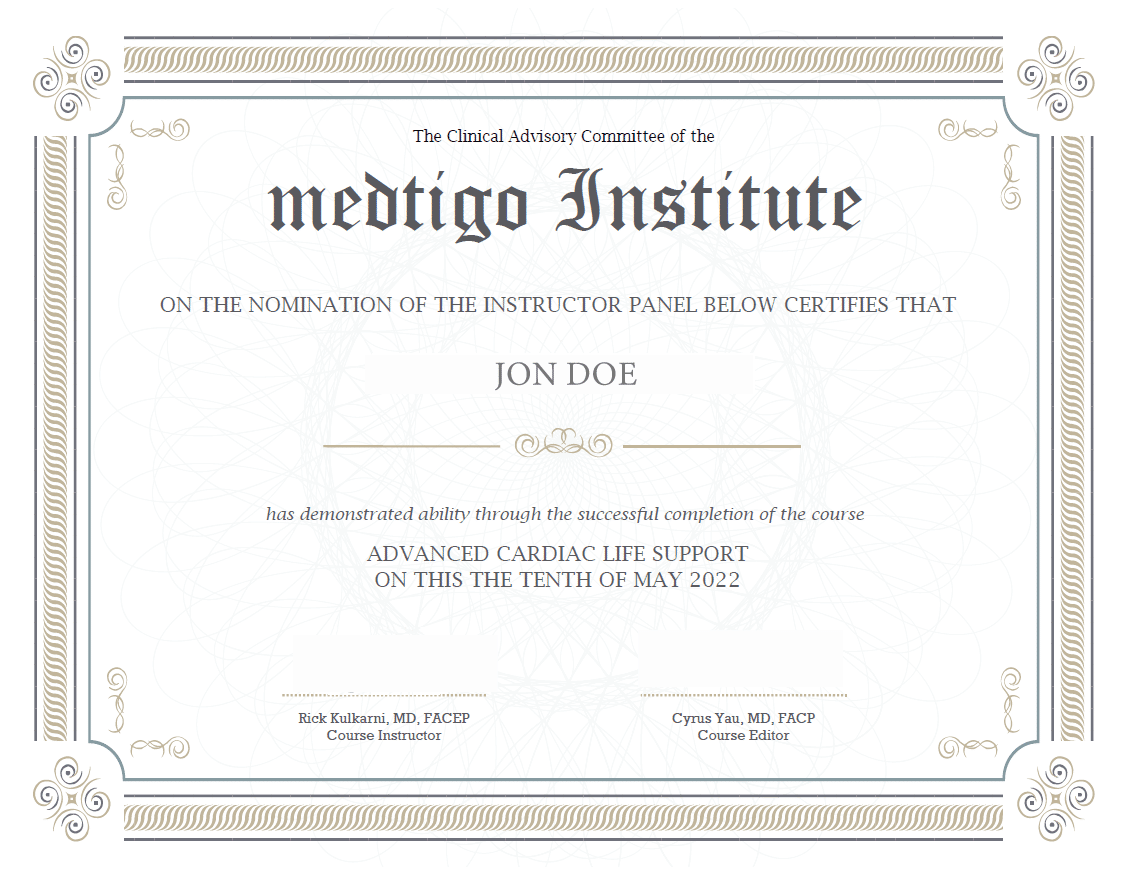
Digital Certificate PDF
On course completion, you will receive a full-sized presentation quality digital certificate.
medtigo Simulation
A dynamic medical simulation platform designed to train healthcare professionals and students to effectively run code situations through an immersive hands-on experience in a live, interactive 3D environment.
medtigo Points
medtigo points is our unique point redemption system created to award users for interacting on our site. These points can be redeemed for special discounts on the medtigo marketplace as well as towards the membership cost itself.
Community Forum post/reply = 5 points
*Redemption of points can occur only through the medtigo marketplace, courses, or simulation system. Money will not be credited to your bank account. 10 points = $1.
All Your Certificates in One Place
When you have your licenses, certificates and CMEs in one place, it's easier to track your career growth. You can easily share these with hospitals as well, using your medtigo app.