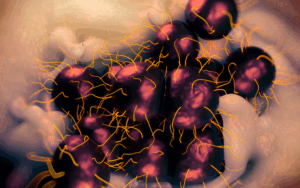
Balantidium coli is a tiny parasite that typically affects pigs but can sometimes infect humans as well. This single-celled organism is known as a ciliate protozoan which is responsible for causing the uncommon intestinal illness called balantidiasis. Balantidiasis symptoms can resemble those of other intestinally inflammatory infections such as amoebic dysentery.
Epidemiology
Prevalence: With an estimated 1% global prevalence it is present globally.
Geographical distribution: Psychiatric hospitals in the United States have experienced epidemics of balantidiasis. Previous reports from India include cases of B coli infection from pigs and cattle among other animals. India has reported very few cases of human B.coli infection.
Individuals who work with pigs are more likely to contract balantidiasis. A French butcher of pork who drank alcohol and became immunosuppressed developed occupational balantidiasis. There have been reports of urinary balantidiasis from Thailand.
Anatomy
Pathophysiology
It typically affects the large intestine which extends from the caecum to the rectum and can exist as a trophozoite. The trophozoites live on bacteria and reproduce by binary fission and conjugation. Humans consume infectious cysts and subsequently spread to the terminal ileum-cecum and large intestine. The organisms can cause ulcers by penetrating the mucosa but their primary habitat is the lumen.
Ulcers due to Balantidium
While balantidium ulcers do not pierce intestinal muscle layers and are visible with trophozoites in the pus and margins and amoebiasis-like intestine lesions.
Etiology
Through the oral-fecal route- contaminated food or water from sick humans or animals can spread the bacteria Balantidium coli. Ingestion of contaminated fruit or meat as well as the drinking and washing of food with tainted water which can all lead to infection.
Genetics
Prognostic Factors
Patients with comorbidities are more likely to develop symptomatic infection although the majority of cases are asymptomatic. Both diarrhea and watery stools are possible. Rare and most often linked to fulminating dysentery with or without multiple intestinal perforations which is a fulminant disease. When colonic ulcers and a deep bacterial invasion of the submucosa are present and the clinical presentation and ulcers resemble those of amebic dysentery. Sepsis brought on by micro-perforations can be a potentially lethal consequence.
Clinical History
Most infections caused by Balantidium are asymptomatic and self-limiting. Balantidiasis can present with mild to severe symptoms in its clinical manifestations. In the community asymptomatic hosts act as reservoirs for infections.
Those with chronic infection present:
Cramping
Pain in the abdomen
Halitosis
Diarrhea
Ciliate dysentery
Ciliary dysentery is caused by a B coli infection. The most common symptom of mild infections is intermittent diarrhea that alternates with constipation.
Those who have fulminating balantidiasis often have mucoid and bloody stools.
Weight loss and bloody stools are the most severe symptoms of a B coli infection. Proteolytic enzymes produced by B. coli can also cause intestinal bleeding and perforation.
There have been reports of perforations and hemorrhages in B. coli infection deaths.
Age group:
People of any age can contract balantidiasis but specific populations may be more susceptible to infection due to certain factors. Balantidiasis is frequently linked to conditions like weakened immune systems when in close contact with animals and poor sanitation. The following things to think about when it comes to age groups and balantidiasis:
Children:
Balantidiasis may pose a greater risk to children particularly in places with inadequate access to clean water and poor sanitation. Youngsters might be more likely to consume tainted food or water.
Physical Examination
Check for the over all skin appearance
Age group
Associated comorbidity
It is typically regarded as a self-limiting infection that rarely causes serious complications. A higher risk of complications or a more severe course of the disease may be brought on by specific comorbidities or underlying medical conditions. The following comorbidities or risk factors include balantidiasis.
Associated activity
Acuity of presentation
Differential Diagnoses
Intestinal tuberculosis
Chronic fungal bowel infections
Yersinia enterocolitica infection
Amoebic dysentery
Colitis
Laboratory Studies
Imaging Studies
Procedures
Histologic Findings
Staging
Treatment Paradigm
Antibiotics is the main treatment for balantidiasis.
Address underlying cause:
Antibiotic Treatment:
Antibiotics that are often used include:
Tetracycline: Taken orally over a predetermined period in several doses.
Another efficient treatment for balantidiasis is metronidazole.
Rehydrating and Providing Support:
When diarrhea causes dehydration and oral rehydration solutions combined with supportive care may be required to preserve fluid and electrolyte balance.
Medical Care
When patients with balantidiasis experience severe diarrhea thereby extra care should be taken with volume replacement and electrolyte replenishment.
Surgical Treatment
Rarely does balantidiasis cause acute appendicitis which necessitates an appendectomy.
Nutrition
It is recommended that patients with balantidiasis follow a starch-free diet.
by Stage
by Modality
Chemotherapy
Radiation Therapy
Surgical Interventions
Hormone Therapy
Immunotherapy
Hyperthermia
Photodynamic Therapy
Stem Cell Transplant
Targeted Therapy
Palliative Care
use-of-antibiotics
The recommended course of treatment is tetracycline along with metronidazole serving as the primary substitute. For ten days- 500 mg of tetracycline is administered orally four times a day.
Tetracycline
The bacterium Streptomyces aurefaciens is the source of this isolation. Protein synthesis is inhibited because of its reversible binding to the bacteria’ 30S and 50S subunits.
Iodoquinol
It works in the intestinal lumen and is known as a contact amoebicide.
Administration of Pharmaceutical agents with Drugs
Preventing complications and lowering morbidity are the two main objectives of pharmacotherapy. Balantidiasis in HIV-positive or otherwise immunocompromised patients may require extended therapy regimens to cure.
Use of antibiotics
The recommended course of treatment is tetracycline, with metronidazole serving as the primary substitute.
For ten days, 500 mg of tetracycline is administered orally four times a day. Additionally effective against balantidiasis are nitazoxanide, puromycin, and iodoquinol.
Tetracycline
Tetracycline is isolated from the bacteria Streptomyces aurefaciens. It exerts activity by binding to 50S and 30S subunits of microorganisms reversibly, which leads to the inhibition of protein synthesis.
Metronidazole
Metronidazole is a synthetic drug that possesses antibacterial and antiprotozoal activity. It is used to treat diarrhea in symptomatic patients.
Iodoquinol
Iodoquinol is a contact amoebicide that works in the intestinal lumen.
phases-of-management
Three steps are involved in managing balantidiasis: diagnosis along with therapy and follow-up. A complete medical history that includes symptoms with recent travel and exposure to contaminated food or water is required in the initial stage. Adjunctive treatment and symptomatic care are also crucial particularly in cases when the patient is dehydrated and experiencing diarrhea. Instructions for patients include washing their hands often and taking medicines as directed.
Measures of Public Health:
Public health officials may occasionally need to investigate and take action to stop the spread of balantidiasis particularly in outbreaks or unsanitary areas.
People who think they may have balantidiasis should get in touch with a doctor right away to estabish a proper diagnosis and treatment.
Balantidium coli is a tiny parasite that typically affects pigs but can sometimes infect humans as well. This single-celled organism is known as a ciliate protozoan which is responsible for causing the uncommon intestinal illness called balantidiasis. Balantidiasis symptoms can resemble those of other intestinally inflammatory infections such as amoebic dysentery.
Prevalence: With an estimated 1% global prevalence it is present globally.
Geographical distribution: Psychiatric hospitals in the United States have experienced epidemics of balantidiasis. Previous reports from India include cases of B coli infection from pigs and cattle among other animals. India has reported very few cases of human B.coli infection.
Individuals who work with pigs are more likely to contract balantidiasis. A French butcher of pork who drank alcohol and became immunosuppressed developed occupational balantidiasis. There have been reports of urinary balantidiasis from Thailand.
It typically affects the large intestine which extends from the caecum to the rectum and can exist as a trophozoite. The trophozoites live on bacteria and reproduce by binary fission and conjugation. Humans consume infectious cysts and subsequently spread to the terminal ileum-cecum and large intestine. The organisms can cause ulcers by penetrating the mucosa but their primary habitat is the lumen.
Ulcers due to Balantidium
While balantidium ulcers do not pierce intestinal muscle layers and are visible with trophozoites in the pus and margins and amoebiasis-like intestine lesions.
Through the oral-fecal route- contaminated food or water from sick humans or animals can spread the bacteria Balantidium coli. Ingestion of contaminated fruit or meat as well as the drinking and washing of food with tainted water which can all lead to infection.
Patients with comorbidities are more likely to develop symptomatic infection although the majority of cases are asymptomatic. Both diarrhea and watery stools are possible. Rare and most often linked to fulminating dysentery with or without multiple intestinal perforations which is a fulminant disease. When colonic ulcers and a deep bacterial invasion of the submucosa are present and the clinical presentation and ulcers resemble those of amebic dysentery. Sepsis brought on by micro-perforations can be a potentially lethal consequence.
Most infections caused by Balantidium are asymptomatic and self-limiting. Balantidiasis can present with mild to severe symptoms in its clinical manifestations. In the community asymptomatic hosts act as reservoirs for infections.
Those with chronic infection present:
Cramping
Pain in the abdomen
Halitosis
Diarrhea
Ciliate dysentery
Ciliary dysentery is caused by a B coli infection. The most common symptom of mild infections is intermittent diarrhea that alternates with constipation.
Those who have fulminating balantidiasis often have mucoid and bloody stools.
Weight loss and bloody stools are the most severe symptoms of a B coli infection. Proteolytic enzymes produced by B. coli can also cause intestinal bleeding and perforation.
There have been reports of perforations and hemorrhages in B. coli infection deaths.
Age group:
People of any age can contract balantidiasis but specific populations may be more susceptible to infection due to certain factors. Balantidiasis is frequently linked to conditions like weakened immune systems when in close contact with animals and poor sanitation. The following things to think about when it comes to age groups and balantidiasis:
Children:
Balantidiasis may pose a greater risk to children particularly in places with inadequate access to clean water and poor sanitation. Youngsters might be more likely to consume tainted food or water.
Check for the over all skin appearance
It is typically regarded as a self-limiting infection that rarely causes serious complications. A higher risk of complications or a more severe course of the disease may be brought on by specific comorbidities or underlying medical conditions. The following comorbidities or risk factors include balantidiasis.
Intestinal tuberculosis
Chronic fungal bowel infections
Yersinia enterocolitica infection
Amoebic dysentery
Colitis
Antibiotics is the main treatment for balantidiasis.
Address underlying cause:
Antibiotic Treatment:
Antibiotics that are often used include:
Tetracycline: Taken orally over a predetermined period in several doses.
Another efficient treatment for balantidiasis is metronidazole.
Rehydrating and Providing Support:
When diarrhea causes dehydration and oral rehydration solutions combined with supportive care may be required to preserve fluid and electrolyte balance.
Medical Care
When patients with balantidiasis experience severe diarrhea thereby extra care should be taken with volume replacement and electrolyte replenishment.
Surgical Treatment
Rarely does balantidiasis cause acute appendicitis which necessitates an appendectomy.
Nutrition
It is recommended that patients with balantidiasis follow a starch-free diet.
Gastroenterology
The recommended course of treatment is tetracycline along with metronidazole serving as the primary substitute. For ten days- 500 mg of tetracycline is administered orally four times a day.
Tetracycline
The bacterium Streptomyces aurefaciens is the source of this isolation. Protein synthesis is inhibited because of its reversible binding to the bacteria’ 30S and 50S subunits.
Iodoquinol
It works in the intestinal lumen and is known as a contact amoebicide.
Infectious Disease
Preventing complications and lowering morbidity are the two main objectives of pharmacotherapy. Balantidiasis in HIV-positive or otherwise immunocompromised patients may require extended therapy regimens to cure.
Gastroenterology
The recommended course of treatment is tetracycline, with metronidazole serving as the primary substitute.
For ten days, 500 mg of tetracycline is administered orally four times a day. Additionally effective against balantidiasis are nitazoxanide, puromycin, and iodoquinol.
Tetracycline
Tetracycline is isolated from the bacteria Streptomyces aurefaciens. It exerts activity by binding to 50S and 30S subunits of microorganisms reversibly, which leads to the inhibition of protein synthesis.
Metronidazole
Metronidazole is a synthetic drug that possesses antibacterial and antiprotozoal activity. It is used to treat diarrhea in symptomatic patients.
Iodoquinol
Iodoquinol is a contact amoebicide that works in the intestinal lumen.
Gastroenterology
Three steps are involved in managing balantidiasis: diagnosis along with therapy and follow-up. A complete medical history that includes symptoms with recent travel and exposure to contaminated food or water is required in the initial stage. Adjunctive treatment and symptomatic care are also crucial particularly in cases when the patient is dehydrated and experiencing diarrhea. Instructions for patients include washing their hands often and taking medicines as directed.
Measures of Public Health:
Public health officials may occasionally need to investigate and take action to stop the spread of balantidiasis particularly in outbreaks or unsanitary areas.
People who think they may have balantidiasis should get in touch with a doctor right away to estabish a proper diagnosis and treatment.
Balantidium coli is a tiny parasite that typically affects pigs but can sometimes infect humans as well. This single-celled organism is known as a ciliate protozoan which is responsible for causing the uncommon intestinal illness called balantidiasis. Balantidiasis symptoms can resemble those of other intestinally inflammatory infections such as amoebic dysentery.
Prevalence: With an estimated 1% global prevalence it is present globally.
Geographical distribution: Psychiatric hospitals in the United States have experienced epidemics of balantidiasis. Previous reports from India include cases of B coli infection from pigs and cattle among other animals. India has reported very few cases of human B.coli infection.
Individuals who work with pigs are more likely to contract balantidiasis. A French butcher of pork who drank alcohol and became immunosuppressed developed occupational balantidiasis. There have been reports of urinary balantidiasis from Thailand.
It typically affects the large intestine which extends from the caecum to the rectum and can exist as a trophozoite. The trophozoites live on bacteria and reproduce by binary fission and conjugation. Humans consume infectious cysts and subsequently spread to the terminal ileum-cecum and large intestine. The organisms can cause ulcers by penetrating the mucosa but their primary habitat is the lumen.
Ulcers due to Balantidium
While balantidium ulcers do not pierce intestinal muscle layers and are visible with trophozoites in the pus and margins and amoebiasis-like intestine lesions.
Through the oral-fecal route- contaminated food or water from sick humans or animals can spread the bacteria Balantidium coli. Ingestion of contaminated fruit or meat as well as the drinking and washing of food with tainted water which can all lead to infection.
Patients with comorbidities are more likely to develop symptomatic infection although the majority of cases are asymptomatic. Both diarrhea and watery stools are possible. Rare and most often linked to fulminating dysentery with or without multiple intestinal perforations which is a fulminant disease. When colonic ulcers and a deep bacterial invasion of the submucosa are present and the clinical presentation and ulcers resemble those of amebic dysentery. Sepsis brought on by micro-perforations can be a potentially lethal consequence.
Most infections caused by Balantidium are asymptomatic and self-limiting. Balantidiasis can present with mild to severe symptoms in its clinical manifestations. In the community asymptomatic hosts act as reservoirs for infections.
Those with chronic infection present:
Cramping
Pain in the abdomen
Halitosis
Diarrhea
Ciliate dysentery
Ciliary dysentery is caused by a B coli infection. The most common symptom of mild infections is intermittent diarrhea that alternates with constipation.
Those who have fulminating balantidiasis often have mucoid and bloody stools.
Weight loss and bloody stools are the most severe symptoms of a B coli infection. Proteolytic enzymes produced by B. coli can also cause intestinal bleeding and perforation.
There have been reports of perforations and hemorrhages in B. coli infection deaths.
Age group:
People of any age can contract balantidiasis but specific populations may be more susceptible to infection due to certain factors. Balantidiasis is frequently linked to conditions like weakened immune systems when in close contact with animals and poor sanitation. The following things to think about when it comes to age groups and balantidiasis:
Children:
Balantidiasis may pose a greater risk to children particularly in places with inadequate access to clean water and poor sanitation. Youngsters might be more likely to consume tainted food or water.
Check for the over all skin appearance
It is typically regarded as a self-limiting infection that rarely causes serious complications. A higher risk of complications or a more severe course of the disease may be brought on by specific comorbidities or underlying medical conditions. The following comorbidities or risk factors include balantidiasis.
Intestinal tuberculosis
Chronic fungal bowel infections
Yersinia enterocolitica infection
Amoebic dysentery
Colitis
Antibiotics is the main treatment for balantidiasis.
Address underlying cause:
Antibiotic Treatment:
Antibiotics that are often used include:
Tetracycline: Taken orally over a predetermined period in several doses.
Another efficient treatment for balantidiasis is metronidazole.
Rehydrating and Providing Support:
When diarrhea causes dehydration and oral rehydration solutions combined with supportive care may be required to preserve fluid and electrolyte balance.
Medical Care
When patients with balantidiasis experience severe diarrhea thereby extra care should be taken with volume replacement and electrolyte replenishment.
Surgical Treatment
Rarely does balantidiasis cause acute appendicitis which necessitates an appendectomy.
Nutrition
It is recommended that patients with balantidiasis follow a starch-free diet.
Gastroenterology
The recommended course of treatment is tetracycline along with metronidazole serving as the primary substitute. For ten days- 500 mg of tetracycline is administered orally four times a day.
Tetracycline
The bacterium Streptomyces aurefaciens is the source of this isolation. Protein synthesis is inhibited because of its reversible binding to the bacteria’ 30S and 50S subunits.
Iodoquinol
It works in the intestinal lumen and is known as a contact amoebicide.
Infectious Disease
Preventing complications and lowering morbidity are the two main objectives of pharmacotherapy. Balantidiasis in HIV-positive or otherwise immunocompromised patients may require extended therapy regimens to cure.
Gastroenterology
The recommended course of treatment is tetracycline, with metronidazole serving as the primary substitute.
For ten days, 500 mg of tetracycline is administered orally four times a day. Additionally effective against balantidiasis are nitazoxanide, puromycin, and iodoquinol.
Tetracycline
Tetracycline is isolated from the bacteria Streptomyces aurefaciens. It exerts activity by binding to 50S and 30S subunits of microorganisms reversibly, which leads to the inhibition of protein synthesis.
Metronidazole
Metronidazole is a synthetic drug that possesses antibacterial and antiprotozoal activity. It is used to treat diarrhea in symptomatic patients.
Iodoquinol
Iodoquinol is a contact amoebicide that works in the intestinal lumen.
Gastroenterology
Three steps are involved in managing balantidiasis: diagnosis along with therapy and follow-up. A complete medical history that includes symptoms with recent travel and exposure to contaminated food or water is required in the initial stage. Adjunctive treatment and symptomatic care are also crucial particularly in cases when the patient is dehydrated and experiencing diarrhea. Instructions for patients include washing their hands often and taking medicines as directed.
Measures of Public Health:
Public health officials may occasionally need to investigate and take action to stop the spread of balantidiasis particularly in outbreaks or unsanitary areas.
People who think they may have balantidiasis should get in touch with a doctor right away to estabish a proper diagnosis and treatment.
Both our subscription plans include Free CME/CPD AMA PRA Category 1 credits.
Digital Certificate PDF
On course completion, you will receive a full-sized presentation quality digital certificate.
medtigo Simulation
A dynamic medical simulation platform designed to train healthcare professionals and students to effectively run code situations through an immersive hands-on experience in a live, interactive 3D environment.
medtigo Points
medtigo points is our unique point redemption system created to award users for interacting on our site. These points can be redeemed for special discounts on the medtigo marketplace as well as towards the membership cost itself.
Community Forum post/reply = 5 points
*Redemption of points can occur only through the medtigo marketplace, courses, or simulation system. Money will not be credited to your bank account. 10 points = $1.
All Your Certificates in One Place
When you have your licenses, certificates and CMEs in one place, it's easier to track your career growth. You can easily share these with hospitals as well, using your medtigo app.