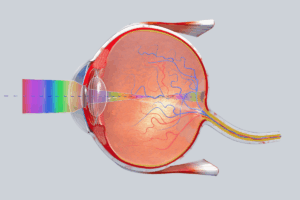
In this disorder it shows the effect on the light-sensitive tissue at the back of the eye that is important for vision. Central Retinal Vein Occlusion is a vascular condition which affects the retina of eye.
CRVO develops due to the central retinal vein. It is a key blood channel that drains blood from the retina so they may block.
This blockage causes a buildup of blood and fluid in the retina. It causes damage to the sensitive retinal cells and possibly leading in vision loss.
The two basic kinds of CRVO are non-ischemic and ischemic.
Epidemiology
Age influences the frequency of CRVO, which is more common in adults over 50. Hypertension is a significant risk factor for developing CRVO.
Diabetic retinopathy is another retinal vascular disease that appears to be more common and widespread than CRVO.
Hyperlipidemia and other vascular disorders may also play a role in the development of CRVO.
Anatomy
Pathophysiology
The most common cause of central retinal vein thrombosis is a blood clot in the vein.
The thrombus inside the central retinal vein prevents normal blood flow from the retina, increasing vascular resistance.
Obstruction of the retinal vein generates increased venous pressure and congestion.
Etiology
People with diabetes have a higher chance of getting these vascular diseases. Diabetes may change blood artery structure which result in thrombosis and occlusion.
Tobacco smoke contains compounds that have the potential to damage blood vessels and raise the risk of vascular illnesses.
Genetics
Prognostic Factors
Non-ischemic CRVO typically has a better prognosis than ischemic CRVO. Non-ischemic CRVO causes less severe vision loss and a decreased risk of complications.
The presence and severity of macular edema can influence visual results. It can cause impaired vision and distortion, and its resolution is frequently a determining factor in visual improvement.
Clinical History
It is more common among people over the age of 50.
CRVO can occur at any age. It is more common in elderly people. The chance of having vascular illnesses, especially those affecting the retina, increases with age.
Physical Examination
Fundus Examination
Fluorescein Angiography
Intraocular Pressure Measurement
Color Vision Testing
Visual Field Testing
Age group
Associated comorbidity
Hypertension is a significant risk factor for CRVO. Elevated blood pressure can lead to changes in the blood vessels. Individuals with diabetes are at an increased risk of developing vascular complications, including CRVO.
Atherosclerosis, the buildup of fatty deposits on arterial walls, can affect both arteries and veins, contributing to vascular occlusions.Conditions associated with increased blood clotting, such as hypercoagulable states or blood disorders, may increase the risk of thrombosis and CRVO.
Various cardiovascular conditions, including coronary artery disease and cerebrovascular disease, may be associated with CRVO. The chemicals in tobacco smoke can have adverse effects on blood vessels.
Associated activity
Acuity of presentation
Patients with CRVO shows substantial visual impairment. The loss of visual acuity is usually sudden and painless thus affects to center vision.
The type of CRVO can also affect presentation clarity. Ischemic CRVO which causes a more severe blockage of blood flow It may have worse visual consequences than non-ischemic CRVO.
Differential Diagnoses
Branch Retinal Vein Occlusion
Hypertensive and diabetic Retinopathy
Ischemic Optic Neuropathy
Central Retinal Artery Occlusion
Laboratory Studies
Imaging Studies
Procedures
Histologic Findings
Staging
Treatment Paradigm
Physicians should address and control underlying systemic conditions are essential for preventing the progression of CRVO and reducing the risk of recurrence.
The use of anticoagulant therapy may be suggested in individuals with CRVO associated with a hypercoagulable state or other blood disorders.
For individuals with persistent visual impairment, low vision rehabilitation services may be beneficial.
The patient should use bright and natural lighting in select locations for detailed tasks.
Use of glare from windows or bright lights should be avoided as it can be harmful for people with vision impairments.
Investigate the use of adaptive technologies such as magnifiers, screen readers to support reading and daily duties.
Use of vascular endothelial growth factor inhibitors
Ranibizumab is a monoclonal antibody which inhibits the activity of vascular endothelial growth factor.
It helps reduce vascular permeability and prevent the formation of abnormal blood vessels.
Use of corticosteroids
Dexamethasoneis a potent corticosteroid suppresses the release of inflammatory mediators. It also stabilizes cell membranes and reduces vascular permeability.
The first phase involves the prompt diagnosis of CRVO through a comprehensive eye examination.
Regular follow-up examinations are essential to assess the response to treatment.
Continued management of underlying systemic conditions, lifestyle modifications, and regular healthcare follow-up are important for preventing recurrence and maintaining overall health.
»
Home » CAD » Central Retinal Vein Occlusion (CRVO)
Central Retinal Vein Occlusion (CRVO)
Updated :
April 12, 2024
In this disorder it shows the effect on the light-sensitive tissue at the back of the eye that is important for vision. Central Retinal Vein Occlusion is a vascular condition which affects the retina of eye.
CRVO develops due to the central retinal vein. It is a key blood channel that drains blood from the retina so they may block.
This blockage causes a buildup of blood and fluid in the retina. It causes damage to the sensitive retinal cells and possibly leading in vision loss.
The two basic kinds of CRVO are non-ischemic and ischemic.
Age influences the frequency of CRVO, which is more common in adults over 50. Hypertension is a significant risk factor for developing CRVO.
Diabetic retinopathy is another retinal vascular disease that appears to be more common and widespread than CRVO.
Hyperlipidemia and other vascular disorders may also play a role in the development of CRVO.
The most common cause of central retinal vein thrombosis is a blood clot in the vein.
The thrombus inside the central retinal vein prevents normal blood flow from the retina, increasing vascular resistance.
Obstruction of the retinal vein generates increased venous pressure and congestion.
People with diabetes have a higher chance of getting these vascular diseases. Diabetes may change blood artery structure which result in thrombosis and occlusion.
Tobacco smoke contains compounds that have the potential to damage blood vessels and raise the risk of vascular illnesses.
Non-ischemic CRVO typically has a better prognosis than ischemic CRVO. Non-ischemic CRVO causes less severe vision loss and a decreased risk of complications.
The presence and severity of macular edema can influence visual results. It can cause impaired vision and distortion, and its resolution is frequently a determining factor in visual improvement.
It is more common among people over the age of 50.
CRVO can occur at any age. It is more common in elderly people. The chance of having vascular illnesses, especially those affecting the retina, increases with age.
Fundus Examination
Fluorescein Angiography
Intraocular Pressure Measurement
Color Vision Testing
Visual Field Testing
Hypertension is a significant risk factor for CRVO. Elevated blood pressure can lead to changes in the blood vessels. Individuals with diabetes are at an increased risk of developing vascular complications, including CRVO.
Atherosclerosis, the buildup of fatty deposits on arterial walls, can affect both arteries and veins, contributing to vascular occlusions.Conditions associated with increased blood clotting, such as hypercoagulable states or blood disorders, may increase the risk of thrombosis and CRVO.
Various cardiovascular conditions, including coronary artery disease and cerebrovascular disease, may be associated with CRVO. The chemicals in tobacco smoke can have adverse effects on blood vessels.
Patients with CRVO shows substantial visual impairment. The loss of visual acuity is usually sudden and painless thus affects to center vision.
The type of CRVO can also affect presentation clarity. Ischemic CRVO which causes a more severe blockage of blood flow It may have worse visual consequences than non-ischemic CRVO.
Branch Retinal Vein Occlusion
Hypertensive and diabetic Retinopathy
Ischemic Optic Neuropathy
Central Retinal Artery Occlusion
Physicians should address and control underlying systemic conditions are essential for preventing the progression of CRVO and reducing the risk of recurrence.
The use of anticoagulant therapy may be suggested in individuals with CRVO associated with a hypercoagulable state or other blood disorders.
For individuals with persistent visual impairment, low vision rehabilitation services may be beneficial.
Ophthalmology
The patient should use bright and natural lighting in select locations for detailed tasks.
Use of glare from windows or bright lights should be avoided as it can be harmful for people with vision impairments.
Investigate the use of adaptive technologies such as magnifiers, screen readers to support reading and daily duties.
Ophthalmology
Ranibizumab is a monoclonal antibody which inhibits the activity of vascular endothelial growth factor.
It helps reduce vascular permeability and prevent the formation of abnormal blood vessels.
Cardiology, General
Ophthalmology
Dexamethasoneis a potent corticosteroid suppresses the release of inflammatory mediators. It also stabilizes cell membranes and reduces vascular permeability.
Ophthalmology
Surgery, Vascular
In this condition Anti-vascular endothelial growth factor (anti-VEGF) medications are given through intravitreal injections.
Intravitreal corticosteroid injections may be used to treat macular edema associated with CRVO.
Ophthalmology
Psychiatry/Mental Health
The first phase involves the prompt diagnosis of CRVO through a comprehensive eye examination.
Regular follow-up examinations are essential to assess the response to treatment.
Continued management of underlying systemic conditions, lifestyle modifications, and regular healthcare follow-up are important for preventing recurrence and maintaining overall health.
In this disorder it shows the effect on the light-sensitive tissue at the back of the eye that is important for vision. Central Retinal Vein Occlusion is a vascular condition which affects the retina of eye.
CRVO develops due to the central retinal vein. It is a key blood channel that drains blood from the retina so they may block.
This blockage causes a buildup of blood and fluid in the retina. It causes damage to the sensitive retinal cells and possibly leading in vision loss.
The two basic kinds of CRVO are non-ischemic and ischemic.
Age influences the frequency of CRVO, which is more common in adults over 50. Hypertension is a significant risk factor for developing CRVO.
Diabetic retinopathy is another retinal vascular disease that appears to be more common and widespread than CRVO.
Hyperlipidemia and other vascular disorders may also play a role in the development of CRVO.
The most common cause of central retinal vein thrombosis is a blood clot in the vein.
The thrombus inside the central retinal vein prevents normal blood flow from the retina, increasing vascular resistance.
Obstruction of the retinal vein generates increased venous pressure and congestion.
People with diabetes have a higher chance of getting these vascular diseases. Diabetes may change blood artery structure which result in thrombosis and occlusion.
Tobacco smoke contains compounds that have the potential to damage blood vessels and raise the risk of vascular illnesses.
Non-ischemic CRVO typically has a better prognosis than ischemic CRVO. Non-ischemic CRVO causes less severe vision loss and a decreased risk of complications.
The presence and severity of macular edema can influence visual results. It can cause impaired vision and distortion, and its resolution is frequently a determining factor in visual improvement.
It is more common among people over the age of 50.
CRVO can occur at any age. It is more common in elderly people. The chance of having vascular illnesses, especially those affecting the retina, increases with age.
Fundus Examination
Fluorescein Angiography
Intraocular Pressure Measurement
Color Vision Testing
Visual Field Testing
Hypertension is a significant risk factor for CRVO. Elevated blood pressure can lead to changes in the blood vessels. Individuals with diabetes are at an increased risk of developing vascular complications, including CRVO.
Atherosclerosis, the buildup of fatty deposits on arterial walls, can affect both arteries and veins, contributing to vascular occlusions.Conditions associated with increased blood clotting, such as hypercoagulable states or blood disorders, may increase the risk of thrombosis and CRVO.
Various cardiovascular conditions, including coronary artery disease and cerebrovascular disease, may be associated with CRVO. The chemicals in tobacco smoke can have adverse effects on blood vessels.
Patients with CRVO shows substantial visual impairment. The loss of visual acuity is usually sudden and painless thus affects to center vision.
The type of CRVO can also affect presentation clarity. Ischemic CRVO which causes a more severe blockage of blood flow It may have worse visual consequences than non-ischemic CRVO.
Branch Retinal Vein Occlusion
Hypertensive and diabetic Retinopathy
Ischemic Optic Neuropathy
Central Retinal Artery Occlusion
Physicians should address and control underlying systemic conditions are essential for preventing the progression of CRVO and reducing the risk of recurrence.
The use of anticoagulant therapy may be suggested in individuals with CRVO associated with a hypercoagulable state or other blood disorders.
For individuals with persistent visual impairment, low vision rehabilitation services may be beneficial.
Ophthalmology
The patient should use bright and natural lighting in select locations for detailed tasks.
Use of glare from windows or bright lights should be avoided as it can be harmful for people with vision impairments.
Investigate the use of adaptive technologies such as magnifiers, screen readers to support reading and daily duties.
Ophthalmology
Ranibizumab is a monoclonal antibody which inhibits the activity of vascular endothelial growth factor.
It helps reduce vascular permeability and prevent the formation of abnormal blood vessels.
Cardiology, General
Ophthalmology
Dexamethasoneis a potent corticosteroid suppresses the release of inflammatory mediators. It also stabilizes cell membranes and reduces vascular permeability.
Ophthalmology
Surgery, Vascular
In this condition Anti-vascular endothelial growth factor (anti-VEGF) medications are given through intravitreal injections.
Intravitreal corticosteroid injections may be used to treat macular edema associated with CRVO.
Ophthalmology
Psychiatry/Mental Health
The first phase involves the prompt diagnosis of CRVO through a comprehensive eye examination.
Regular follow-up examinations are essential to assess the response to treatment.
Continued management of underlying systemic conditions, lifestyle modifications, and regular healthcare follow-up are important for preventing recurrence and maintaining overall health.
Both our subscription plans include Free CME/CPD AMA PRA Category 1 credits.
Digital Certificate PDF
On course completion, you will receive a full-sized presentation quality digital certificate.
medtigo Simulation
A dynamic medical simulation platform designed to train healthcare professionals and students to effectively run code situations through an immersive hands-on experience in a live, interactive 3D environment.
medtigo Points
medtigo points is our unique point redemption system created to award users for interacting on our site. These points can be redeemed for special discounts on the medtigo marketplace as well as towards the membership cost itself.
Community Forum post/reply = 5 points
*Redemption of points can occur only through the medtigo marketplace, courses, or simulation system. Money will not be credited to your bank account. 10 points = $1.
All Your Certificates in One Place
When you have your licenses, certificates and CMEs in one place, it's easier to track your career growth. You can easily share these with hospitals as well, using your medtigo app.