Hemophilia A

Updated: July 3, 2024

Mail Whatsapp PDF Image

Background

  • Hemophilia A or VIII deficiency, is an X-linked recessive bleeding disorder which is caused by deficiency or dysfunction of clotting factor VIII. Hemophilia A affects males, and it is estimated to occur in 1 in 5,000 live male births.
  • The severity of Hemophilia A depends on the residual level of factor VIII activity, with mild hemophilia A having 5-40% activity, moderate hemophilia A having 1-5% activity, and severe hemophilia A having less than 1% activity.
  • Hemophilia A can lead to spontaneous bleeding into joints, muscles, and other soft tissues, and it can also result in excessive bleeding after injury or surgery. Treatment for hemophilia A involves replacement of the missing factor VIII through regular infusions. 

Epidemiology

  • Incidence and Prevalence: Hemophilia A is a rare genetic disorder, affecting males. The incidence of Hemophilia A is estimated to be around 1 in 5,000 male births. The prevalence of Hemophilia A varies among populations and geographic regions.  
  • Genetic Inheritance: Hemophilia A follows an X-linked recessive inheritance pattern. Males have one X chromosome and are therefore more commonly affected, while females who carry a single copy of the defective gene are typically carriers but may exhibit mild symptoms.  
  • Carrier Frequency: Carriers of the defective F8 gene have a 50% chance of passing it to their children. 
  • Severity and Presentation: Hemophilia A can manifest in varying degrees of severity, categorized as severe, moderate, or mild, based on the residual activity of Factor VIII. 

Anatomy

Pathophysiology

  • Deficiency of Factor VIII: Haemophilia A is characterized by a deficiency or clotting factor VIII dysfunction, which is essential for stable blood clots formation.  
  • Disrupted Coagulation Cascade: Factor VIII plays a crucial role in the intrinsic pathway of the coagulation cascade. Without sufficient Factor VIII, the conversion of Factor IX to its active form (Factor IXa) is impaired, resulting in a deficiency of activated Factor X and reduced thrombin generation.  
  • Impaired Platelet Function: In addition to its role in the coagulation cascade, Factor VIII also enhances platelet aggregation and adhesion at the site of injury.  
  • Variable Severity: The severity of Hemophilia A can vary depending on the residual activity of Factor VIII. Individuals with severe Hemophilia A have less than 1% of normal Factor VIII activity and experience frequent and spontaneous bleeding. 

Etiology

  • Genetic Mutation: Hemophilia A is an X-linked recessive disorder caused by F8 gene mutations, which provides instructions for producing the clotting protein Factor VIII.  
  • Inheritance: Hemophilia A is inherited in an X-linked recessive pattern. Males have only one X chromosome, so if there is inheritance of mutated gene, they will develop Hemophilia A. Females have two X chromosomes, so they can be carriers of the mutated gene and passing it on to their children.  
  • Spontaneous Mutations: In some cases, individuals with Hemophilia A may have no family history of the disorder. Spontaneous mutations can occur during early development, leading to the development of Hemophilia A even without a family history.  


Genetics

Prognostic Factors

  • Severity of Hemophilia: It is determined by the amount of Factor VIII clotting activity in the blood. The lower the levels of Factor VIII, the more severe the hemophilia and the higher the risk of bleeding complications. Prognosis can vary based on the severity of the condition.  
  • Presence of Inhibitors: Inhibitors are antibodies that develop in some individuals with Hemophilia A, which can neutralize or reduce the effectiveness of Factor VIII replacement therapy. The presence of inhibitors can complicate treatment and increase the risk of bleeding episodes, thereby affecting the prognosis.  
  • Age at Diagnosis: Early diagnosis and initiation of appropriate treatment can significantly improve outcomes for individuals with Hemophilia A. Prompt management and access to comprehensive care can reduce the risk of complications and improve overall prognosis.  
  • Joint Health: Hemophilia A can lead to joint damage and the development of arthropathy due to recurrent bleeding into the joints. The severity and frequency of joint bleeds can impact long-term joint health and functional outcomes. 

Clinical History

Age Group: 

  • Hemophilia A is typically diagnosed in infancy or early childhood when bleeding symptoms become evident. However, the severity of symptoms can vary among individuals. 
  • Severe hemophilia A is often diagnosed in the first two years of life, as spontaneous bleeding may occur, or excessive bleeding may result from minor injuries. 
  • Moderate and mild forms of Hemophilia A may be diagnosed later in childhood or even in adulthood, as bleeding symptoms may be less severe or may not manifest until later in life. 

Physical Examination

When evaluating a patient with Hemophilia A, the physical examination aims to assess the extent of bleeding, identify potential complications, and determine the overall clinical status of the individual. The following aspects may be assessed during the physical examination: 

General Appearance: 

  • Assess the patient’s general appearance, including signs of pallor, fatigue, or distress. 
  • Look for any visible signs of bleeding, such as bruising or hematoma formation. 
  • Joint Examination: 
  • Evaluate the range of strength, motion, and stability of joints, particularly weight-bearing joints such as the knees, ankles, and elbows. 
  • Palpate the joints for swelling, tenderness, warmth, or effusion. 
  • Assess joint deformities or contractures that may be associated with chronic hemophilic arthropathy. 

Soft Tissue Examination: 

  • Inspect the skin for signs of bruising, petechiae, or other skin manifestations of bleeding. 
  • Palpate muscles and soft tissues for any areas of swelling, hematoma, or tenderness. 

Neurological Examination: 

  • Evaluate neurological function, especially in cases of head trauma or suspected intracranial bleeding. 
  • Assess for signs of neurologic deficits, such as altered consciousness, headache, vomiting, or focal neurological findings. 

Examination of Mucosal Surfaces: 

  • Inspect oral cavity and gums for signs of bleeding or spontaneous gingival bleeding. 
  • Assess other mucosal surfaces, such as the nasal cavity and gastrointestinal tract, for signs of bleeding. 

Laboratory Investigations: 

  • Hemophilia A diagnosis and monitoring involve laboratory testing to determine the factor VIII activity level and other relevant blood parameters. 
  • Additional tests, such as complete blood count (CBC), clotting profile, and imaging studies, may be ordered based on the clinical presentation and specific concerns. 

Age group

Associated comorbidity

  • Joint Bleeding: Hemophilia A can cause joint bleeding, which is a common manifestation. swelling and limited range of motion can occur, especially in weight-bearing joints such as the knees and ankles. 
  • Soft Tissue Bleeding: Hemophilia A can also lead to bleeding into soft tissues, such as muscles and organs. This can result in bruising, hematoma formation, and internal bleeding. 
  • Spontaneous Bleeding: Individuals with Hemophilia A may experience spontaneous bleeding without apparent cause or trauma, such as nosebleeds, gastrointestinal bleeding, or blood in the urine. 

Associated activity

Acuity of presentation

  • Acute Bleeding Episodes: Hemophilia A is characterized by recurrent acute bleeding episodes, which can be triggered by trauma or occur spontaneously. 
  • Chronic Joint Disease: Frequent or inadequately treated bleeding into joints can lead to chronic joint disease, known as hemophilic arthropathy. This can result in pain, deformity, and functional impairment of the affected joints. 

Differential Diagnoses

  • Hemophilia B: The hemophilia B is caused by clotting factor IX deficiency, while hemophilia A is caused by clotting factor VIII deficiency. 
  • von Willebrand disease: This is the common bleeding disorder and can present with similar symptoms as hemophilia A. It is caused by a dysfunction or deficiency of von Willebrand factor, which is important in the clotting process. 
  • Platelet function disorders: Disorders such as Glanzmann’s thrombasthenia, Bernard-Soulier syndrome, and storage pool deficiency can lead to abnormal platelet function and bleeding symptoms that can mimic those of hemophilia A. 
  • Liver disease: It can affect the production of clotting factors and lead to bleeding disorders. 
  • Acquired hemophilia: This is a rare condition in which body produces antibodies that attack and destroy clotting factors, leading to bleeding. 
  • Medication-induced bleeding: Certain medications, such as blood thinners, may have an increase in risk of bleeding and may need to be managed in patients with hemophilia A. 

Laboratory Studies

Imaging Studies

Procedures

Histologic Findings

Staging

Treatment Paradigm

  • The treatment and management of Hemophilia A involves several approaches to prevent and control bleeding episodes and to improve overall quality of life.

by Stage

by Modality

Chemotherapy

Radiation Therapy

Surgical Interventions

Hormone Therapy

Immunotherapy

Hyperthermia

Photodynamic Therapy

Stem Cell Transplant

Targeted Therapy

Palliative Care

  • Providing a safe environment to minimize the risk of injury and bleeding. 
  • Encouraging regular physical activity within the limits of safety and with appropriate precautions. 
  • Educating patients and caregivers about injury prevention strategies. 

  • Replacement Therapy: The cornerstone of treatment for Hemophilia A is factor VIII replacement therapy, which involves intravenous administration of recombinant or plasma-derived factor VIII concentrates to replace the deficient clotting factor. 
  • Prophylactic Therapy: In severe Hemophilia A, regular prophylactic infusions of factor VIII are recommended to prevent bleeding episodes and to preserve joint and overall health. 
  • On-Demand Therapy: Administration of factor VIII concentrates as needed to control bleeding episodes. 
  • Desmopressin (DDAVP): Some individuals with mild Hemophilia A may respond to desmopressin, a medication that stimulates the release of stored factor VIII from endothelial cells. 

  • Surgical Interventions: In cases where surgical procedures are necessary, appropriate factor VIII replacement therapy is administered to maintain hemostasis. 
  • Dental Procedures: Dental procedures should be carefully planned in coordination with the hematologist to ensure adequate factor VIII coverage. 
  • Joint Aspiration and Injection: For individuals with recurrent joint bleeding, joint aspiration and injection of factor VIII concentrates may be performed to relieve symptoms. 

  • Acute Bleeding Episode Management: Prompt administration of factor VIII concentrates or other appropriate interventions to control bleeding and prevent complications. 
  • Prophylactic Management: Regular infusions of factor VIII to prevent bleeding episodes, especially in severe Hemophilia A. 
  • Chronic Joint Disease Management: Comprehensive joint care, including physical therapy, pain management, and rehabilitation, to preserve joint function and prevent complications. 
  • Supportive Care: Comprehensive care, including psychosocial support, genetic counseling, and education, to address the physical, emotional, and social needs of individuals with Hemophilia A and their families. 

Medication


anti-inhibitor coagulant complex 

The recommended intravenous dosage for joint hemorrhage is 50 units/kg every 12 hours, with the possibility of increasing to 100 units/kg every 12 hours
The recommended intravenous dosage for mucous membrane bleeding is 50 units/kg every 6 hours; this can be raised to 100 units/kg for up to two treatments
The recommended intravenous dosage for soft tissue haemorrhage is 100 units/kg intravenously every 12 hours
It is advised to provide 100 units/kg intravenously every 6 to12 hours for severe hemorrhages, such as CNS bleeding, however greater dosages can be necessary based on the severity
50 to 100 units/kg intravenously are given as part of perioperative treatment just before surgery, and then again, every 6 to 12 hours after surgery until the bleeding stops and the wounds heal
Routine prophylaxis entails a dosage of 85 units/kg intravenously administered every other day


anti-inhibitor coagulant complex 

Preventing and Managing Bleeding
For joint hemorrhage, give 50 units/kg intravenously every 12 hours; if necessary, increase to 100 units/kg every 12 hours
The recommended intravenous dosage for mucous membrane bleeding is 50 units/kg every 6 hours; this can be raised to 100 units/kg for a maximum of two treatments
Give 100 units/kg intravenously every 12 hours for soft tissue hemorrhage, up to a daily dosage of 200 units/kg
Use 100 units/kg intravenously every 6 to 12 hours for severe hemorrhage (such as CNS bleeding), up to a daily dose of 200 units/kg, unless the severity calls for greater dosages
Management of Perioperative Conditions
Preoperative: A single dose of 50 to100 units/kg intravenously can be given immediately before surgery
Postoperative: Administer 50 to100 units/kg intravenously every 6–12 hours until bleeding stops, and the surgical site heals
Routine Prophylaxis
For routine prophylaxis, a dose of 85 units/kg intravenously every other day is recommended


Media Gallary

Content loading

Latest Posts

Hemophilia A

Updated : July 3, 2024

Mail Whatsapp PDF Image


  • Hemophilia A or VIII deficiency, is an X-linked recessive bleeding disorder which is caused by deficiency or dysfunction of clotting factor VIII. Hemophilia A affects males, and it is estimated to occur in 1 in 5,000 live male births.
  • The severity of Hemophilia A depends on the residual level of factor VIII activity, with mild hemophilia A having 5-40% activity, moderate hemophilia A having 1-5% activity, and severe hemophilia A having less than 1% activity.
  • Hemophilia A can lead to spontaneous bleeding into joints, muscles, and other soft tissues, and it can also result in excessive bleeding after injury or surgery. Treatment for hemophilia A involves replacement of the missing factor VIII through regular infusions. 
  • Incidence and Prevalence: Hemophilia A is a rare genetic disorder, affecting males. The incidence of Hemophilia A is estimated to be around 1 in 5,000 male births. The prevalence of Hemophilia A varies among populations and geographic regions.  
  • Genetic Inheritance: Hemophilia A follows an X-linked recessive inheritance pattern. Males have one X chromosome and are therefore more commonly affected, while females who carry a single copy of the defective gene are typically carriers but may exhibit mild symptoms.  
  • Carrier Frequency: Carriers of the defective F8 gene have a 50% chance of passing it to their children. 
  • Severity and Presentation: Hemophilia A can manifest in varying degrees of severity, categorized as severe, moderate, or mild, based on the residual activity of Factor VIII. 
  • Deficiency of Factor VIII: Haemophilia A is characterized by a deficiency or clotting factor VIII dysfunction, which is essential for stable blood clots formation.  
  • Disrupted Coagulation Cascade: Factor VIII plays a crucial role in the intrinsic pathway of the coagulation cascade. Without sufficient Factor VIII, the conversion of Factor IX to its active form (Factor IXa) is impaired, resulting in a deficiency of activated Factor X and reduced thrombin generation.  
  • Impaired Platelet Function: In addition to its role in the coagulation cascade, Factor VIII also enhances platelet aggregation and adhesion at the site of injury.  
  • Variable Severity: The severity of Hemophilia A can vary depending on the residual activity of Factor VIII. Individuals with severe Hemophilia A have less than 1% of normal Factor VIII activity and experience frequent and spontaneous bleeding. 
  • Genetic Mutation: Hemophilia A is an X-linked recessive disorder caused by F8 gene mutations, which provides instructions for producing the clotting protein Factor VIII.  
  • Inheritance: Hemophilia A is inherited in an X-linked recessive pattern. Males have only one X chromosome, so if there is inheritance of mutated gene, they will develop Hemophilia A. Females have two X chromosomes, so they can be carriers of the mutated gene and passing it on to their children.  
  • Spontaneous Mutations: In some cases, individuals with Hemophilia A may have no family history of the disorder. Spontaneous mutations can occur during early development, leading to the development of Hemophilia A even without a family history.  


  • Severity of Hemophilia: It is determined by the amount of Factor VIII clotting activity in the blood. The lower the levels of Factor VIII, the more severe the hemophilia and the higher the risk of bleeding complications. Prognosis can vary based on the severity of the condition.  
  • Presence of Inhibitors: Inhibitors are antibodies that develop in some individuals with Hemophilia A, which can neutralize or reduce the effectiveness of Factor VIII replacement therapy. The presence of inhibitors can complicate treatment and increase the risk of bleeding episodes, thereby affecting the prognosis.  
  • Age at Diagnosis: Early diagnosis and initiation of appropriate treatment can significantly improve outcomes for individuals with Hemophilia A. Prompt management and access to comprehensive care can reduce the risk of complications and improve overall prognosis.  
  • Joint Health: Hemophilia A can lead to joint damage and the development of arthropathy due to recurrent bleeding into the joints. The severity and frequency of joint bleeds can impact long-term joint health and functional outcomes. 

Age Group: 

  • Hemophilia A is typically diagnosed in infancy or early childhood when bleeding symptoms become evident. However, the severity of symptoms can vary among individuals. 
  • Severe hemophilia A is often diagnosed in the first two years of life, as spontaneous bleeding may occur, or excessive bleeding may result from minor injuries. 
  • Moderate and mild forms of Hemophilia A may be diagnosed later in childhood or even in adulthood, as bleeding symptoms may be less severe or may not manifest until later in life. 

When evaluating a patient with Hemophilia A, the physical examination aims to assess the extent of bleeding, identify potential complications, and determine the overall clinical status of the individual. The following aspects may be assessed during the physical examination: 

General Appearance: 

  • Assess the patient’s general appearance, including signs of pallor, fatigue, or distress. 
  • Look for any visible signs of bleeding, such as bruising or hematoma formation. 
  • Joint Examination: 
  • Evaluate the range of strength, motion, and stability of joints, particularly weight-bearing joints such as the knees, ankles, and elbows. 
  • Palpate the joints for swelling, tenderness, warmth, or effusion. 
  • Assess joint deformities or contractures that may be associated with chronic hemophilic arthropathy. 

Soft Tissue Examination: 

  • Inspect the skin for signs of bruising, petechiae, or other skin manifestations of bleeding. 
  • Palpate muscles and soft tissues for any areas of swelling, hematoma, or tenderness. 

Neurological Examination: 

  • Evaluate neurological function, especially in cases of head trauma or suspected intracranial bleeding. 
  • Assess for signs of neurologic deficits, such as altered consciousness, headache, vomiting, or focal neurological findings. 

Examination of Mucosal Surfaces: 

  • Inspect oral cavity and gums for signs of bleeding or spontaneous gingival bleeding. 
  • Assess other mucosal surfaces, such as the nasal cavity and gastrointestinal tract, for signs of bleeding. 

Laboratory Investigations: 

  • Hemophilia A diagnosis and monitoring involve laboratory testing to determine the factor VIII activity level and other relevant blood parameters. 
  • Additional tests, such as complete blood count (CBC), clotting profile, and imaging studies, may be ordered based on the clinical presentation and specific concerns. 
  • Joint Bleeding: Hemophilia A can cause joint bleeding, which is a common manifestation. swelling and limited range of motion can occur, especially in weight-bearing joints such as the knees and ankles. 
  • Soft Tissue Bleeding: Hemophilia A can also lead to bleeding into soft tissues, such as muscles and organs. This can result in bruising, hematoma formation, and internal bleeding. 
  • Spontaneous Bleeding: Individuals with Hemophilia A may experience spontaneous bleeding without apparent cause or trauma, such as nosebleeds, gastrointestinal bleeding, or blood in the urine. 
  • Acute Bleeding Episodes: Hemophilia A is characterized by recurrent acute bleeding episodes, which can be triggered by trauma or occur spontaneously. 
  • Chronic Joint Disease: Frequent or inadequately treated bleeding into joints can lead to chronic joint disease, known as hemophilic arthropathy. This can result in pain, deformity, and functional impairment of the affected joints. 
  • Hemophilia B: The hemophilia B is caused by clotting factor IX deficiency, while hemophilia A is caused by clotting factor VIII deficiency. 
  • von Willebrand disease: This is the common bleeding disorder and can present with similar symptoms as hemophilia A. It is caused by a dysfunction or deficiency of von Willebrand factor, which is important in the clotting process. 
  • Platelet function disorders: Disorders such as Glanzmann’s thrombasthenia, Bernard-Soulier syndrome, and storage pool deficiency can lead to abnormal platelet function and bleeding symptoms that can mimic those of hemophilia A. 
  • Liver disease: It can affect the production of clotting factors and lead to bleeding disorders. 
  • Acquired hemophilia: This is a rare condition in which body produces antibodies that attack and destroy clotting factors, leading to bleeding. 
  • Medication-induced bleeding: Certain medications, such as blood thinners, may have an increase in risk of bleeding and may need to be managed in patients with hemophilia A. 
  • The treatment and management of Hemophilia A involves several approaches to prevent and control bleeding episodes and to improve overall quality of life.

Free CME credits

Both our subscription plans include Free CME/CPD AMA PRA Category 1 credits.
Digital Certificate PDF

On course completion, you will receive a full-sized presentation quality digital certificate.

medtigo Simulation

A dynamic medical simulation platform designed to train healthcare professionals and students to effectively run code situations through an immersive hands-on experience in a live, interactive 3D environment.
medtigo Points

medtigo points is our unique point redemption system created to award users for interacting on our site. These points can be redeemed for special discounts on the medtigo marketplace as well as towards the membership cost itself.
 
  • Registration with medtigo = 10 points
  • 1 visit to medtigo’s website = 1 point
  • Interacting with medtigo posts (through comments/clinical cases etc.) = 5 points
  • Attempting a game = 1 point
  • Community Forum post/reply = 5 points

    *Redemption of points can occur only through the medtigo marketplace, courses, or simulation system. Money will not be credited to your bank account. 10 points = $1.

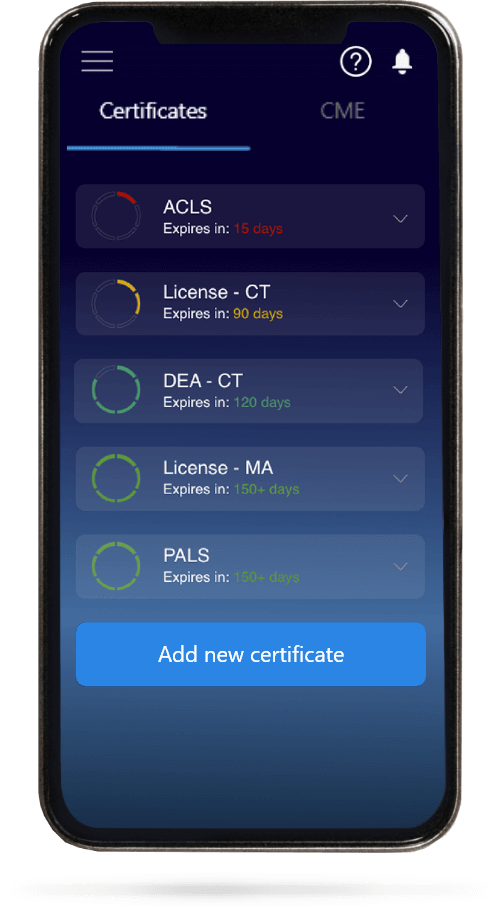
All Your Certificates in One Place

When you have your licenses, certificates and CMEs in one place, it's easier to track your career growth. You can easily share these with hospitals as well, using your medtigo app.
Our Certificate Courses