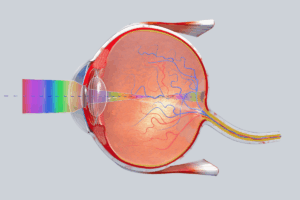
It is an eye disorder which affects the macula. It is the center of the retina. This is important in driving, reading, and facial recognition activities. It arises when there is a small opening in the macula which causes central vision loss.
It occurs due to age-related eye changes including shrinkage and separation of vitreous gel from retina. It can sometimes result from vitreous detachment. The symptoms start with blurred central vision. A blind spot or dark patch may occur in the middle of the vision as the hole deepens.
Epidemiology
The risk factors are primarily age-related. In most cases it occur in individuals over 60 years old. It is seen more common in women than men.
The reported cases per 100,000 people every year. The factors include advancing age, high nearsightedness, and eye trauma. Women with postmenopausal may have at higher risk of this disorder.
Anatomy
Pathophysiology
Vitreous gel undergoes vitreous liquefaction and transforms into a liquid state.
This process can lead to posterior vitreous detachment (PVD). It is a common aging process. In some cases, vitreous gel may exert traction on the macula. Thus, it is responsible for stretching and deforming.
This traction can create stress and mechanical forces. It leads to the development of a macular hole. The fovea is a central and sensitive macula which form a lamellar hole and may progress to a full thickness of macular hole.
Etiology
These are primarily age-related conditions. Normal aging increases the risk of vitreous gel detaching from the retina. It leads to posterior vitreous detachment (PVD).
PVD can cause traction on the macula and causes macular hole formation. In some cases, vitreomacular traction may occur thus it causes mechanical stress and macular hole development.
Genetics
Prognostic Factors
The diagnosis is a key prognostic factor. The macular holes are classified into based on their size and severity.
An early diagnosis and treatment lead to successful closure and better visual outcomes.
Delay in treatment may result in advanced hole stages and reduced intervention effectiveness. The size of hole is crucial in predicting outcomes. Small holes are generally having better closure rates and improved visual acuity.
Clinical History
The macular holes are an age-related condition. Most cases occur in people more than 60 years old. In this age category the ranges are frequently related to the eye’s normal ageing process.
Physical Examination
Slit-Lamp Bio microscopy
Dilated Fundus Examination
Visual Field Testing
Fundus Autofluorescence (FAF)
Fluorescein Angiography
Age group
Associated comorbidity
High Myopia (Nearsightedness): Individuals with high levels of nearsightedness are at an increased risk of developing macular holes. When a person has myopia, their extended eyeball may put mechanical strain on the retina, increasing the risk of macular hole development.
Vitreomacular Traction (VMT): Macular holes may be associated with vitreomacular traction, where the vitreous gel exerts traction on the macula, leading to the formation of a hole. This may occur in the context of posterior vitreous detachment (PVD).
Epiretinal Membrane (ERM): Macular holes may be connected with the development of an epiretinal membrane, a thin covering of tissue on the retina’s surface. Surgical removal of both the ERM and the internal limiting membrane (ILM) may be necessary for optimal closure
Associated activity
Acuity of presentation
The development of a macular hole may lead to gradual changes in central vision. Patients may notice distortion or blurriness in their central vision.
It refers to the perception of distorted shapes or lines. Patients with macular holes may observe metamorphopsia.
As the macular hole grows further a blind spot appears in the central visual field. This can significantly impact activities that require focused vision.
Differential Diagnoses
Macular Pucker
Myopic Traction Maculopathy
Vitreomacular Traction (VMT)
Retinal Detachment
Choroidal Neovascularization (CNV)
Laboratory Studies
Imaging Studies
Procedures
Histologic Findings
Staging
Treatment Paradigm
Surgeons should extract vitreous gel from the eye for reduced macula traction. The peeling of the internal limiting membrane (ILM) on retina surface. The primary surgical procedure is vitrectomy to cure this disorder.
In postoperative instructions, the patient should maintain a specific head or body position for tamponade. The visual recovery varies among individuals, it may take weeks to months.
Patients are advised to maintain a specific head or body position to optimize the contact between the gas bubble and the macula. Physician should suggest patient to maintain a face-down position for a certain time each day.
Therapies like Vision and rehabilitation therapy may be recommended to help individuals adapt to changes in their vision after surgery. Use low vision devices to increase the reading and daily activities.
Role of Ocriplasmin in the treatment of Macular Hole
Ocriplasmin is used in the treatment of symptomatic vitreomacular adhesion (VMA). It is an enzyme which induces vitreous liquefaction and is responsiblefor the release of vitreomacular traction.
The standard of treatment for treating macular holes is a vitrectomy, a surgical operation that involves removing the gel made up of vitreous from the interior of the eye.
In pars plana vitrectomy the surgeon makes small incisions in the sclera to access the vitreous gel. The vitreous gel, which may be implicated in the formation and progression of macular holes is carefully removed from the eye.
The surgeon separates the posterior cortical vitreous from the retina. It is a crucial step in inducing a posterior vitreous detachment.
use-of-phases-in-managing-macular-hole
In the preoperative phase the process begins with a thorough clinical evaluation by an ophthalmologist. This evaluation includes a detailed examination of the macula using techniques such as funduscopy and optical coherence tomography (OCT).
In the postoperative phase it depends on the surgeon’s preference and the characteristics of the macular hole. Patients may be instructed to maintain a specific head or body position to ensure proper contact.
In long-term follow-up phase the long-term monitoring is essential to assess the stability of macular hole closure and address any late complications
It is an eye disorder which affects the macula. It is the center of the retina. This is important in driving, reading, and facial recognition activities. It arises when there is a small opening in the macula which causes central vision loss.
It occurs due to age-related eye changes including shrinkage and separation of vitreous gel from retina. It can sometimes result from vitreous detachment. The symptoms start with blurred central vision. A blind spot or dark patch may occur in the middle of the vision as the hole deepens.
The risk factors are primarily age-related. In most cases it occur in individuals over 60 years old. It is seen more common in women than men.
The reported cases per 100,000 people every year. The factors include advancing age, high nearsightedness, and eye trauma. Women with postmenopausal may have at higher risk of this disorder.
Vitreous gel undergoes vitreous liquefaction and transforms into a liquid state.
This process can lead to posterior vitreous detachment (PVD). It is a common aging process. In some cases, vitreous gel may exert traction on the macula. Thus, it is responsible for stretching and deforming.
This traction can create stress and mechanical forces. It leads to the development of a macular hole. The fovea is a central and sensitive macula which form a lamellar hole and may progress to a full thickness of macular hole.
These are primarily age-related conditions. Normal aging increases the risk of vitreous gel detaching from the retina. It leads to posterior vitreous detachment (PVD).
PVD can cause traction on the macula and causes macular hole formation. In some cases, vitreomacular traction may occur thus it causes mechanical stress and macular hole development.
The diagnosis is a key prognostic factor. The macular holes are classified into based on their size and severity.
An early diagnosis and treatment lead to successful closure and better visual outcomes.
Delay in treatment may result in advanced hole stages and reduced intervention effectiveness. The size of hole is crucial in predicting outcomes. Small holes are generally having better closure rates and improved visual acuity.
The macular holes are an age-related condition. Most cases occur in people more than 60 years old. In this age category the ranges are frequently related to the eye’s normal ageing process.
Slit-Lamp Bio microscopy
Dilated Fundus Examination
Visual Field Testing
Fundus Autofluorescence (FAF)
Fluorescein Angiography
High Myopia (Nearsightedness): Individuals with high levels of nearsightedness are at an increased risk of developing macular holes. When a person has myopia, their extended eyeball may put mechanical strain on the retina, increasing the risk of macular hole development.
Vitreomacular Traction (VMT): Macular holes may be associated with vitreomacular traction, where the vitreous gel exerts traction on the macula, leading to the formation of a hole. This may occur in the context of posterior vitreous detachment (PVD).
Epiretinal Membrane (ERM): Macular holes may be connected with the development of an epiretinal membrane, a thin covering of tissue on the retina’s surface. Surgical removal of both the ERM and the internal limiting membrane (ILM) may be necessary for optimal closure
The development of a macular hole may lead to gradual changes in central vision. Patients may notice distortion or blurriness in their central vision.
It refers to the perception of distorted shapes or lines. Patients with macular holes may observe metamorphopsia.
As the macular hole grows further a blind spot appears in the central visual field. This can significantly impact activities that require focused vision.
Macular Pucker
Myopic Traction Maculopathy
Vitreomacular Traction (VMT)
Retinal Detachment
Choroidal Neovascularization (CNV)
Surgeons should extract vitreous gel from the eye for reduced macula traction. The peeling of the internal limiting membrane (ILM) on retina surface. The primary surgical procedure is vitrectomy to cure this disorder.
In postoperative instructions, the patient should maintain a specific head or body position for tamponade. The visual recovery varies among individuals, it may take weeks to months.
Ophthalmology
Patients are advised to maintain a specific head or body position to optimize the contact between the gas bubble and the macula. Physician should suggest patient to maintain a face-down position for a certain time each day.
Therapies like Vision and rehabilitation therapy may be recommended to help individuals adapt to changes in their vision after surgery. Use low vision devices to increase the reading and daily activities.
Ophthalmology
Ocriplasmin is used in the treatment of symptomatic vitreomacular adhesion (VMA). It is an enzyme which induces vitreous liquefaction and is responsiblefor the release of vitreomacular traction.
Ophthalmology
The standard of treatment for treating macular holes is a vitrectomy, a surgical operation that involves removing the gel made up of vitreous from the interior of the eye.
In pars plana vitrectomy the surgeon makes small incisions in the sclera to access the vitreous gel. The vitreous gel, which may be implicated in the formation and progression of macular holes is carefully removed from the eye.
The surgeon separates the posterior cortical vitreous from the retina. It is a crucial step in inducing a posterior vitreous detachment.
Ophthalmology
In the preoperative phase the process begins with a thorough clinical evaluation by an ophthalmologist. This evaluation includes a detailed examination of the macula using techniques such as funduscopy and optical coherence tomography (OCT).
In the postoperative phase it depends on the surgeon’s preference and the characteristics of the macular hole. Patients may be instructed to maintain a specific head or body position to ensure proper contact.
In long-term follow-up phase the long-term monitoring is essential to assess the stability of macular hole closure and address any late complications
It is an eye disorder which affects the macula. It is the center of the retina. This is important in driving, reading, and facial recognition activities. It arises when there is a small opening in the macula which causes central vision loss.
It occurs due to age-related eye changes including shrinkage and separation of vitreous gel from retina. It can sometimes result from vitreous detachment. The symptoms start with blurred central vision. A blind spot or dark patch may occur in the middle of the vision as the hole deepens.
The risk factors are primarily age-related. In most cases it occur in individuals over 60 years old. It is seen more common in women than men.
The reported cases per 100,000 people every year. The factors include advancing age, high nearsightedness, and eye trauma. Women with postmenopausal may have at higher risk of this disorder.
Vitreous gel undergoes vitreous liquefaction and transforms into a liquid state.
This process can lead to posterior vitreous detachment (PVD). It is a common aging process. In some cases, vitreous gel may exert traction on the macula. Thus, it is responsible for stretching and deforming.
This traction can create stress and mechanical forces. It leads to the development of a macular hole. The fovea is a central and sensitive macula which form a lamellar hole and may progress to a full thickness of macular hole.
These are primarily age-related conditions. Normal aging increases the risk of vitreous gel detaching from the retina. It leads to posterior vitreous detachment (PVD).
PVD can cause traction on the macula and causes macular hole formation. In some cases, vitreomacular traction may occur thus it causes mechanical stress and macular hole development.
The diagnosis is a key prognostic factor. The macular holes are classified into based on their size and severity.
An early diagnosis and treatment lead to successful closure and better visual outcomes.
Delay in treatment may result in advanced hole stages and reduced intervention effectiveness. The size of hole is crucial in predicting outcomes. Small holes are generally having better closure rates and improved visual acuity.
The macular holes are an age-related condition. Most cases occur in people more than 60 years old. In this age category the ranges are frequently related to the eye’s normal ageing process.
Slit-Lamp Bio microscopy
Dilated Fundus Examination
Visual Field Testing
Fundus Autofluorescence (FAF)
Fluorescein Angiography
High Myopia (Nearsightedness): Individuals with high levels of nearsightedness are at an increased risk of developing macular holes. When a person has myopia, their extended eyeball may put mechanical strain on the retina, increasing the risk of macular hole development.
Vitreomacular Traction (VMT): Macular holes may be associated with vitreomacular traction, where the vitreous gel exerts traction on the macula, leading to the formation of a hole. This may occur in the context of posterior vitreous detachment (PVD).
Epiretinal Membrane (ERM): Macular holes may be connected with the development of an epiretinal membrane, a thin covering of tissue on the retina’s surface. Surgical removal of both the ERM and the internal limiting membrane (ILM) may be necessary for optimal closure
The development of a macular hole may lead to gradual changes in central vision. Patients may notice distortion or blurriness in their central vision.
It refers to the perception of distorted shapes or lines. Patients with macular holes may observe metamorphopsia.
As the macular hole grows further a blind spot appears in the central visual field. This can significantly impact activities that require focused vision.
Macular Pucker
Myopic Traction Maculopathy
Vitreomacular Traction (VMT)
Retinal Detachment
Choroidal Neovascularization (CNV)
Surgeons should extract vitreous gel from the eye for reduced macula traction. The peeling of the internal limiting membrane (ILM) on retina surface. The primary surgical procedure is vitrectomy to cure this disorder.
In postoperative instructions, the patient should maintain a specific head or body position for tamponade. The visual recovery varies among individuals, it may take weeks to months.
Ophthalmology
Patients are advised to maintain a specific head or body position to optimize the contact between the gas bubble and the macula. Physician should suggest patient to maintain a face-down position for a certain time each day.
Therapies like Vision and rehabilitation therapy may be recommended to help individuals adapt to changes in their vision after surgery. Use low vision devices to increase the reading and daily activities.
Ophthalmology
Ocriplasmin is used in the treatment of symptomatic vitreomacular adhesion (VMA). It is an enzyme which induces vitreous liquefaction and is responsiblefor the release of vitreomacular traction.
Ophthalmology
The standard of treatment for treating macular holes is a vitrectomy, a surgical operation that involves removing the gel made up of vitreous from the interior of the eye.
In pars plana vitrectomy the surgeon makes small incisions in the sclera to access the vitreous gel. The vitreous gel, which may be implicated in the formation and progression of macular holes is carefully removed from the eye.
The surgeon separates the posterior cortical vitreous from the retina. It is a crucial step in inducing a posterior vitreous detachment.
Ophthalmology
In the preoperative phase the process begins with a thorough clinical evaluation by an ophthalmologist. This evaluation includes a detailed examination of the macula using techniques such as funduscopy and optical coherence tomography (OCT).
In the postoperative phase it depends on the surgeon’s preference and the characteristics of the macular hole. Patients may be instructed to maintain a specific head or body position to ensure proper contact.
In long-term follow-up phase the long-term monitoring is essential to assess the stability of macular hole closure and address any late complications
Both our subscription plans include Free CME/CPD AMA PRA Category 1 credits.
Digital Certificate PDF
On course completion, you will receive a full-sized presentation quality digital certificate.
medtigo Simulation
A dynamic medical simulation platform designed to train healthcare professionals and students to effectively run code situations through an immersive hands-on experience in a live, interactive 3D environment.
medtigo Points
medtigo points is our unique point redemption system created to award users for interacting on our site. These points can be redeemed for special discounts on the medtigo marketplace as well as towards the membership cost itself.
Community Forum post/reply = 5 points
*Redemption of points can occur only through the medtigo marketplace, courses, or simulation system. Money will not be credited to your bank account. 10 points = $1.
All Your Certificates in One Place
When you have your licenses, certificates and CMEs in one place, it's easier to track your career growth. You can easily share these with hospitals as well, using your medtigo app.