Approximately 230,000 people in the United States are diagnosed with lung cancer each year. Lung cancer also has a high fatality rate, and it claims almost 135,000 lives per year in the US. Although its numbers are steadily declining due to anti-smoking programmes and reduced tobacco consumption, it still causes more deaths than breast, brain, prostate, and colorectal cancer combined.
In 2015, the World Health Organization laid the foundation for classifying lung tumors. This system uses diagnostic tools such as light microscopy and immunohistochemistry to determine a prognosis, and improve treatment outcomes. Non-small lung cancer is an umbrella term that encompasses several distinct lung malignancies, such as large cell carcinoma, squamous cell carcinoma, and adenocarcinoma.
Adenocarcinoma is the most prevalent form of lung cancer in this category, accounting for half of all occurrences. In the past, squamous cell carcinoma was the most often diagnosed form of non-small cell lung cancer (NSCLC). Squamous cell carcinoma (SCC) typically arises at the origin of the tracheobronchial tree, but now an increasing number of instances are being detected towards the lung’s periphery.
Large Cell Carcinoma is a subset of non-small lung cancer which is not as easily diagnosable. It is poorly differentiated and cannot be characterized further using immunohistochemistry or electron microscopy. 90% of instances, however, will exhibit squamous, glandular, or neuroendocrine differentiation.
In addition to other subtypes of lung cancer, NSCLC also comprises diverse categories and broad nomenclature. These include adenosquamous carcinoma, sarcomatoid carcinoma, and neuroendocrine tumors with non-small cell size.
Epidemiology
Approximately 90 percent of lung malignancies have been attributed to tobacco usage. Current smokers with a smoking history of 40 packs per year are twenty times more likely to acquire lung cancer than nonsmokers. This risk can rise if tobacco use is combined with additional environmental or lifestyle hazards, such as asbestos exposure.
It is believed that the advent of filter-cigarettes in the 1960s caused adenocarcinoma, however this is just a theory. Lung cancer is the main cause of cancer-related mortality among men and the second highest cause among women. On the basis of the prevalence of smoking in various countries, lung cancer incidence varies significantly amongst populations.
The rate of lung cancer diagnoses is proportional to the growth or reduction in the smoking rate among various groups. For instance, the age-adjusted mortality rate in the United States is anticipated to decline by 79% between 2015-2065 due to declining tobacco use and anti-smoking programmes.
Anatomy
Non-small Cellular Lung Carcinoma originates from the epithelial cells of the lung, found between the central bronchi and terminal alveoli. The histological type of non-small cell lung cancer correlates with the site of origin, reflecting the diversity in respiratory tract epithelium from the bronchi to the alveoli. SCC generally arises around a central bronchus, whereas bronchioloalveolar carcinoma and adenocarcinoma arises from peripheral lung tissue.
Pathophysiology
Etiology
The etiology of non-small cellular lung carcinoma can be further divided between risk factors that are avoidable and those that are not. Tobacco smoking is the most well-known preventable risk factor for NSCLC.
Some other factors which are known to cause NSCLC are:
Secondhand exposure to smoke
Asbestos exposure
Nickel exposure
Radon Exposure
Alcohol consumption
Exposure to ionizing radiation
Exposure to aromatic hydrocarbons
Chromium exposure Radiation therapy when used to treat other malignancies
Patients diagnosed with pulmonary fibrosis are 7 times more at risk for developing lung cancer, even if they don’t smoke tobacco. The incidence rate of lung cancer is also much more in patients suffering from HIV.
Genetics
Prognostic Factors
Several studies have been conducted to understand the impact of many pathological factors on non-small cellular lung cancer outcomes.
Factors which are linked with a poor prognosis are:
Tumor size greater than 3cm
Vascular invasion
Higher Stage
Pulmonary or constitutional symptoms
Metastases to several lymph nodes
The prognosis of patients with inoperable illness is negatively impacted by poor performance and weight loss above 10%. Such patients have not been accepted in clinical trials exploring multimodal aggressive treatments.
In several retrospective studies of trial data, older age alone has not been found to affect therapy response or survival.
For veterinary use only
Administer intratumoral injection of 0.5 ml per cm3 of total tumor volume
It is indicated for the treatment of mast cell tumors, which are a type of cancer that originates from mast cells.
Approximately 230,000 people in the United States are diagnosed with lung cancer each year. Lung cancer also has a high fatality rate, and it claims almost 135,000 lives per year in the US. Although its numbers are steadily declining due to anti-smoking programmes and reduced tobacco consumption, it still causes more deaths than breast, brain, prostate, and colorectal cancer combined.
In 2015, the World Health Organization laid the foundation for classifying lung tumors. This system uses diagnostic tools such as light microscopy and immunohistochemistry to determine a prognosis, and improve treatment outcomes. Non-small lung cancer is an umbrella term that encompasses several distinct lung malignancies, such as large cell carcinoma, squamous cell carcinoma, and adenocarcinoma.
Adenocarcinoma is the most prevalent form of lung cancer in this category, accounting for half of all occurrences. In the past, squamous cell carcinoma was the most often diagnosed form of non-small cell lung cancer (NSCLC). Squamous cell carcinoma (SCC) typically arises at the origin of the tracheobronchial tree, but now an increasing number of instances are being detected towards the lung’s periphery.
Large Cell Carcinoma is a subset of non-small lung cancer which is not as easily diagnosable. It is poorly differentiated and cannot be characterized further using immunohistochemistry or electron microscopy. 90% of instances, however, will exhibit squamous, glandular, or neuroendocrine differentiation.
In addition to other subtypes of lung cancer, NSCLC also comprises diverse categories and broad nomenclature. These include adenosquamous carcinoma, sarcomatoid carcinoma, and neuroendocrine tumors with non-small cell size.
Approximately 90 percent of lung malignancies have been attributed to tobacco usage. Current smokers with a smoking history of 40 packs per year are twenty times more likely to acquire lung cancer than nonsmokers. This risk can rise if tobacco use is combined with additional environmental or lifestyle hazards, such as asbestos exposure.
It is believed that the advent of filter-cigarettes in the 1960s caused adenocarcinoma, however this is just a theory. Lung cancer is the main cause of cancer-related mortality among men and the second highest cause among women. On the basis of the prevalence of smoking in various countries, lung cancer incidence varies significantly amongst populations.
The rate of lung cancer diagnoses is proportional to the growth or reduction in the smoking rate among various groups. For instance, the age-adjusted mortality rate in the United States is anticipated to decline by 79% between 2015-2065 due to declining tobacco use and anti-smoking programmes.
Non-small Cellular Lung Carcinoma originates from the epithelial cells of the lung, found between the central bronchi and terminal alveoli. The histological type of non-small cell lung cancer correlates with the site of origin, reflecting the diversity in respiratory tract epithelium from the bronchi to the alveoli. SCC generally arises around a central bronchus, whereas bronchioloalveolar carcinoma and adenocarcinoma arises from peripheral lung tissue.
The etiology of non-small cellular lung carcinoma can be further divided between risk factors that are avoidable and those that are not. Tobacco smoking is the most well-known preventable risk factor for NSCLC.
Some other factors which are known to cause NSCLC are:
Secondhand exposure to smoke
Asbestos exposure
Nickel exposure
Radon Exposure
Alcohol consumption
Exposure to ionizing radiation
Exposure to aromatic hydrocarbons
Chromium exposure Radiation therapy when used to treat other malignancies
Patients diagnosed with pulmonary fibrosis are 7 times more at risk for developing lung cancer, even if they don’t smoke tobacco. The incidence rate of lung cancer is also much more in patients suffering from HIV.
Several studies have been conducted to understand the impact of many pathological factors on non-small cellular lung cancer outcomes.
Factors which are linked with a poor prognosis are:
Tumor size greater than 3cm
Vascular invasion
Higher Stage
Pulmonary or constitutional symptoms
Metastases to several lymph nodes
The prognosis of patients with inoperable illness is negatively impacted by poor performance and weight loss above 10%. Such patients have not been accepted in clinical trials exploring multimodal aggressive treatments.
In several retrospective studies of trial data, older age alone has not been found to affect therapy response or survival.
Approximately 230,000 people in the United States are diagnosed with lung cancer each year. Lung cancer also has a high fatality rate, and it claims almost 135,000 lives per year in the US. Although its numbers are steadily declining due to anti-smoking programmes and reduced tobacco consumption, it still causes more deaths than breast, brain, prostate, and colorectal cancer combined.
In 2015, the World Health Organization laid the foundation for classifying lung tumors. This system uses diagnostic tools such as light microscopy and immunohistochemistry to determine a prognosis, and improve treatment outcomes. Non-small lung cancer is an umbrella term that encompasses several distinct lung malignancies, such as large cell carcinoma, squamous cell carcinoma, and adenocarcinoma.
Adenocarcinoma is the most prevalent form of lung cancer in this category, accounting for half of all occurrences. In the past, squamous cell carcinoma was the most often diagnosed form of non-small cell lung cancer (NSCLC). Squamous cell carcinoma (SCC) typically arises at the origin of the tracheobronchial tree, but now an increasing number of instances are being detected towards the lung’s periphery.
Large Cell Carcinoma is a subset of non-small lung cancer which is not as easily diagnosable. It is poorly differentiated and cannot be characterized further using immunohistochemistry or electron microscopy. 90% of instances, however, will exhibit squamous, glandular, or neuroendocrine differentiation.
In addition to other subtypes of lung cancer, NSCLC also comprises diverse categories and broad nomenclature. These include adenosquamous carcinoma, sarcomatoid carcinoma, and neuroendocrine tumors with non-small cell size.
Approximately 90 percent of lung malignancies have been attributed to tobacco usage. Current smokers with a smoking history of 40 packs per year are twenty times more likely to acquire lung cancer than nonsmokers. This risk can rise if tobacco use is combined with additional environmental or lifestyle hazards, such as asbestos exposure.
It is believed that the advent of filter-cigarettes in the 1960s caused adenocarcinoma, however this is just a theory. Lung cancer is the main cause of cancer-related mortality among men and the second highest cause among women. On the basis of the prevalence of smoking in various countries, lung cancer incidence varies significantly amongst populations.
The rate of lung cancer diagnoses is proportional to the growth or reduction in the smoking rate among various groups. For instance, the age-adjusted mortality rate in the United States is anticipated to decline by 79% between 2015-2065 due to declining tobacco use and anti-smoking programmes.
Non-small Cellular Lung Carcinoma originates from the epithelial cells of the lung, found between the central bronchi and terminal alveoli. The histological type of non-small cell lung cancer correlates with the site of origin, reflecting the diversity in respiratory tract epithelium from the bronchi to the alveoli. SCC generally arises around a central bronchus, whereas bronchioloalveolar carcinoma and adenocarcinoma arises from peripheral lung tissue.
The etiology of non-small cellular lung carcinoma can be further divided between risk factors that are avoidable and those that are not. Tobacco smoking is the most well-known preventable risk factor for NSCLC.
Some other factors which are known to cause NSCLC are:
Secondhand exposure to smoke
Asbestos exposure
Nickel exposure
Radon Exposure
Alcohol consumption
Exposure to ionizing radiation
Exposure to aromatic hydrocarbons
Chromium exposure Radiation therapy when used to treat other malignancies
Patients diagnosed with pulmonary fibrosis are 7 times more at risk for developing lung cancer, even if they don’t smoke tobacco. The incidence rate of lung cancer is also much more in patients suffering from HIV.
Several studies have been conducted to understand the impact of many pathological factors on non-small cellular lung cancer outcomes.
Factors which are linked with a poor prognosis are:
Tumor size greater than 3cm
Vascular invasion
Higher Stage
Pulmonary or constitutional symptoms
Metastases to several lymph nodes
The prognosis of patients with inoperable illness is negatively impacted by poor performance and weight loss above 10%. Such patients have not been accepted in clinical trials exploring multimodal aggressive treatments.
In several retrospective studies of trial data, older age alone has not been found to affect therapy response or survival.
Both our subscription plans include Free CME/CPD AMA PRA Category 1 credits.
Digital Certificate PDF
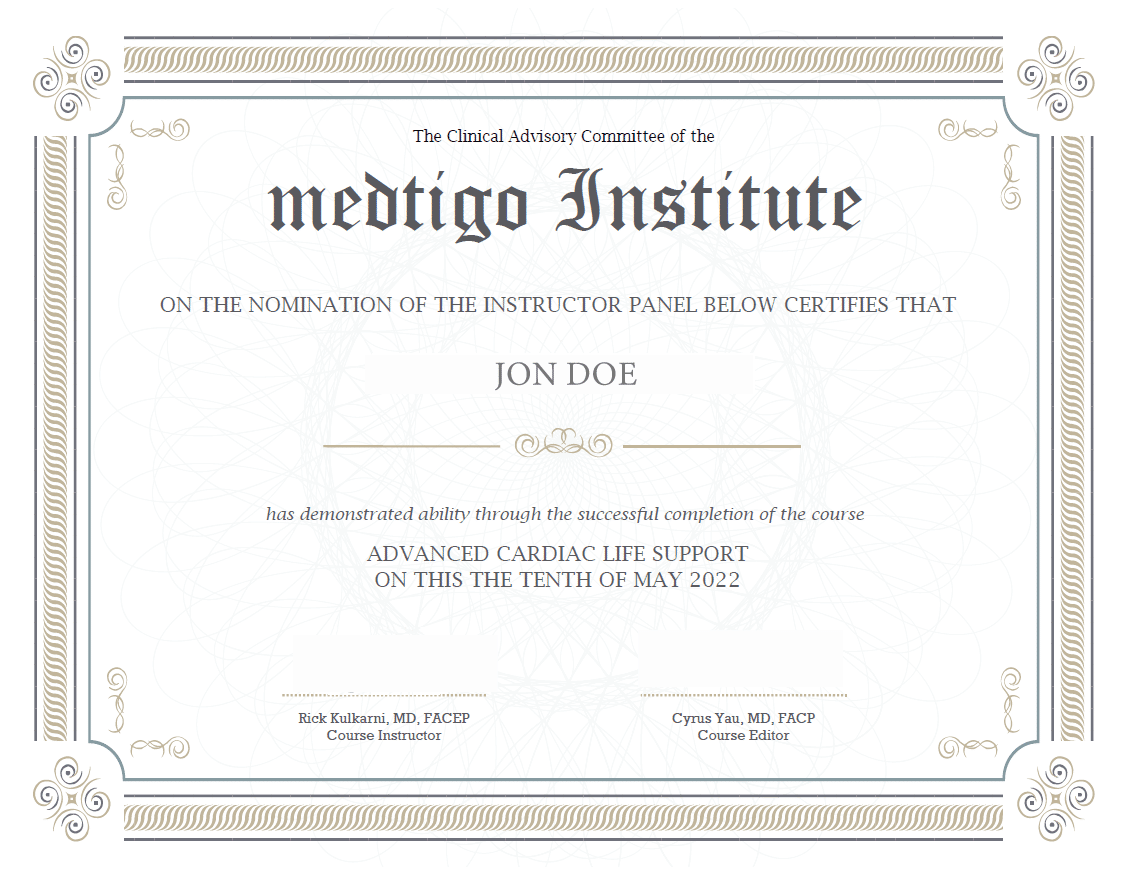
On course completion, you will receive a full-sized presentation quality digital certificate.
medtigo Simulation
A dynamic medical simulation platform designed to train healthcare professionals and students to effectively run code situations through an immersive hands-on experience in a live, interactive 3D environment.
medtigo Points
medtigo points is our unique point redemption system created to award users for interacting on our site. These points can be redeemed for special discounts on the medtigo marketplace as well as towards the membership cost itself.
Community Forum post/reply = 5 points
*Redemption of points can occur only through the medtigo marketplace, courses, or simulation system. Money will not be credited to your bank account. 10 points = $1.
All Your Certificates in One Place
When you have your licenses, certificates and CMEs in one place, it's easier to track your career growth. You can easily share these with hospitals as well, using your medtigo app.