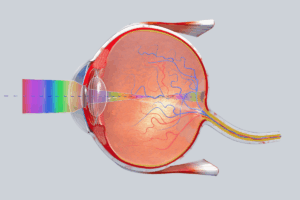
Retinal macroaneurysm is dilation in retinal arteriole in central retinal artery branches.
Retinal artery microaneurysm (RAM) primarily impact elderly women and are associated with hypertension, arteriosclerosis, and diabetes.
Patients with retinal angiomatous proliferation may have blurred or distorted vision or be asymptomatic.
Robertson coined the term Retinal macroaneurysm, defined as a focal dilation of retinal artery within first three orders of bifurcations of central retinal arterioles or at arteriovenous crossings.
Superotemporal arteriole affected in RAM. Associated with systemic hypertension and arteriosclerotic disease.
Weakness in muscularis layer causes thinning and fibrosis in arterial wall to decreased elasticity and aneurysmal dilatation.
Epidemiology
RAM are more prevalent in females aged between 66 to 74 years old with an incidence of 1 per 9000 eyes cases.
Majority of cases are unilateral solitary, but 15-20% have multiple macroaneurysms, with 10% bilateral occurrence.
1 retinal artery macroaneurysm per 1500 subjects over 30 in Central India. RAM prevalence rates in general population range from 0.2% to 2.2%.
RAM more prevalent in female than male with ratio of 2:1 in studies. Systemic hypertension is a major risk factor in patients with resistant hypertension.
Anatomy
Pathophysiology
In RAM, weakness in the arteriolar wall muscularis layer leads to thinning, fibrosis, decreased elasticity, and susceptibility to aneurysmal dilatation.
Rupture can cause hemorrhage with or without exudates in any retina layer results in visual loss.
Chronic hypertension harms vessel structure to cause stiffness, weakens pulsatile blood flow resistance in vessel walls.
Chronic high blood pressure strains arteries cause macroaneurysms when combined with pulsatile flow and vessel weaknesses.
Etiology
The causes of retinal microaneurysm are:
Systemic Health Conditions
Vascular and Mechanical Factors
Lifestyle Factors
Demographic Factors
Genetics
Prognostic Factors
Location of RAM near macula increases risk of significant vision loss. Macular involvement raises chance of macular edema and impairment.
Temporal retinal artery macroaneurysms have better prognosis than nasal branch due to varied vascular supply and potential complications.
Retinal hemorrhage from RAM affects outcome. Intraretinal and subretinal hemorrhages cause vision loss, while smaller or localized hemorrhages have milder effects.
Elderly have higher chance of worse prognosis due to retinal changes and comorbidities.
Clinical History
Collect details including presenting symptoms, medical, and family history to understand clinical history of patient.
Physical Examination
Fundoscopic examination
Visual acuity assessment
Eye movement assessment
Age group
Associated comorbidity
Associated activity
Acuity of presentation
Acute symptoms are:
Hemorrhage, macular edema, rapid swelling in the macula, blurriness or distortion
Chronic symptoms are:
Long-standing vision changes
Differential Diagnoses
Diabetic Retinopathy
Retinal Vein Occlusion
Uveitis
Retinal Detachment
Laboratory Studies
Imaging Studies
Procedures
Histologic Findings
Staging
Treatment Paradigm
Regular monitoring is essential for asymptomatic or mildly symptomatic patients without visual impairment to detect potential changes.
It is essential to control blood pressure and prevent complications from hypertension.
Control blood pressure crucial as uncontrolled hypertension increases risk of RAM progression and complications.
Treatment with focal laser photocoagulation for retinal edema or macroaneurysm with significant leakage affects macula.
Surgery may be needed for hemorrhage causing vision loss or persisting to improve visual outcomes.
Anti-VEGFs reduce nitric oxide levels followed with vasoconstriction and decreased vascular permeability.
It disrupts the inner limits membrane to improve absorption of hemorrhage into the vitreous.
Pars Plana Vitrectomy may be performed for clearing sub-macular hemorrhage to improve visual recovery.
Treatment may include laser photocoagulation, intravitreal injections, vitrectomy, or pneumatic displacement to address vision-threatening complications.
use-of-phases-in-managing-retinal-macroaneurysm
The initial treatment phase includes immediate stabilization, symptom relief, and revascularization.
Pharmacologic therapy is effective in the treatment phase as it includes use of Anti-VEGF Agents.
In supportive care and management phase, patients should receive required attention such as lifestyle modification and intervention therapies.
The regular follow-up visits with the ophthalmologist are scheduled to check the improvement of patients along with treatment response.
Retinal macroaneurysm is dilation in retinal arteriole in central retinal artery branches.
Retinal artery microaneurysm (RAM) primarily impact elderly women and are associated with hypertension, arteriosclerosis, and diabetes.
Patients with retinal angiomatous proliferation may have blurred or distorted vision or be asymptomatic.
Robertson coined the term Retinal macroaneurysm, defined as a focal dilation of retinal artery within first three orders of bifurcations of central retinal arterioles or at arteriovenous crossings.
Superotemporal arteriole affected in RAM. Associated with systemic hypertension and arteriosclerotic disease.
Weakness in muscularis layer causes thinning and fibrosis in arterial wall to decreased elasticity and aneurysmal dilatation.
RAM are more prevalent in females aged between 66 to 74 years old with an incidence of 1 per 9000 eyes cases.
Majority of cases are unilateral solitary, but 15-20% have multiple macroaneurysms, with 10% bilateral occurrence.
1 retinal artery macroaneurysm per 1500 subjects over 30 in Central India. RAM prevalence rates in general population range from 0.2% to 2.2%.
RAM more prevalent in female than male with ratio of 2:1 in studies. Systemic hypertension is a major risk factor in patients with resistant hypertension.
In RAM, weakness in the arteriolar wall muscularis layer leads to thinning, fibrosis, decreased elasticity, and susceptibility to aneurysmal dilatation.
Rupture can cause hemorrhage with or without exudates in any retina layer results in visual loss.
Chronic hypertension harms vessel structure to cause stiffness, weakens pulsatile blood flow resistance in vessel walls.
Chronic high blood pressure strains arteries cause macroaneurysms when combined with pulsatile flow and vessel weaknesses.
The causes of retinal microaneurysm are:
Systemic Health Conditions
Vascular and Mechanical Factors
Lifestyle Factors
Demographic Factors
Location of RAM near macula increases risk of significant vision loss. Macular involvement raises chance of macular edema and impairment.
Temporal retinal artery macroaneurysms have better prognosis than nasal branch due to varied vascular supply and potential complications.
Retinal hemorrhage from RAM affects outcome. Intraretinal and subretinal hemorrhages cause vision loss, while smaller or localized hemorrhages have milder effects.
Elderly have higher chance of worse prognosis due to retinal changes and comorbidities.
Collect details including presenting symptoms, medical, and family history to understand clinical history of patient.
Fundoscopic examination
Visual acuity assessment
Eye movement assessment
Acute symptoms are:
Hemorrhage, macular edema, rapid swelling in the macula, blurriness or distortion
Chronic symptoms are:
Long-standing vision changes
Diabetic Retinopathy
Retinal Vein Occlusion
Uveitis
Retinal Detachment
Regular monitoring is essential for asymptomatic or mildly symptomatic patients without visual impairment to detect potential changes.
It is essential to control blood pressure and prevent complications from hypertension.
Control blood pressure crucial as uncontrolled hypertension increases risk of RAM progression and complications.
Treatment with focal laser photocoagulation for retinal edema or macroaneurysm with significant leakage affects macula.
Surgery may be needed for hemorrhage causing vision loss or persisting to improve visual outcomes.
Anti-VEGFs reduce nitric oxide levels followed with vasoconstriction and decreased vascular permeability.
It disrupts the inner limits membrane to improve absorption of hemorrhage into the vitreous.
Pars Plana Vitrectomy may be performed for clearing sub-macular hemorrhage to improve visual recovery.
Ophthalmology
Use brighter bulbs for specific activities. Ensure well spaces in areas where activities are performed.
Use lampshades to reduce harsh glare from direct light sources for individuals with vision changes.
Keep pathways free of obstacles to prevent falls. Organize used items within easy reach in designated spaces to minimize confusion.
Provide personal alarms or fall detection devices in case of an emergency.
Proper awareness about retinal macroaneurysm should be provided and its related causes with management strategies.
Appointments with an ophthalmologist and preventing recurrence of disorder is an ongoing life-long effort.
Ophthalmology
Ranibizumab:
It prevents the interaction of VEGF-A on the surface of endothelial cells.
Bevacizumab:
It blocks the angiogenic molecule VEGF to inhibit tumor angiogenesis of blood.
Ophthalmology
Treatment may include laser photocoagulation, intravitreal injections, vitrectomy, or pneumatic displacement to address vision-threatening complications.
Ophthalmology
The initial treatment phase includes immediate stabilization, symptom relief, and revascularization.
Pharmacologic therapy is effective in the treatment phase as it includes use of Anti-VEGF Agents.
In supportive care and management phase, patients should receive required attention such as lifestyle modification and intervention therapies.
The regular follow-up visits with the ophthalmologist are scheduled to check the improvement of patients along with treatment response.
Retinal macroaneurysm is dilation in retinal arteriole in central retinal artery branches.
Retinal artery microaneurysm (RAM) primarily impact elderly women and are associated with hypertension, arteriosclerosis, and diabetes.
Patients with retinal angiomatous proliferation may have blurred or distorted vision or be asymptomatic.
Robertson coined the term Retinal macroaneurysm, defined as a focal dilation of retinal artery within first three orders of bifurcations of central retinal arterioles or at arteriovenous crossings.
Superotemporal arteriole affected in RAM. Associated with systemic hypertension and arteriosclerotic disease.
Weakness in muscularis layer causes thinning and fibrosis in arterial wall to decreased elasticity and aneurysmal dilatation.
RAM are more prevalent in females aged between 66 to 74 years old with an incidence of 1 per 9000 eyes cases.
Majority of cases are unilateral solitary, but 15-20% have multiple macroaneurysms, with 10% bilateral occurrence.
1 retinal artery macroaneurysm per 1500 subjects over 30 in Central India. RAM prevalence rates in general population range from 0.2% to 2.2%.
RAM more prevalent in female than male with ratio of 2:1 in studies. Systemic hypertension is a major risk factor in patients with resistant hypertension.
In RAM, weakness in the arteriolar wall muscularis layer leads to thinning, fibrosis, decreased elasticity, and susceptibility to aneurysmal dilatation.
Rupture can cause hemorrhage with or without exudates in any retina layer results in visual loss.
Chronic hypertension harms vessel structure to cause stiffness, weakens pulsatile blood flow resistance in vessel walls.
Chronic high blood pressure strains arteries cause macroaneurysms when combined with pulsatile flow and vessel weaknesses.
The causes of retinal microaneurysm are:
Systemic Health Conditions
Vascular and Mechanical Factors
Lifestyle Factors
Demographic Factors
Location of RAM near macula increases risk of significant vision loss. Macular involvement raises chance of macular edema and impairment.
Temporal retinal artery macroaneurysms have better prognosis than nasal branch due to varied vascular supply and potential complications.
Retinal hemorrhage from RAM affects outcome. Intraretinal and subretinal hemorrhages cause vision loss, while smaller or localized hemorrhages have milder effects.
Elderly have higher chance of worse prognosis due to retinal changes and comorbidities.
Collect details including presenting symptoms, medical, and family history to understand clinical history of patient.
Fundoscopic examination
Visual acuity assessment
Eye movement assessment
Acute symptoms are:
Hemorrhage, macular edema, rapid swelling in the macula, blurriness or distortion
Chronic symptoms are:
Long-standing vision changes
Diabetic Retinopathy
Retinal Vein Occlusion
Uveitis
Retinal Detachment
Regular monitoring is essential for asymptomatic or mildly symptomatic patients without visual impairment to detect potential changes.
It is essential to control blood pressure and prevent complications from hypertension.
Control blood pressure crucial as uncontrolled hypertension increases risk of RAM progression and complications.
Treatment with focal laser photocoagulation for retinal edema or macroaneurysm with significant leakage affects macula.
Surgery may be needed for hemorrhage causing vision loss or persisting to improve visual outcomes.
Anti-VEGFs reduce nitric oxide levels followed with vasoconstriction and decreased vascular permeability.
It disrupts the inner limits membrane to improve absorption of hemorrhage into the vitreous.
Pars Plana Vitrectomy may be performed for clearing sub-macular hemorrhage to improve visual recovery.
Ophthalmology
Use brighter bulbs for specific activities. Ensure well spaces in areas where activities are performed.
Use lampshades to reduce harsh glare from direct light sources for individuals with vision changes.
Keep pathways free of obstacles to prevent falls. Organize used items within easy reach in designated spaces to minimize confusion.
Provide personal alarms or fall detection devices in case of an emergency.
Proper awareness about retinal macroaneurysm should be provided and its related causes with management strategies.
Appointments with an ophthalmologist and preventing recurrence of disorder is an ongoing life-long effort.
Ophthalmology
Ranibizumab:
It prevents the interaction of VEGF-A on the surface of endothelial cells.
Bevacizumab:
It blocks the angiogenic molecule VEGF to inhibit tumor angiogenesis of blood.
Ophthalmology
Treatment may include laser photocoagulation, intravitreal injections, vitrectomy, or pneumatic displacement to address vision-threatening complications.
Ophthalmology
The initial treatment phase includes immediate stabilization, symptom relief, and revascularization.
Pharmacologic therapy is effective in the treatment phase as it includes use of Anti-VEGF Agents.
In supportive care and management phase, patients should receive required attention such as lifestyle modification and intervention therapies.
The regular follow-up visits with the ophthalmologist are scheduled to check the improvement of patients along with treatment response.
Both our subscription plans include Free CME/CPD AMA PRA Category 1 credits.
Digital Certificate PDF
On course completion, you will receive a full-sized presentation quality digital certificate.
medtigo Simulation
A dynamic medical simulation platform designed to train healthcare professionals and students to effectively run code situations through an immersive hands-on experience in a live, interactive 3D environment.
medtigo Points
medtigo points is our unique point redemption system created to award users for interacting on our site. These points can be redeemed for special discounts on the medtigo marketplace as well as towards the membership cost itself.
Community Forum post/reply = 5 points
*Redemption of points can occur only through the medtigo marketplace, courses, or simulation system. Money will not be credited to your bank account. 10 points = $1.
All Your Certificates in One Place
When you have your licenses, certificates and CMEs in one place, it's easier to track your career growth. You can easily share these with hospitals as well, using your medtigo app.