Hidden Risks of Exosome Injections in Pain Management
April 8, 2026




Brand Name :
Vanrafia
Synonyms :
Atrasentan
Class :
Endothelin Antagonists



Brand Name :
Vanrafia
Synonyms :
Atrasentan
Class :
Endothelin Antagonists
Dosage forms & Strengths:
Adult
Tablet
0.75 mg
Take a dose of 0.75 mg orally daily
Dosage Modifications
Renal impairment
Mild-to-severe: dose adjustment not required
End-stage renal disease: Effect not known
Hepatic impairment
Mild-to-moderate (Child Pugh A or B): dose adjustment not required
Severe (Child Pugh C): Do not start because their effect not known
Dosing Considerations
Exclude pregnancy before starting treatment.
Liver enzyme testing
Conduct liver enzyme tests before and during treatment.
Monitor liver tests for patients with elevated aminotransferases.
Pediatric
Safety and efficacy not established.
Geriatrics
Refer as per adult dose
Actions and Spectrum:
Atrasentan blocks endothelin-1 effects by acting as a selective endothelin A receptor antagonist.
Atrasentan reduces cell proliferation and proteinuria by blocking endothelin-1 receptor.
It reduces endothelin-1 effects by inhibiting ET_A receptor activity.
Frequency defined:
>10%
Hemoglobin decreased
1-10%
Anemia
Peripheral edema
Liver transaminase elevation
Black Box Warning:
Patients should use contraception before, during, and after treatment.
Discontinue atrasentan immediately if patient pregnant.
Contraindication / Caution:
Contraindication:
Pregnancy
Hypersensitivity
Caution:
Embryo-fetal toxicity
Hepatotoxicity
Decreased sperm counts
Fluid retention
Pregnancy / Lactation:
Pregnancy Warnings:
Pregnancy category: N/A
Lactation: Excretion of the drug into the human breast milk is unknown
Pregnancy categories:
Category A: Satisfactory and well-controlled studies show no evidence of risk to the fetus in the first trimester or in the later trimester.
Category B: No evidence of risk to fetus found in animal reproduction studies and there are not enough studies on pregnant women.
Category C: Adverse effects on the fetus found with evidence in animal reproduction studies and no adequate evidence for an effect in humans, care must be taken for potential risks in pregnant women.
Category D: There is adequate data available with sufficient evidence of human fetal risk from various platforms, but despite potential risks may be used only in emergency cases for potential benefits.
Category X: Drugs listed in this category clearly outweigh risks over benefits. These category drugs should be prohibited for pregnant women.
Category N: There is no data available for the drug under this category.
Pharmacology:
It is demonstrated to reduce urinary albumin levels, which is effective in kidney diseases.
Endothelin-B receptors preserve vasodilation, natriuresis, and endothelin-1 clearance.
Pharmacodynamics:
Atrasentan promotes vasodilation, which lowers blood pressure.
It slows cell growth that helps in cancer treatment and kidney protection.
Proteinuria reduction indicates decreased kidney damage risk.
Pharmacokinetics:
Absorption:
Peak plasma time reaches in ~0.5 hour.
Distribution:
It has high protein binding up to >99%.
Volume of distribution of 1180 L.
Metabolism:
It is metabolized through CYP3A pathways and glucuronidation.
Elimination and excretion:
Half-life shows up to ~24-41 hours.
It is excreted through feces up to~86%.
Administration:
It is available in tablet form for oral administration.
Swallow whole tablet with water and do not crush or chew the tablet.
The dose should take with or without food.
Take missed dose promptly and then continue with schedule.
Patient information leaflet
Generic Name: Atrasentan
Why do we use Atrasentan?
Atrasentan is used to reduces proteinuria in adults with immunoglobulin A nephropathy at rapid progression risk.
It is used to reduce albuminuria and slows progression of kidney damage.
Both our subscription plans include Free CME/CPD AMA PRA Category 1 credits.

On course completion, you will receive a full-sized presentation quality digital certificate.
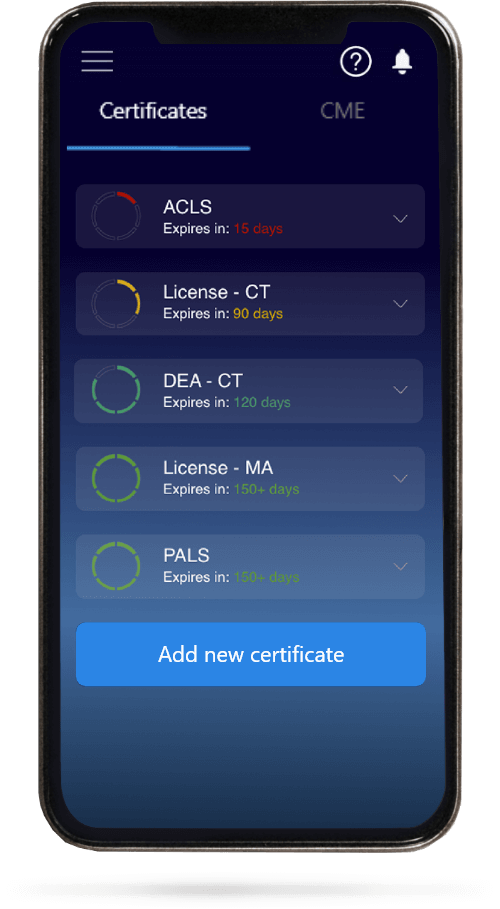
When you have your licenses, certificates and CMEs in one place, it's easier to track your career growth. You can easily share these with hospitals as well, using your medtigo app.