The spread of this pathogenic infections in lab mice has been seen at rates of 4% to 13%. It focuses the risk of the disease transfer from rodents to humans who are handling them. These numbers show cruciality of infection. it is to watch how rodents and humans transmit diseases in labs.
It rarely causes blood infection in people, with less of cases illustrated., it show leukemia, lymphoma, or HIV those with weakened immunity. The few cases suggest that while bacteria exist in rodents, healthy humans face low chances of complete infection.
bone infection of this bacteria is very rare, with just single case informed in someone earlier bitten on the heel by a horse. With so few cases, bone illnesses from this pathogen appear very unusual in people. Overall, human infections linked to R. pneumotropicus seem reasonably infrequent, expected at under 1 per 100,000 people.
It is a rod-shaped pathogen. It’s gram-negative and has a whip-like tail and its for moving. On its outer layer, it sports a capsule-like coating. It falls within the Bacteria kingdom and Pseudomonadota phylum. This tiny-organism grow up best in conditions with less oxygen—a favorite known as microaerophilic.
The original strain of this pathogen is called P 421. This strain is saved and available from several culture collections, including DSM 21403, ATCC 35149, CCUG 12398, JCM 14074, LMG 4224, and NCTC 8141.
It is a bacterium that acts differently in different animals. It doesn’t usually make mice sick. It shows that mice can fight off the bacteria well. But in mice without good immune systems, R. pneumotropicus can cause many kinds of diseases. Some are mild, while others are very serious and even deadly. It creates infected wounds in parts of their bodies.
The bacterium spreads when healthy animals touch sick ones. It can also spread through their bodily fluids or feces. In rare cases, animal bites from creatures like horses or dogs can spread it too. However, R. pneumotropicus doesn’t survive well outside a host. So it’s unlikely to spread indirectly through the environment.
After infecting a host, R. pneotropicus can enter the bloodstream, bones, or lungs. It causes swelling, pus, and tissue damage in those areas. Severe infections can damage organs, cause blood poisoning, or be fatal.
People have several defense systems against Rodentibacter pneumotropicus in their lungs. The nose and throat act as the first defense, stopping larger particles and bacteria from entering the lungs. Mucus produced by cells lining the airways traps and moves invading germs away. Coughing also helps remove R. pneotropicus from the respiratory system.
Inside the air sacs, scavenger cells called macrophages and tissue histiocytes swallow up and destroy R. pneumotropicus. They also release chemical signals that activate other immune cells. Some proteins, like defensins and lysozyme, kill bacteria directly and control inflammation. However, R. pneumotropicus can reduce the body’s production of these proteins, leading to invasive disease.
When infected, our bodies make reactive oxygen and nitrogen molecules that damage bacterial cell walls, DNA, and proteins. Even so, R. pneumotropicus can resist these damaging molecules by producing antioxidant enzymes. A cell process called autophagy usually breaks down and removes harmful components, including Rodetibacter pneumotropicus. Yet the bacteria can evade this destruction by interfering with the cell’s signaling pathways.
Innate immunity has cell types called innate lymphoid cells (ILCs). There are several kinds: ILC1, ILC2, and ILC3. These cells fight off R. pneumotropicus bacteria. They make cytokines that control inflammation and immune responses. Specifically, ILC3 cells produce lots of IL-17, a key cytokine. It brings in neutrophils to attack the bacteria.
Adaptive immunity involves specialized cells: B cells and T cells. These immune cells can recognize and remember specific antigens. They provide long-lasting defense. B cells make antibodies that disable bacteria by neutralizing them or marking them for destruction. Meanwhile, T cells release cytokines and toxic molecules that enhance phagocytosis (engulfing) and killing of R. pneumotropicus by other cells. Interstingly, the lung epithelium itself can influence B cell development, showing the interconnected nature of its defenses against the bacterial threat.
People with Rodentibacter pneumotropicus infections may have the following problems:
Bacterialemia is a severe condition caused by bacteria entering the bloodstream. It leads to system-wide inflammation. Symptoms like chills, fever, feeling unwell, and organ failure in serious cases can occur.
In rare cases, the bacteria can cause osteomyelitis, a bone infection. People with risk factors like horse bite wounds on the head have reported getting this. Osteomyelitis leads to inflammation, pain, swelling, and difficulty moving the affected bone.
While respiratory infections from pneumotropicusare more common in animals like rodents, some people with existing lung conditions have also gotten them. Coughing and mucus production can occur.
Diagnosing Rodentibacte pneumotropicus follows various methods. The first method, the culture test, grows germs from samples on special plates. Second, high-resolution melting curve analysis: Spot differences from related bacteria. Third, molecular techniques: Check sodA gene code for exact ID. Last, the sociological test: Find antibodies like CARLO-1 protein that react to infection.
Keep away from direct contact with rodents and their waste. Doing so prevents catching the bacteria.
When dealing with rodents or rodent cages, wear gloves and protective clothing if an infection seems likely. It stops the Rodentibacter bacteria from getting into you.
Clean and disinfect rodent bites or wounds right away. Doing this prevents the bacteria from entering the skin and causing an infection.
It is important to quarantine or re-introduce new rodents at animal facilities. It ensures rodentibacter carriers cannot spread the bacteria to other rodents.
The spread of this pathogenic infections in lab mice has been seen at rates of 4% to 13%. It focuses the risk of the disease transfer from rodents to humans who are handling them. These numbers show cruciality of infection. it is to watch how rodents and humans transmit diseases in labs.
It rarely causes blood infection in people, with less of cases illustrated., it show leukemia, lymphoma, or HIV those with weakened immunity. The few cases suggest that while bacteria exist in rodents, healthy humans face low chances of complete infection.
bone infection of this bacteria is very rare, with just single case informed in someone earlier bitten on the heel by a horse. With so few cases, bone illnesses from this pathogen appear very unusual in people. Overall, human infections linked to R. pneumotropicus seem reasonably infrequent, expected at under 1 per 100,000 people.
It is a rod-shaped pathogen. It’s gram-negative and has a whip-like tail and its for moving. On its outer layer, it sports a capsule-like coating. It falls within the Bacteria kingdom and Pseudomonadota phylum. This tiny-organism grow up best in conditions with less oxygen—a favorite known as microaerophilic.
The original strain of this pathogen is called P 421. This strain is saved and available from several culture collections, including DSM 21403, ATCC 35149, CCUG 12398, JCM 14074, LMG 4224, and NCTC 8141.
It is a bacterium that acts differently in different animals. It doesn’t usually make mice sick. It shows that mice can fight off the bacteria well. But in mice without good immune systems, R. pneumotropicus can cause many kinds of diseases. Some are mild, while others are very serious and even deadly. It creates infected wounds in parts of their bodies.
The bacterium spreads when healthy animals touch sick ones. It can also spread through their bodily fluids or feces. In rare cases, animal bites from creatures like horses or dogs can spread it too. However, R. pneumotropicus doesn’t survive well outside a host. So it’s unlikely to spread indirectly through the environment.
After infecting a host, R. pneotropicus can enter the bloodstream, bones, or lungs. It causes swelling, pus, and tissue damage in those areas. Severe infections can damage organs, cause blood poisoning, or be fatal.
People have several defense systems against Rodentibacter pneumotropicus in their lungs. The nose and throat act as the first defense, stopping larger particles and bacteria from entering the lungs. Mucus produced by cells lining the airways traps and moves invading germs away. Coughing also helps remove R. pneotropicus from the respiratory system.
Inside the air sacs, scavenger cells called macrophages and tissue histiocytes swallow up and destroy R. pneumotropicus. They also release chemical signals that activate other immune cells. Some proteins, like defensins and lysozyme, kill bacteria directly and control inflammation. However, R. pneumotropicus can reduce the body’s production of these proteins, leading to invasive disease.
When infected, our bodies make reactive oxygen and nitrogen molecules that damage bacterial cell walls, DNA, and proteins. Even so, R. pneumotropicus can resist these damaging molecules by producing antioxidant enzymes. A cell process called autophagy usually breaks down and removes harmful components, including Rodetibacter pneumotropicus. Yet the bacteria can evade this destruction by interfering with the cell’s signaling pathways.
Innate immunity has cell types called innate lymphoid cells (ILCs). There are several kinds: ILC1, ILC2, and ILC3. These cells fight off R. pneumotropicus bacteria. They make cytokines that control inflammation and immune responses. Specifically, ILC3 cells produce lots of IL-17, a key cytokine. It brings in neutrophils to attack the bacteria.
Adaptive immunity involves specialized cells: B cells and T cells. These immune cells can recognize and remember specific antigens. They provide long-lasting defense. B cells make antibodies that disable bacteria by neutralizing them or marking them for destruction. Meanwhile, T cells release cytokines and toxic molecules that enhance phagocytosis (engulfing) and killing of R. pneumotropicus by other cells. Interstingly, the lung epithelium itself can influence B cell development, showing the interconnected nature of its defenses against the bacterial threat.
People with Rodentibacter pneumotropicus infections may have the following problems:
Bacterialemia is a severe condition caused by bacteria entering the bloodstream. It leads to system-wide inflammation. Symptoms like chills, fever, feeling unwell, and organ failure in serious cases can occur.
In rare cases, the bacteria can cause osteomyelitis, a bone infection. People with risk factors like horse bite wounds on the head have reported getting this. Osteomyelitis leads to inflammation, pain, swelling, and difficulty moving the affected bone.
While respiratory infections from pneumotropicusare more common in animals like rodents, some people with existing lung conditions have also gotten them. Coughing and mucus production can occur.
Diagnosing Rodentibacte pneumotropicus follows various methods. The first method, the culture test, grows germs from samples on special plates. Second, high-resolution melting curve analysis: Spot differences from related bacteria. Third, molecular techniques: Check sodA gene code for exact ID. Last, the sociological test: Find antibodies like CARLO-1 protein that react to infection.
Keep away from direct contact with rodents and their waste. Doing so prevents catching the bacteria.
When dealing with rodents or rodent cages, wear gloves and protective clothing if an infection seems likely. It stops the Rodentibacter bacteria from getting into you.
Clean and disinfect rodent bites or wounds right away. Doing this prevents the bacteria from entering the skin and causing an infection.
It is important to quarantine or re-introduce new rodents at animal facilities. It ensures rodentibacter carriers cannot spread the bacteria to other rodents.
The spread of this pathogenic infections in lab mice has been seen at rates of 4% to 13%. It focuses the risk of the disease transfer from rodents to humans who are handling them. These numbers show cruciality of infection. it is to watch how rodents and humans transmit diseases in labs.
It rarely causes blood infection in people, with less of cases illustrated., it show leukemia, lymphoma, or HIV those with weakened immunity. The few cases suggest that while bacteria exist in rodents, healthy humans face low chances of complete infection.
bone infection of this bacteria is very rare, with just single case informed in someone earlier bitten on the heel by a horse. With so few cases, bone illnesses from this pathogen appear very unusual in people. Overall, human infections linked to R. pneumotropicus seem reasonably infrequent, expected at under 1 per 100,000 people.
It is a rod-shaped pathogen. It’s gram-negative and has a whip-like tail and its for moving. On its outer layer, it sports a capsule-like coating. It falls within the Bacteria kingdom and Pseudomonadota phylum. This tiny-organism grow up best in conditions with less oxygen—a favorite known as microaerophilic.
The original strain of this pathogen is called P 421. This strain is saved and available from several culture collections, including DSM 21403, ATCC 35149, CCUG 12398, JCM 14074, LMG 4224, and NCTC 8141.
It is a bacterium that acts differently in different animals. It doesn’t usually make mice sick. It shows that mice can fight off the bacteria well. But in mice without good immune systems, R. pneumotropicus can cause many kinds of diseases. Some are mild, while others are very serious and even deadly. It creates infected wounds in parts of their bodies.
The bacterium spreads when healthy animals touch sick ones. It can also spread through their bodily fluids or feces. In rare cases, animal bites from creatures like horses or dogs can spread it too. However, R. pneumotropicus doesn’t survive well outside a host. So it’s unlikely to spread indirectly through the environment.
After infecting a host, R. pneotropicus can enter the bloodstream, bones, or lungs. It causes swelling, pus, and tissue damage in those areas. Severe infections can damage organs, cause blood poisoning, or be fatal.
People have several defense systems against Rodentibacter pneumotropicus in their lungs. The nose and throat act as the first defense, stopping larger particles and bacteria from entering the lungs. Mucus produced by cells lining the airways traps and moves invading germs away. Coughing also helps remove R. pneotropicus from the respiratory system.
Inside the air sacs, scavenger cells called macrophages and tissue histiocytes swallow up and destroy R. pneumotropicus. They also release chemical signals that activate other immune cells. Some proteins, like defensins and lysozyme, kill bacteria directly and control inflammation. However, R. pneumotropicus can reduce the body’s production of these proteins, leading to invasive disease.
When infected, our bodies make reactive oxygen and nitrogen molecules that damage bacterial cell walls, DNA, and proteins. Even so, R. pneumotropicus can resist these damaging molecules by producing antioxidant enzymes. A cell process called autophagy usually breaks down and removes harmful components, including Rodetibacter pneumotropicus. Yet the bacteria can evade this destruction by interfering with the cell’s signaling pathways.
Innate immunity has cell types called innate lymphoid cells (ILCs). There are several kinds: ILC1, ILC2, and ILC3. These cells fight off R. pneumotropicus bacteria. They make cytokines that control inflammation and immune responses. Specifically, ILC3 cells produce lots of IL-17, a key cytokine. It brings in neutrophils to attack the bacteria.
Adaptive immunity involves specialized cells: B cells and T cells. These immune cells can recognize and remember specific antigens. They provide long-lasting defense. B cells make antibodies that disable bacteria by neutralizing them or marking them for destruction. Meanwhile, T cells release cytokines and toxic molecules that enhance phagocytosis (engulfing) and killing of R. pneumotropicus by other cells. Interstingly, the lung epithelium itself can influence B cell development, showing the interconnected nature of its defenses against the bacterial threat.
People with Rodentibacter pneumotropicus infections may have the following problems:
Bacterialemia is a severe condition caused by bacteria entering the bloodstream. It leads to system-wide inflammation. Symptoms like chills, fever, feeling unwell, and organ failure in serious cases can occur.
In rare cases, the bacteria can cause osteomyelitis, a bone infection. People with risk factors like horse bite wounds on the head have reported getting this. Osteomyelitis leads to inflammation, pain, swelling, and difficulty moving the affected bone.
While respiratory infections from pneumotropicusare more common in animals like rodents, some people with existing lung conditions have also gotten them. Coughing and mucus production can occur.
Diagnosing Rodentibacte pneumotropicus follows various methods. The first method, the culture test, grows germs from samples on special plates. Second, high-resolution melting curve analysis: Spot differences from related bacteria. Third, molecular techniques: Check sodA gene code for exact ID. Last, the sociological test: Find antibodies like CARLO-1 protein that react to infection.
Keep away from direct contact with rodents and their waste. Doing so prevents catching the bacteria.
When dealing with rodents or rodent cages, wear gloves and protective clothing if an infection seems likely. It stops the Rodentibacter bacteria from getting into you.
Clean and disinfect rodent bites or wounds right away. Doing this prevents the bacteria from entering the skin and causing an infection.
It is important to quarantine or re-introduce new rodents at animal facilities. It ensures rodentibacter carriers cannot spread the bacteria to other rodents.
Both our subscription plans include Free CME/CPD AMA PRA Category 1 credits.
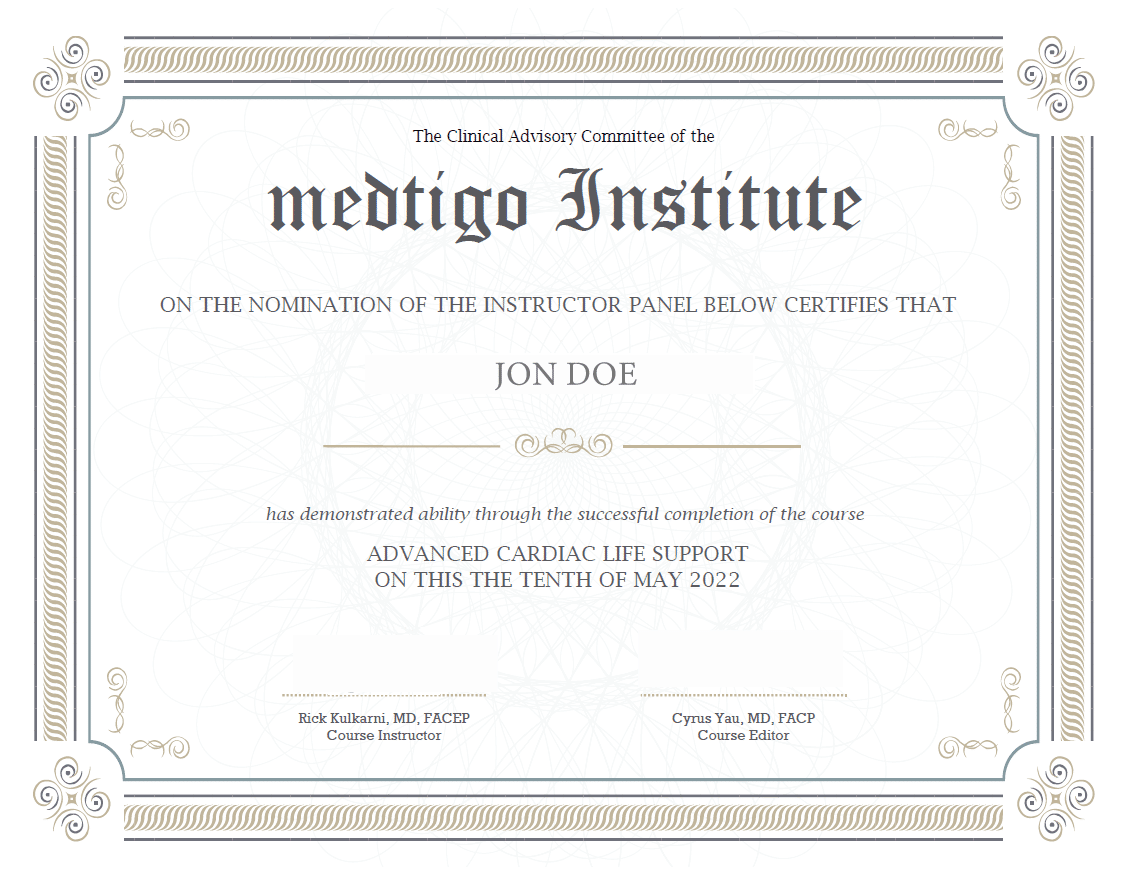
Digital Certificate PDF
On course completion, you will receive a full-sized presentation quality digital certificate.
medtigo Simulation
A dynamic medical simulation platform designed to train healthcare professionals and students to effectively run code situations through an immersive hands-on experience in a live, interactive 3D environment.
medtigo Points
medtigo points is our unique point redemption system created to award users for interacting on our site. These points can be redeemed for special discounts on the medtigo marketplace as well as towards the membership cost itself.
Community Forum post/reply = 5 points
*Redemption of points can occur only through the medtigo marketplace, courses, or simulation system. Money will not be credited to your bank account. 10 points = $1.
All Your Certificates in One Place
When you have your licenses, certificates and CMEs in one place, it's easier to track your career growth. You can easily share these with hospitals as well, using your medtigo app.