The anion gap is an important value in clinical medicine that is used to evaluate acid-base balance and electrolyte disorders. It measures the difference between measured cations and anions in the blood and indicates unmeasured anions or cations. Healthcare professionals can easily find acid-base abnormalities, detect metabolic disorders, and guide therapeutic interventions by understanding the anion gap. It helps them improve patient outcomes and manage electrolyte and acid-base imbalances.
This blog will be a complete guide for healthcare professionals to understand the anion gap.
Understanding anion gap:
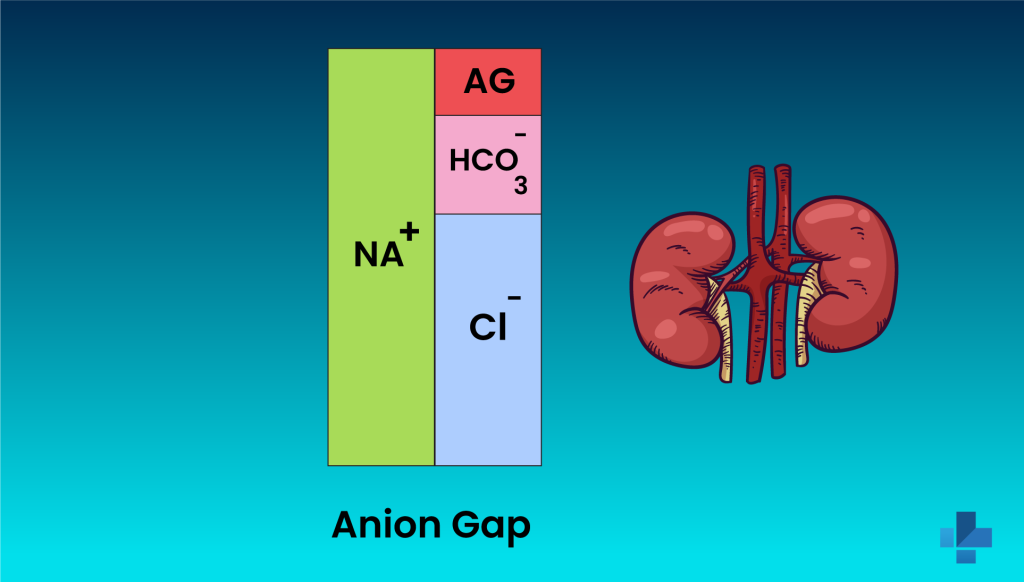
The anion gap is a value that indicates the presence of unmeasured ions in the blood that includes organic acids and inorganic ions. A normal person has an anion gap between 3 and10 mEq/L.
Healthcare professionals only use sodium (Na+), chloride (Cl-), and bicarbonate (HCO3-) ions to calculate the anion gap.
They use a formula to calculate the anion gap and that is given below.
Anion Gap = Na+ – Cl- + HCO3-.
A high anion gap is also known as metabolic acidosis. It is a condition that is caused by factors like diabetes, lactic acidosis, and renal failure. These factors increase the levels of acids in the blood. On the other hand, a low anion gap may suggest metabolic alkalosis. It is a condition caused by some factors like vomiting, excessive bicarbonate administration, and hypokalemia. It causes a deficiency of acids that are required to maintain normal anion gap.
Interpreting the anion gap of a person alongside other clinical findings is very important for accurate diagnosis and management.
Importance of anion gap:
Metabolic Acidosis Marker:
The anion gap is a marker that detects metabolic acidosis. It is a condition characterized by an excess of acids in the body. It can be caused by increased production of acids, decreased excretion or loss of bicarbonate. The accumulation of unmeasured anions contributes to a widened anion gap that indicates the body’s attempt to compensate for excess acids. This helps differentiate it from respiratory acidosis that is caused by a respiratory system abnormality. But a widened anion gap strongly suggests metabolic acidosis and further evaluation is needed to determine the specific cause.
Detects electrolyte disturbance:
The anion gap can detect electrolyte disturbances that are associated with metabolic acidosis or alkalosis. They can be caused by increased or decreased electrolyte intake, impaired renal function, gastrointestinal losses or endocrine disorders. It helps identify these disturbances by reflecting changes in unmeasured ions. Healthcare providers can use the anion gap in conjunction with other laboratory findings to assess electrolyte balance and take corrective measures. But it is not a direct measure of electrolyte concentrations and should be used in conjunction with other tests.
In last, the anion gap is very important tool in clinical medicine that indicates unmeasured ions in a person’s blood. It helps healthcare professionals detect metabolic disorders. Hence, they can select an effective treatment for this condition and improve patient outcomes.
Don’t just understand the anion gap—calculate it instantly here.