Hidden Risks of Exosome Injections in Pain Management
April 8, 2026






Background
Cataract is a common eye condition characterized by the clouding of the lens in the eye, leading to a decline in vision quality. This particular issue predominantly affects older adults and is a significant contributor to global vision impairment. Cataracts can develop gradually over time in one or both eyes, causing difficulties in visual clarity and hindering daily activities.
The lens of the eye plays a vital role in focusing light onto the retina, which transmits visual signals to the brain. With aging, the proteins within the lens may deteriorate and aggregate, forming a cloudy region referred to as a cataract. This cloudiness obstructs the proper passage of light through the lens, resulting in blurred or hazy vision.
Epidemiology
Prevalence: Cataracts are a prevalent condition worldwide, particularly among older adults. The prevalence of cataracts tends to increase with age, and it is estimated that over 90% of cataracts occur in individuals aged 65 years and older. However, cataracts can also affect younger individuals, albeit less frequently.
Global Burden: Cataracts are a significant cause of visual impairment and blindness globally. According to the World Health Organization, cataracts are responsible for about 51% of world blindness, which amounts to approximately 20 million people. Cataracts are considered a major public health issue due to their impact on individuals, communities, and healthcare systems.
Risk Factors: Age is the most prominent risk factor, with the prevalence of cataracts increasing exponentially with advancing age.
Anatomy
Pathophysiology
Lens Metabolism: The lens fibers exhibit metabolic activity and necessitate a consistent provision of nutrients and oxygen. The lens maintains its transparency through a delicate balance of ion and water transport, as well as the maintenance of proteins and other cellular components.
Protein Denaturation: Over time, various factors can disrupt the delicate balance within the lens, leading to protein denaturation or aggregation. This process involves changes in the three-dimensional structure of lens proteins, which are necessary for maintaining lens clarity.
Oxidative Stress: Reactive oxygen species (ROS) can accumulate within the lens due to factors such as aging, ultraviolet (UV) radiation, smoking, and certain medical conditions. ROS cause damage to lens proteins and other cellular components, leading to protein denaturation and aggregation.
Glycation: Another contributing factor to cataract formation is glycation. This process involves the non-enzymatic attachment of sugar molecules to proteins, resulting in the formation of advanced glycation end products (AGEs). AGEs can accumulate within the lens, leading to protein cross-linking, altered protein structure, and lens opacity.
Altered Water and Ion Balance: Disruptions in the transport mechanisms responsible for maintaining water and ion balance within the lens can contribute to cataract formation. Changes in ion concentrations, particularly calcium, disrupt lens fiber cell integrity and function, leading to lens opacification.
Etiology
Aging: Age-related changes in the lens are the most common cause of cataract development. Over time, the proteins in the lens can clump together, leading to opacity and loss of transparency.
Genetic factors: Certain genetic mutations and hereditary conditions can increase the risk of cataract development. These genetic factors may affect the structure and function of the lens or influence the metabolism of lens proteins.
Ultraviolet (UV) radiation: Chronic exposure to sunlight and UV radiation can contribute to cataract formation. The lens absorbs UV radiation, and cumulative exposure over time can cause damage to lens proteins, leading to cataract development.
Systemic diseases and medications: Certain systemic diseases, such as hypertension and autoimmune disorders, and the use of specific medications like corticosteroids or long-term use of certain classes of medications like statins, can increase the risk of cataract development.
Genetics
Prognostic Factors
Clinical History
CLINICAL HISTORY
Age Group:
Physical Examination
PHYSICAL EXAMINATION
Age group
Associated comorbidity
Associated Comorbidity or Activity:
Associated activity
Acuity of presentation
Acuity of Presentation:
Differential Diagnoses
DIFFERENTIAL DIAGNOSIS
Laboratory Studies
Imaging Studies
Procedures
Histologic Findings
Staging
Treatment Paradigm
TREATMENT PARADIGM
Modification of Environment:
Administration of Pharmaceutical Agents with Drugs:
Intervention with a Procedure:
Phase of Management:
by Stage
by Modality
Chemotherapy
Radiation Therapy
Surgical Interventions
Hormone Therapy
Immunotherapy
Hyperthermia
Photodynamic Therapy
Stem Cell Transplant
Targeted Therapy
Palliative Care
Medication
Put one drop in the affected eye four times a day for a duration of 14 days
Starting with first day after the surgical procedure
ketorolac/phenylephrine ophthalmic
Dilute 4 ml solution in 500 ml ophthalmic irrigating solution
Use irrigation solution for the surgical procedure as required
Indicated for cataract surgery
Instill two drops into each eye, followed by an extra two drops into each eye after a five-minute interval
Give a single drop into the conjunctiva six times a day
ketorolac/phenylephrine ophthalmic
Dilute 4 ml solution in 500 ml ophthalmic irrigating solution
Use irrigation solution for the surgical procedure as required
Future Trends
References
Cataract
https://www.ncbi.nlm.nih.gov/books/NBK539699/
Cataract is a common eye condition characterized by the clouding of the lens in the eye, leading to a decline in vision quality. This particular issue predominantly affects older adults and is a significant contributor to global vision impairment. Cataracts can develop gradually over time in one or both eyes, causing difficulties in visual clarity and hindering daily activities.
The lens of the eye plays a vital role in focusing light onto the retina, which transmits visual signals to the brain. With aging, the proteins within the lens may deteriorate and aggregate, forming a cloudy region referred to as a cataract. This cloudiness obstructs the proper passage of light through the lens, resulting in blurred or hazy vision.
Prevalence: Cataracts are a prevalent condition worldwide, particularly among older adults. The prevalence of cataracts tends to increase with age, and it is estimated that over 90% of cataracts occur in individuals aged 65 years and older. However, cataracts can also affect younger individuals, albeit less frequently.
Global Burden: Cataracts are a significant cause of visual impairment and blindness globally. According to the World Health Organization, cataracts are responsible for about 51% of world blindness, which amounts to approximately 20 million people. Cataracts are considered a major public health issue due to their impact on individuals, communities, and healthcare systems.
Risk Factors: Age is the most prominent risk factor, with the prevalence of cataracts increasing exponentially with advancing age.
Lens Metabolism: The lens fibers exhibit metabolic activity and necessitate a consistent provision of nutrients and oxygen. The lens maintains its transparency through a delicate balance of ion and water transport, as well as the maintenance of proteins and other cellular components.
Protein Denaturation: Over time, various factors can disrupt the delicate balance within the lens, leading to protein denaturation or aggregation. This process involves changes in the three-dimensional structure of lens proteins, which are necessary for maintaining lens clarity.
Oxidative Stress: Reactive oxygen species (ROS) can accumulate within the lens due to factors such as aging, ultraviolet (UV) radiation, smoking, and certain medical conditions. ROS cause damage to lens proteins and other cellular components, leading to protein denaturation and aggregation.
Glycation: Another contributing factor to cataract formation is glycation. This process involves the non-enzymatic attachment of sugar molecules to proteins, resulting in the formation of advanced glycation end products (AGEs). AGEs can accumulate within the lens, leading to protein cross-linking, altered protein structure, and lens opacity.
Altered Water and Ion Balance: Disruptions in the transport mechanisms responsible for maintaining water and ion balance within the lens can contribute to cataract formation. Changes in ion concentrations, particularly calcium, disrupt lens fiber cell integrity and function, leading to lens opacification.
Aging: Age-related changes in the lens are the most common cause of cataract development. Over time, the proteins in the lens can clump together, leading to opacity and loss of transparency.
Genetic factors: Certain genetic mutations and hereditary conditions can increase the risk of cataract development. These genetic factors may affect the structure and function of the lens or influence the metabolism of lens proteins.
Ultraviolet (UV) radiation: Chronic exposure to sunlight and UV radiation can contribute to cataract formation. The lens absorbs UV radiation, and cumulative exposure over time can cause damage to lens proteins, leading to cataract development.
Systemic diseases and medications: Certain systemic diseases, such as hypertension and autoimmune disorders, and the use of specific medications like corticosteroids or long-term use of certain classes of medications like statins, can increase the risk of cataract development.
CLINICAL HISTORY
Age Group:
PHYSICAL EXAMINATION
Associated Comorbidity or Activity:
Acuity of Presentation:
DIFFERENTIAL DIAGNOSIS
TREATMENT PARADIGM
Modification of Environment:
Administration of Pharmaceutical Agents with Drugs:
Intervention with a Procedure:
Phase of Management:
Cataract
https://www.ncbi.nlm.nih.gov/books/NBK539699/

Cataract is a common eye condition characterized by the clouding of the lens in the eye, leading to a decline in vision quality. This particular issue predominantly affects older adults and is a significant contributor to global vision impairment. Cataracts can develop gradually over time in one or both eyes, causing difficulties in visual clarity and hindering daily activities.
The lens of the eye plays a vital role in focusing light onto the retina, which transmits visual signals to the brain. With aging, the proteins within the lens may deteriorate and aggregate, forming a cloudy region referred to as a cataract. This cloudiness obstructs the proper passage of light through the lens, resulting in blurred or hazy vision.
Prevalence: Cataracts are a prevalent condition worldwide, particularly among older adults. The prevalence of cataracts tends to increase with age, and it is estimated that over 90% of cataracts occur in individuals aged 65 years and older. However, cataracts can also affect younger individuals, albeit less frequently.
Global Burden: Cataracts are a significant cause of visual impairment and blindness globally. According to the World Health Organization, cataracts are responsible for about 51% of world blindness, which amounts to approximately 20 million people. Cataracts are considered a major public health issue due to their impact on individuals, communities, and healthcare systems.
Risk Factors: Age is the most prominent risk factor, with the prevalence of cataracts increasing exponentially with advancing age.
Lens Metabolism: The lens fibers exhibit metabolic activity and necessitate a consistent provision of nutrients and oxygen. The lens maintains its transparency through a delicate balance of ion and water transport, as well as the maintenance of proteins and other cellular components.
Protein Denaturation: Over time, various factors can disrupt the delicate balance within the lens, leading to protein denaturation or aggregation. This process involves changes in the three-dimensional structure of lens proteins, which are necessary for maintaining lens clarity.
Oxidative Stress: Reactive oxygen species (ROS) can accumulate within the lens due to factors such as aging, ultraviolet (UV) radiation, smoking, and certain medical conditions. ROS cause damage to lens proteins and other cellular components, leading to protein denaturation and aggregation.
Glycation: Another contributing factor to cataract formation is glycation. This process involves the non-enzymatic attachment of sugar molecules to proteins, resulting in the formation of advanced glycation end products (AGEs). AGEs can accumulate within the lens, leading to protein cross-linking, altered protein structure, and lens opacity.
Altered Water and Ion Balance: Disruptions in the transport mechanisms responsible for maintaining water and ion balance within the lens can contribute to cataract formation. Changes in ion concentrations, particularly calcium, disrupt lens fiber cell integrity and function, leading to lens opacification.
Aging: Age-related changes in the lens are the most common cause of cataract development. Over time, the proteins in the lens can clump together, leading to opacity and loss of transparency.
Genetic factors: Certain genetic mutations and hereditary conditions can increase the risk of cataract development. These genetic factors may affect the structure and function of the lens or influence the metabolism of lens proteins.
Ultraviolet (UV) radiation: Chronic exposure to sunlight and UV radiation can contribute to cataract formation. The lens absorbs UV radiation, and cumulative exposure over time can cause damage to lens proteins, leading to cataract development.
Systemic diseases and medications: Certain systemic diseases, such as hypertension and autoimmune disorders, and the use of specific medications like corticosteroids or long-term use of certain classes of medications like statins, can increase the risk of cataract development.
CLINICAL HISTORY
Age Group:
PHYSICAL EXAMINATION
Associated Comorbidity or Activity:
Acuity of Presentation:
DIFFERENTIAL DIAGNOSIS
TREATMENT PARADIGM
Modification of Environment:
Administration of Pharmaceutical Agents with Drugs:
Intervention with a Procedure:
Phase of Management:
Cataract
https://www.ncbi.nlm.nih.gov/books/NBK539699/

Both our subscription plans include Free CME/CPD AMA PRA Category 1 credits.
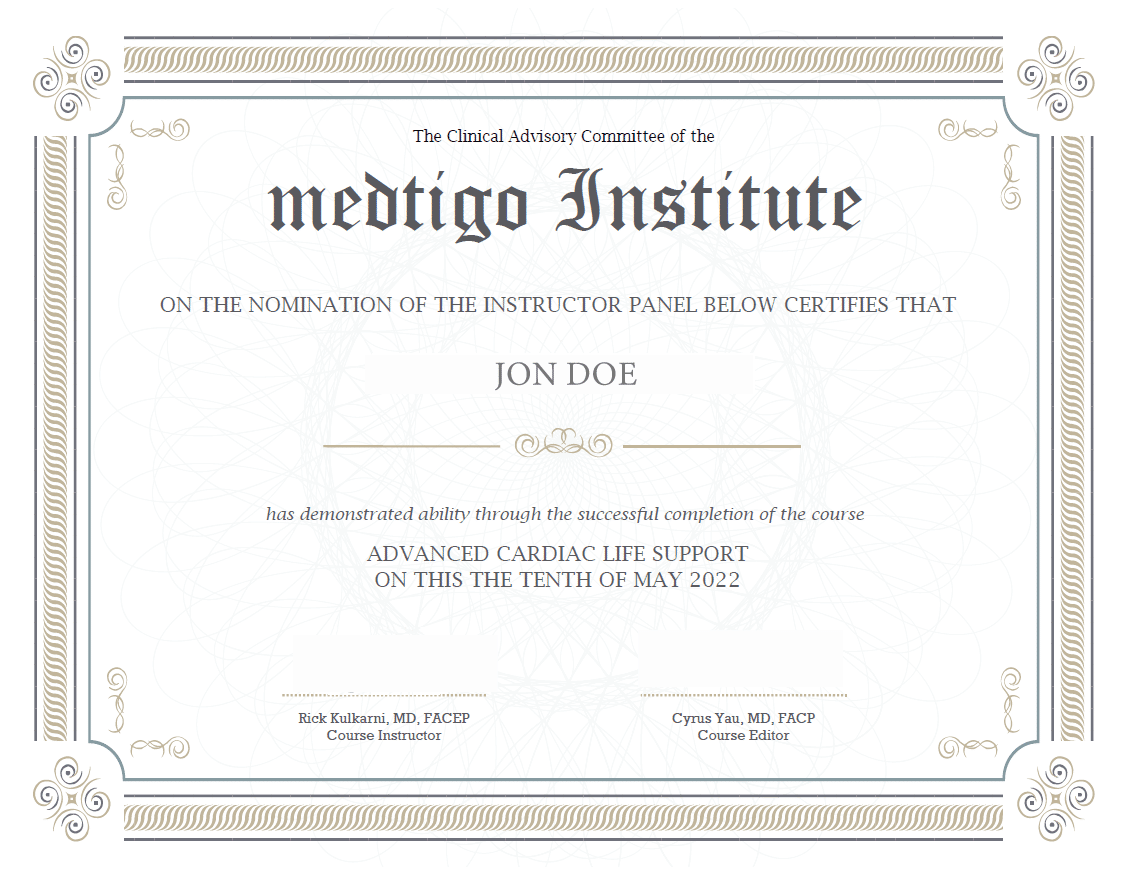
On course completion, you will receive a full-sized presentation quality digital certificate.
A dynamic medical simulation platform designed to train healthcare professionals and students to effectively run code situations through an immersive hands-on experience in a live, interactive 3D environment.

When you have your licenses, certificates and CMEs in one place, it's easier to track your career growth. You can easily share these with hospitals as well, using your medtigo app.